
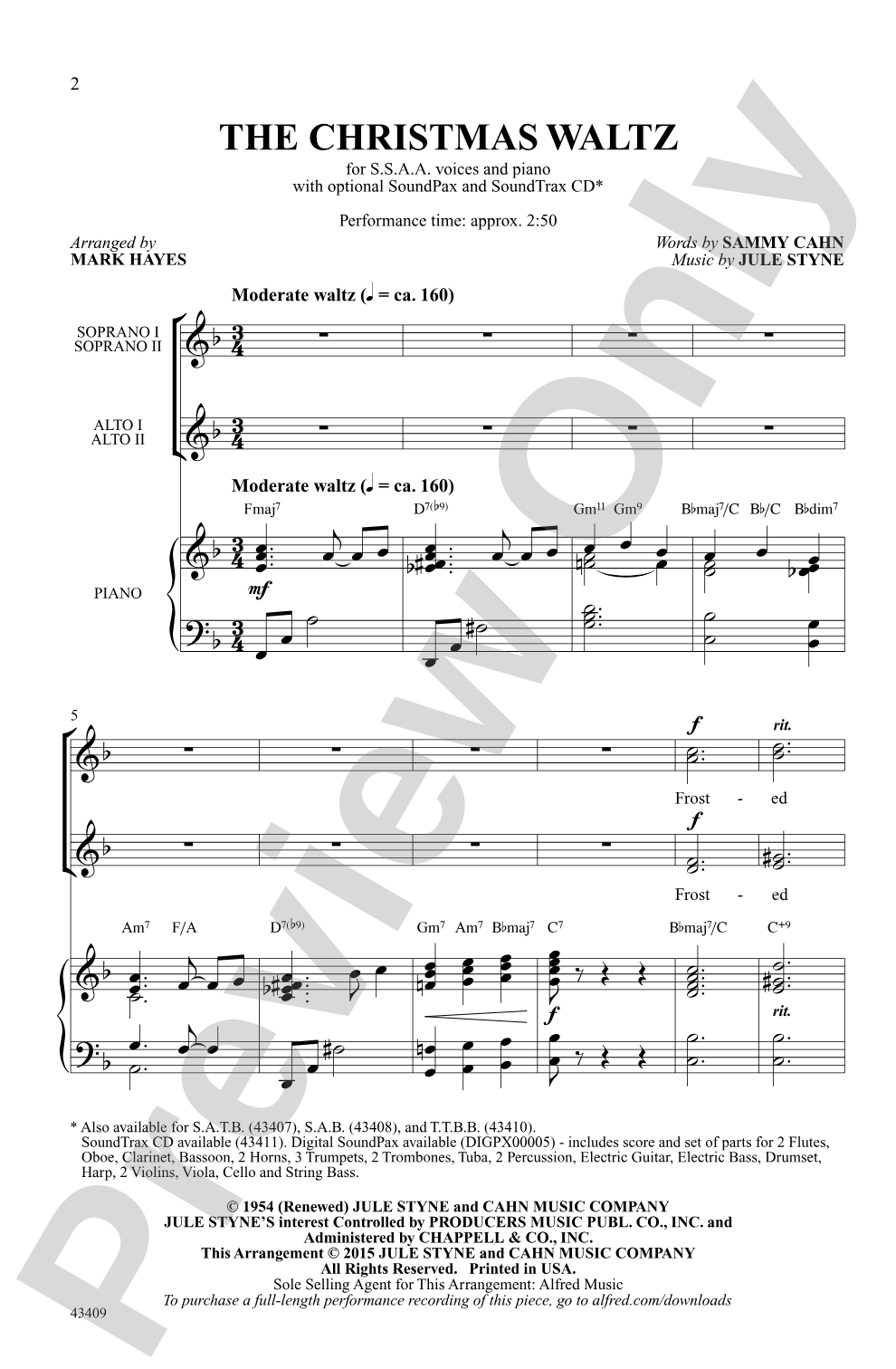
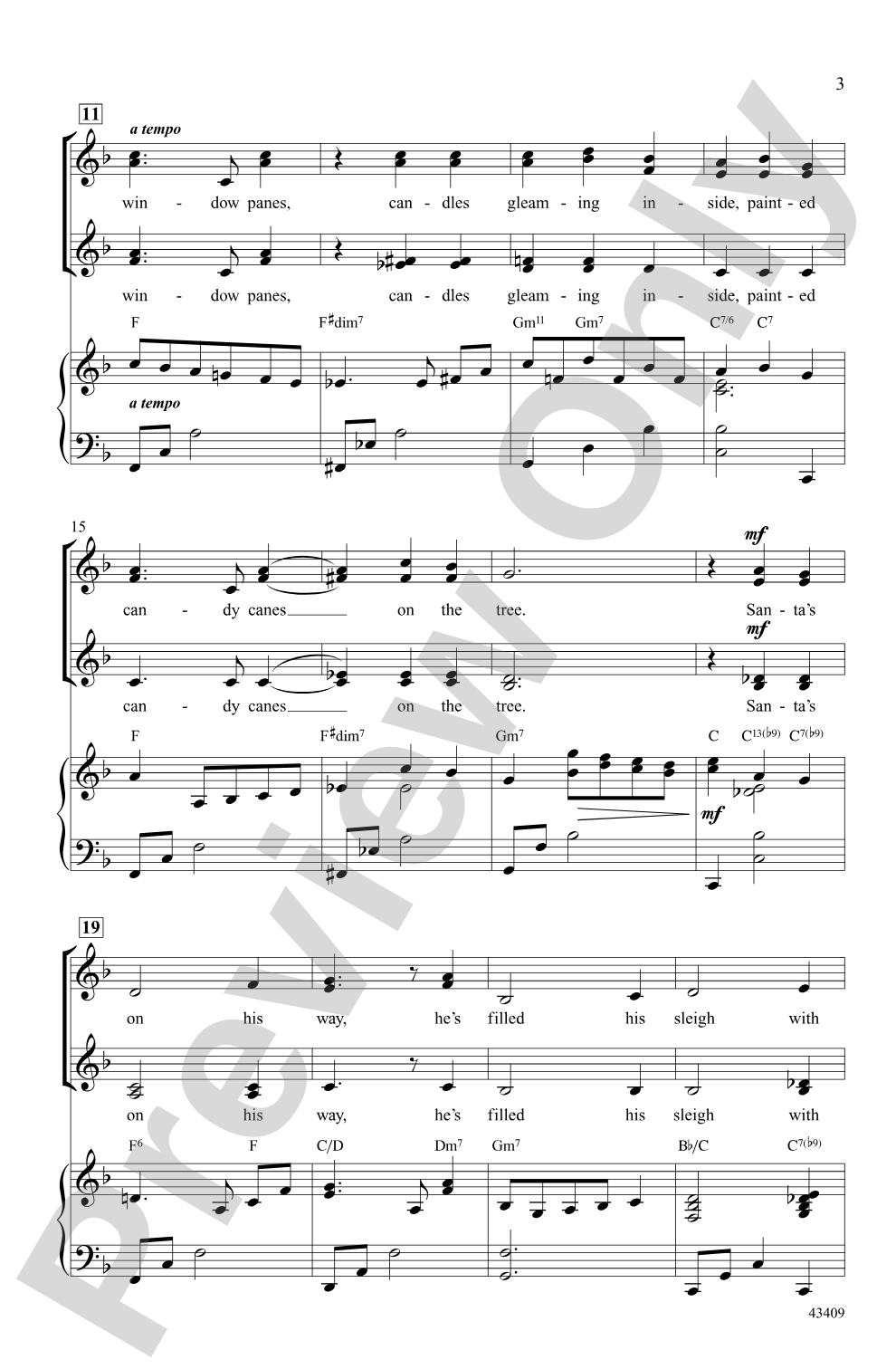
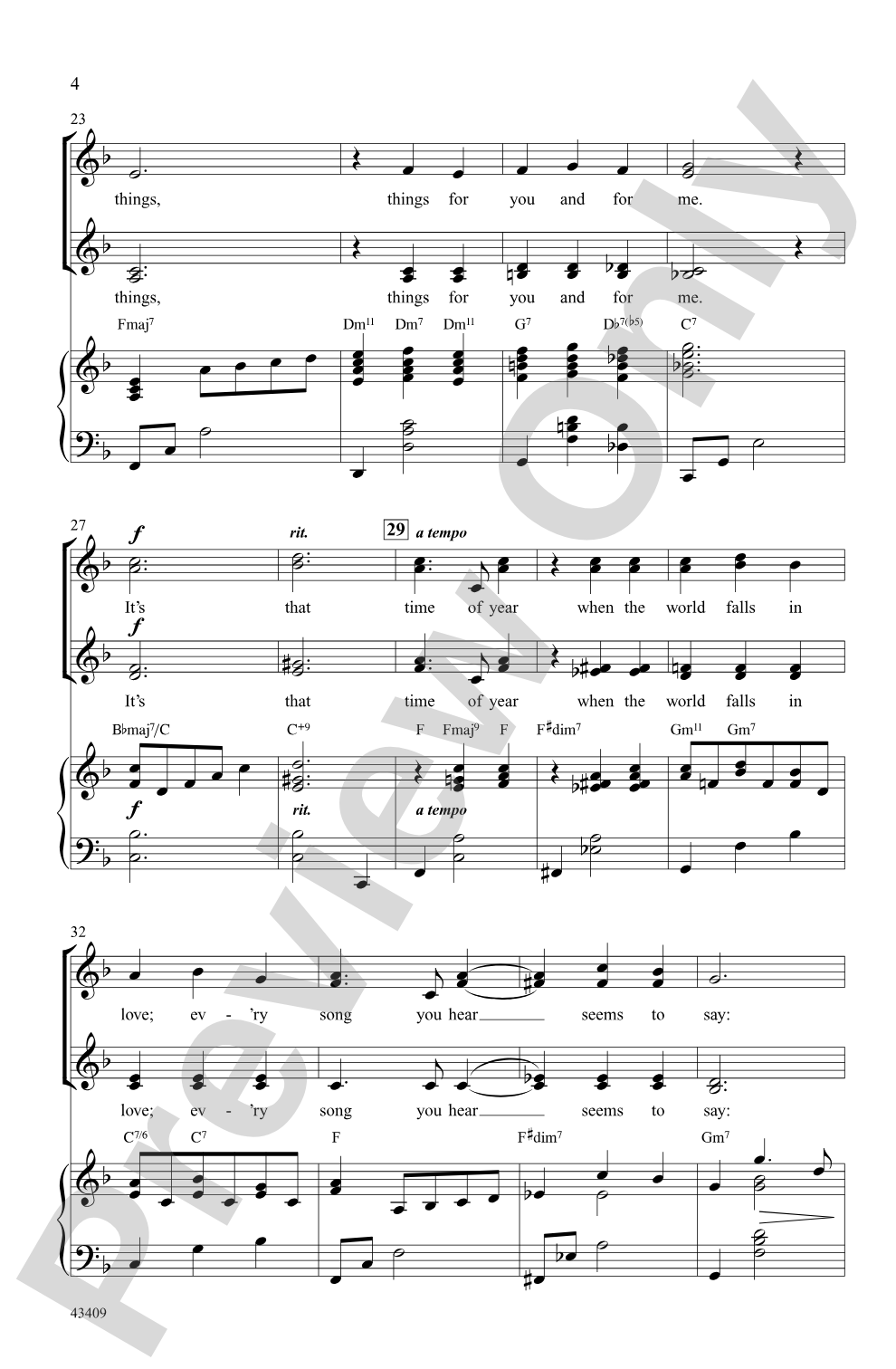

The Christmas Waltz: SSAA Choral Octavo
Words by Sammy Cahn, music by Jule Styne / arr. Mark Hayes
Item: 00-PO-0003346
$2.00
Minimum order quantity: 20 copies
One moment…
Related Items
The Christmas Waltz: SATB Choral Octavo |
$2.10
|
View | |
The Christmas Waltz: SAB Choral Octavo |
$2.00
|
View | |
The Christmas Waltz: TTBB Choral Octavo |
$2.00
|
View | |
The Christmas Waltz: Choral Octavo Digital SoundPax |
$65.00
|
View | |
The Christmas Waltz: SoundTrax Digital Audio Download |
$29.99
|
View | |
The Christmas Waltz: SATB Choral Octavo |
$2.10
|
View | |
The Christmas Waltz: SAB Choral Octavo |
$2.00
|
View | |
The Christmas Waltz: SSAA Choral Octavo |
$2.00
|
View | |
The Christmas Waltz: Choral Octavo SoundTrax CD |
$29.99
|
View |
Description
Originally written for and premiered by Frank Sinatra as the B-side of his "White Christmas" recording, this holiday favorite has been covered by more than forty artists, including Rosemary Clooney, Tony Bennett, Kristin Chenoweth, and Harry Connick Jr. "Frosted windowpanes . . ."


The Christmas Waltz: SSAA Choral Octavo isn't in MakeMusic Cloud just yet...but it could be. Let us know you'd like to see it, and you'll help shape what comes next. In the meantime, start a free trial and dive into thousands of interactive titles your students can play along with today.
Request This Title
Tell us you want it.
Start Your Free Trial
Explore everything that's ready to play right now.
Sample Audio
1
Audio File
--:--
0:00
0:00
Sample Video
No sample videos found.
Additional Details
Series:
Alfred Pop Choral Series
Publisher:
Alfred Music
Page Count:
12
SKU:
00-PO-0003346
More about this title
About the Composer: Jule Styne
Jule Styne (1905-1975) composed music for Broadway, Hollywood, and the popular song repertoire with equal fluency. His gift for melody and harmonic sophistication made him a sought-after collaborator for lyricists including Sammy Cahn, Stephen Sondheim, and Betty Comden. Beyond the stage, Styne's songs became standards recorded by jazz singers and popular artists, demonstrating the durability of his compositional voice across genres and decades.
For music educators, Styne's work offers accessible entry points into mid-century American songwriting. His melodies sit naturally in the voice, and his harmonic language rewards singers who listen carefully to choral blend and intonation. "The Christmas Waltz" exemplifies his ability to craft music that feels both sophisticated and singable.
Why we love this
Mark Hayes's arrangement respects the elegance of Styne's original melody while crafting parts that give each voice section meaningful material. The waltz meter and jazz-influenced harmonies create a sophisticated holiday offering that stands apart from traditional carols and typical seasonal pop arrangements. This is the kind of piece that sounds polished in performance but doesn't demand excessive rehearsal time, making it ideal for groups building a holiday program with limited preparation weeks.
What to expect
Elegant and understated, the piece evokes a mid-century aesthetic without sounding dated. The waltz rhythm gives it lightness and motion, while the harmonic palette (infused with seventh chords and jazz voicings) adds warmth and sophistication. Singing it should feel like stepping into a classic holiday recording, not a commercial pop track.
Who it's for
SSAA choirs looking to program something with jazz-pop sophistication at the holiday concert. This works equally well for adult community choirs, church music programs, and upper-level high school or college ensembles. Singers who enjoy standards and crooner-style holiday music will connect with the song's origins and the elegant arrangement.
How to get the most out of it
- Shape the phrase contours across the longer musical lines. Resist the impulse to arrive at cadences too early; let the waltz feel unhurried and dance-like throughout.
- Balance the recorded accompaniment so the harmony is clear without drowning the choral sound. The arrangement depends on listeners hearing how the parts support one another.
- Attend to the text setting in the ensemble passages. Hayes gives the voices staggered entrances and varied rhythmic figures; clarity and precision here create sophistication.
- Use the ensemble parts as guides for blend. This arrangement invites singers to listen across all four parts, which builds better tuning and vertical cohesion than isolated part rehearsals alone.
How to use it
Position this in the second half of a holiday concert where audiences are receptive to secular, standards-based selections. It pairs beautifully with other Styne songs or with jazz-influenced holiday arrangements, and it bridges well between traditional carols and contemporary pop medleys. The recorded accompaniment makes it viable even for groups with limited instrumental resources.
Skills your students will build
- Conducting and sustaining long melodic lines in waltz meter without rushing
- Reading four-part SSAA voicing with staggered entrances and rhythmic independence
- Blending seventh chords and jazz harmonies for vertical tuning
- Interpreting text with sophistication and restraint in a pop/standards context