
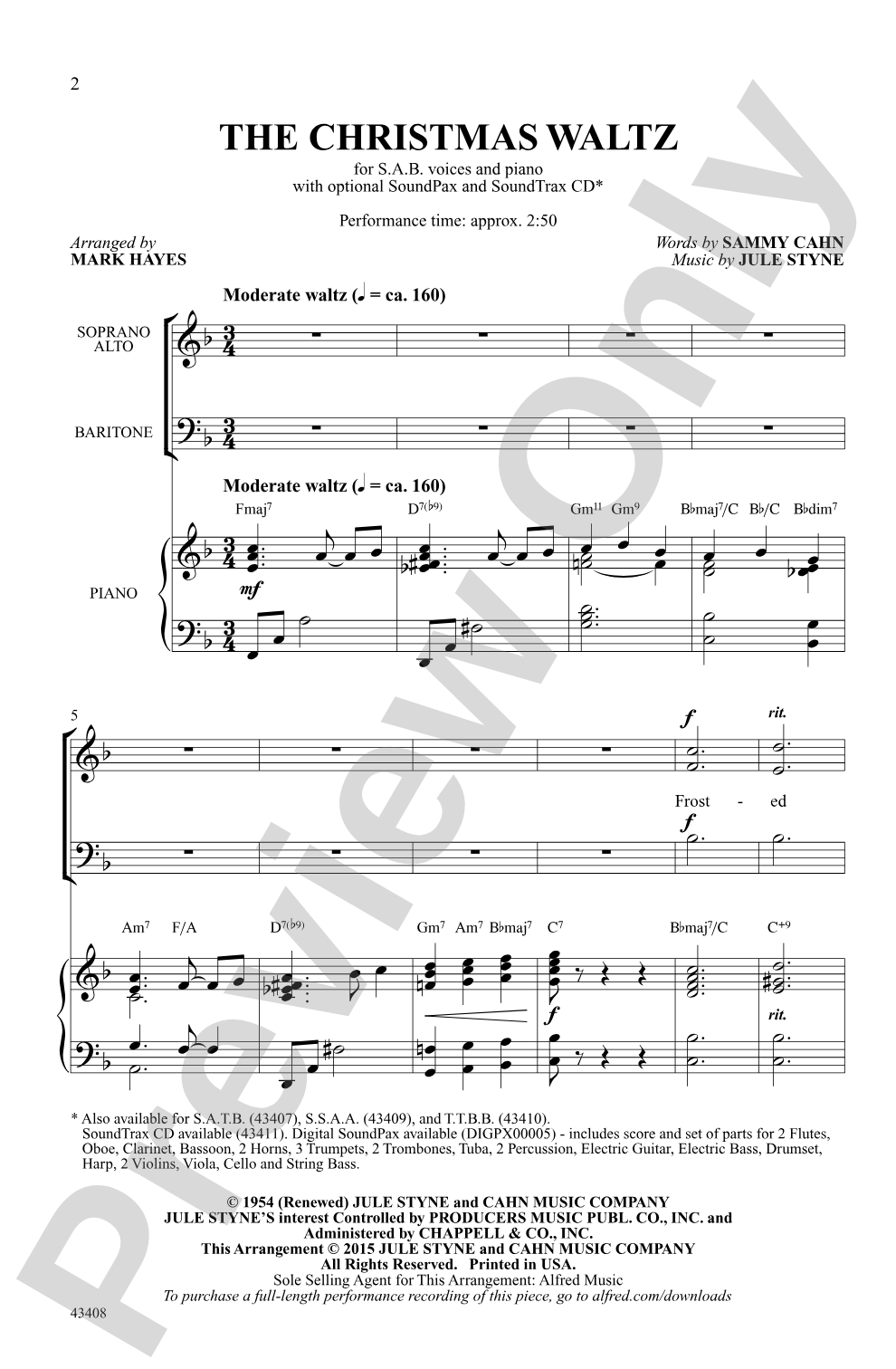
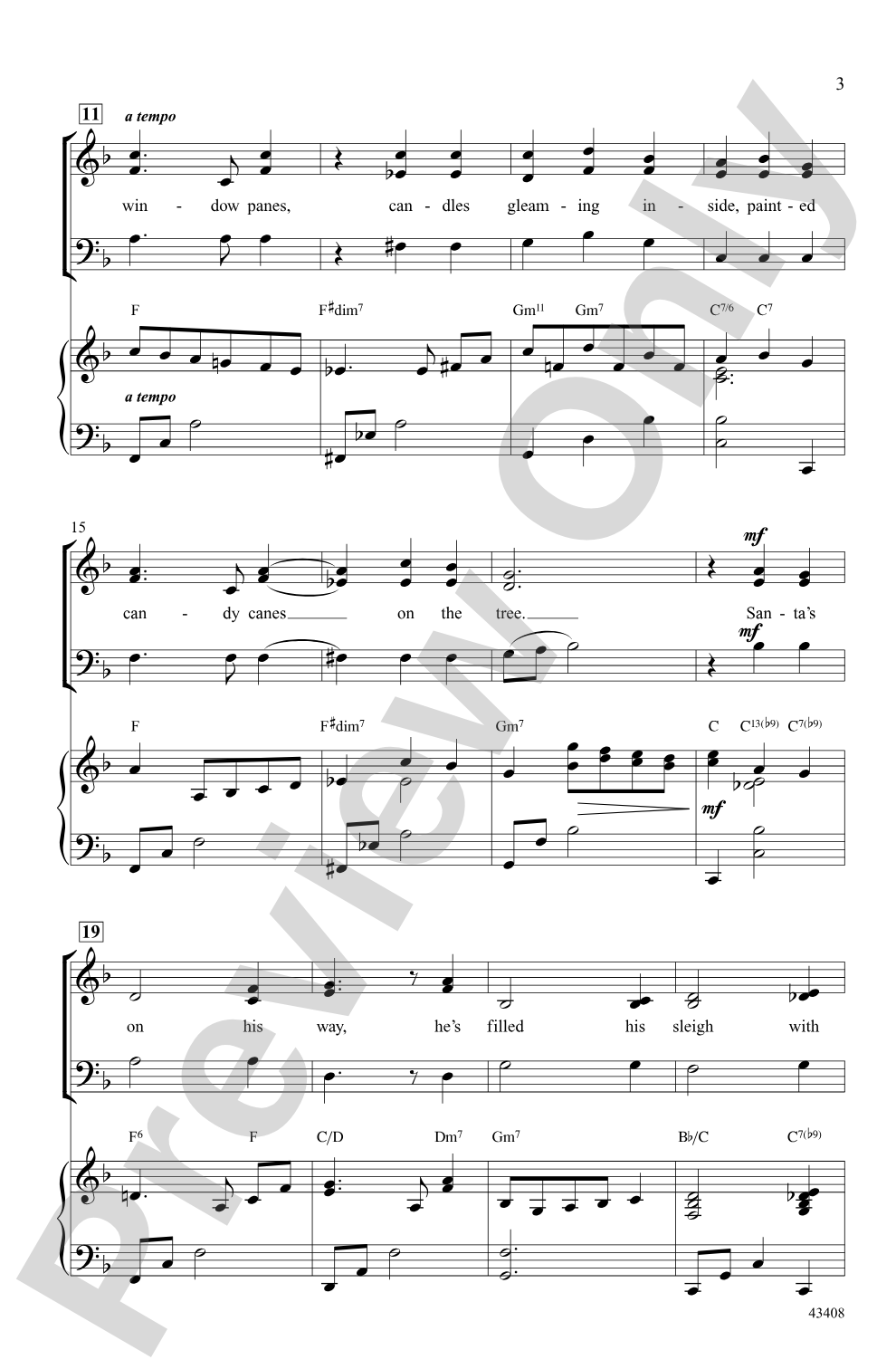
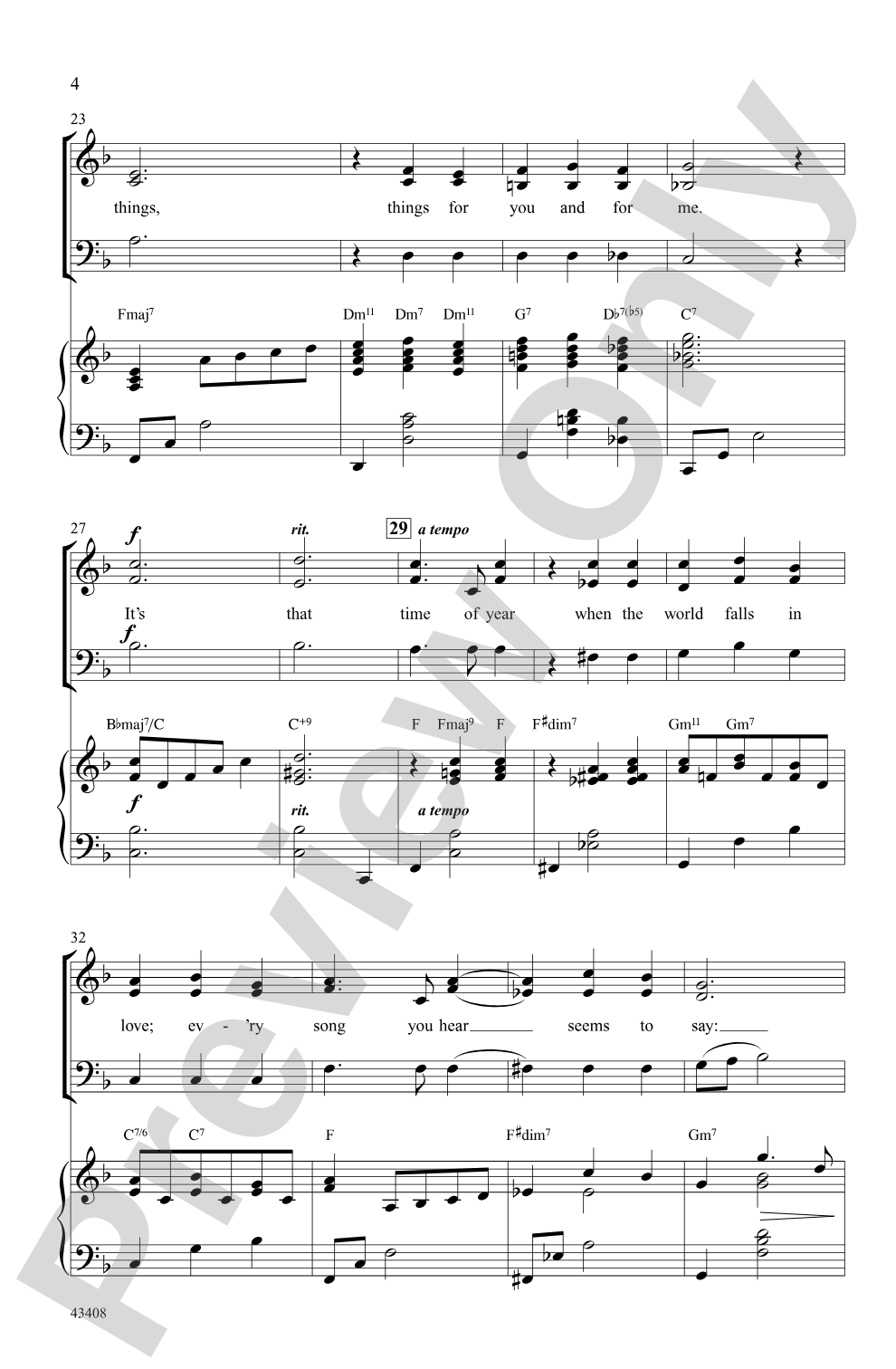

The Christmas Waltz: SAB Choral Octavo
Words by Sammy Cahn, music by Jule Styne / arr. Mark Hayes
Item: 00-PO-0003345
$2.00
Minimum order quantity: 20 copies
One moment…
Related Items
The Christmas Waltz: SATB Choral Octavo |
$2.10
|
View | |
The Christmas Waltz: SSAA Choral Octavo |
$2.00
|
View | |
The Christmas Waltz: TTBB Choral Octavo |
$2.00
|
View | |
The Christmas Waltz: Choral Octavo Digital SoundPax |
$65.00
|
View | |
The Christmas Waltz: SoundTrax Digital Audio Download |
$29.99
|
View | |
The Christmas Waltz: SATB Choral Octavo |
$2.10
|
View | |
The Christmas Waltz: SAB Choral Octavo |
$2.00
|
View | |
The Christmas Waltz: SSAA Choral Octavo |
$2.00
|
View | |
The Christmas Waltz: Choral Octavo SoundTrax CD |
$29.99
|
View |
Description
Originally written for and premiered by Frank Sinatra as the B-side of his "White Christmas" recording, this holiday favorite has been covered by more than forty artists, including Rosemary Clooney, Tony Bennett, Kristin Chenoweth, and Harry Connick Jr. "Frosted windowpanes . . ."


The Christmas Waltz: SAB Choral Octavo isn't in MakeMusic Cloud just yet...but it could be. Let us know you'd like to see it, and you'll help shape what comes next. In the meantime, start a free trial and dive into thousands of interactive titles your students can play along with today.
Request This Title
Tell us you want it.
Start Your Free Trial
Explore everything that's ready to play right now.
Sample Audio
1
Audio File
--:--
0:00
0:00
Sample Video
No sample videos found.
Additional Details
Series:
Alfred Pop Choral Series
Publisher:
Alfred Music
Page Count:
12
SKU:
00-PO-0003345
More about this title
About the Composer: Jule Styne
Jule Styne (1905-1975) composed music for more than thirty Broadway musicals and wrote hundreds of songs for film and television. His gift for melody and harmonic sophistication made him one of the most recorded composers of the twentieth century. "The Christmas Waltz," written with lyricist Sammy Cahn, exemplifies Styne's ability to craft elegant, singable melodies that endure across generations and genres.
Styne's work appears regularly in choral and educational settings because his songs balance accessibility with musical substance. Directors return to his compositions year after year, drawn to their clear structure, memorable hooks, and the emotional directness that makes them rewarding for singers of varying experience levels.
Why we love this
Mark Hayes's SAB arrangement respects the song's inherent sophistication while making it genuinely singable for three-part choirs. The waltz meter and Styne's flowing melody translate beautifully to this voicing, and the recorded accompaniment lets you focus rehearsal time on blend and phrasing rather than part independence. You get a piece that sounds polished and festive without demanding operatic technique.
What to expect
Elegant and unhurried, moving in graceful three-quarter time. The melody unfolds with a gentle lilt that suggests winter elegance rather than jolly cheer, and there's a romantic nostalgia in Styne's harmonic language that connects to the song's original Sinatra recording.
Who it's for
Choirs that want a recognizable holiday standard with immediate audience appeal. This works well for mixed choirs with limited rehearsal time and varying reading levels, as the SAB voicing and familiar tune keep preparation manageable.
How to get the most out of it
- Shape the melody with long-line phrasing rather than pushing individual phrases. Let the waltz meter guide the breath; resist breaking the tune into choppy segments.
- Balance the soprano line carefully against the alto and baritone parts, which provide harmonic color. The accompaniment will carry harmonic weight, so your choir's job is to sing the melody with grace and support the voicing with warm, blended tone.
- Work the intonation of the waltz rhythm early. The three-quarter feel can feel awkward if singers don't commit to it; lock it in during early rehearsals so it becomes automatic.
- Use the recorded accompaniment in rehearsal to anchor the harmonic context, but pull it away in final performances to let your singers own the sound and establish dynamic control.
How to use it
Program this in the second half of a holiday concert, where it can serve as a transitional moment between more energetic pieces and quieter closing selections. Its sophistication makes it work equally well in secular pops concerts or as part of a mixed seasonal program where you want something recognizable but musically substantive.
Skills your students will build
- Singing in 3/4 meter with consistent, lilting rhythm
- Balancing melody line against secondary vocal parts
- Sustaining long phrases with supported tone
- Responding to dynamic shape in a melody-driven arrangement
- Matching intonation within three-part harmony