

The Christmas Waltz: SATB Choral Octavo
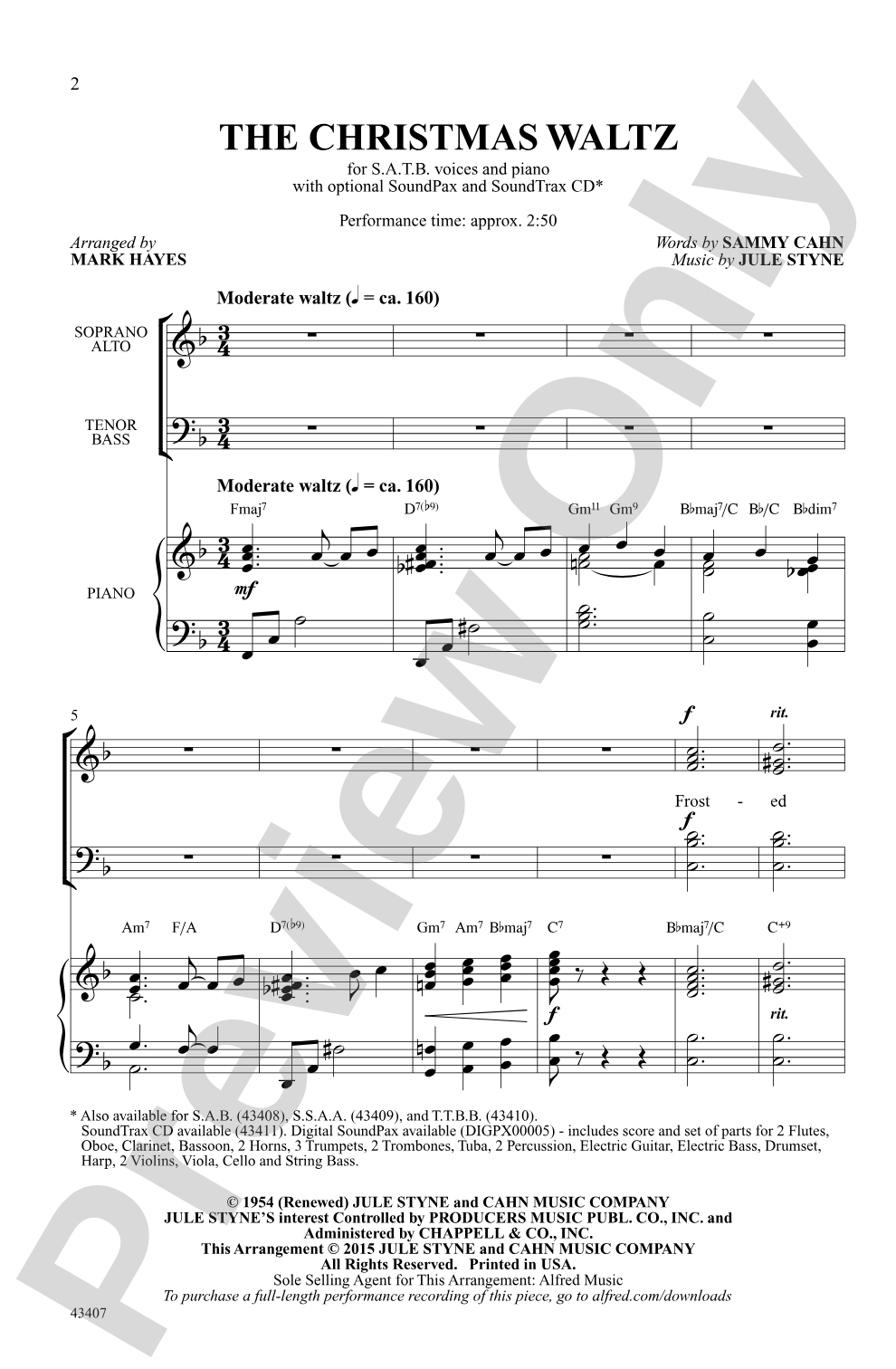
Words by Sammy Cahn, music by Jule Styne / arr. Mark Hayes
Item: 00-PO-0003344

$2.10
Minimum order quantity: 20 copies
One moment…
Related Items
The Christmas Waltz: SAB Choral Octavo |
$2.00
|
View | |
The Christmas Waltz: SSAA Choral Octavo |
$2.00
|
View | |
The Christmas Waltz: TTBB Choral Octavo |
$2.00
|
View | |
The Christmas Waltz: Choral Octavo Digital SoundPax |
$65.00
|
View | |
The Christmas Waltz: SoundTrax Digital Audio Download |
$29.99
|
View | |
The Christmas Waltz: SATB Choral Octavo |
$2.10
|
View | |
The Christmas Waltz: SAB Choral Octavo |
$2.00
|
View | |
The Christmas Waltz: Choral Octavo SoundTrax CD |
$29.99
|
View |
Description
Originally written for and premiered by Frank Sinatra as the B-side of his "White Christmas" recording, this holiday favorite has been covered by more than forty artists, including Rosemary Clooney, Tony Bennett, Kristin Chenoweth, and Harry Connick Jr. "Frosted windowpanes . . ."


Don't just read it, hear it, play along with it, and watch your students grow with it. In MakeMusic Cloud, The Christmas Waltz: SATB Choral Octavo comes alive with professional accompaniment, adjustable tempo, and built-in practice tools that turn solo practice into real progress.
Open in the Player
Jump straight in and assign it today.
Start Your Free Trial
Open this title and explore the full library in minutes.
Sample Audio
1
Audio File
--:--
0:00
0:00
Sample Video
Additional Details
Series:
Alfred Pop Choral Series
Publisher:
Alfred Music
Page Count:
12
SKU:
00-PO-0003344
More about this title
About the Composer: Jule Styne
Jule Styne (1905-1975) was a prolific composer who shaped American musical theater and popular song across five decades. His melodies combined operatic sophistication with infectious catchiness, making him a natural fit for both Broadway (Gypsy, Funny Girl, Bells Are Ringing) and Hollywood film scores. Styne's gift for writing singable, memorable lines earned him two Academy Awards and deep respect from musicians across genres.
For choral directors, Styne's music offers elegant melodic material that sits well in the voice. His harmonic language is sophisticated without being forbidding, and his sense of phrasing rewards careful attention from singers. "The Christmas Waltz" exemplifies his ability to craft a tune that feels timeless and accessible at once.
Why we love this
Mark Hayes's arrangement captures the sophistication of Styne's melody while keeping the piece genuinely singable for mixed choirs of varying skill levels. The harmonization is elegant without getting bogged down, and the vocal writing sits comfortably across all four parts. With recorded accompaniment available, this becomes an excellent choice for groups seeking a polished holiday number that doesn't require a pianist or full orchestra.
What to expect
Elegant and intimate despite its orchestral history. The waltz rhythm creates a gentle forward motion that feels both nostalgic and contemporary, somewhere between a ballroom and a quiet evening at home. Styne's melody unfolds with the ease of a classic standard, warmly supported by Hayes's full harmonic textures.
Who it's for
This octavo works for community choirs, high school show choirs, college recreational ensembles, and church holiday programs seeking sophisticated but accessible repertoire. It's an excellent choice when you want something more refined than typical Christmas pop arrangements but less demanding than concert-level choral literature.
How to get the most out of it
- Shape the melody phrases generously; resist rushing through the waltz rhythm, which can flatten under time pressure. Let the sopranos breathe the line.
- Balance the inner voices carefully so the harmonic movement supports rather than obscures the primary tune. Mark Hayes layers the texture thoughtfully, but careless balance will muddy it.
- Record yourself or use the accompaniment track in rehearsal so singers hear the proper harmonic context early. This builds independence and confidence faster than a cappella drill.
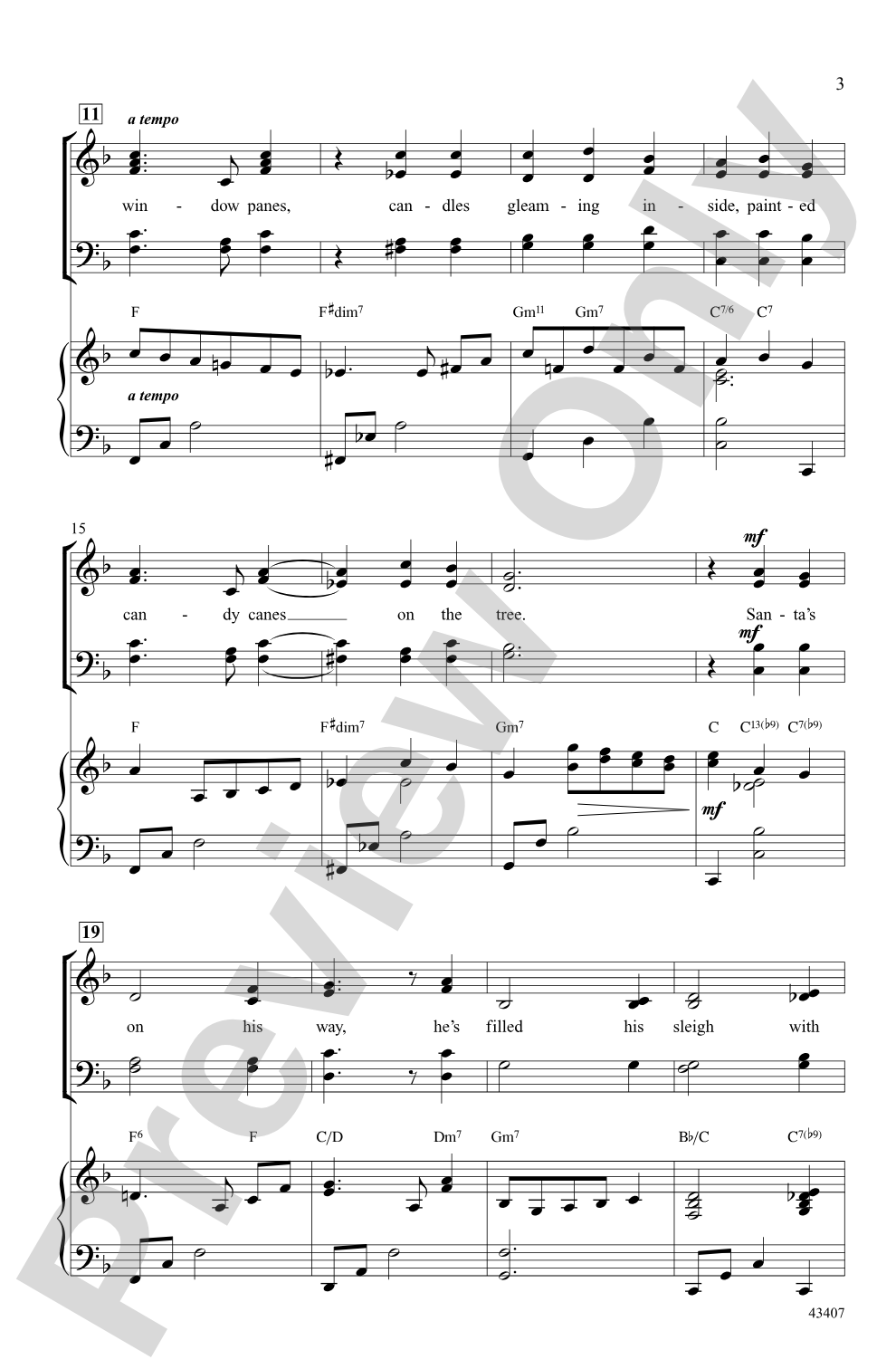
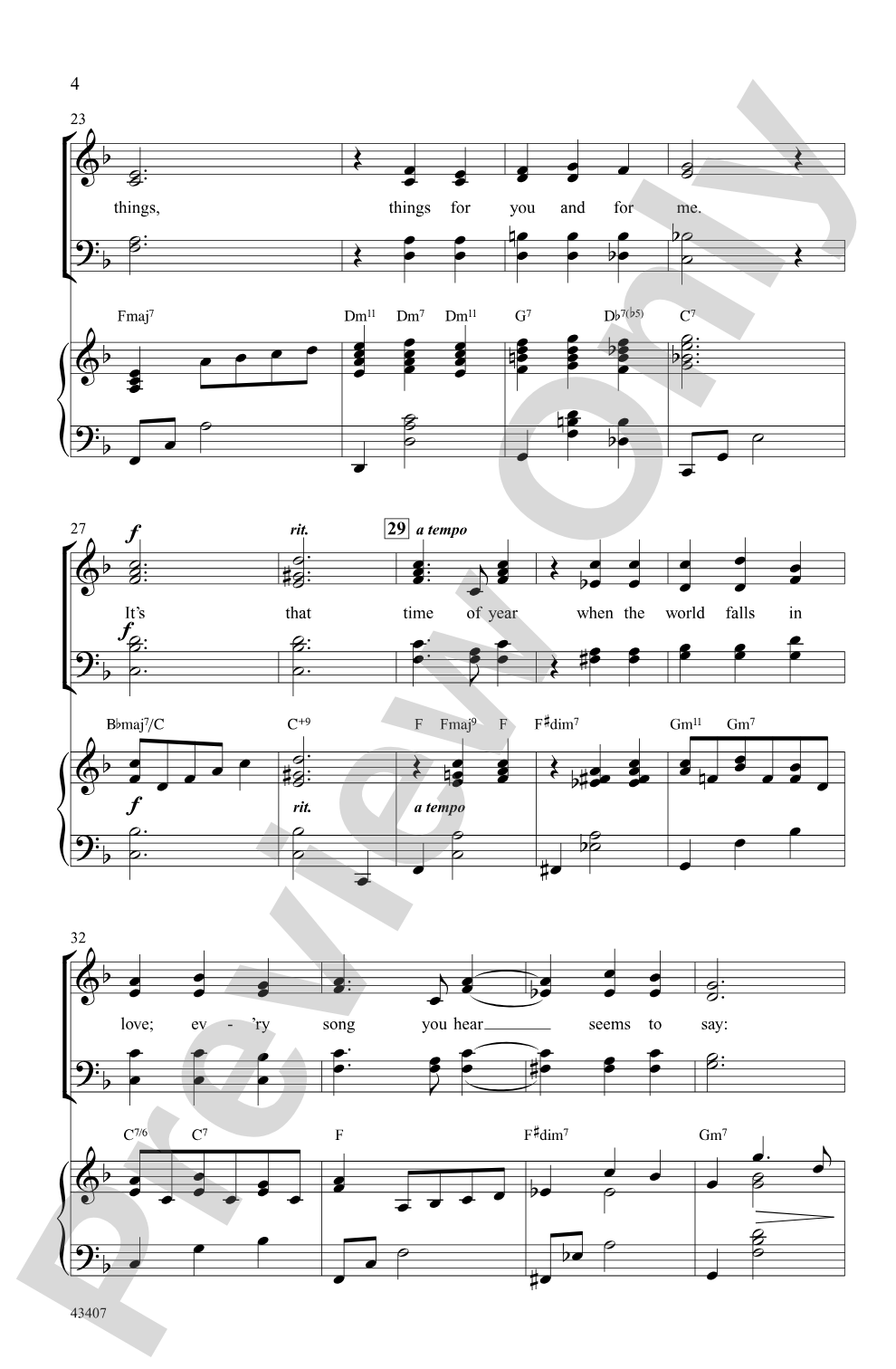
- Pay attention to the text painting, especially around "frosted windowpanes" and similar imagery. The arrangement's elegance should be matched by warm, connected singing through the lyrics.
How to use it
Pair this with contrasting holiday fare (perhaps something more energetic or traditionally sacred) to round out a winter concert. It also serves as a sophisticated opener or closer for a holiday pops show, giving audiences a touch of old-Hollywood glamour alongside contemporary selections. The availability of instrumental parts makes it flexible for accompanying forces ranging from piano alone to a small ensemble.
Skills your students will build
- Singing 3/4 meter with stylistic control and forward phrasing
- Balancing inner harmony voices to support the main melody
- Connecting text and music for expressive communication
- Reading multi-part SATB voicing with appropriate blend and balance