
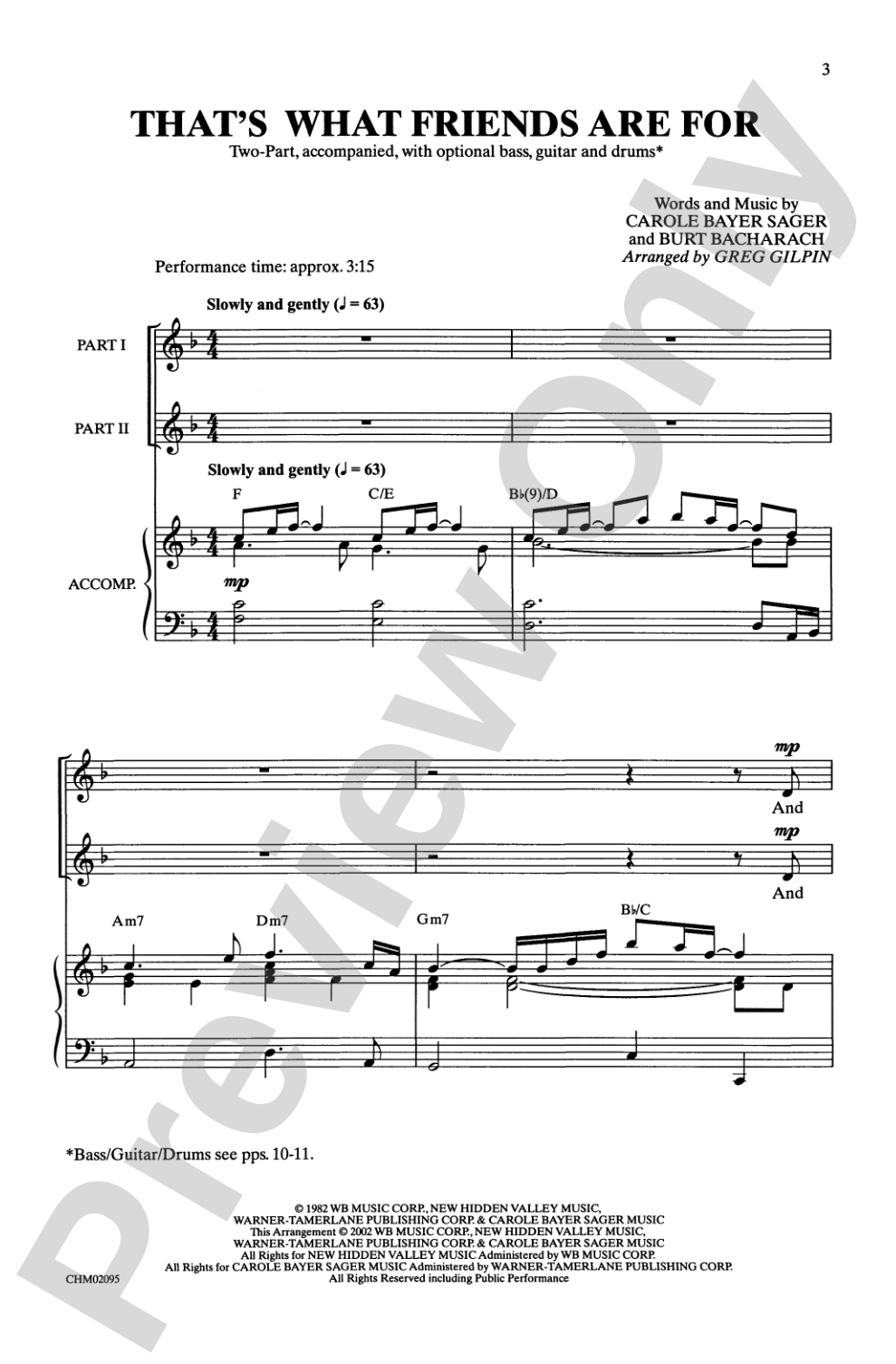
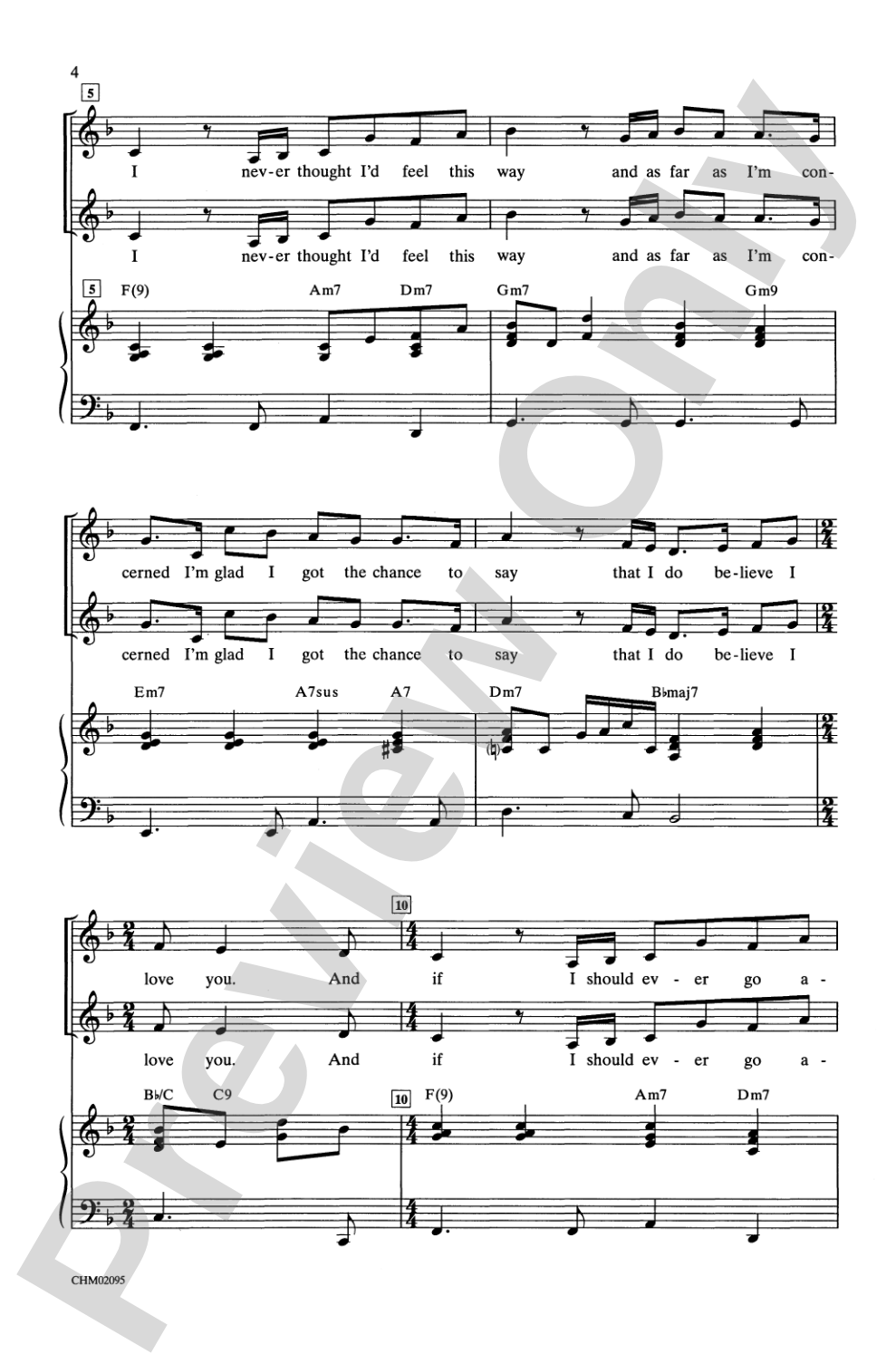

That's What Friends Are For: 2-Part Choral Octavo
Words and music by Carole Bayer Sager and Burt Bacharach / arr. Greg Gilpin
Level: Moderate
Item: 00-PO-0004817
$2.25
Minimum order quantity: 20 copies
One moment…
Related Items
That's What Friends Are For: SATB Choral Octavo |
$2.25
|
View | |
That's What Friends Are For: 3-Part Mixed Choral Octavo |
$2.25
|
View | |
That's What Friends Are For: SATB Choral Octavo |
$2.25
|
View | |
That's What Friends Are For: 3-Part Mixed Choral Octavo |
$2.25
|
View | |
That's What Friends Are For: 2-Part Choral Octavo |
$2.25
|
View | |
That's What Friends Are For: Choral Octavo SoundTrax CD |
$27.99
|
View |
Description


That's What Friends Are For: 2-Part Choral Octavo isn't in MakeMusic Cloud just yet...but it could be. Let us know you'd like to see it, and you'll help shape what comes next. In the meantime, start a free trial and dive into thousands of interactive titles your students can play along with today.
Request This Title
Tell us you want it.
Start Your Free Trial
Explore everything that's ready to play right now.
Sample Audio
No sample audio found.
Sample Video
No sample videos found.
Additional Details
Series:
Alfred Archive Edition: Alfred Pop Choral Series
Publisher:
Alfred Music
Page Count:
12
SKU:
00-PO-0004817
More about this title
About the Composer: Carole Bayer Sager
Carole Bayer Sager is a Grammy Award-winning songwriter and composer whose catalog spans decades of popular music. She has written or cowritten hits across multiple genres, from soft rock to film scores, and brings a sophisticated harmonic sensibility to accessible melodies that resonate with broad audiences.
Why we love this
Greg Gilpin's arrangement captures the warmth and sincerity of this beloved standard while keeping the writing lean and singable for younger choirs. The 2-part voicing sits comfortably in a moderate range, and the harmonic sophistication never overwhelms the emotional directness of the song. Audiences recognize it immediately, which means your singers get the satisfaction of performing a song people genuinely love.
What to expect
Gentle and contemplative, with an undercurrent of quiet strength. The song settles into a comfortable range and builds gradually, creating space for reflection rather than spectacle. Even at moderate difficulty, it conveys genuine warmth and sincerity that resonates with singers and listeners alike.
Who it's for
Middle school and early high school choirs looking for a quality pop arrangement with real emotional weight. This works equally well for mixed-ability choirs and specialized treble or lower voice ensembles, since the writing accommodates different comfort zones without sacrificing musicality.
How to get the most out of it
- Balance the melody between the two parts so neither dominates; this is fundamentally about shared expression, not solo spotlight.
- Let the recorded accompaniment do the harmonic heavy lifting while your singers focus on warm tone quality and gentle phrasing.
- Shape the phrases around the lyrics rather than the bar lines; Bayer Sager's songwriting rewards conversational, natural breathing.
- Avoid oversinging dynamic markings in the middle sections; restraint makes the emotional moments land harder.
How to use it
Use this as a concert centerpiece during winter or spring shows; its lyrical grace and recognizable melody make it an ideal complement to more energetic pop numbers or classical selections. It also works beautifully as a closing piece, leaving audiences with a sense of connection and gratitude.
Skills your students will build
- Blending two independent melodic lines at moderate tempos
- Interpreting pop phrasing within a choral context
- Sustaining warm, supported tone through longer phrases
- Balancing part independence with ensemble cohesion