

That's All: SAB Choral Octavo
Words and music by Bob Haymes and Alan Brandt / arr. Kirby Shaw
Item: 00-PO-0007893
$2.65
Minimum order quantity: 20 copies
Pickup currently not available
Related Items
That's All: SATB Choral Octavo |
$2.65
|
View | |
That's All: SSA Choral Octavo |
$2.65
|
View | |
That's All: Choral SoundPax Digital Download |
$15.00
|
View | |
That's All: SATB Choral Octavo |
$2.65
|
View | |
That's All: SAB Choral Octavo |
$2.65
|
View | |
That's All: SSA Choral Octavo |
$2.65
|
View | |
That's All: Choral Octavo SoundTrax CD |
$29.99
|
View |
Description
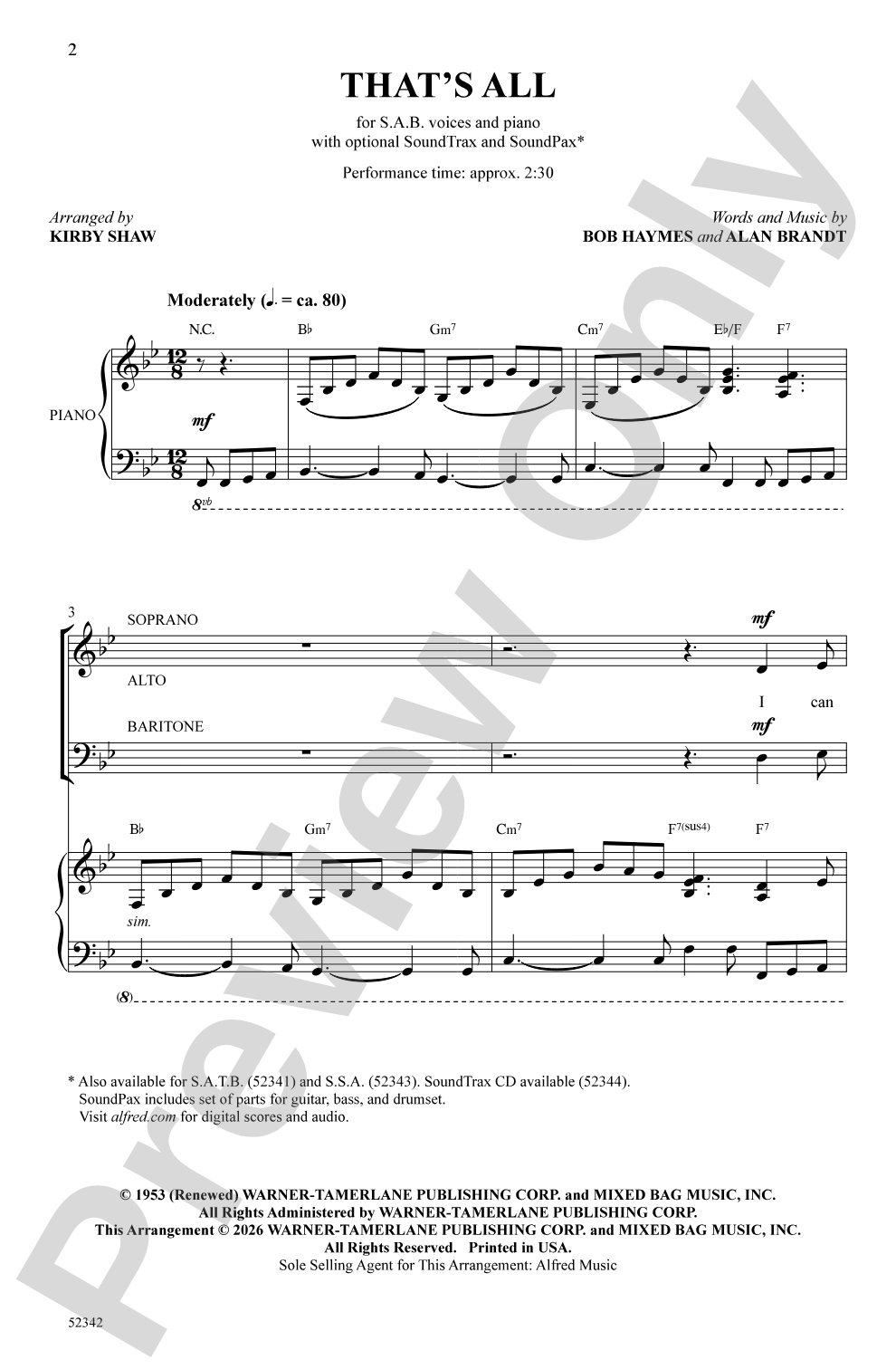
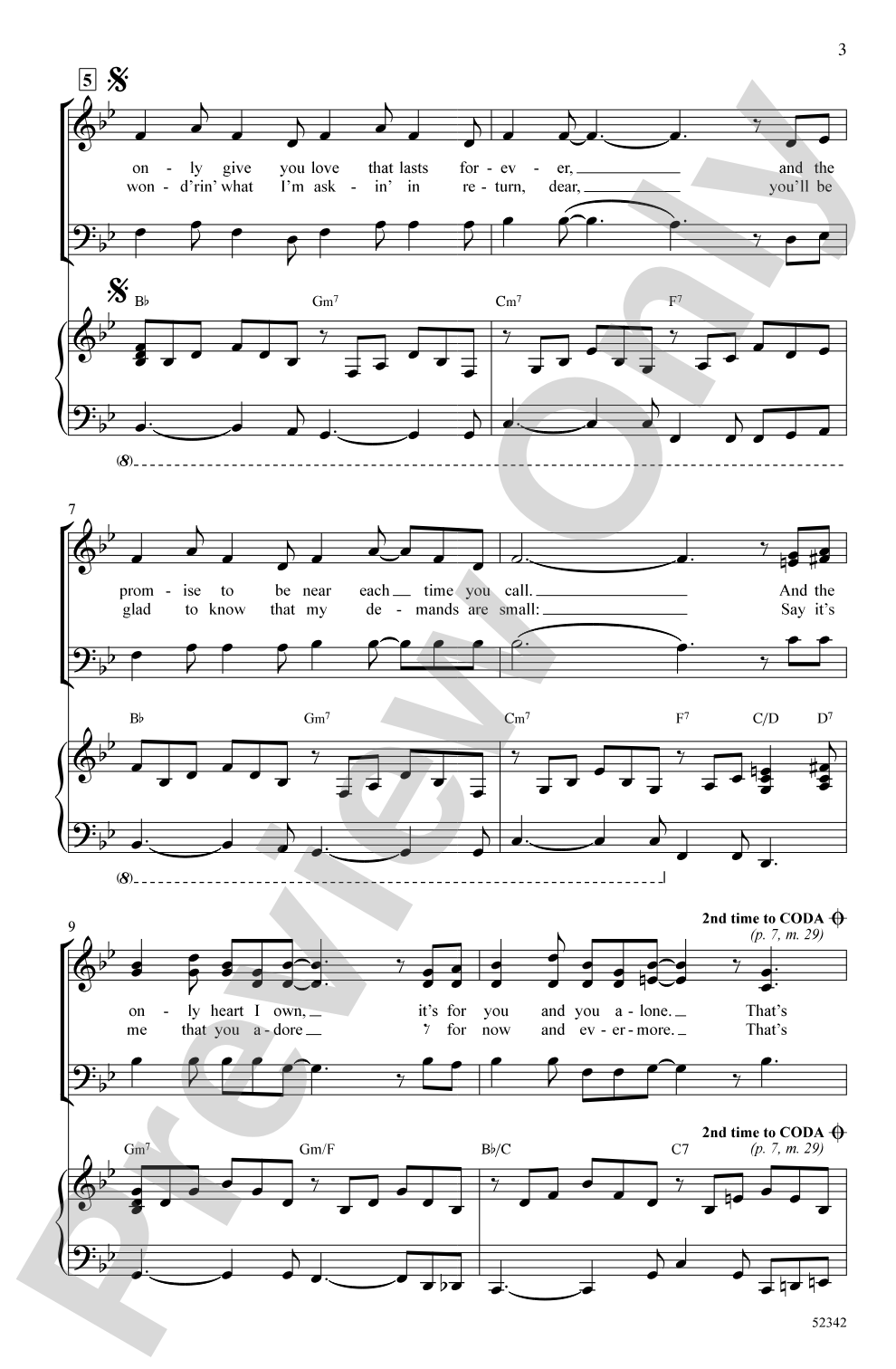
Romantic and nostalgic, this lush setting of the 1950s standard captures a warm jazz aesthetic in a flowing 12/8 meter. The accessible arrangement comes in a variety of voicings designed for teens or adults new to the style. Sing with guitar, bass, and drumset (SoundPax available) on your pop program at any time of year. "I can only give you love that lasts forever . . . that's all."


That's All: SAB Choral Octavo isn't in MakeMusic Cloud just yet...but it could be. Let us know you'd like to see it, and you'll help shape what comes next. In the meantime, start a free trial and dive into thousands of interactive titles your students can play along with today.
Request This Title
Tell us you want it.
Start Your Free Trial
Explore everything that's ready to play right now.
Sample Audio
1
Audio File
--:--
0:00
0:00
Sample Video
Additional Details
Series:
Alfred Pop Choral Series
Publisher:
Alfred Music
Page Count:
8
SKU:
00-PO-0007893
More about this title
About the Composer: Bob Haymes
Bob Haymes (1919-1989) was an American lyricist, composer, and singer whose career spanned radio, film, and popular music. He co-wrote "That's All" with Alan Brandt in 1953, crafting one of the Great American Songbook's most enduring standards. His gift for memorable melodies and emotionally direct lyrics made him a sought-after songwriter for Hollywood and the recording industry.
Haymes understood how to write for the human voice with warmth and accessibility. His songs have been recorded by countless artists across generations, and "That's All" remains a touchstone for jazz and pop vocalists seeking material that balances sophistication with sincerity.
Why we love this
Kirby Shaw's arrangement brings a jazz-inflected elegance to this 1950s standard without overwhelming singers new to the style. The 12/8 meter and three-part voicing create a warm, flowing sound that sits naturally for SAB choirs, and the built-in flexibility with SoundPax accompaniments means you can program this on a pop concert, a jazz night, or a cabaret-style event with equal confidence.
What to expect
Nostalgic and intimate, with the unhurried warmth of a late-night jazz club. The lush harmonies and flowing 12/8 rhythm create a sense of romantic resignation; there's elegance in simplicity, and comfort in the melody's familiar curves. Singers feel supported by rich chords while the lyrical content invites genuine emotional investment.
Who it's for
SAB choirs working with teens or adults who are discovering jazz standards and popular repertoire for the first time. The accessible voicing and familiar harmonic language make it ideal for community choirs, school show choirs, and programs looking to expand beyond classical repertoire.
How to get the most out of it
- Shape the 12/8 meter with gentle swing eighth notes rather than straight rhythms; listen to the recorded accompaniment to absorb the groove before rehearsal.
- Balance the harmonic texture by keeping inner voices warm and connected; these parts support the melody without stepping forward.
- Approach the lyrical moments with conversational phrasing; "that's all" should feel like a tender reflection, not a punch line.
- If using the instrumental accompaniment, ensure the rhythm section locks in before full ensemble rehearsals so singers can relax into the groove.
How to use it
Pair this with other Great American Songbook standards or contemporary jazz arrangements to create a cohesive pop or jazz concert set. It also works beautifully as a closing number when you want to leave the audience with warmth and reflection. The relaxed groove makes it an excellent choice for spring or fall programming when you're balancing energetic pop tunes with something more introspective.
Skills your students will build
- Singing in compound meter (12/8) with rhythmic independence
- Interpreting swing rhythm and jazz phrasing conventions
- Sustaining harmonic awareness in three-part voicing
- Balancing melody and inner voices in a jazz texture
- Responding to groove-based accompaniment without pulling or rushing