
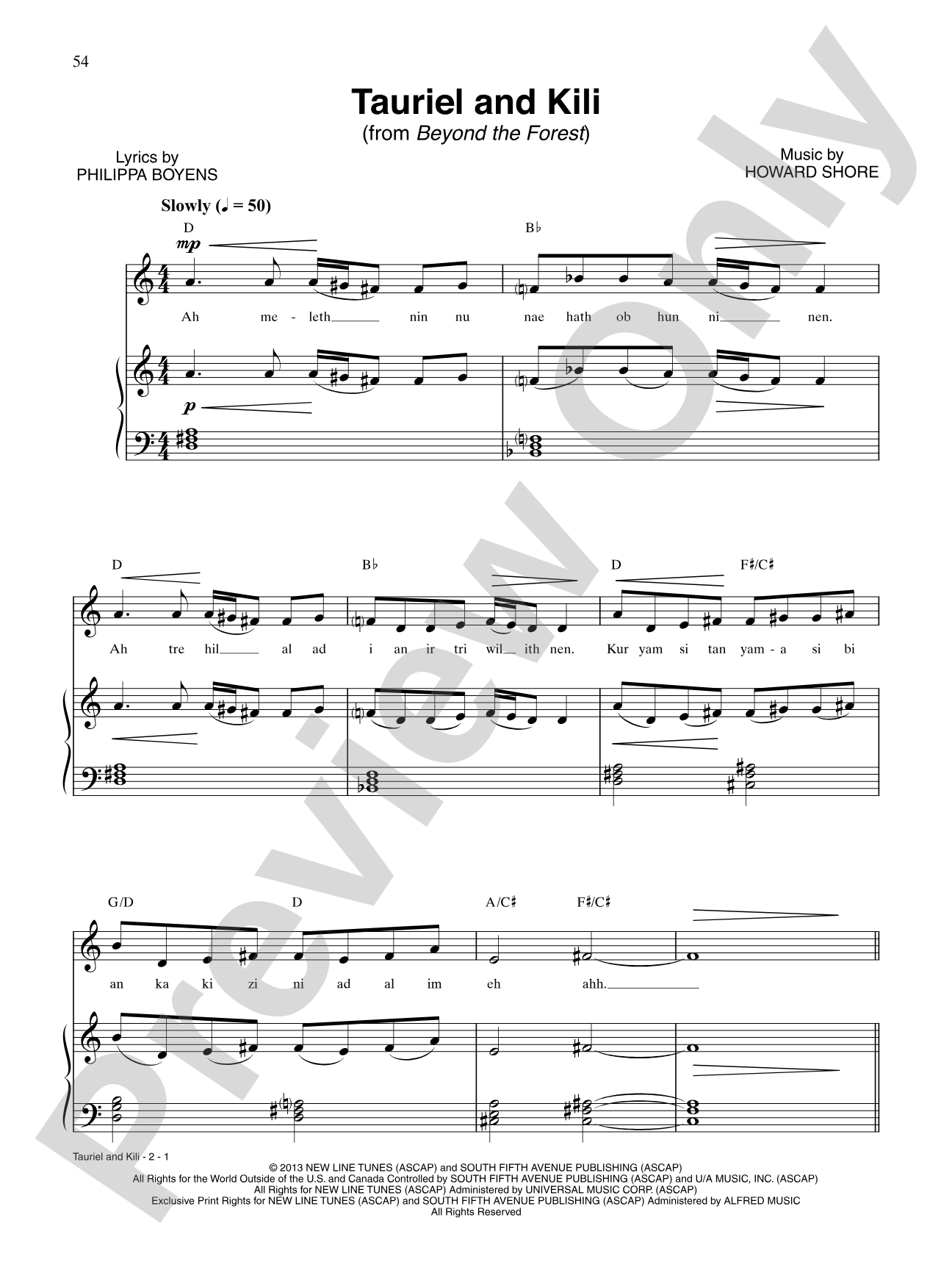
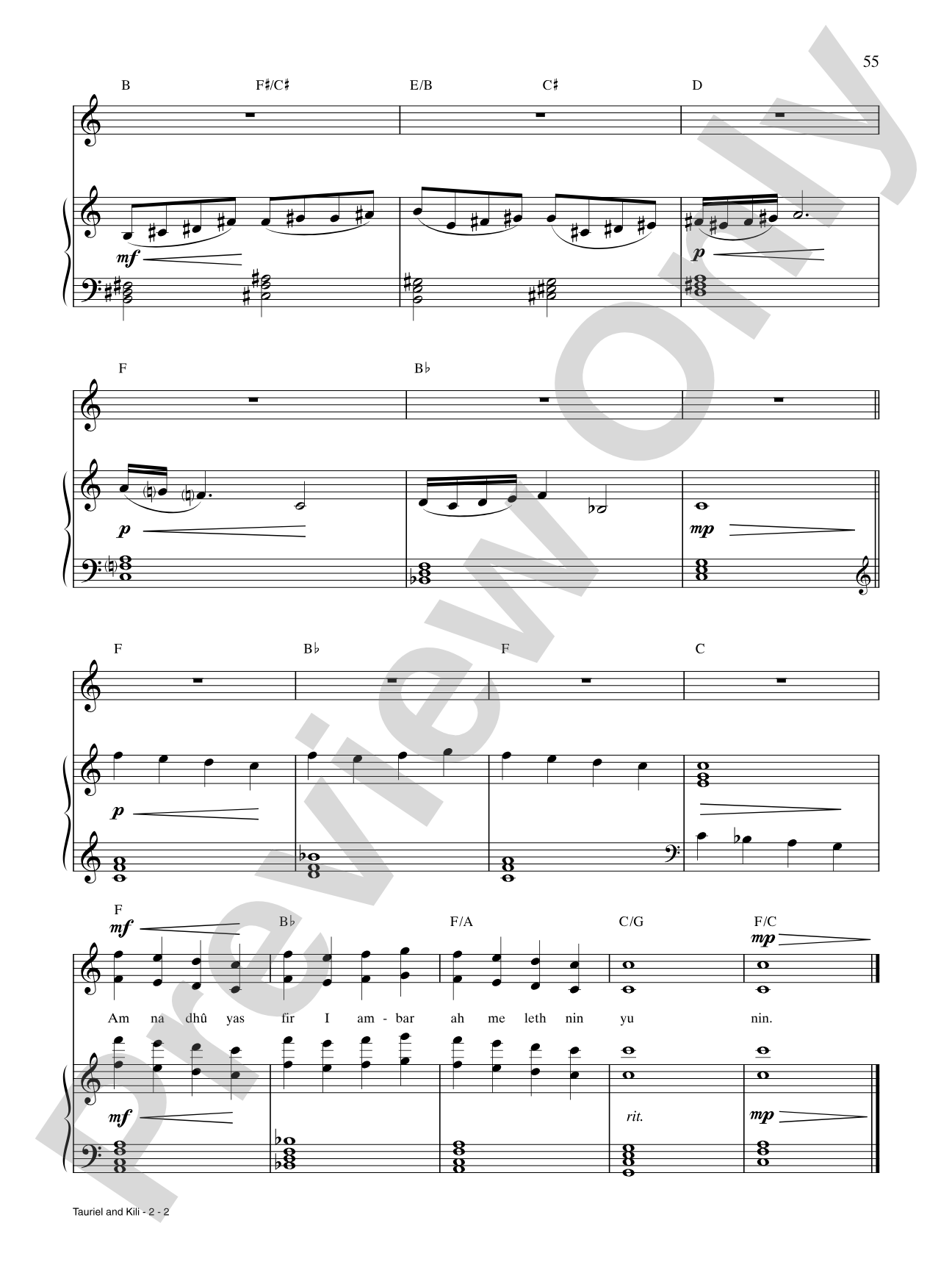

Tauriel and Kili (from The Hobbit: The Desolation of Smaug): Piano/Vocal/Chords
Sheet Music Selections from the Original Motion Picture Soundtrack
Music composed by Howard Shore
Item: 00-PS-0015926
$9.99
Pickup currently not available
Related Items
The Quest for Erebor (from The Hobbit: The Desolation of Smaug): Piano |
$4.99
|
View | |
Erebor (from The Hobbit: The Desolation of Smaug): Piano |
$4.99
|
View | |
Bree (from The Hobbit: The Desolation of Smaug): Piano |
$4.99
|
View | |
Beorn (from The Hobbit: The Desolation of Smaug): Piano |
$4.99
|
View | |
A Necromancer (from The Hobbit: The Desolation of Smaug): Piano |
$4.99
|
View | |
The Woodland Realm (from The Hobbit: The Desolation of Smaug): Piano |
$4.99
|
View | |
Feast of Starlight (from The Hobbit: The Desolation of Smaug): Piano/Vocal/Chords |
$4.99
|
View | |
Bard A Man of Lake-town (from The Hobbit: The Desolation of Smaug): Piano |
$4.99
|
View | |
Thrice Welcome (from The Hobbit: The Desolation of Smaug): Piano |
$4.99
|
View | |
Bard and Family (from The Hobbit: The Desolation of Smaug): Piano |
$4.99
|
View | |
Lake-town (from The Hobbit: The Desolation of Smaug): Piano |
$4.99
|
View | |
Girion Lord of Dale (from The Hobbit: The Desolation of Smaug): Piano |
$4.99
|
View | |
Girion and Bard (from The Hobbit: The Desolation of Smaug): Piano |
$4.99
|
View | |
Lake-town Bard (from The Hobbit: The Desolation of Smaug): Piano |
$4.99
|
View | |
House of Durin (from The Hobbit: The Desolation of Smaug): Piano |
$4.99
|
View | |
Smaug (from The Hobbit: The Desolation of Smaug): Piano |
$4.99
|
View | |
I See Fire (from The Hobbit: The Desolation of Smaug): Piano/Vocal/Chords |
$4.99
|
View | |
Beyond the Forest (from The Hobbit: The Desolation of Smaug): Piano/Vocal/Chords |
$4.99
|
View | |
The Hobbit: The Desolation of Smaug: Piano/Vocal Book |
$19.99
|
View |
Description
With The Hobbit: The Desolation of Smaug, audiences worldwide were transported back to Middle-earth for more thrills and adventure. This officially licensed sheet music collection features 19 piano renditions of Howard Shore's masterful score. Pianists will have both classic and new themes from the epic journey right at their fingertips as they play. In addition to the piano arrangements, this beautifully produced souvenir folio features an array of colorful photos from the film. Titles: The Quest for Erebor * Erebor * Bree * Beorn * A Necromancer * Woodland Realm * Feast of Starlight * Bard, A Man of Lake-town * Thrice Welcome * Bard and Family * Lake-town * Girion, Lord of Dale * Girion and Bard * Lake-town Bard * House of Durin * Smaug * I See Fire * Tauriel and Kili * Beyond the Forest.


Tauriel and Kili (from The Hobbit: The Desolation of Smaug): Piano/Vocal/Chords isn't in MakeMusic Cloud just yet...but it could be. Let us know you'd like to see it, and you'll help shape what comes next. In the meantime, start a free trial and dive into thousands of interactive titles your students can play along with today.
Request This Title
Tell us you want it.
Start Your Free Trial
Explore everything that's ready to play right now.
Sample Audio
No sample audio found.
Sample Video
No sample videos found.
Additional Details
Publisher:
Alfred Music
Page Count:
64
SKU:
00-PS-0015926
More about this title
About the Composer: Howard Shore
Howard Shore is a three-time Academy Award-winning composer whose orchestral scores have shaped modern cinema. His work on Peter Jackson's The Lord of the Rings trilogy and The Hobbit films demonstrates his mastery of expansive, thematically rich composition that weaves together leitmotifs, folk influences, and symphonic depth.
Shore's approach to film scoring emphasizes melody and emotional clarity alongside technical sophistication, making his music both accessible to performers and rewarding to study. His scores function as complete musical narratives, which is why they translate so effectively to piano arrangements for educational and recreational musicians.
Why we love this
Shore's Middle-earth scores contain some of the most singable, musically coherent melodies in contemporary film music, and this collection captures 19 of them in accessible piano arrangements. The variety across the 64 pages gives pianists meaningful repertoire that ranges from intimate character themes to sweeping orchestral moments, all grounded in Shore's signature harmonic language. Pairing these pieces with film stills creates a natural bridge between cinema and music study, giving students visual context for the emotional arc they're learning to play.
What to expect
These pieces evoke the scale and wonder of Middle-earth, even when distilled to piano and voice. Shore's melodies carry an Old World quality blended with moments of genuine urgency and darkness, creating emotional variety across the collection. Whether tender (as in character moments like Tauriel and Kili) or propulsive (as in the quest themes), the music balances accessibility with harmonic sophistication.
Who it's for
This collection serves pianists who want to explore a substantial body of thematic material written by a master orchestrator, whether for recital programming, studio exploration, or simply the pleasure of playing film music they know and love. Pianists comfortable with intermediate to advanced repertoire will find arrangements that respect Shore's original compositional voice while making efficient use of the keyboard.
How to get the most out of it
- Shape the melodic lines with attention to where Shore places his emotional peaks; these themes often build gradually, and linear phrasing will flatten what makes them memorable.
- Treat the harmonic accompaniment as active support rather than filler; Shore's voicings frequently carry important color and forward motion that can be buried if chords are played mechanically.
- Reference the film's pacing if available; knowing whether a moment is tender, urgent, or majestic informs the tempo and tone you choose, especially in passages marked with tempo flexibility.
How to use it
Solo pianists can extract individual pieces for student or professional recitals, building a program around contrasting moods and tempos from the same compositional world. Voice students and singers with piano accompaniment will find vocal arrangements alongside the pure piano settings, offering flexibility for mixed recital formats. Teachers can assign selections strategically throughout a year to build students' familiarity with leitmotif technique and how composers create character through musical means.
Skills your students will build
- Recognizing and executing leitmotif development across different harmonic contexts
- Pedal control in arrangements that balance orchestral texture with clarity
- Interpreting tempo and phrasing in music written for film, where rubato and breathing differ from concert tradition
- Balancing melody and accompaniment when converting orchestral scoring to keyboard voicing
- Reading and performing vocal lines with piano support in theatrical contexts