
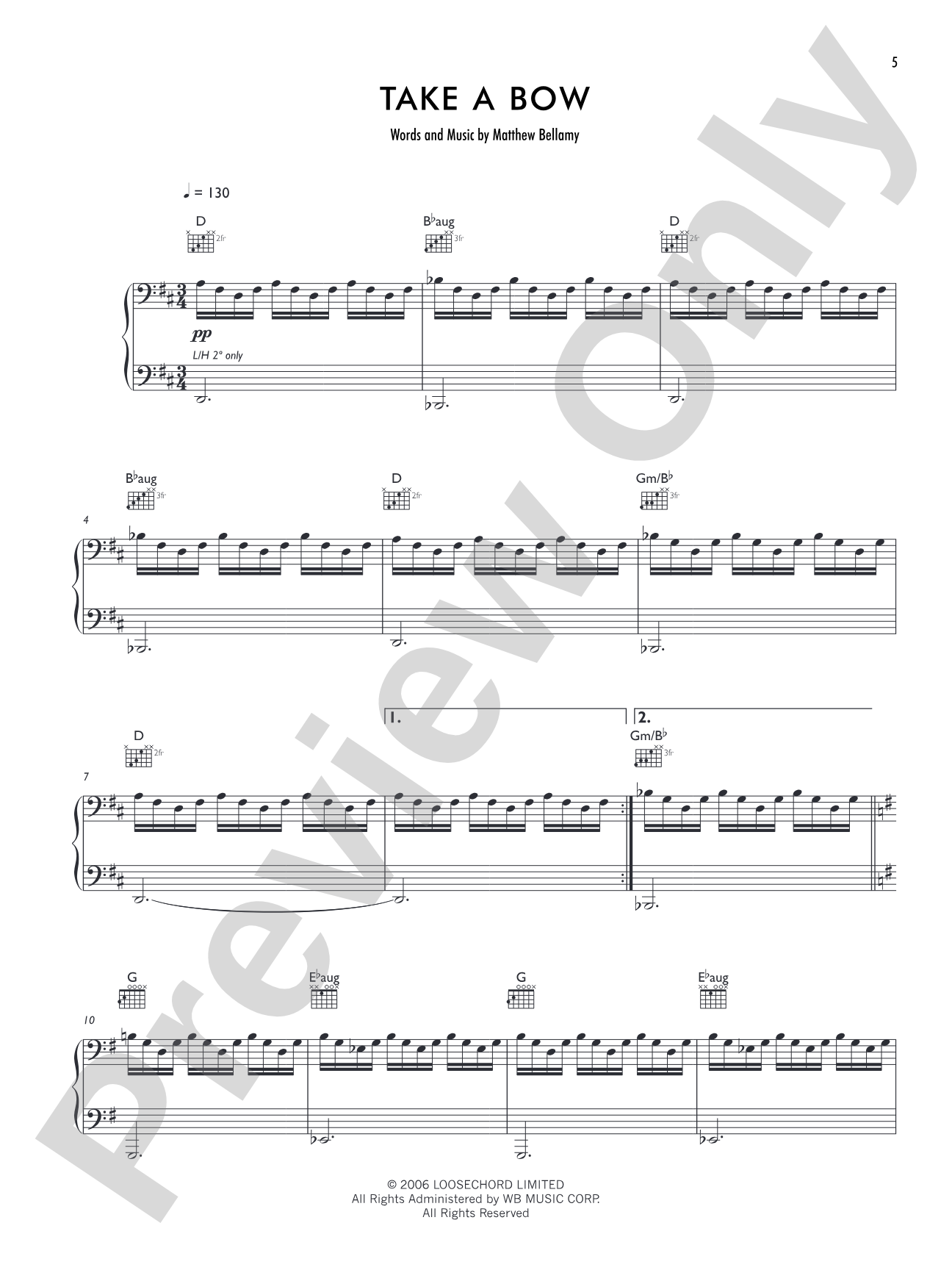
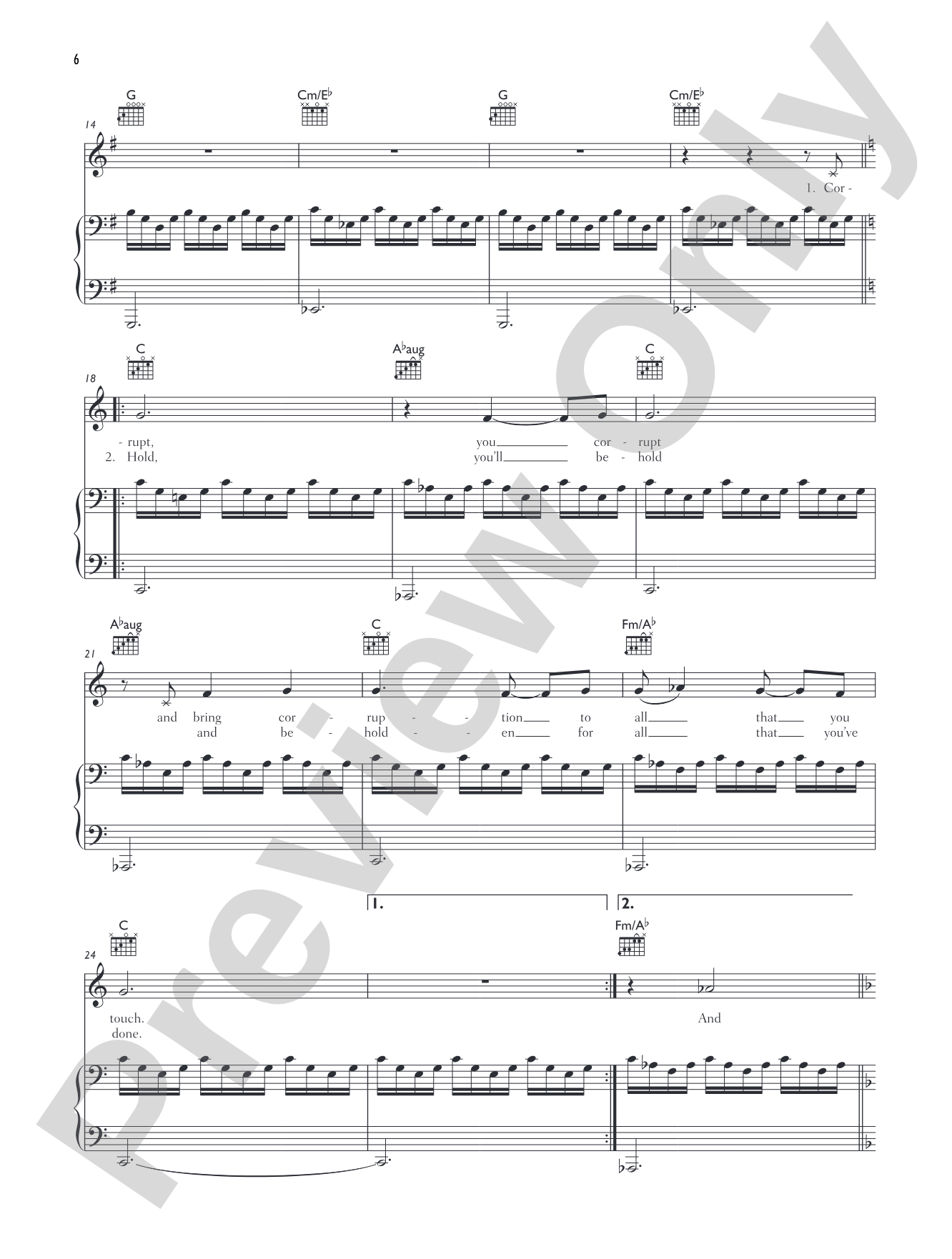
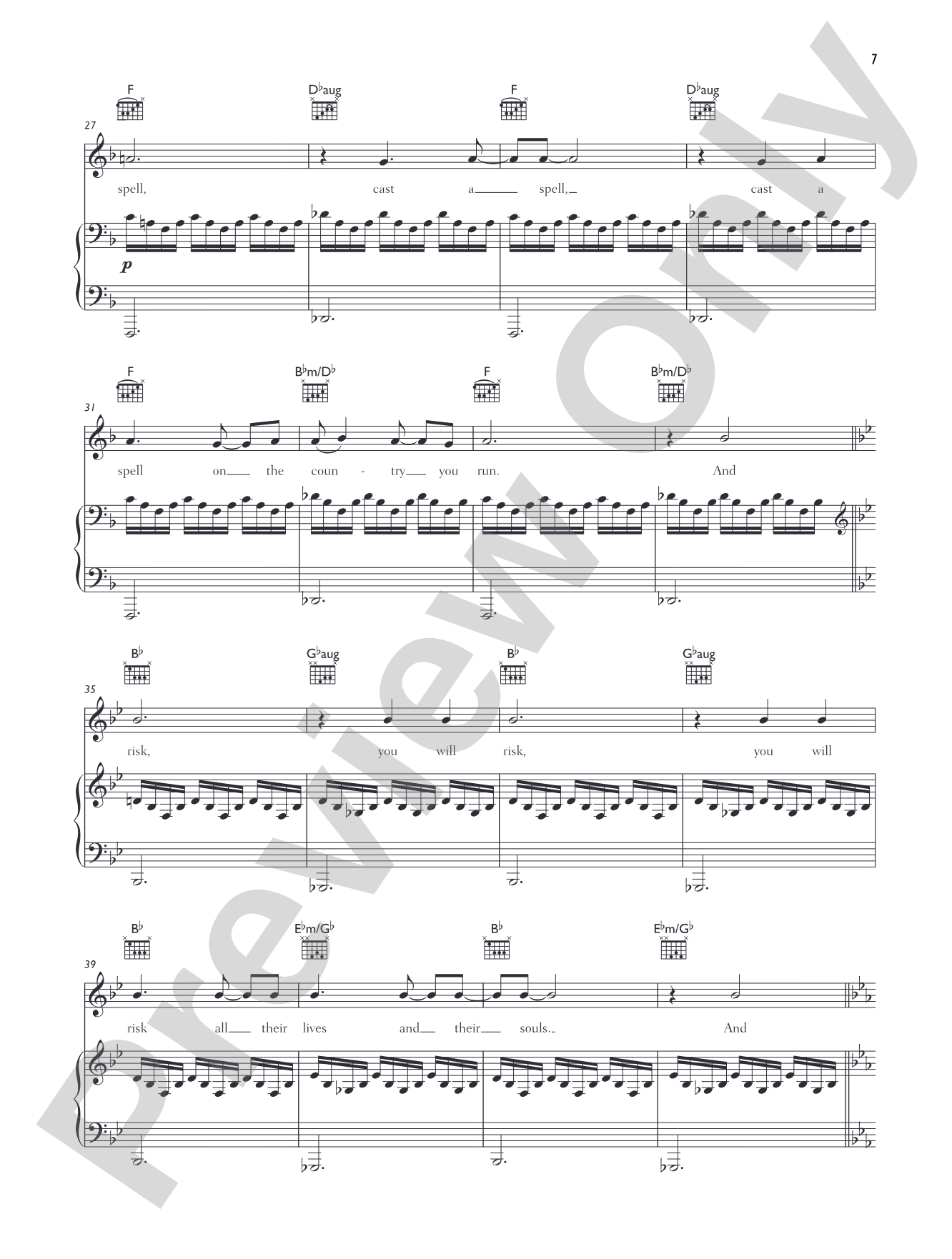

Take a Bow: Piano/Vocal/Chords
Muse
Item: 00-PS-0013160
$9.99
One moment…
Related Items
Map of the Problematique: Piano/Vocal/Chords |
$5.99
|
View | |
Soldier's Poem: Piano/Vocal/Chords |
$4.99
|
View | |
Invincible: Piano/Vocal/Chords |
$5.99
|
View | |
Assassin: Piano/Vocal/Chords |
$5.99
|
View | |
Exo-Politics: Piano/Vocal/Chords |
$5.99
|
View | |
City of Delusion: Piano/Vocal/Chords |
$4.99
|
View | |
Hoodoo: Piano/Vocal/Chords |
$4.99
|
View | |
Knights of Cydonia: Piano/Vocal/Chords |
$5.99
|
View |
Description
After years of being available only in guitar TAB format, the smash-hit 2006 Muse album Black Holes and Revelations is now available as a songbook for keyboardists! A "musician's album," Black Holes exemplifies the band's unique brand of progressive hard rock. This book captures the essential parts played by each instrument in the band and condenses them into arrangements playable on piano or keyboards. Vocal melodies, lyrics, and basic guitar chords are also included. This is sure to be a prized collectible for any Muse fan, and it makes a perfect gift. Titles: Take a Bow * Starlight * Supermassive Black Hole * Map of the Problematique * Soldier's Poem * Invincible * Assassin * Exo-Politics * City of Delusion * Hoodoo * Knights of Cydonia.


Take a Bow: Piano/Vocal/Chords isn't in MakeMusic Cloud just yet...but it could be. Let us know you'd like to see it, and you'll help shape what comes next. In the meantime, start a free trial and dive into thousands of interactive titles your students can play along with today.
Request This Title
Tell us you want it.
Start Your Free Trial
Explore everything that's ready to play right now.
Sample Audio
No sample audio found.
Sample Video
No sample videos found.
Additional Details
Publisher:
Alfred Music
Page Count:
72
SKU:
00-PS-0013160
More about this title
About the Composer: Matthew Bellamy
Matthew Bellamy is the lead vocalist, guitarist, and primary songwriter for Muse, the British rock band that emerged from the progressive rock revival of the early 2000s. His compositional approach combines complex harmonies, layered arrangements, and dramatic dynamics—hallmarks that define Black Holes and Revelations and make the album a standout in contemporary rock.
Bellamy's work spans classical influences, electronic experimentation, and hard rock intensity, creating music that rewards close listening and detailed study. His arrangements demonstrate sophisticated harmonic thinking and instrumental interaction, making his compositions valuable for keyboardists seeking to expand beyond standard song structures.
Why we love this
This songbook brings serious progressive rock into the practice room and studio. Black Holes and Revelations showcases sophisticated harmonic movement and layered instrumental textures that challenge keyboardists to think beyond melody and accompaniment, revealing how synth and piano lines drive the band's signature sound. For musicians who want to engage with contemporary rock composition at a higher level, this collection offers immediately rewarding material.
What to expect
Orchestral grandeur collides with raw rock intensity. The album combines soaring melodic lines with unsettling harmonic tensions, building from intimate, introspective moments to massive, layered climaxes. Playing through these arrangements reveals the meticulous architecture beneath what sounds like controlled chaos.
Who it's for
Keyboardists and pianists who want to explore contemporary progressive rock beyond pop covers, as well as Muse fans ready to engage with the band's material at a playing level. This book also serves musicians interested in how modern rock arranges keyboard textures and synthesizer parts for live performance.
How to get the most out of it
- Study the original recordings alongside the book. The arrangements condense multiple keyboard and synth layers into playable parts, so hearing how each voice sits in the full mix informs phrasing and balance.
- Lock into the rhythmic foundation early. Many tracks layer complex meters and syncopation; establishing the groove with precision allows the melodic and harmonic elements to land with impact.
- Explore the dynamic arc within each song rather than treating sections as static. These arrangements preserve the band's building intensity and sudden shifts, which define the album's dramatic character.
- Use the guitar chords as a guide for harmonic understanding, not as a replacement for keyboard voicings. The transcribed piano parts often voice chords differently than the chord symbols suggest.
How to use it
Feature individual tracks in recitals or studio showcases where students tackle contemporary material with serious compositional substance. The complete album also works as a multi-week study project for advanced keyboardists, offering consistency in style while exposing different compositional approaches across 11 tracks.
Skills your students will build
- Reading complex synth and keyboard arrangements that layer multiple parts into a single staff
- Coordinating chord symbols with voiced piano parts that deviate from standard jazz voicings
- Managing tempo and rhythmic precision in progressive structures with meter changes
- Balancing melodic and harmonic responsibility across the keyboard range
- Interpreting dynamic and textural shifts that define the arrangement's emotional arc