
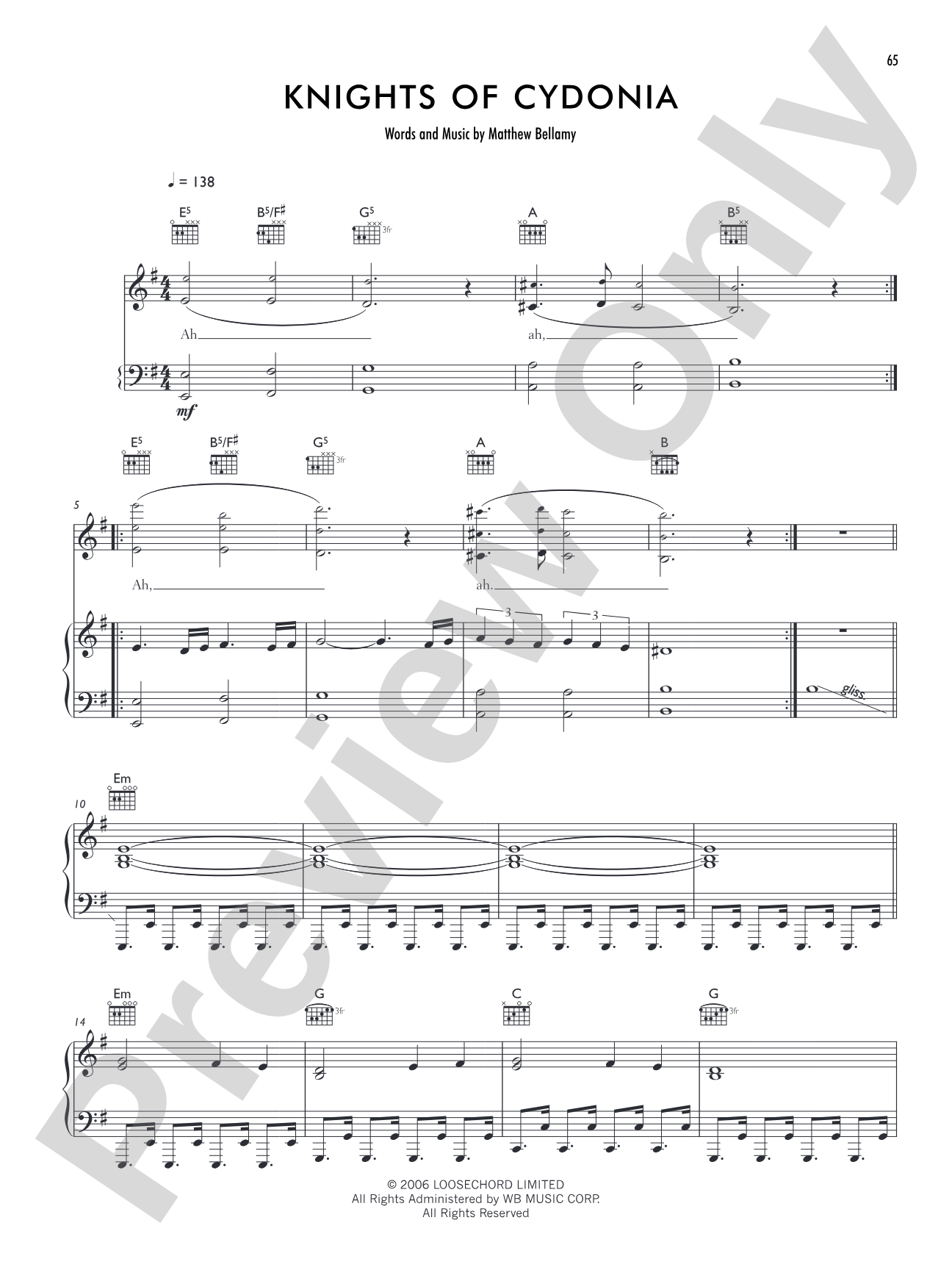
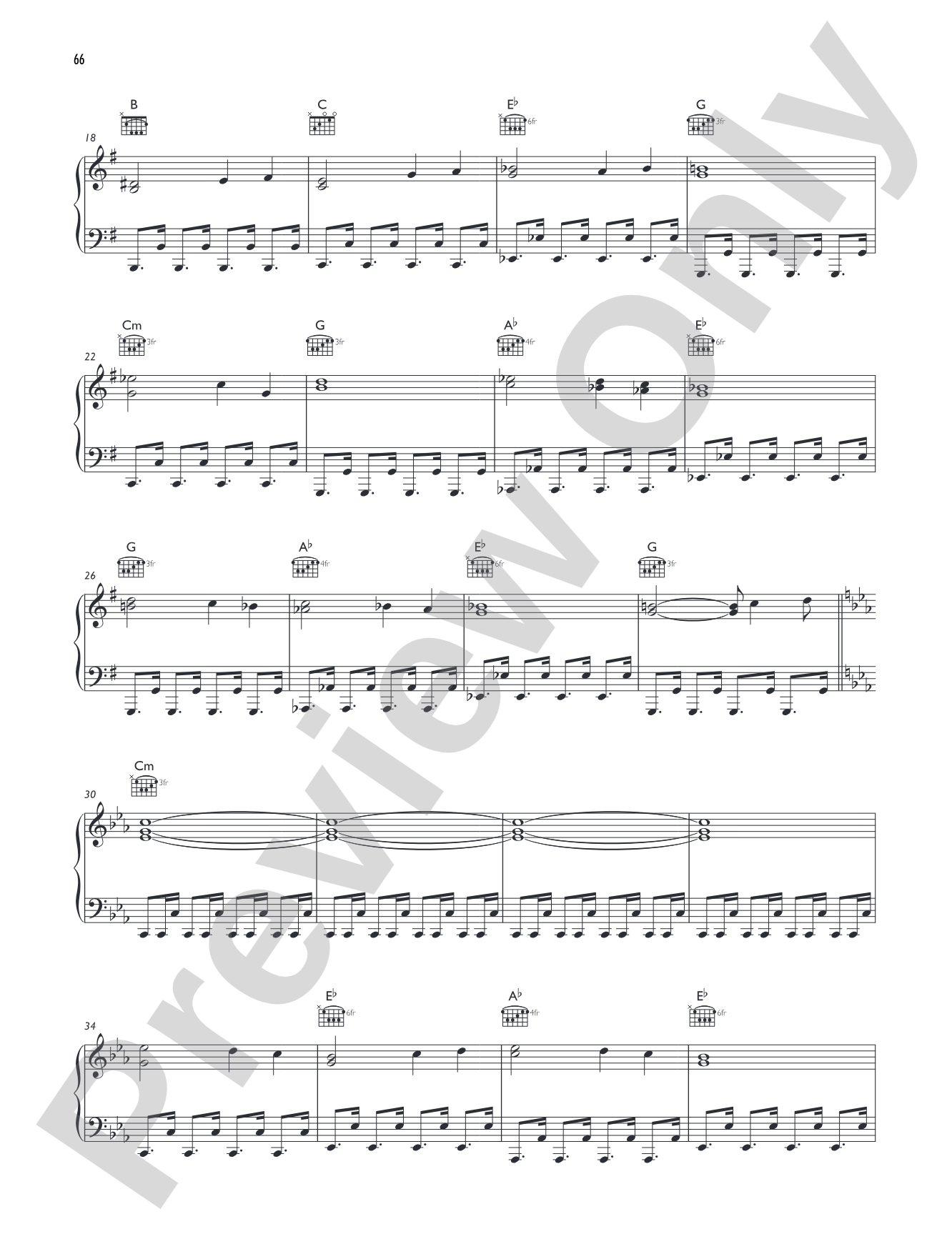

Knights of Cydonia: Piano/Vocal/Chords
Muse
Item: 00-PS-0013168
$5.99
One moment…
Related Items
Take a Bow: Piano/Vocal/Chords |
$9.99
|
View | |
Map of the Problematique: Piano/Vocal/Chords |
$5.99
|
View | |
Soldier's Poem: Piano/Vocal/Chords |
$4.99
|
View | |
Invincible: Piano/Vocal/Chords |
$5.99
|
View | |
Assassin: Piano/Vocal/Chords |
$5.99
|
View | |
Exo-Politics: Piano/Vocal/Chords |
$5.99
|
View | |
City of Delusion: Piano/Vocal/Chords |
$4.99
|
View | |
Hoodoo: Piano/Vocal/Chords |
$4.99
|
View |
Description
After years of being available only in guitar TAB format, the smash-hit 2006 Muse album Black Holes and Revelations is now available as a songbook for keyboardists! A "musician's album," Black Holes exemplifies the band's unique brand of progressive hard rock. This book captures the essential parts played by each instrument in the band and condenses them into arrangements playable on piano or keyboards. Vocal melodies, lyrics, and basic guitar chords are also included. This is sure to be a prized collectible for any Muse fan, and it makes a perfect gift. Titles: Take a Bow * Starlight * Supermassive Black Hole * Map of the Problematique * Soldier's Poem * Invincible * Assassin * Exo-Politics * City of Delusion * Hoodoo * Knights of Cydonia.


Knights of Cydonia: Piano/Vocal/Chords isn't in MakeMusic Cloud just yet...but it could be. Let us know you'd like to see it, and you'll help shape what comes next. In the meantime, start a free trial and dive into thousands of interactive titles your students can play along with today.
Request This Title
Tell us you want it.
Start Your Free Trial
Explore everything that's ready to play right now.
Sample Audio
No sample audio found.
Sample Video
No sample videos found.
Additional Details
Publisher:
Alfred Music
Page Count:
72
SKU:
00-PS-0013168
More about this title
About the Composer: Matthew Bellamy
Matthew Bellamy is the songwriter, vocalist, and keyboardist of Muse, one of the defining rock bands of the 21st century. His compositional approach blends classical music training with hard rock intensity, creating arrangements that demand technical precision from every musician in the band. Bellamy's work across multiple albums has made him a fixture in progressive rock and a model for keyboardists who want to move beyond traditional rock structures.
Why we love this
Black Holes and Revelations stands as one of Muse's most ambitious albums, and seeing these complex arrangements distilled for solo piano and keyboard opens the door for keyboardists to inhabit music that was previously locked behind guitar tabs. The vocal melodies and chord charts make this accessible to pianists working with singers or playing along with vocalists, while the embedded instrumental lines challenge players to manage the orchestral density Muse built into their sound. For students serious about contemporary progressive rock and for educators looking to bridge the gap between classical technique and modern music, this collection offers genuine substance.
What to expect
Cinematic, ambitious, and densely layered. These arrangements capture the grandeur and architectural detail of Black Holes and Revelations, where a single song can shift from intimate verses to explosive choruses and extended instrumental passages. Playing this music feels like conducting a band from the keyboard, managing multiple melodic and harmonic lines that were originally spread across guitar, bass, synth, and drums.
Who it's for
Pianists and keyboardists who connect with contemporary rock and want to expand beyond classical or jazz standards into material that demands technical skill and musical maturity. This book works equally well for solo pianists performing concert recitals, for accompanists supporting singers, and for music students exploring how modern composition handles harmony and texture.
How to get the most out of it
- Study the chord charts alongside the piano voicings to understand how Bellamy constructed harmony; many of these chords reflect classical theory applied to a rock context.
- Use the vocal melody as a guide to phrasing and dynamics even when playing instrumental sections; this music relies on vocal-like contours throughout.
- Lock into the rhythmic feel of each track by listening to the original recordings while you work through the arrangements; Muse's production choices shape the groove in ways notation alone cannot capture.
- Pay attention to register shifts and space in the piano part; these arrangements deliberately leave room for other instruments, so resist the urge to fill every moment with sound.
How to use it
Feature individual tracks in contemporary classical or crossover concert programs to demonstrate how rock music can engage the same technical and compositional rigor as concert music. Alternatively, assign selections to advanced students as sight-reading and interpretation projects that reward curiosity about non-traditional genres.
Skills your students will build
- Reading and executing complex harmonic progressions across multiple octaves
- Balancing melody, harmony, and counter-melody on a single instrument
- Translating guitar-based arrangements into idiomatic piano voicings
- Interpreting chord symbols in a rock music context
- Maintaining rhythmic drive while managing intricate textures