
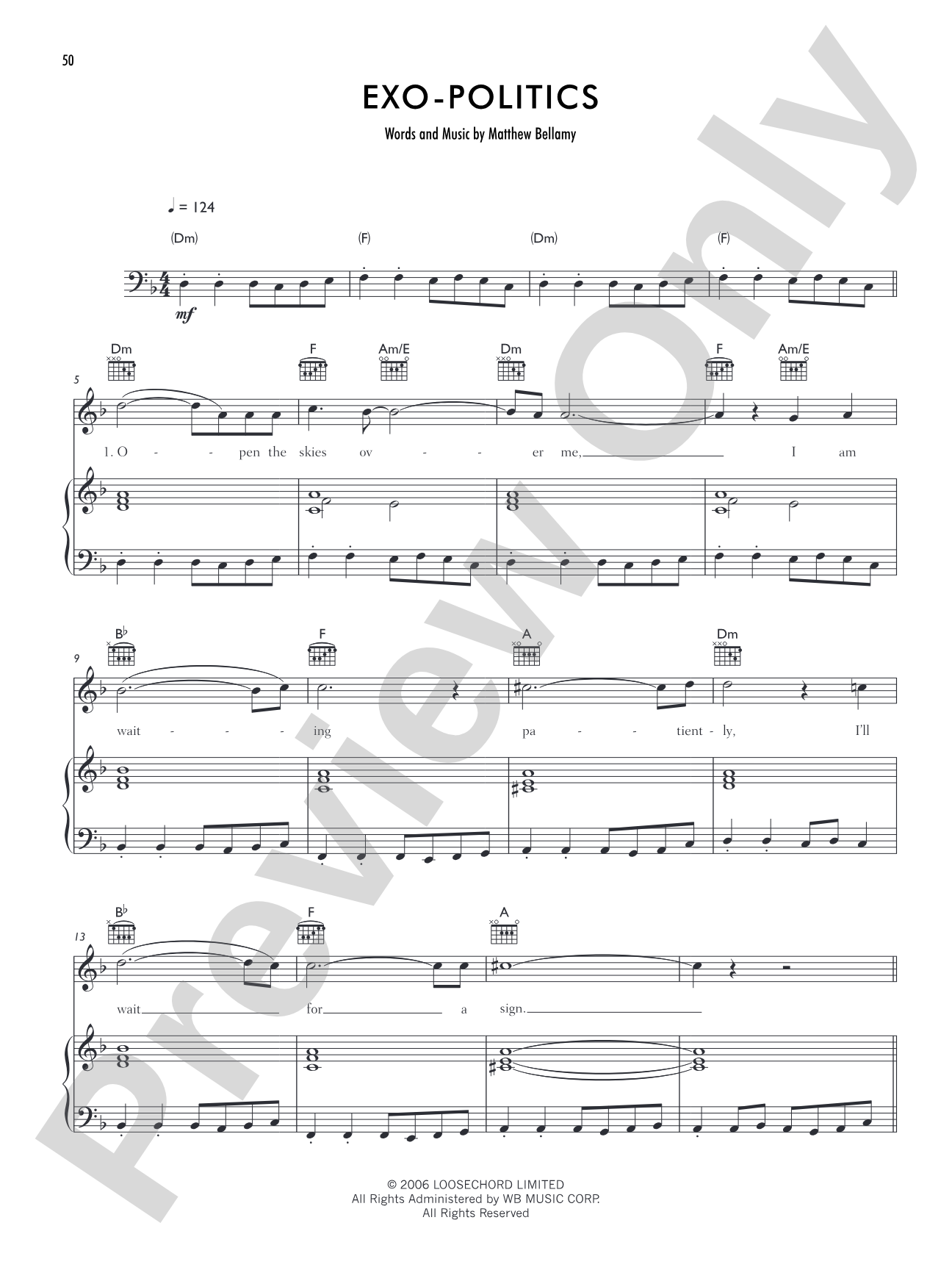
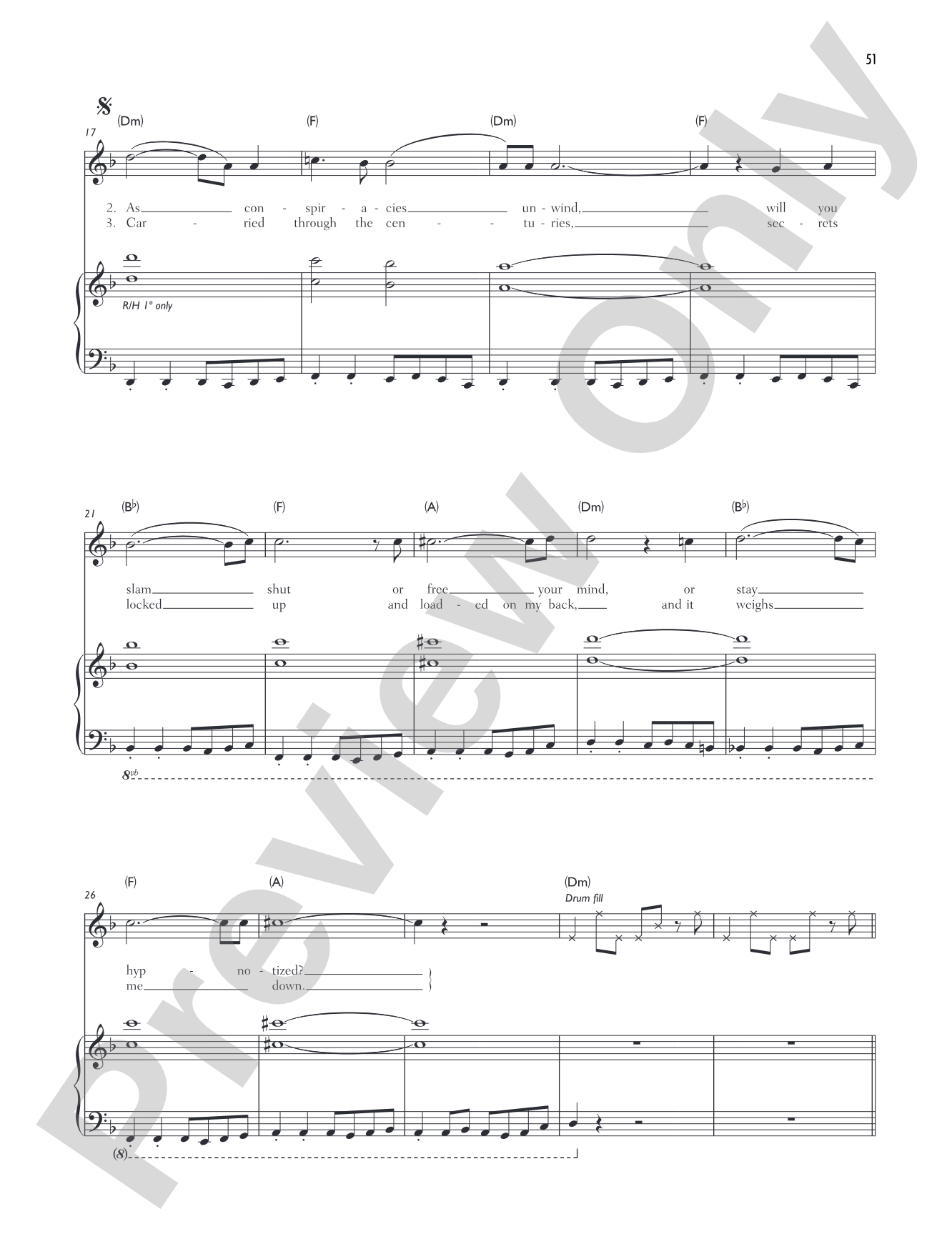

Exo-Politics: Piano/Vocal/Chords
Muse
Item: 00-PS-0013165
$5.99
One moment…
Related Items
Take a Bow: Piano/Vocal/Chords |
$9.99
|
View | |
Map of the Problematique: Piano/Vocal/Chords |
$5.99
|
View | |
Soldier's Poem: Piano/Vocal/Chords |
$4.99
|
View | |
Invincible: Piano/Vocal/Chords |
$5.99
|
View | |
Assassin: Piano/Vocal/Chords |
$5.99
|
View | |
City of Delusion: Piano/Vocal/Chords |
$4.99
|
View | |
Hoodoo: Piano/Vocal/Chords |
$4.99
|
View | |
Knights of Cydonia: Piano/Vocal/Chords |
$5.99
|
View |
Description
After years of being available only in guitar TAB format, the smash-hit 2006 Muse album Black Holes and Revelations is now available as a songbook for keyboardists! A "musician's album," Black Holes exemplifies the band's unique brand of progressive hard rock. This book captures the essential parts played by each instrument in the band and condenses them into arrangements playable on piano or keyboards. Vocal melodies, lyrics, and basic guitar chords are also included. This is sure to be a prized collectible for any Muse fan, and it makes a perfect gift. Titles: Take a Bow * Starlight * Supermassive Black Hole * Map of the Problematique * Soldier's Poem * Invincible * Assassin * Exo-Politics * City of Delusion * Hoodoo * Knights of Cydonia.


Exo-Politics: Piano/Vocal/Chords isn't in MakeMusic Cloud just yet...but it could be. Let us know you'd like to see it, and you'll help shape what comes next. In the meantime, start a free trial and dive into thousands of interactive titles your students can play along with today.
Request This Title
Tell us you want it.
Start Your Free Trial
Explore everything that's ready to play right now.
Sample Audio
No sample audio found.
Sample Video
No sample videos found.
Additional Details
Publisher:
Alfred Music
Page Count:
72
SKU:
00-PS-0013165
More about this title
About the Composer: Matthew Bellamy
Matthew Bellamy is the lead vocalist, guitarist, and primary songwriter for Muse, a British rock band known for their ambitious approach to composition and production. Since Muse's formation in 1994, Bellamy has established himself as a distinctive voice in progressive rock, blending classical influences, electronic elements, and heavy guitar work into songs that demand sophisticated musical arrangements. His work as a composer emphasizes harmonic complexity and dynamic range, making his material particularly rewarding for musicians who seek arrangements beyond standard pop song structures.
Why we love this
This songbook opens the Black Holes and Revelations album to keyboardists who've only encountered it in guitar tabs, giving pianists and keyboard players a chance to own one of the 2000s' most architecturally interesting rock albums. The arrangements intelligently compress the band's lush synth and guitar layers into playable keyboard parts while preserving the songs' harmonic sophistication. Any musician interested in how modern rock composition handles orchestration and counterpoint will find genuine educational value in studying these arrangements.
What to expect
Exo-Politics and its companions on this album feel like stepping into a cathedral built from synthesizers and distorted guitars, where intricate melodies unfold over shifting harmonic foundations. The music alternates between soaring, almost orchestral passages and moments of rhythmic precision that demand absolute control. There's an intellectual energy here that rewards careful listening and deliberate practice.
Who it's for
This book serves keyboardists and pianists who are already fans of Muse or who want to expand beyond classical and jazz standards into contemporary rock composition. It also works for guitarists who want to understand how the album's synth layers function harmonically. Singer-guitarists will appreciate having vocal melodies, lyrics, and chords all on one page.
How to get the most out of it
- Study the original recordings alongside the sheet music to understand the dynamic contours and synth textures that define each track; the arrangements are reductions, not replacements, of what you'll hear on the album.
- Pay close attention to tempo markings and time signature changes within songs; Muse frequently shifts between sections with different feels, and nailing those transitions is essential to the music's impact.
- Treat the guitar chord symbols not just as harmonic reference but as a roadmap to voice leading choices on the keyboard; many arrangements suggest which notes to emphasize in the left hand based on the underlying guitar voicings.
- Lock into the rhythmic precision early; progressive rock arrangements rely on exact rhythmic coordination between vocal melody and keyboard accompaniment to maintain their architectural integrity.
How to use it
Program one or two tracks from this collection during a concert that highlights contemporary songwriting or showcases the breadth of rock music in ensemble contexts. These arrangements also work well as a bridge between classical concert repertoire and popular music, showing audiences and students alike how sophisticated harmonic and structural ideas appear across genres. For educational purposes, consider pairing one track with a discussion of how instrumental roles transfer between rock band and solo keyboard performance.
Skills your students will build
- Reading keyboard reductions of multi-instrument arrangements
- Voicing chords in left hand while managing independent melodic lines in right hand
- Navigating time signature and tempo changes within rock song forms
- Interpreting chord symbols to make artistic choices about voice leading and harmonic density
- Balancing accompaniment role with moment-to-moment attention to lyrical content and phrasing