
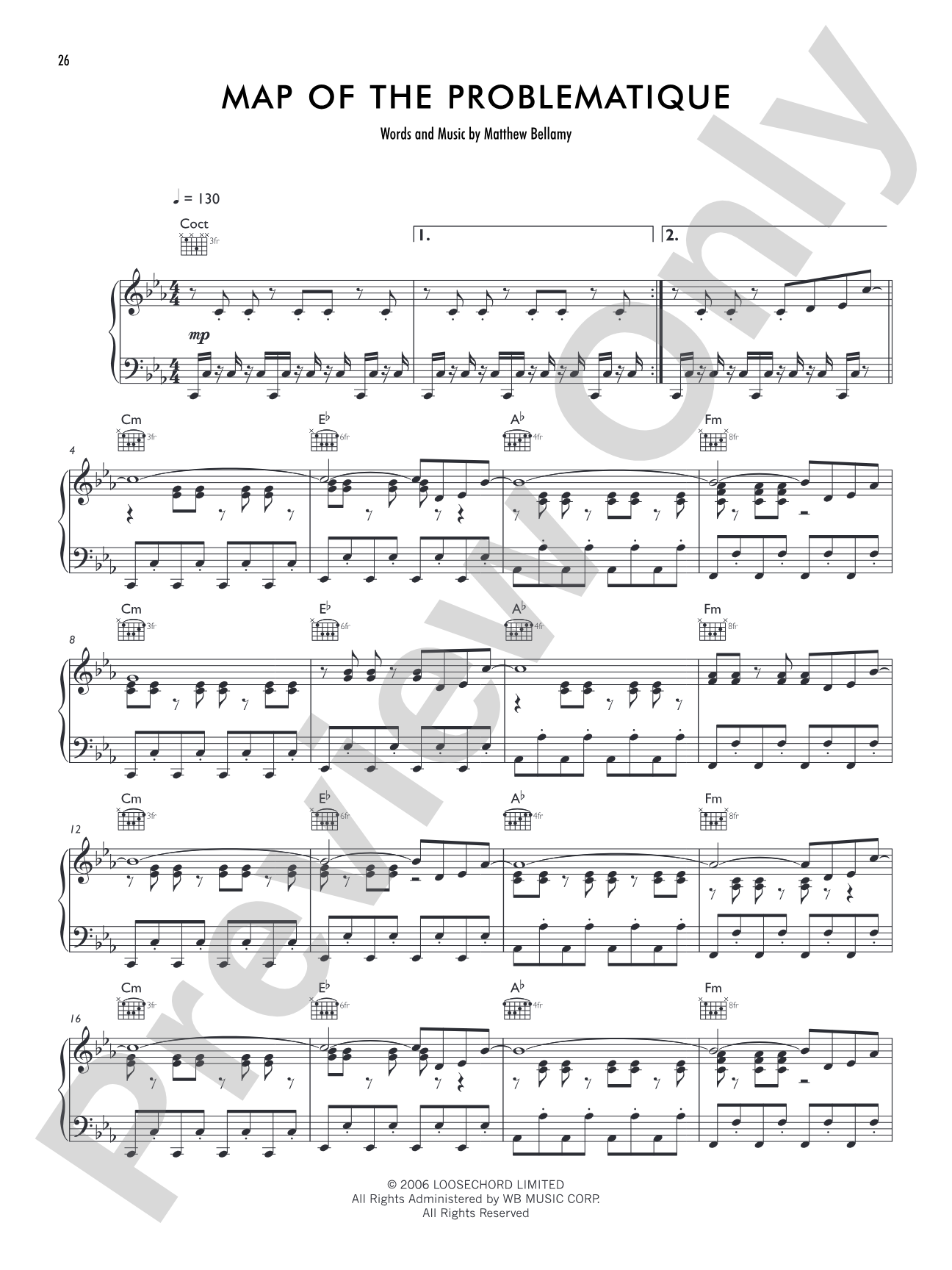
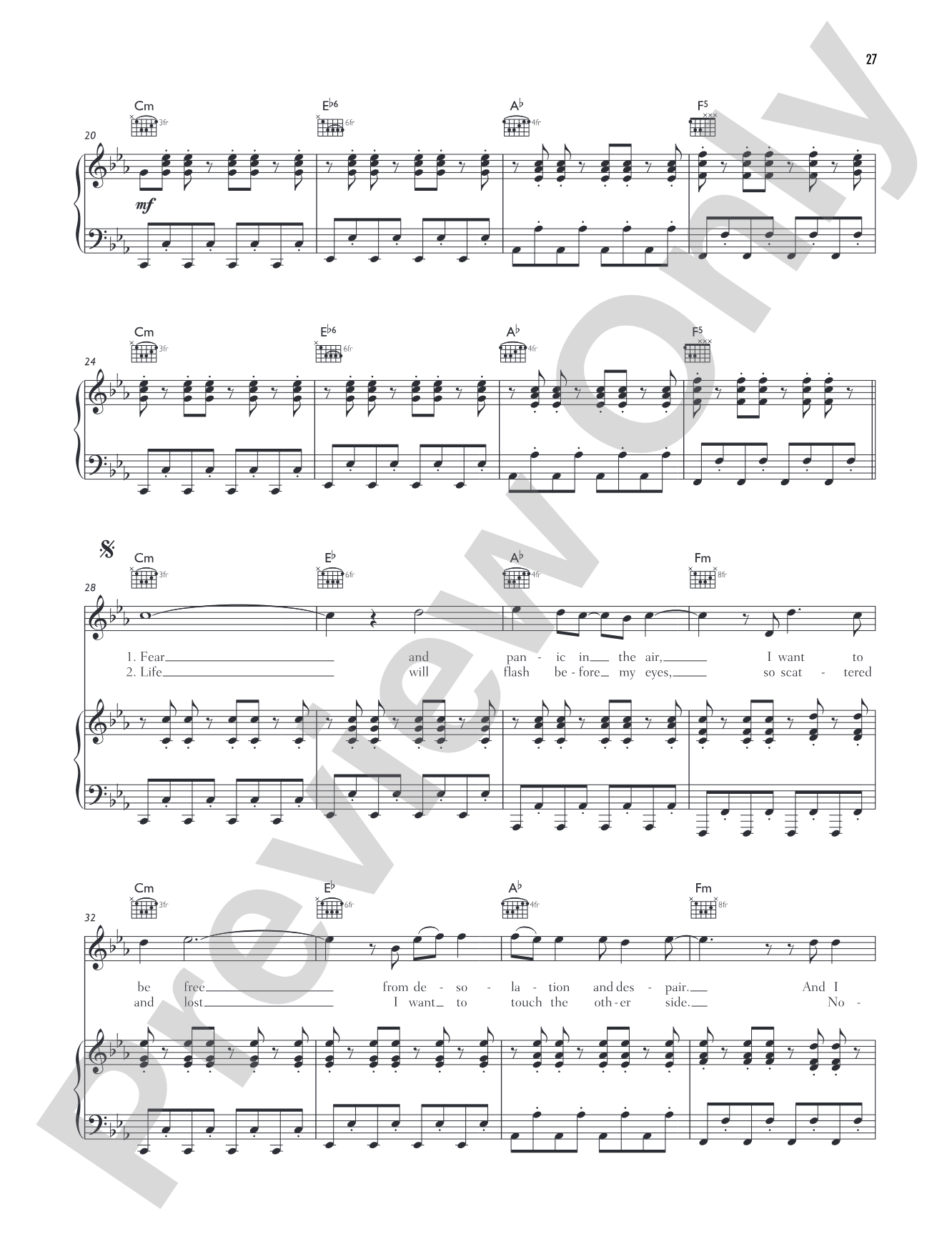

Map of the Problematique: Piano/Vocal/Chords
Muse
Item: 00-PS-0013161
$5.99
One moment…
Related Items
Take a Bow: Piano/Vocal/Chords |
$9.99
|
View | |
Soldier's Poem: Piano/Vocal/Chords |
$4.99
|
View | |
Invincible: Piano/Vocal/Chords |
$5.99
|
View | |
Assassin: Piano/Vocal/Chords |
$5.99
|
View | |
Exo-Politics: Piano/Vocal/Chords |
$5.99
|
View | |
City of Delusion: Piano/Vocal/Chords |
$4.99
|
View | |
Hoodoo: Piano/Vocal/Chords |
$4.99
|
View | |
Knights of Cydonia: Piano/Vocal/Chords |
$5.99
|
View |
Description
After years of being available only in guitar TAB format, the smash-hit 2006 Muse album Black Holes and Revelations is now available as a songbook for keyboardists! A "musician's album," Black Holes exemplifies the band's unique brand of progressive hard rock. This book captures the essential parts played by each instrument in the band and condenses them into arrangements playable on piano or keyboards. Vocal melodies, lyrics, and basic guitar chords are also included. This is sure to be a prized collectible for any Muse fan, and it makes a perfect gift. Titles: Take a Bow * Starlight * Supermassive Black Hole * Map of the Problematique * Soldier's Poem * Invincible * Assassin * Exo-Politics * City of Delusion * Hoodoo * Knights of Cydonia.


Map of the Problematique: Piano/Vocal/Chords isn't in MakeMusic Cloud just yet...but it could be. Let us know you'd like to see it, and you'll help shape what comes next. In the meantime, start a free trial and dive into thousands of interactive titles your students can play along with today.
Request This Title
Tell us you want it.
Start Your Free Trial
Explore everything that's ready to play right now.
Sample Audio
No sample audio found.
Sample Video
No sample videos found.
Additional Details
Publisher:
Alfred Music
Page Count:
72
SKU:
00-PS-0013161
More about this title
About the Composer: Matthew Bellamy
Matthew Bellamy formed Muse in 1994 and has served as the band's primary songwriter, vocalist, and keyboardist throughout their career. His compositional approach blends classical training with progressive rock sensibilities, resulting in sprawling arrangements that demand technical facility across multiple instruments. Bellamy's work has made him one of contemporary rock's most distinctive voices, equally comfortable writing intricate keyboard passages and soaring vocal lines that define the band's sound.
Why we love this
Black Holes and Revelations captures Bellamy's architectural approach to songwriting in a format that finally serves keyboardists and pianists equally. The arrangements distill complex band textures into playable piano parts without sacrificing the songs' progressive DNA, making this collection genuinely rewarding for musicians who want to engage with modern rock composition on a serious level.
What to expect
These arrangements carry the sweeping cinematic scope of the album into the hands of keyboardists: soaring passages alternate with driving rhythmic figures, and the keyboard lines often provide the architectural backbone that holds the band's maximalist arrangements together. The songs oscillate between moments of quiet intensity and explosive climaxes, demanding both technical control and interpretive maturity.
Who it's for
This book serves keyboardists and pianists who want to perform or study Muse's 2006 masterpiece in a playable format. Rock musicians exploring progressive composition will find substantial material for both performance and transcription study. Singers can use the vocal melodies and lyrics to learn Bellamy's phrasing and melodic sensibility.
How to get the most out of it
- Study the vocal melody and lyrics first to anchor your interpretation, then layer in the keyboard arrangement; Bellamy's melodies carry the emotional weight of these songs.
- Balance the orchestral textures implied in the arrangements by using sustain strategically and varying your left-hand voicings to create space rather than density.
- Reference the original recordings for tempo and feel; these songs demand precision rhythmically, and the studio versions offer essential interpretive guidance.
- Use the chord symbols as a foundation for improvisation in rehearsal, but lock into the written keyboard parts for performance to maintain the album's architectural integrity.
How to use it
Feature individual songs as recital selections that demonstrate serious contemporary rock composition to audiences more accustomed to classical or jazz repertoire. Use the collection in keyboard ensemble settings where multiple pianists can explore Muse's layered textures together.
Skills your students will build
- Playing rock and pop keyboard arrangements with jazz-influenced voicings
- Coordinating keyboard lines with sung melody and chord changes
- Reading and executing syncopated rhythmic patterns in rock idioms
- Interpreting dynamic shapes and textural layering in contemporary music
- Balancing written parts with improvisation using provided chord symbols