
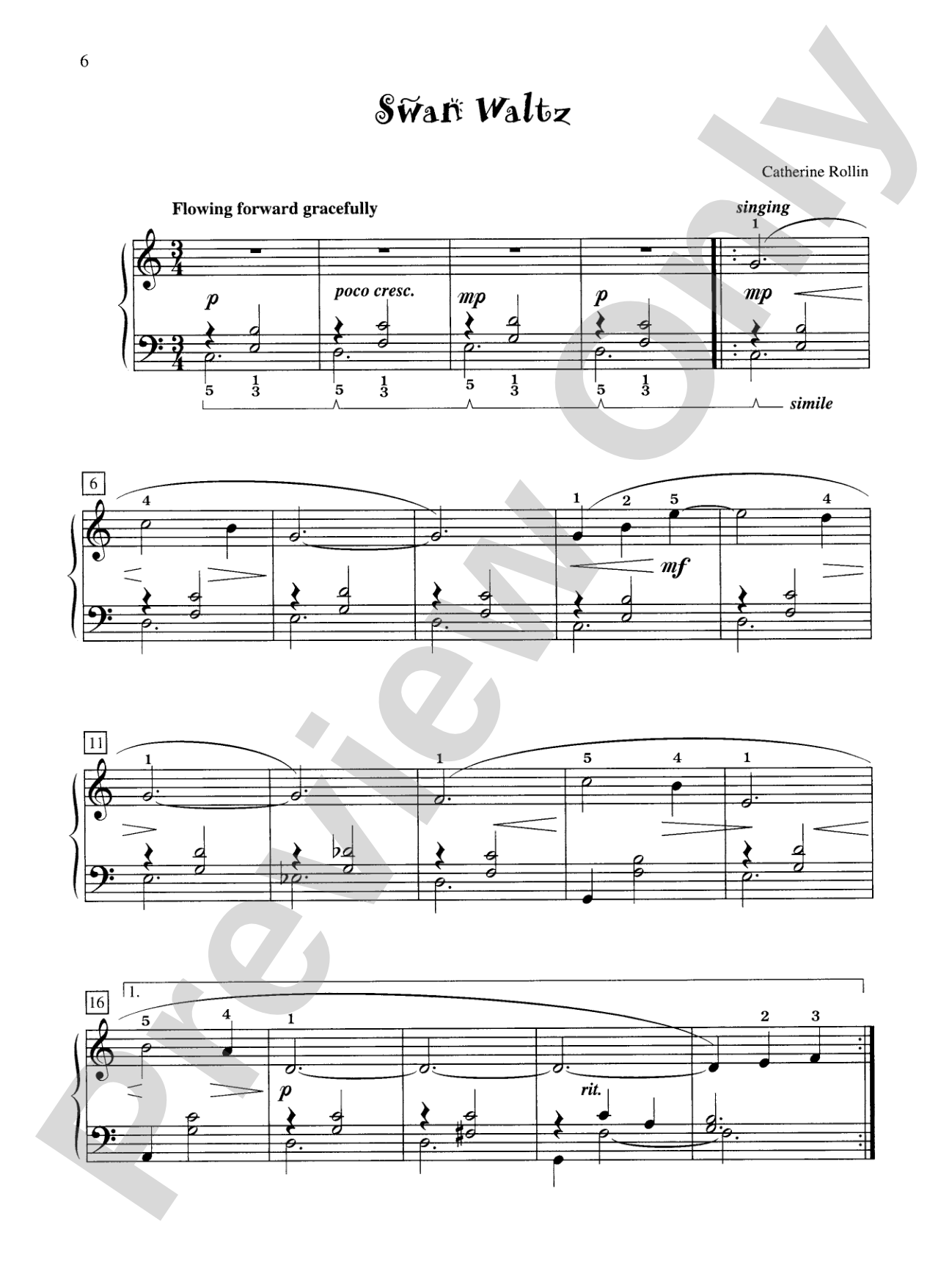

Swan Waltz - Piano Solo: Piano Solo
6 Light-Hearted Solos in a Variety of Styles for the Early Intermediate Pianist
By Catherine Rollin
Level: Early Intermediate
Item: 00-PS-0017465
$4.99
Pickup currently not available
Related Items
Animal Chit Chat - Piano Solo: Piano Solo |
$4.99
|
View | |
Jazzy Joey - Piano Solo: Piano Solo |
$4.99
|
View | |
Kitten 'n' Mousin' on the Keys - Piano Solo: Piano Solo |
$4.99
|
View | |
Swingin' Through the Trees - Piano Solo: Piano Solo |
$4.99
|
View | |
The Roadrunner's (Beep! Beep!) Boogie Woogie - Piano Solo: Piano Solo |
$5.99
|
View | |
Jazz Menagerie, Book 2: Piano Book |
$5.99
|
View |
Description
These two collections draw upon animals as a wonderful source of inspiration for the musical imagination. Students will enjoy the hints of jazz sounds and rhythms, but most importantly, these pieces will entertain and spark their imagination. Book 1 is written at the late elementary level while Book 2 contains solos at the early intermediate level. A Federation Festivals 2024-2028 selection.


Swan Waltz - Piano Solo: Piano Solo isn't in MakeMusic Cloud just yet...but it could be. Let us know you'd like to see it, and you'll help shape what comes next. In the meantime, start a free trial and dive into thousands of interactive titles your students can play along with today.
Request This Title
Tell us you want it.
Start Your Free Trial
Explore everything that's ready to play right now.
Sample Audio
No sample audio found.
Sample Video
No sample videos found.
Additional Details
Publisher:
Alfred Music
Page Count:
16
SKU:
00-PS-0017465
More about this title
About the Composer: Catherine Rollin

Catherine Rollin balances an active performance schedule with mentoring students to festival success, having led masterclasses and workshops across the United States, Canada, Japan, and Taiwan. She holds a Bachelor of Musical Arts degree with distinction from the University of Michigan and a Master of Music degree from Oakland University School of Performing Arts.
Rollin's compositions have earned commissions from Clavier Companion magazine, the Music Teachers National Association, and the Michigan Music Teachers Association, with multiple works selected for the National Federation of Music Clubs Festivals Bulletin. She has judged the MTNA Student Composition Competition at the national level and served on the panel for the Lynn Freeman Olson Composition Contest. In 2018, she premiered Suite Detroit (a trio for flute, alto saxophone, and piano) as part of MTNA's prestigious "From the Pen to the Premiere" series, and the Steinway Society featured her in concert as both composer and pianist, showcasing her ASCAP award-winning Museum Masterpieces series.
Why we love this
Rollin writes with genuine affection for the early-intermediate student, crafting a solo that feels rewarding without overreaching technically. The jazz inflections give the piece contemporary flavor while the animal inspiration keeps the narrative clear and memorable, making this a strong choice when you want something that engages students musically rather than just drilling technique.
What to expect
Graceful and gently swaying, with unexpected moments of sophistication woven into the familiar waltz framework. The jazz elements create an elegant surprise, as if watching a swan glide through modern waters while maintaining its natural poise.
Who it's for
Early intermediate pianists ready to engage with jazz idioms and stylistic variety. This works for festival preparation, students developing interpretive skills, or anyone seeking a piece that combines classical structure with contemporary flavor.
How to get the most out of it
- Shape the melody as if telling the swan's story; lean into the rubato naturally without overdoing it, letting the waltz pulse guide your phrasing
- Highlight the jazz-influenced harmonic moments by adjusting your touch slightly in those passages, making them colorful without disrupting the overall elegance
- Balance accompaniment patterns so they support rather than compete with the melody line; this allows the lyrical content to shine
How to use it
Position this as a bridge piece between straight classical repertoire and modern styles, or include it in a thematic concert exploring nature-inspired music. It works well alongside other Rollin animal-inspired pieces from the collection for a cohesive recital segment.
Skills your students will build
- Jazz harmonic language and chord voicings in a tonal context
- Stylistic variation within waltz form
- Rubato and expressive phrasing in a contemporary idiom
- Left-hand accompaniment patterns that support melody without overstating