
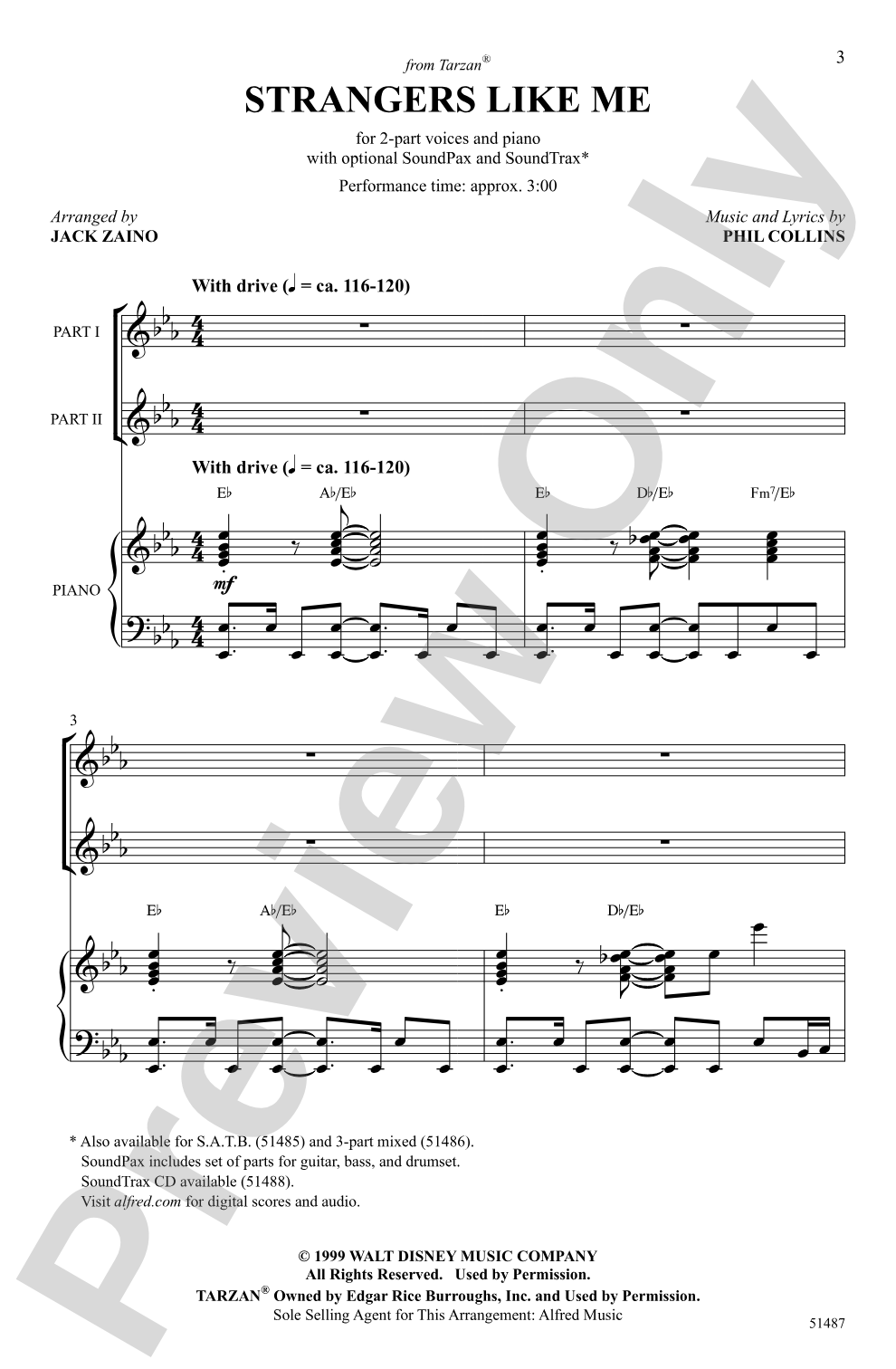
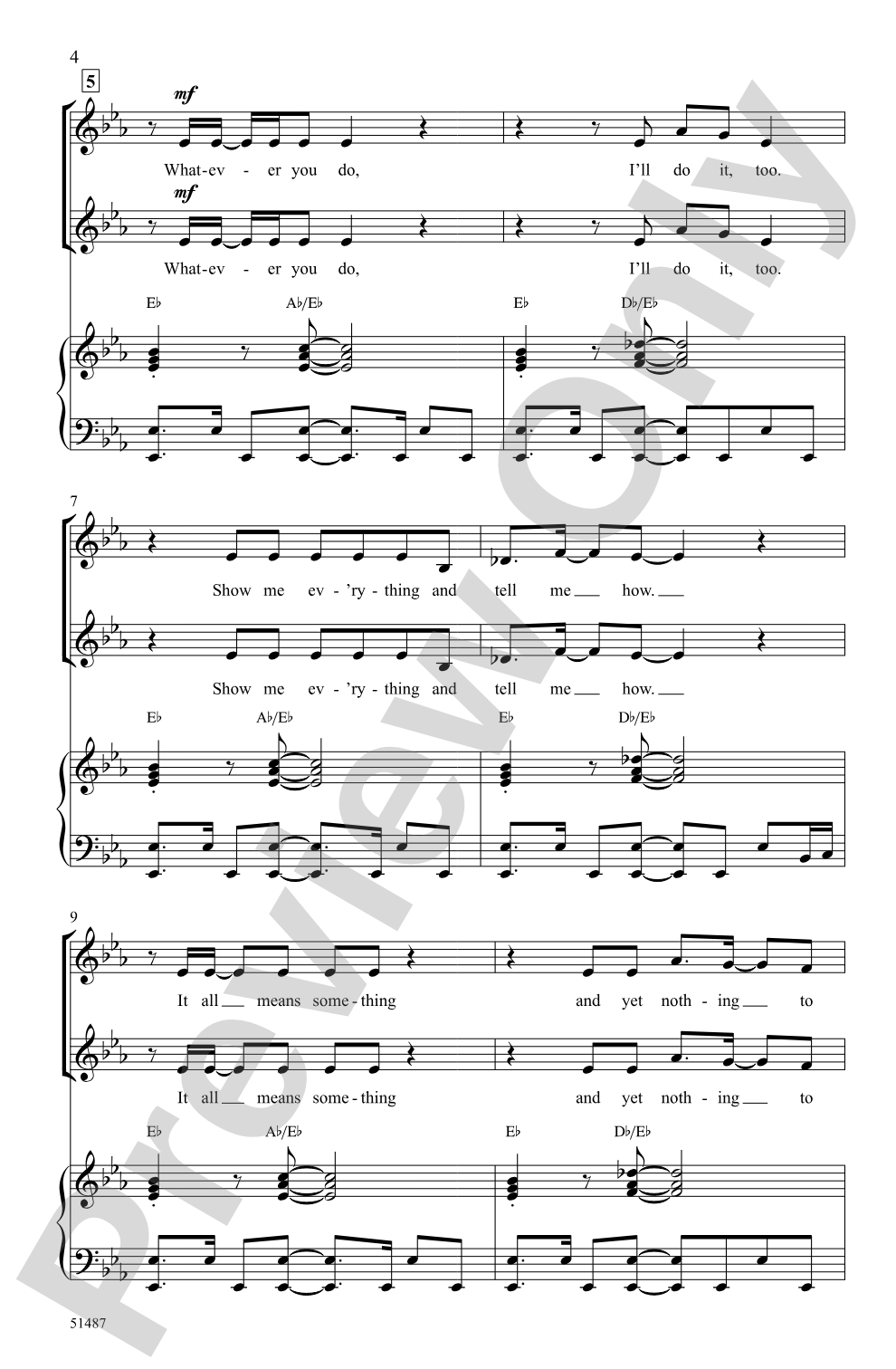
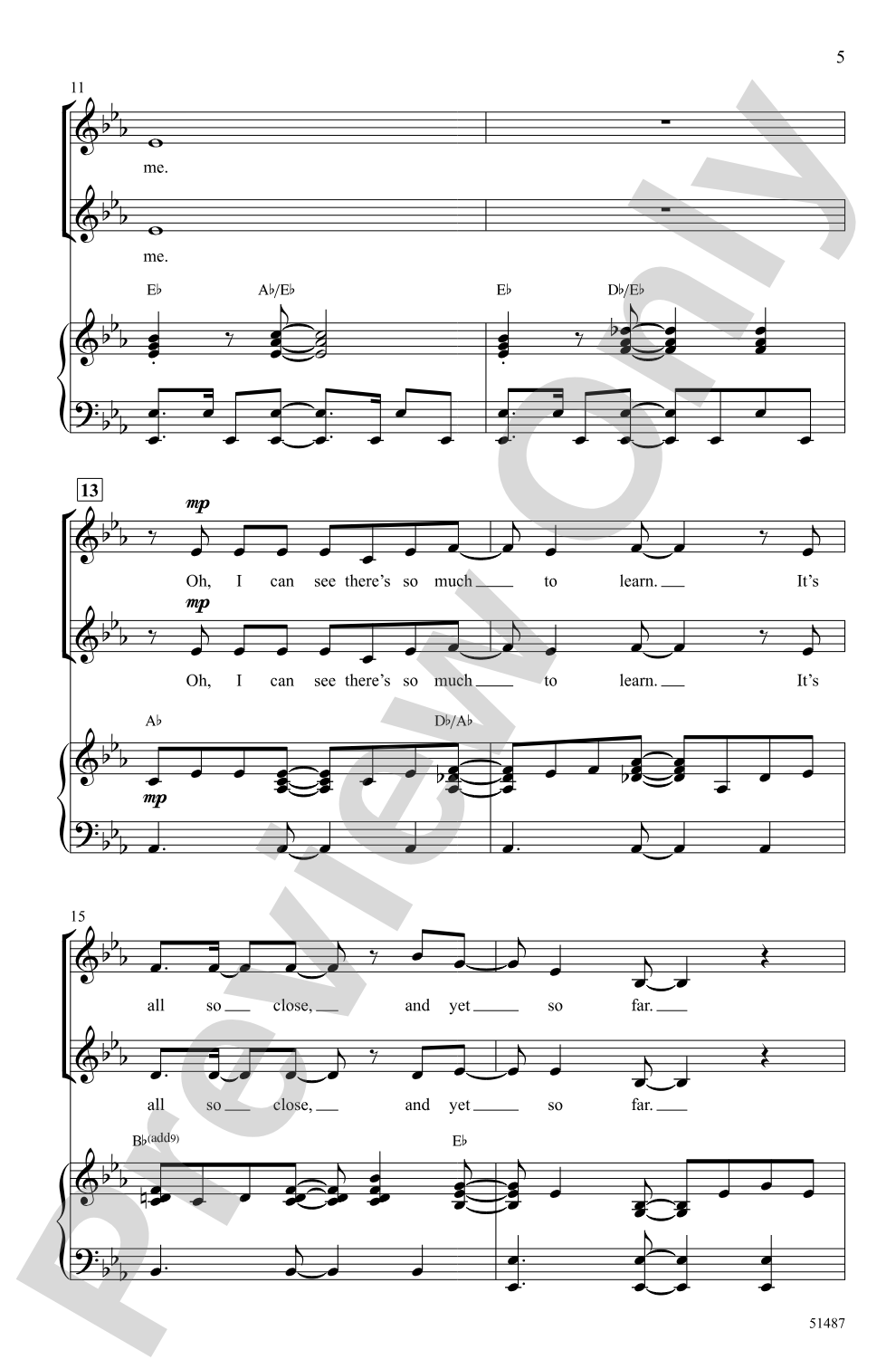

Strangers Like Me: 2-Part Choral Octavo
from Tarzan
Music and lyrics by Phil Collins / arr. Jack Zaino
Item: 00-PO-0008164
$2.75
Minimum order quantity: 10 copies
Please note: Under U.S. copyright law, you must purchase the exact number of copies needed for your ensemble. Printing, duplicating or sharing additional copies is strictly prohibited.
One moment…
Related Items
Strangers Like Me: SATB Choral Octavo |
$2.75
|
View | |
Strangers Like Me: 3-Part Mixed Choral Octavo |
$2.75
|
View | |
Strangers Like Me: SATB Choral Octavo |
$2.75
|
View | |
Strangers Like Me: 3-Part Mixed Choral Octavo |
$2.75
|
View | |
Strangers Like Me: 2-Part Choral Octavo |
$2.75
|
View | |
Strangers Like Me: Choral SoundTrax CD |
$29.99
|
View |
Description
Unleash your choir's spirit of adventure with this driving selection from Disney's Tarzan! With lyrics that speak to the desire for human connection, the percussive song by pop legend Phil Collins mirrors the thrilling pulse of the jungle with its rhythmic vocal lines and energetic accompaniment. It's a rockin' journey of curiosity and self-discovery you won't want to miss!


Discover MakeMusic Cloud: thousands of interactive titles your students can play along with today.
Sample Audio
1
Audio File
--:--
0:00
0:00
Sample Video
Additional Details
Series:
Alfred Pop Choral Series
Publisher:
Alfred Music
Page Count:
16
SKU:
00-PO-0008164
More about this title
About the Composer: Phil Collins
Phil Collins became a household name as the drummer and later frontman of Genesis, one of rock's most influential bands. Beyond his work with the group, Collins has built an equally distinguished career as a film composer, earning an Academy Award for his work on Tarzan and establishing himself as a master of blending contemporary pop sensibilities with orchestral arrangement.
Throughout his career, Collins has demonstrated a gift for crafting memorable melodies that resonate across generations. His film scores showcase his ability to write music that serves narrative while remaining immediately accessible to audiences. For music educators, his work offers models of how pop songwriting can coexist with rich harmonic and rhythmic sophistication.
Why we love this
Jack Zaino's arrangement respects the song's infectious rhythmic core while making it genuinely singable for developing choirs. The 2-part voicing creates space for both parts to carry melodic weight, and the percussive vocal techniques feel natural rather than gimmicky. Programming this alongside your more traditional repertoire signals to students that ensemble singing encompasses far more than classical styles.
What to expect
The song pulses with curious energy, rhythmically restless and propulsive. There's an undercurrent of yearning beneath the driving beat, a sense of reaching toward something just beyond the horizon. It feels alive in a way that reminds singers why they love making music together.
Who it's for
This arrangement works best for middle school and early high school choirs seeking contemporary material with real substance. If your singers respond to pop music and you need a piece that builds confidence in students new to ensemble singing, this delivers both musicality and immediate gratification.
How to get the most out of it
- Lock the rhythmic unison passages early in rehearsal. The song's power lives in the precision of these collective moments, so invest time in making them snap.
- Bring out the conversational quality of the two parts when they trade lines. This arrangement plays with call-and-response phrasing that mirrors the song's narrative of connection.
- Balance the desire for energy with clarity on the text. The accompaniment is busy and driving; your singers need clean diction to ensure lyrics cut through.
- Consider the recorded accompaniment as a rehearsal tool first. Once your choir owns the part, backing away from the track in final rehearsals often yields a more confident live performance.
How to use it
Place this in a spring concert where you're celebrating the range of music your choir can tackle, or use it as a gateway piece to ease reluctant singers into ensemble participation. Its rhythmic vitality makes it especially effective as a set opener to establish momentum and engagement with your audience.
Skills your students will build
- Reading and performing rhythmic syncopation in vocal lines
- Maintaining rhythmic independence when one part rests while the other continues
- Text clarity and diction at faster tempos
- Balancing blend with rhythmic precision in percussive vocal passages
- Responding to film music styling within a choral context