
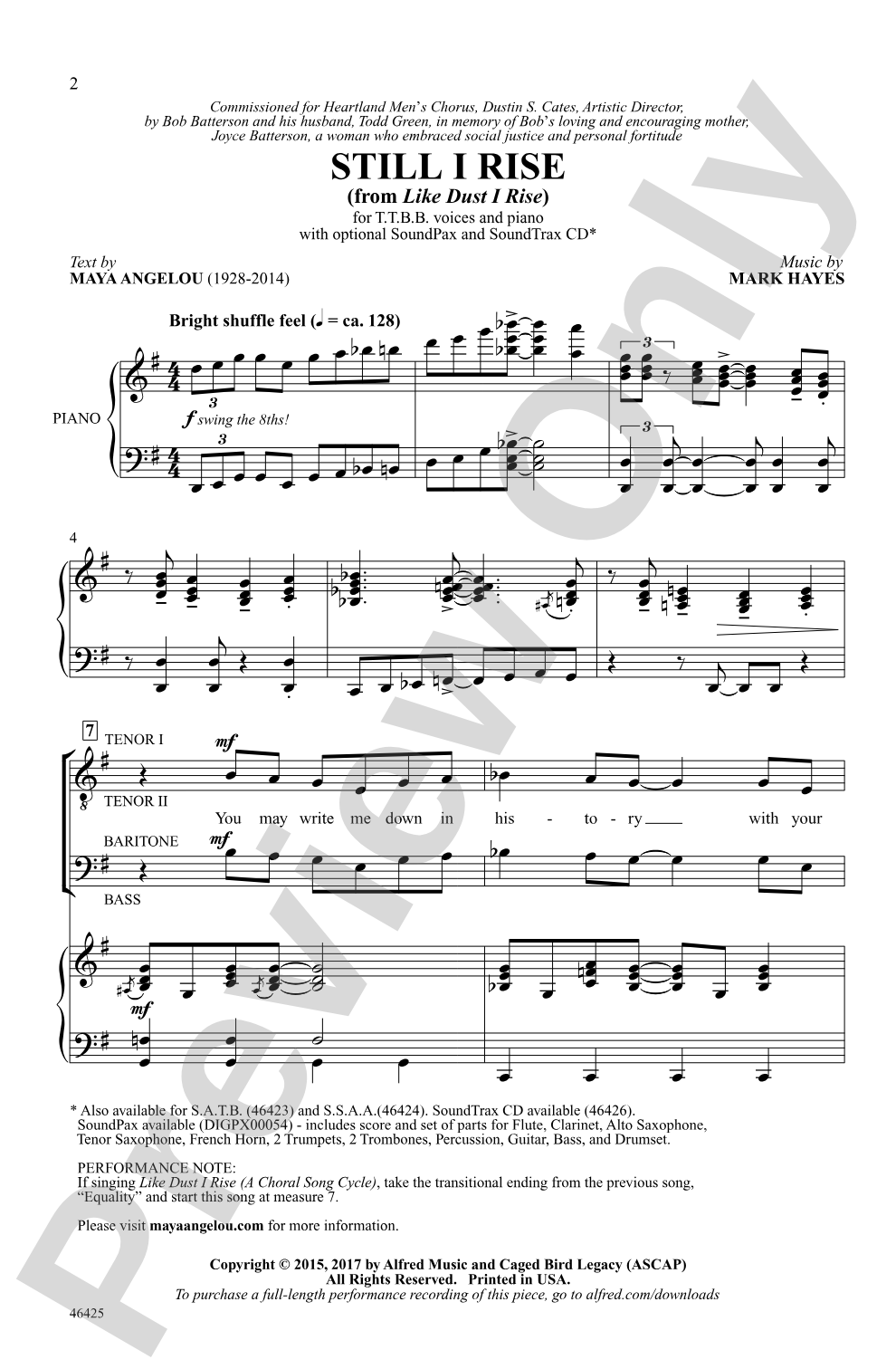
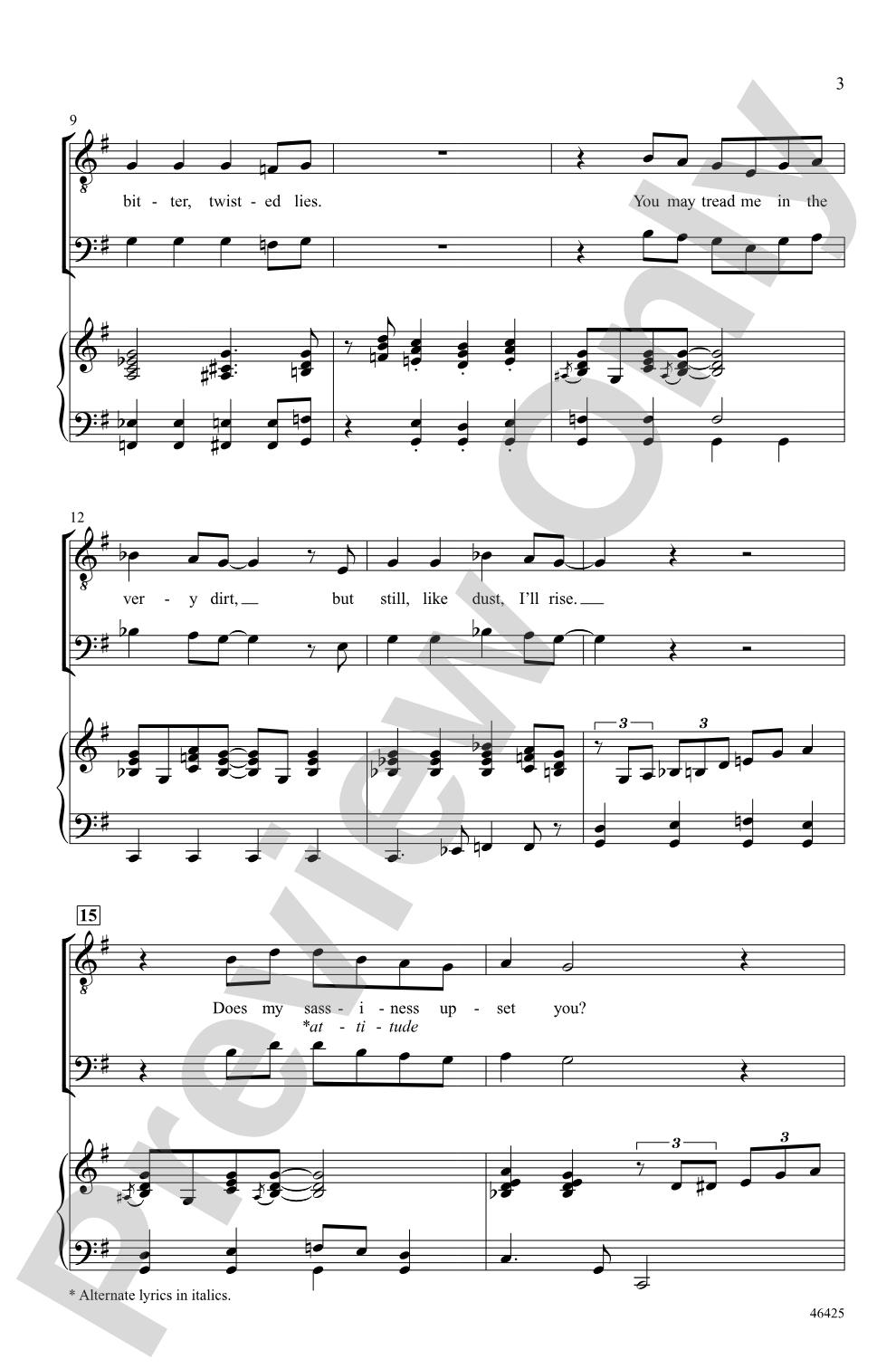
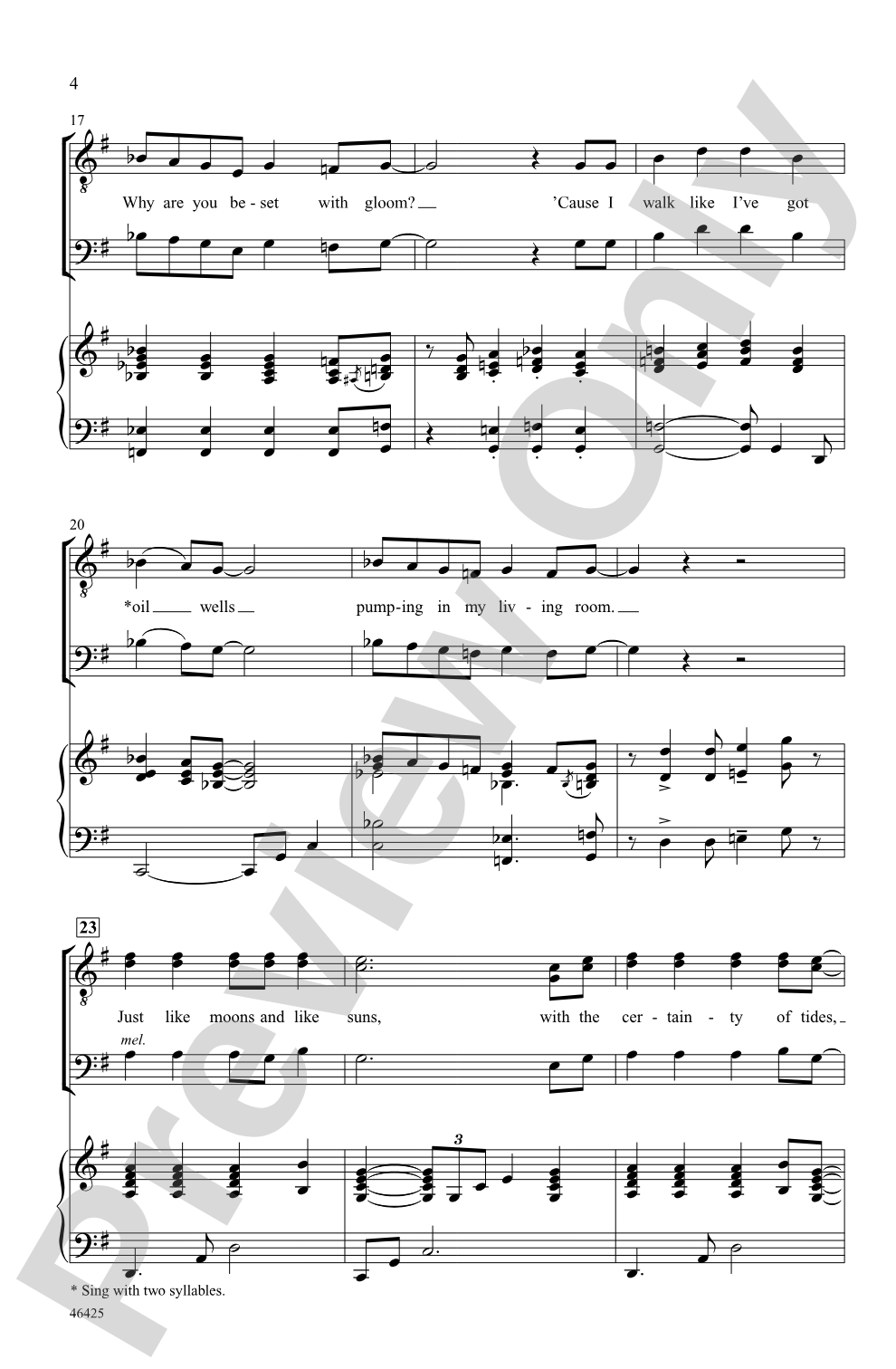

Still I Rise: TTBB Choral Octavo
From Like Dust I Rise (A Choral Song Cycle)
Text by Maya Angelou, music by Mark Hayes
Item: 00-PO-0005661
$2.00
Minimum order quantity: 20 copies
Pickup currently not available
Related Items
Still I Rise: SoundTrax Digital Audio Download |
$29.99
|
View | |
Still I Rise: SATB Choral Octavo |
$2.00
|
View | |
Still I Rise: SSAA Choral Octavo |
$2.00
|
View | |
Still I Rise: Choral SoundPax |
$50.00
|
View | |
Still I Rise: SATB Choral Octavo |
$2.00
|
View | |
Still I Rise: SSAA Choral Octavo |
$2.00
|
View | |
Still I Rise: TTBB Choral Octavo |
$2.00
|
View | |
Still I Rise: Choral Octavo SoundTrax CD |
$29.99
|
View | |
Still I Rise: Choral SoundPax |
$50.00
|
View |
Description
Maya Angelou's most popular poem about triumph over adversity comes brilliantly to life in this vivid setting by Mark Hayes. The bright shuffle tempo and bluesy piano riffs perfectly embody Angelou's strength, courage, and determination to rise above. One of the most uplifting choral selections of our time! This is the final movement from the song cycle Like Dust I Rise.


Still I Rise: TTBB Choral Octavo isn't in MakeMusic Cloud just yet...but it could be. Let us know you'd like to see it, and you'll help shape what comes next. In the meantime, start a free trial and dive into thousands of interactive titles your students can play along with today.
Request This Title
Tell us you want it.
Start Your Free Trial
Explore everything that's ready to play right now.
Sample Audio
1
Audio File
--:--
2
SATB Recording
--:--
Audio File
0:00
0:00
Sample Video
Additional Details
Series:
Alfred Choral Designs
Publisher:
Alfred Music
Page Count:
16
SKU:
00-PO-0005661
More about this title
About the Composer: Mark Hayes
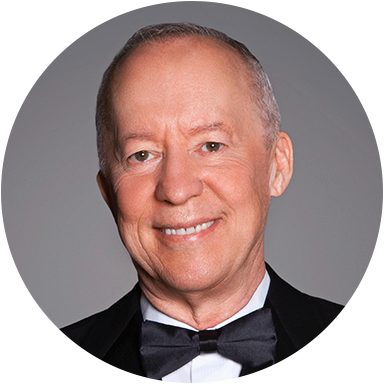
Mark Hayes has composed, arranged, and conducted over 1,750 published works spanning concert music, choral literature, and musical theater. A summa cum laude graduate in Piano Performance from Baylor University, he has served as guest conductor at major venues including Lincoln Center, the National Cathedral, and Carnegie Hall, and premiered his Requiem at Lincoln Center in 2013 and again at St. Ignatius Basilica in Rome as part of a Vatican-sponsored festival in 2014.
Hayes's output ranges across sacred and secular genres, with particular distinction in choral and piano writing. He orchestrated the musical Madame Buttermilk, composed the score for Civil War Voices (which won six awards at the Midtown International Theatre Festival), and has over 100 piano books in print spanning styles from gospel to classical to jazz to Broadway. In 2010, Baylor University honored him with the Award for Exemplary Leadership in Christian Music.
Why we love this
Hayes captures the defiant resilience of Angelou's poem with arrangements that feel equally grounded and soaring. The shuffle tempo and bluesy piano figures give the text room to land while the TTBB voicing sits naturally across most tenor-bass sections, making this attainable without sacrificing impact or emotional depth.
What to expect
Bright, propulsive, and ultimately triumphant. The shuffle rhythm moves the piece forward with momentum while the bluesy harmonic language gives it soul and authenticity. By the final statement of "Still I Rise," the music has built to something genuinely powerful: not bombast, but earned strength.
Who it's for
TTBB choirs and mixed ensembles with flexible voicing options (TB/TBB variants are available). Directors seeking repertoire that speaks directly to themes of perseverance and human dignity, and singers who want their voices to carry words that matter.
How to get the most out of it
- Lean into the shuffle feel rather than over-straightening the rhythm. The bluesy character depends on the relaxed swing of the pulse.
- Balance the piano part carefully in rehearsal. It's not accompanimental wallpaper; Hayes uses it as a character voice that amplifies the message.
- Attend to diction across all voice parts during runs and rhythmic passages. Clarity strengthens the power of Angelou's words.
- Let the ensemble find the jubilant quality in the final section naturally. Pushing for brightness will flatten the hard-earned triumph.
How to use it
Program this as a centerpiece for concerts focused on social justice, celebration, or resilience. It works equally well opening a second half or closing a program on an affirmative note. The literary and musical sophistication makes it suitable for both academic and community settings.
Skills your students will build
- Singing shuffle rhythm with rhythmic precision and stylistic feel
- Blending blues-influenced harmonies and chord quality awareness
- Interpreting text with conviction and emotional authenticity
- Balancing ensemble sound while maintaining individual vocal clarity
- Working with flexible voicing options across TTBB/TB/TBB ranges