
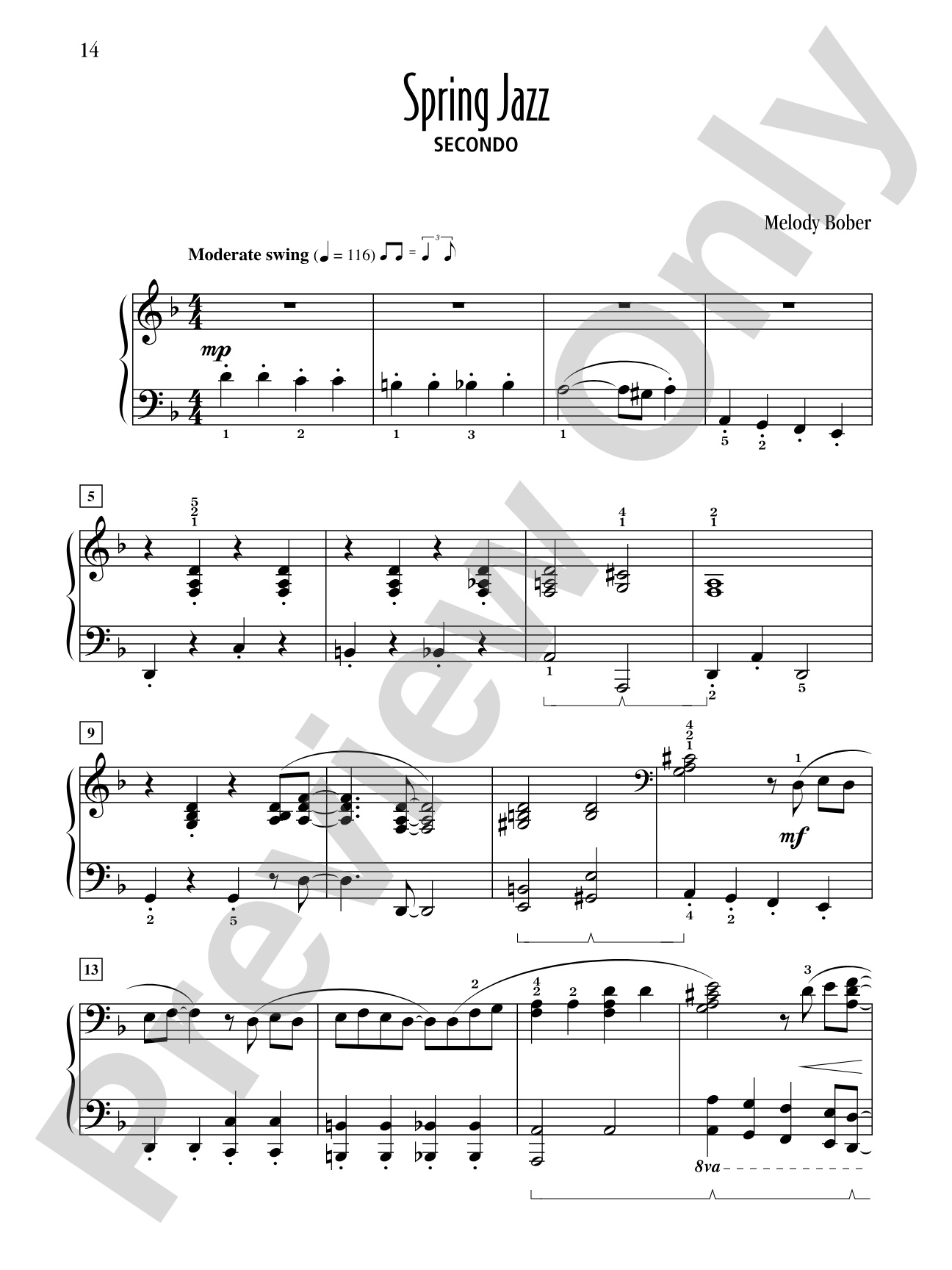
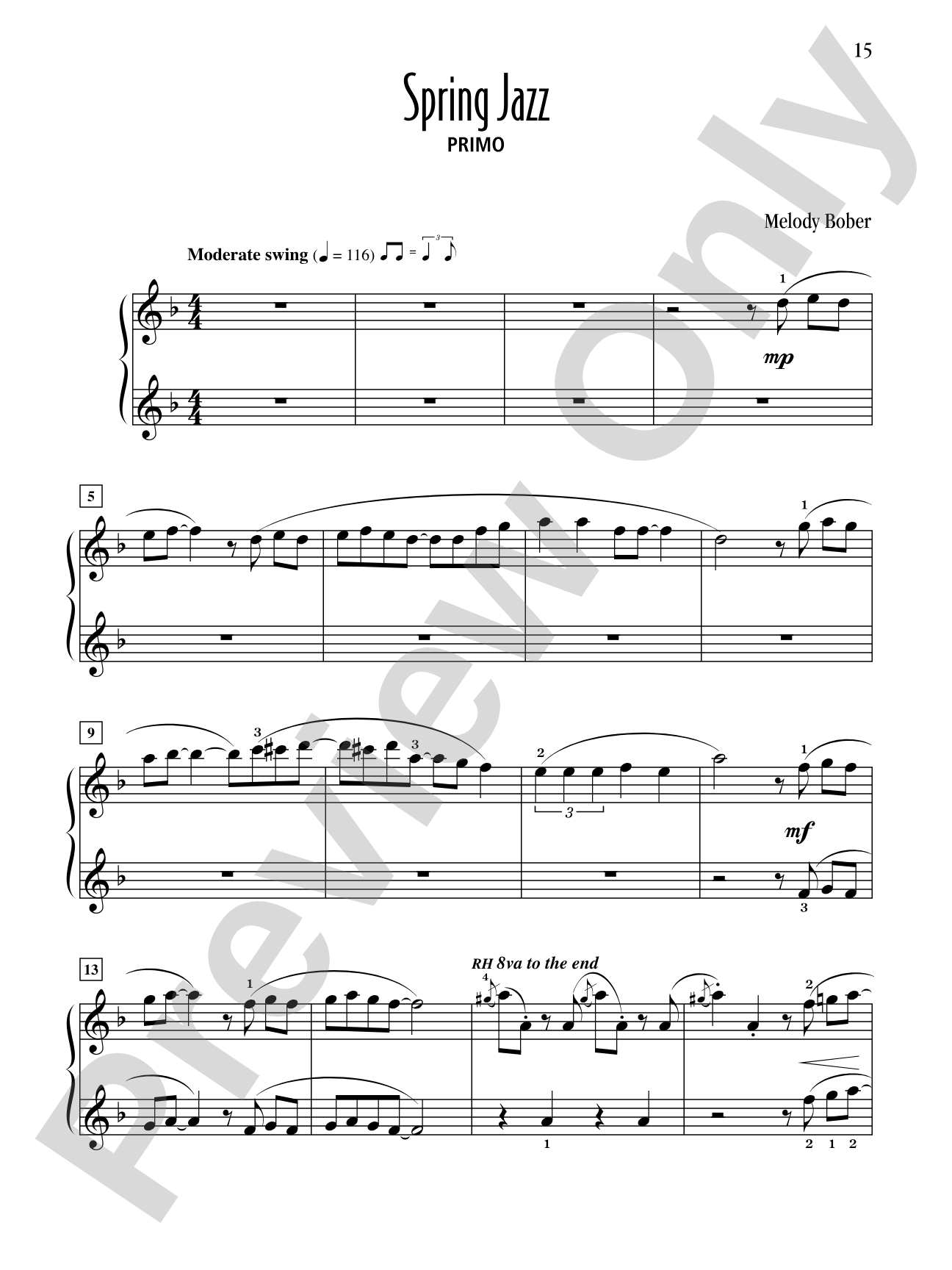

Spring Jazz - Piano Duet (1 Piano, 4 Hands): Piano Duet (1 Piano, 4 Hands)
By Melody Bober
Level: Late Intermediate
Item: 00-PS-0017489
$5.99
Pickup currently not available
Related Items
Autumn Ballade - Piano Duet (1 Piano, 4 Hands): Piano Duet (1 Piano, 4 Hands) |
$5.99
|
View | |
Summer Latin - Piano Duet (1 Piano, 4 Hands): Piano Duet (1 Piano, 4 Hands) |
$5.99
|
View | |
Winter Romance - Piano Duet (1 Piano, 4 Hands): Piano Duet (1 Piano, 4 Hands) |
$7.99
|
View | |
Suite in Season: Piano Book |
$9.99
|
View | |
Suite in Season: Piano Duet Suite (1 Piano, 4 Hands) Book |
$7.99
|
View |
Description
The Music Teachers National Association commissioned Melody Bober to write a collaborative composition for piano and two instruments, suitable for high school performers. Suite in Season for Piano, Flute and Bassoon (#39120) was premiered at the 2012 conference in New York City. Written in four movements, each movement represents a season and has a corresponding style that fits the mood. Shortly after finishing the trio, Melody arranged the suite for piano duet to allow other students to experience the variety of musical styles and genres used in the piece. A Federation Festivals 2024-2028 selection.


Discover MakeMusic Cloud: thousands of interactive titles your students can play along with today.
Sample Audio
No sample audio found.
Sample Video
No sample videos found.
Additional Details
Series:
Duet Recital Suite Series
Publisher:
Alfred Music
Page Count:
28
SKU:
00-PS-0017489
More about this title
About the Composer: Melody Bober

Melody Bober holds degrees in music education from the University of Illinois and a master's in piano performance from Minnesota State University, Moorhead. Her teaching spans two decades in public schools, university instruction, and a thriving private studio, complemented by her ongoing work as a church pianist and music director. She studied with renowned pedagogues including Joel Shapiro, Andrew Froelich, Mary Hoffman, and jazz pianist Tony Caramia, influences that shaped her compositional voice.
Bober is recognized across North America as both a clinician and composer whose pieces consistently motivate students to engage more deeply with music. Her work appears regularly on festival lists and at teacher conventions, reflecting a compositional philosophy rooted in accessibility without sacrificing artistic substance.
Why we love this
Bober's decision to arrange this commissioned suite for piano duet multiplies its classroom value. Where the original trio limits access to flute and bassoon players, the duet version opens the piece to any two pianists at comparable levels, making it viable for festivals, recitals, and studio partnerships without additional instrumentation.
What to expect
The piece cycles through musical landscapes tied to seasonal character. Each movement adopts a different compositional language and genre approach, creating contrast that keeps both players engaged and listeners attentive across the full suite.
Who it's for
High school pianists working toward festival performance or recital repertoire, particularly pairs looking for substantial collaborative material beyond simple teaching pieces. Studio teachers seeking federally approved selections will find this especially useful; it meets the rigor of competition play while remaining accessible to late intermediate students.
How to get the most out of it
- Establish clear leadership between primo and secondo parts before rehearsal; the arrangement maintains distinct roles that need intentional balance, not equal weight.
- Map the seasonal moods across all four movements so the arc feels cohesive rather than disconnected pieces. Each movement's style shift should feel purposeful.
- Pay close attention to the arrangement's voicing in the lower staff; Bober writes idiomatically for piano, and the secondo often carries harmonic or melodic material that supports the overall texture.
- Record a run-through and listen for moments where the parts might blur together. Clarity of line matters in a four-hand setting where both performers occupy similar registers.
How to use it
Open a spring or early summer recital with this suite to establish variety in tone and texture from the opening. The four-movement structure provides natural programming flexibility; perform all movements together for maximum impact, or excerpt individual seasons as transitions between other repertoire.
Skills your students will build
- Ensemble balance and voice independence in four-hand texture
- Stylistic diversity across multiple genres and compositional approaches
- Collaborative listening and rhythmic synchronization with a partner
- Interpretation of contrasting moods and seasonal musical imagery
- Arrangement-specific pianistic writing for both primo and secondo parts