
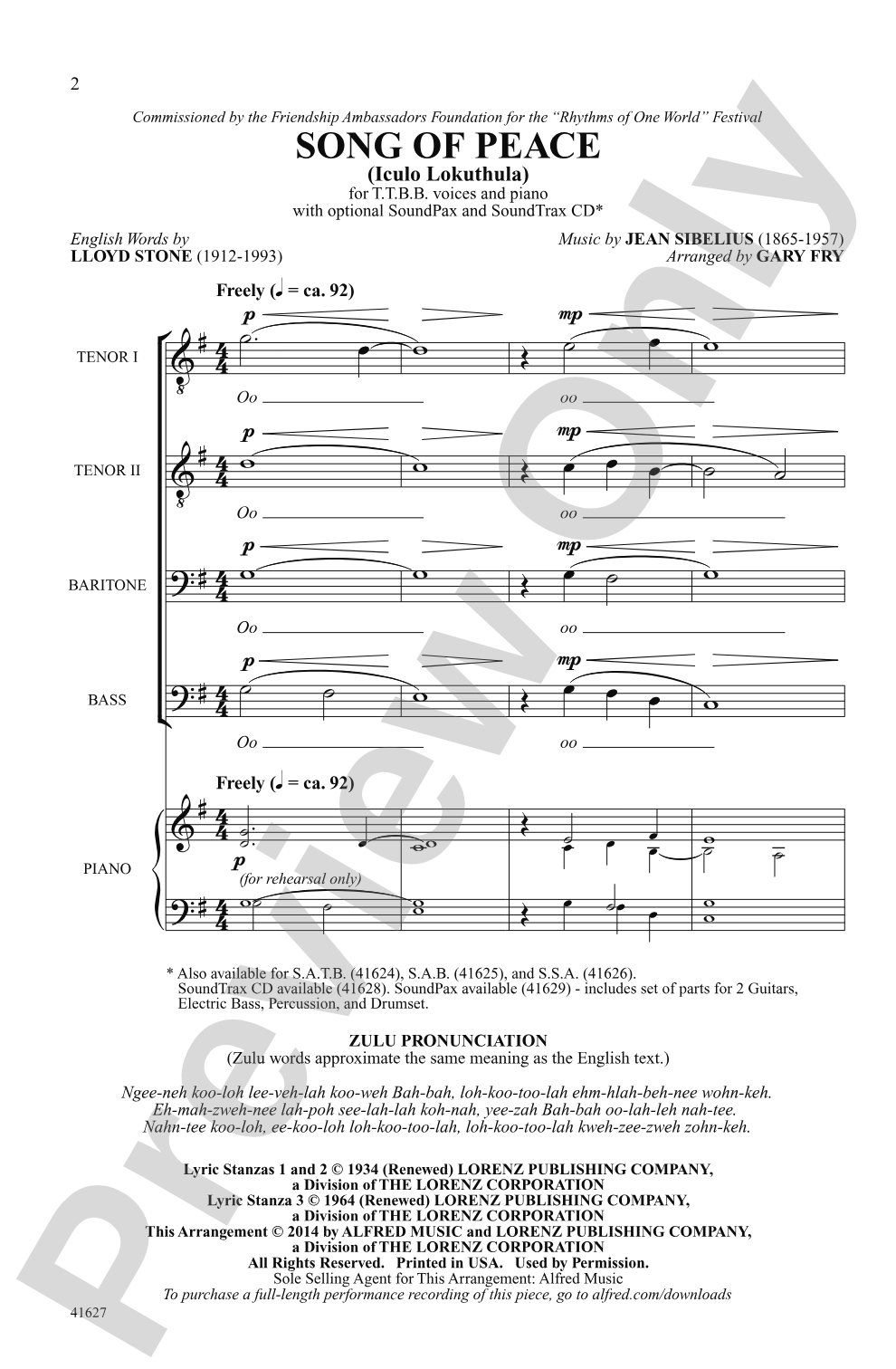
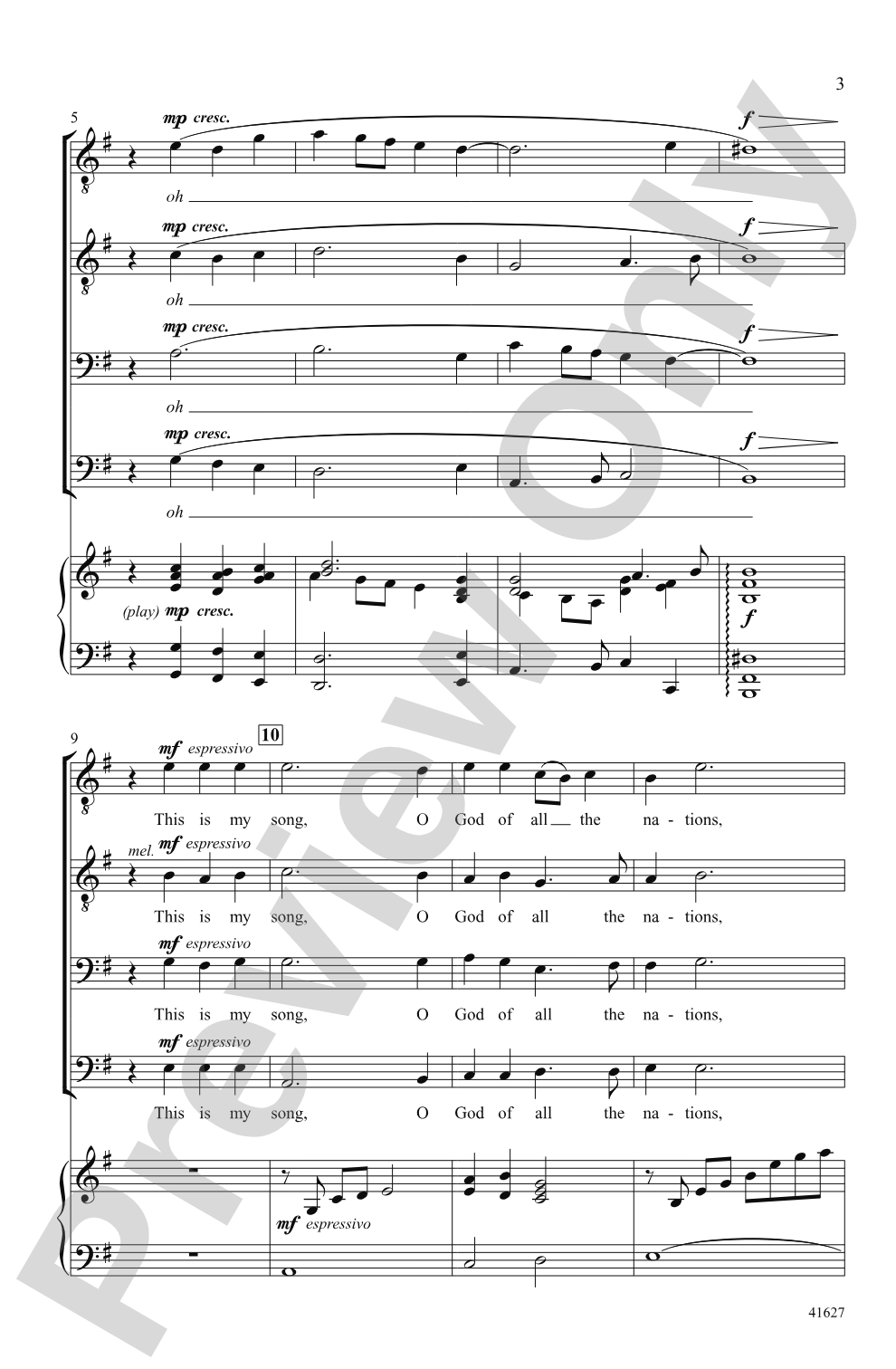

Song of Peace: TTBB Choral Octavo
(Iculo Lokuthula)
English words by Lloyd Stone, music by Jean Sibelius / arr. Gary Fry
Item: 00-PO-0001838
$1.85
Minimum order quantity: 20 copies
Pickup currently not available
Related Items
Song of Peace: SoundTrax Digital Audio Download |
$27.99
|
View | |
Song of Peace: SATB Choral Octavo |
$1.85
|
View | |
Song of Peace: SAB Choral Octavo |
$1.85
|
View | |
Song of Peace: SSA Choral Octavo |
$1.85
|
View | |
Song of Peace: SATB Choral Octavo |
$1.85
|
View | |
Song of Peace: SAB Choral Octavo |
$1.85
|
View | |
Song of Peace: SSA Choral Octavo |
$1.85
|
View | |
Song of Peace: TTBB Choral Octavo |
$1.85
|
View | |
Song of Peace: Choral Octavo SoundTrax CD |
$27.99
|
View |
Description
Based on Sibelius' Finlandia, this impressive selection is like two phenomenal arrangements in one: the first half, a stunning homophonic treatment of "This Is My Song;" the second half, a Zulu translation set to a world music groove. A powerful multicultural standout!


Song of Peace: TTBB Choral Octavo isn't in MakeMusic Cloud just yet...but it could be. Let us know you'd like to see it, and you'll help shape what comes next. In the meantime, start a free trial and dive into thousands of interactive titles your students can play along with today.
Request This Title
Tell us you want it.
Start Your Free Trial
Explore everything that's ready to play right now.
Sample Audio
1
Audio File
--:--
0:00
0:00
Sample Video
No sample videos found.
Additional Details
Series:
Alfred Choral Designs
Publisher:
Alfred Music
Page Count:
12
SKU:
00-PO-0001838
More about this title
About the Composer: Jean Sibelius
Jean Sibelius (1865-1957) was a Finnish composer whose orchestral works became synonymous with Finnish nationalism and identity. His most famous composition, Finlandia, emerged from a period of Russian oppression in Finland and became an unofficial anthem of independence. Sibelius's gift for sweeping melodic lines and rich harmonic color made his music immediately accessible to audiences while remaining sophisticated enough to engage musicians and scholars alike.
Why we love this
Gary Fry's arrangement respects the nobility of Sibelius's original melody while creating something genuinely new. By pairing a refined homophonic setting with a Zulu world music groove, this piece refuses to be one thing, offering singers and audiences a genuine multicultural statement rather than a token gesture.
What to expect
The first half unfolds with the quiet dignity of a prayer or pledge, each voice line singing with clear purpose. The second half explodes into life, grounded in African rhythmic energy and a sense of celebration that feels earned rather than imposed.
Who it's for
TTBB ensembles looking for a substantial concert piece that challenges singers musically while delivering a powerful thematic statement. This works equally well for high school and collegiate choirs comfortable with both lyrical singing and rhythmic precision.
How to get the most out of it
- Balance the harmonic simplicity of the first half with full, resonant tone; the homophonic texture demands clear part independence, not blending into unison.
- Let the rhythmic vitality of the second half energize your singers without rushing; the world music groove works best when grounded and confident rather than frantic.
- Shape the transition between sections carefully; treat it as a genuine pivot point, not an abrupt change of mood.
- Use the recorded accompaniment to lock the groove in the second half, but rehearse a cappella first to ensure your singers own the harmonic integrity of both sections.
How to use it
Program this as a centerpiece for a concert exploring music's power to unite across cultures. The dramatic arc from reverent to joyful makes it a natural closer for a set, or a powerful standalone moment in a longer program exploring peace, faith, or human connection.
Skills your students will build
- Singing sustained harmonic lines with vertical clarity in homophonic texture
- Maintaining rhythmic precision and groove in world music idioms
- Managing dramatic tempo and character shifts within a single piece
- Pronouncing and interpreting a Zulu text with cultural respect
- Balancing accessibility (a well-known melody) with musical sophistication