
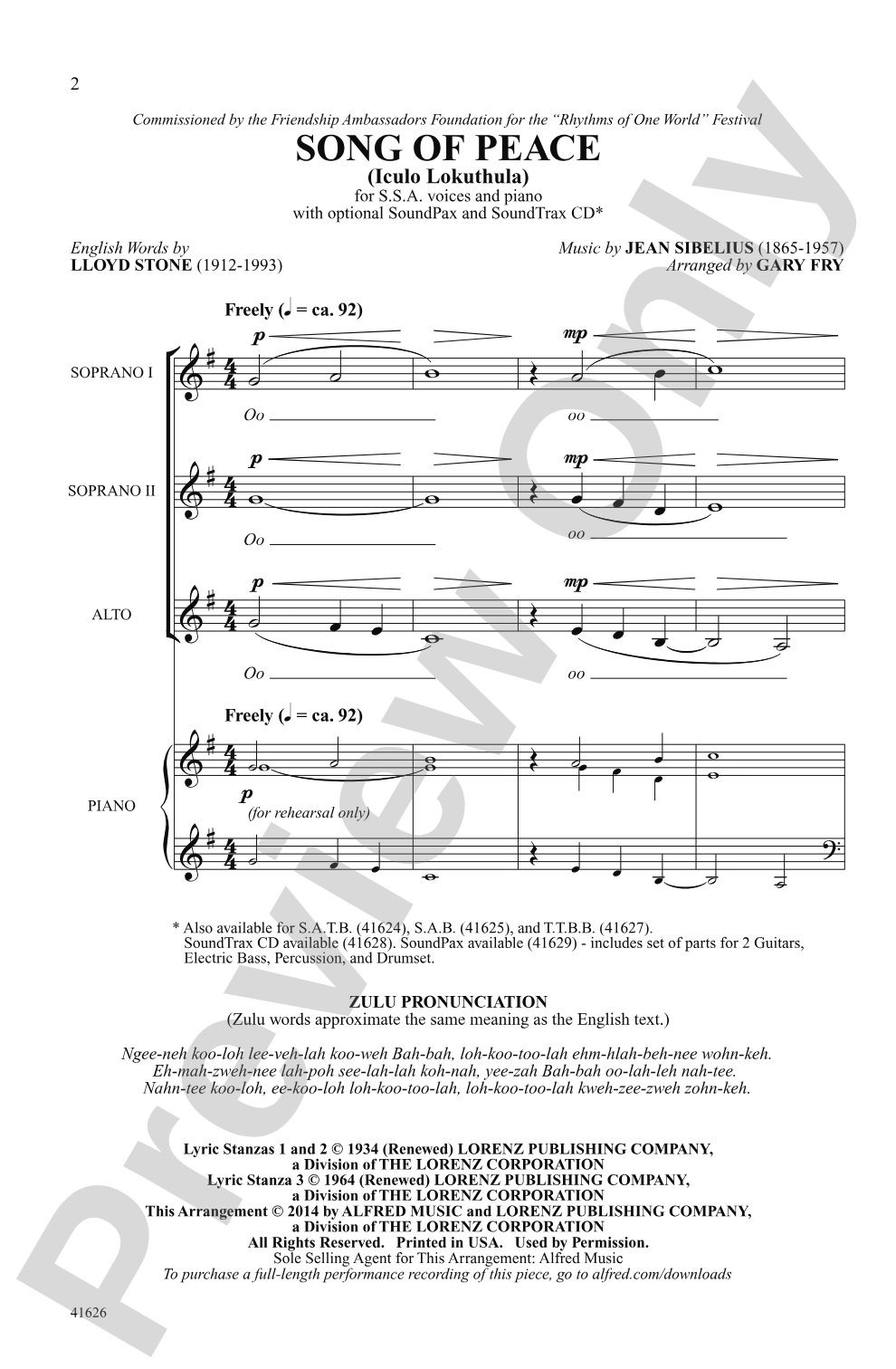

Song of Peace: SSA Choral Octavo
(Iculo Lokuthula)
English words by Lloyd Stone, music by Jean Sibelius / arr. Gary Fry
Item: 00-PO-0001837
$1.85
Minimum order quantity: 20 copies
Pickup currently not available
Related Items
Song of Peace: SoundTrax Digital Audio Download |
$27.99
|
View | |
Song of Peace: SATB Choral Octavo |
$1.85
|
View | |
Song of Peace: SAB Choral Octavo |
$1.85
|
View | |
Song of Peace: TTBB Choral Octavo |
$1.85
|
View | |
Song of Peace: SATB Choral Octavo |
$1.85
|
View | |
Song of Peace: SAB Choral Octavo |
$1.85
|
View | |
Song of Peace: SSA Choral Octavo |
$1.85
|
View | |
Song of Peace: TTBB Choral Octavo |
$1.85
|
View | |
Song of Peace: Choral Octavo SoundTrax CD |
$27.99
|
View |
Description
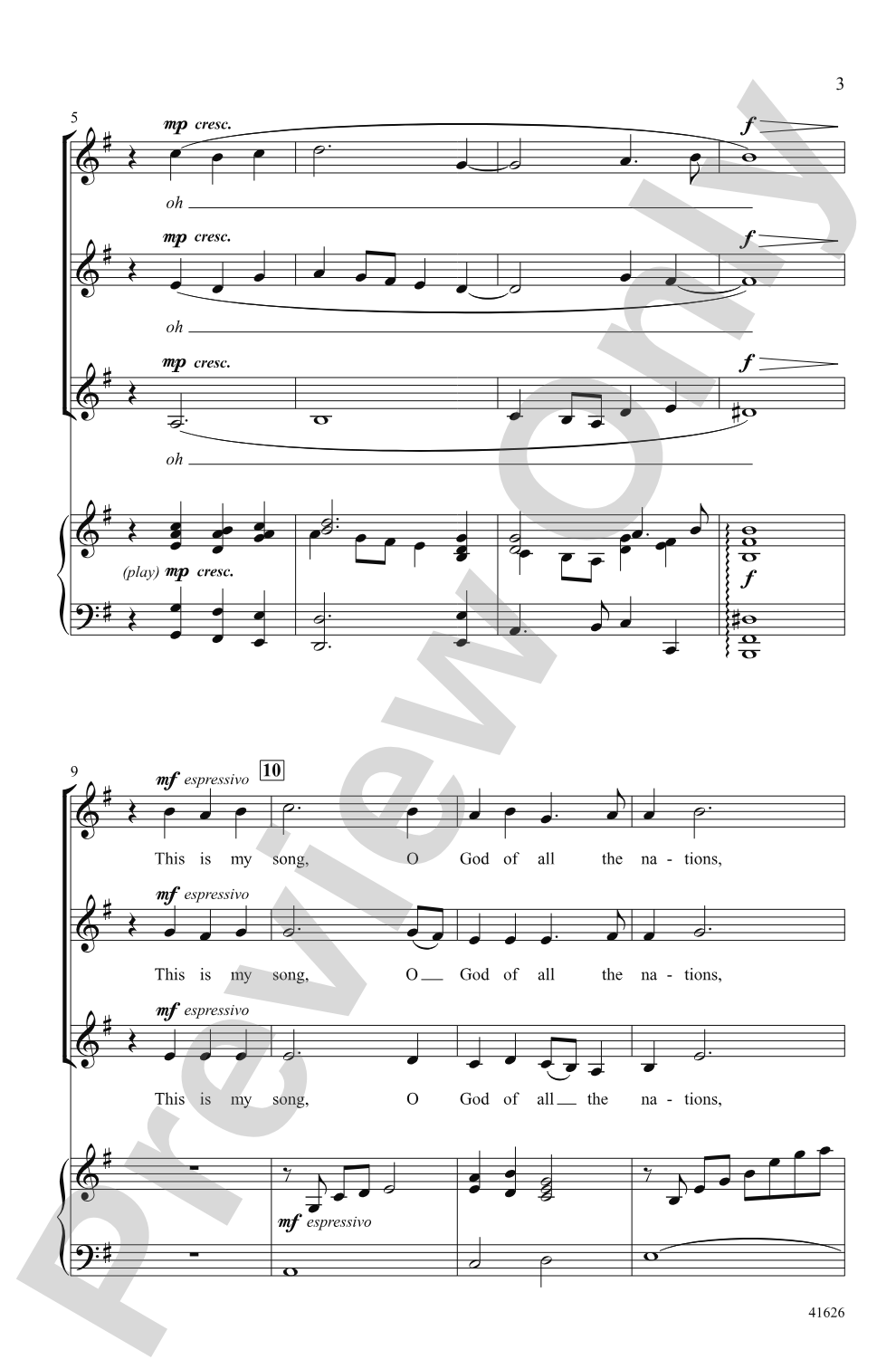
Based on Sibelius' Finlandia, this impressive selection is like two phenomenal arrangements in one: the first half, a stunning homophonic treatment of "This Is My Song;" the second half, a Zulu translation set to a world music groove. A powerful multicultural standout!


Song of Peace: SSA Choral Octavo isn't in MakeMusic Cloud just yet...but it could be. Let us know you'd like to see it, and you'll help shape what comes next. In the meantime, start a free trial and dive into thousands of interactive titles your students can play along with today.
Request This Title
Tell us you want it.
Start Your Free Trial
Explore everything that's ready to play right now.
Sample Audio
1
Audio File
--:--
0:00
0:00
Sample Video
No sample videos found.
Additional Details
Series:
Alfred Choral Designs
Publisher:
Alfred Music
Page Count:
12
SKU:
00-PO-0001837
More about this title
About the Composer: Jean Sibelius
Jean Sibelius (1865-1957) was a Finnish composer whose work defined the Romantic era's nationalist movement. His orchestral works, particularly Finlandia, became anthems of cultural identity and remain cornerstones of the concert repertoire. Finlandia's stirring melodic material has inspired countless arrangements across ensembles and voices, testifying to the universal power of Sibelius' compositional voice.
Why we love this
Gary Fry's dual-arrangement design gives you two distinct emotional landscapes from a single piece of repertoire. The homophonic opening captures the dignity and grandeur of the original Finlandia, while the world music second half demonstrates how this iconic melody transcends cultural boundaries. Programming becomes richer when your singers discover that a beloved European masterwork can speak authentically in multiple musical languages.
What to expect
The first half unfolds with noble simplicity, allowing Sibelius' melody to speak with clarity and warmth across the three voices. When the world music arrangement begins, energy shifts; rhythmic vitality and a grounded, earthy quality replace the classical restraint, yet the same musical material feels entirely fresh. The piece carries genuine emotional weight throughout, moving from introspection to celebration without losing its sense of purpose.
Who it's for
SSA choirs with intermediate to advanced musicianship who want to explore how a single melodic idea can support multiple cultural and musical perspectives. This works particularly well for groups seeking repertoire that bridges classical tradition with contemporary global awareness. Directors programming concerts around themes of unity, peace, or cultural celebration will find this piece both musically substantial and conceptually rich.
How to get the most out of it
- Balance the homophonic texture of the first half by ensuring all parts carry equal weight; avoid letting any one voice line emerge accidentally.
- Shape the transition between the two halves deliberately, using a breath or brief pause to signal the shift from classical treatment to world music groove.
- Engage with the Zulu translation actively by researching pronunciation and cultural context; your singers' ownership of the language will deepen the authenticity of the second section.
- Use the recorded accompaniment to establish the world music groove in the second half, allowing your singers to lock into rhythmic phrasing that feels natural rather than mechanical.
How to use it
Position this as a centerpiece in a concert exploring music's power to unite across cultures. Its thematic focus on peace makes it ideal for winter holiday concerts, community celebration events, or programs built around social justice and inclusion. The arrangement's structural clarity also makes it an excellent choice for competitions or festival performances where a single piece can showcase both technical control and interpretive range.
Skills your students will build
- Singing exposed homophonic textures with blend and balance
- Interpreting multiple musical languages and styles from a single melodic source
- Maintaining rhythmic precision in world music grooves
- Pronouncing and honoring non-English text with cultural sensitivity
- Managing sectional transitions and tonal shifts within a continuous piece