

Song of Peace: SAB Choral Octavo
(Iculo Lokuthula)
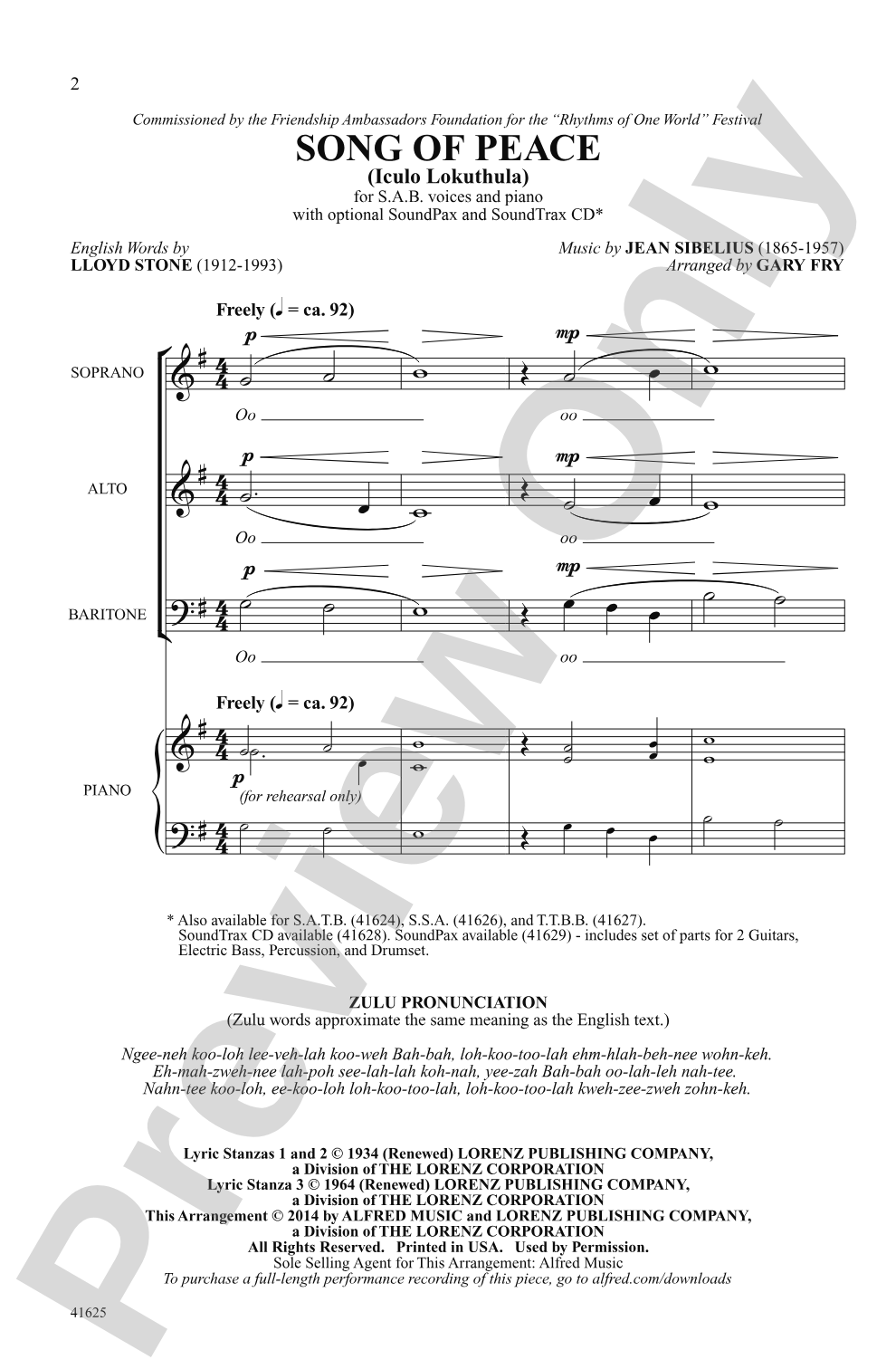
English words by Lloyd Stone, music by Jean Sibelius / arr. Gary Fry
Item: 00-PO-0001836
$1.85
Minimum order quantity: 20 copies
Pickup currently not available
Related Items
Song of Peace: SoundTrax Digital Audio Download |
$27.99
|
View | |
Song of Peace: SATB Choral Octavo |
$1.85
|
View | |
Song of Peace: SSA Choral Octavo |
$1.85
|
View | |
Song of Peace: TTBB Choral Octavo |
$1.85
|
View | |
Song of Peace: SATB Choral Octavo |
$1.85
|
View | |
Song of Peace: SAB Choral Octavo |
$1.85
|
View | |
Song of Peace: SSA Choral Octavo |
$1.85
|
View | |
Song of Peace: TTBB Choral Octavo |
$1.85
|
View | |
Song of Peace: Choral Octavo SoundTrax CD |
$27.99
|
View |
Description
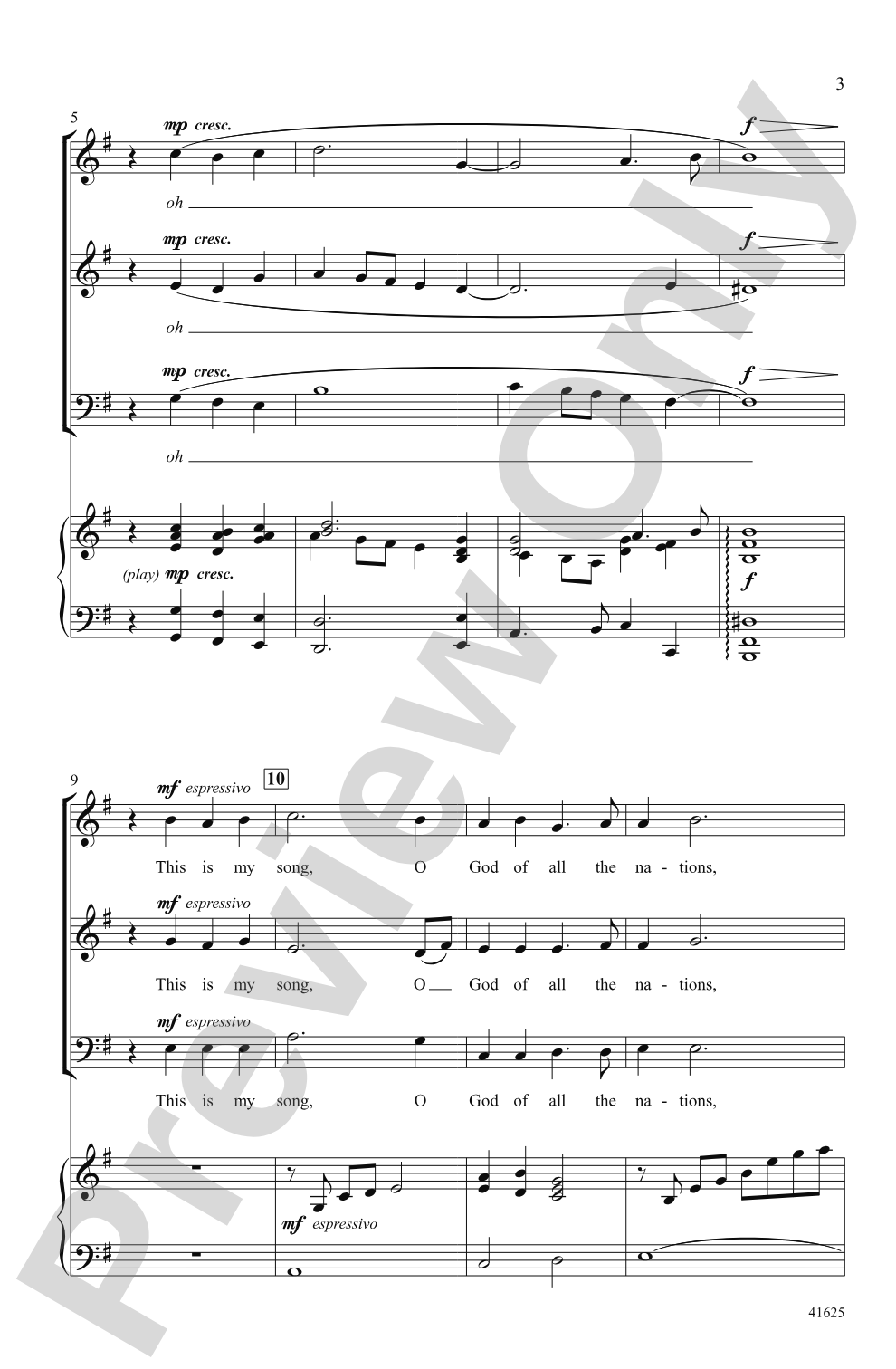
Based on Sibelius' Finlandia, this impressive selection is like two phenomenal arrangements in one: the first half, a stunning homophonic treatment of "This Is My Song;" the second half, a Zulu translation set to a world music groove. A powerful multicultural standout!


Song of Peace: SAB Choral Octavo isn't in MakeMusic Cloud just yet...but it could be. Let us know you'd like to see it, and you'll help shape what comes next. In the meantime, start a free trial and dive into thousands of interactive titles your students can play along with today.
Request This Title
Tell us you want it.
Start Your Free Trial
Explore everything that's ready to play right now.
Sample Audio
1
Audio File
--:--
0:00
0:00
Sample Video
No sample videos found.
Additional Details
Series:
Alfred Choral Designs
Publisher:
Alfred Music
Page Count:
12
SKU:
00-PO-0001836
More about this title
About the Composer: Jean Sibelius
Jean Sibelius (1865–1957) stands as one of the most significant nationalist composers of the late Romantic era. His symphonies and tone poems shaped the sound of modern classical music, but it is Finlandia, written in 1899, that became his most globally recognized work. The piece emerged during a period of Finnish cultural awakening and political tension, making it a symbol of national identity and, eventually, universal themes of freedom and peace.
Why we love this
Gary Fry's arrangement transforms Finlandia into a genuinely inventive two-part statement without losing the melody's architectural power. Shifting from English homophony to a Zulu translation with world music elements gives you a piece that programs authentically as both a masterwork tribute and a genuine multicultural statement, not a superficial nod to diversity.
What to expect
The first half unfolds with the stately dignity of Sibelius' original melody, familiar and dignified. Then the piece pivots into something warmer and more grounded, carrying the same musical DNA but now pulsing with African rhythmic energy and vocal color that feels fresh against the hymn-like opening.
Who it's for
SAB choirs seeking repertoire that honors both classical tradition and genuine multicultural music making. This works for concert choirs with intermediate-to-advancing singers who can navigate two distinct musical languages and are ready to engage meaningfully with global traditions.
How to get the most out of it
- Let the first section breathe as a straightforward, noble hymn; the homophonic texture means every voice line matters equally, so balance voices horizontally rather than stacking soprano-dominant.
- Shape the transition between the English and Zulu sections deliberately; this is where the arrangement's concept becomes clear, so mark a moment of stillness or tonal shift to signal the cultural pivot.
- Anchor the second half's groove in rhythmic precision from your lower voices; the world music setting will feel loose and inauthentic if the foundation wavers.
- Use the recorded accompaniment strategically during rehearsal to establish the Zulu section's rhythmic and harmonic landscape before singers lock their parts.
How to use it
This is a natural centerpiece for a concert themed around peace, brotherhood, or cross-cultural connection. It also serves beautifully as a closer on a program of classical arrangements, where its dual nature (masterwork plus world music) signals artistic ambition beyond straightforward pops programming.
Skills your students will build
- Singing in two distinct musical languages and idioms within a single piece
- Balancing melodic prominence across three voice parts in homophonic texture
- Rhythmic precision in non-Western musical grooves and meters
- Tonal blend and cultural authenticity when navigating world music voicings
- Dramatic phrasing across a large structural shift