
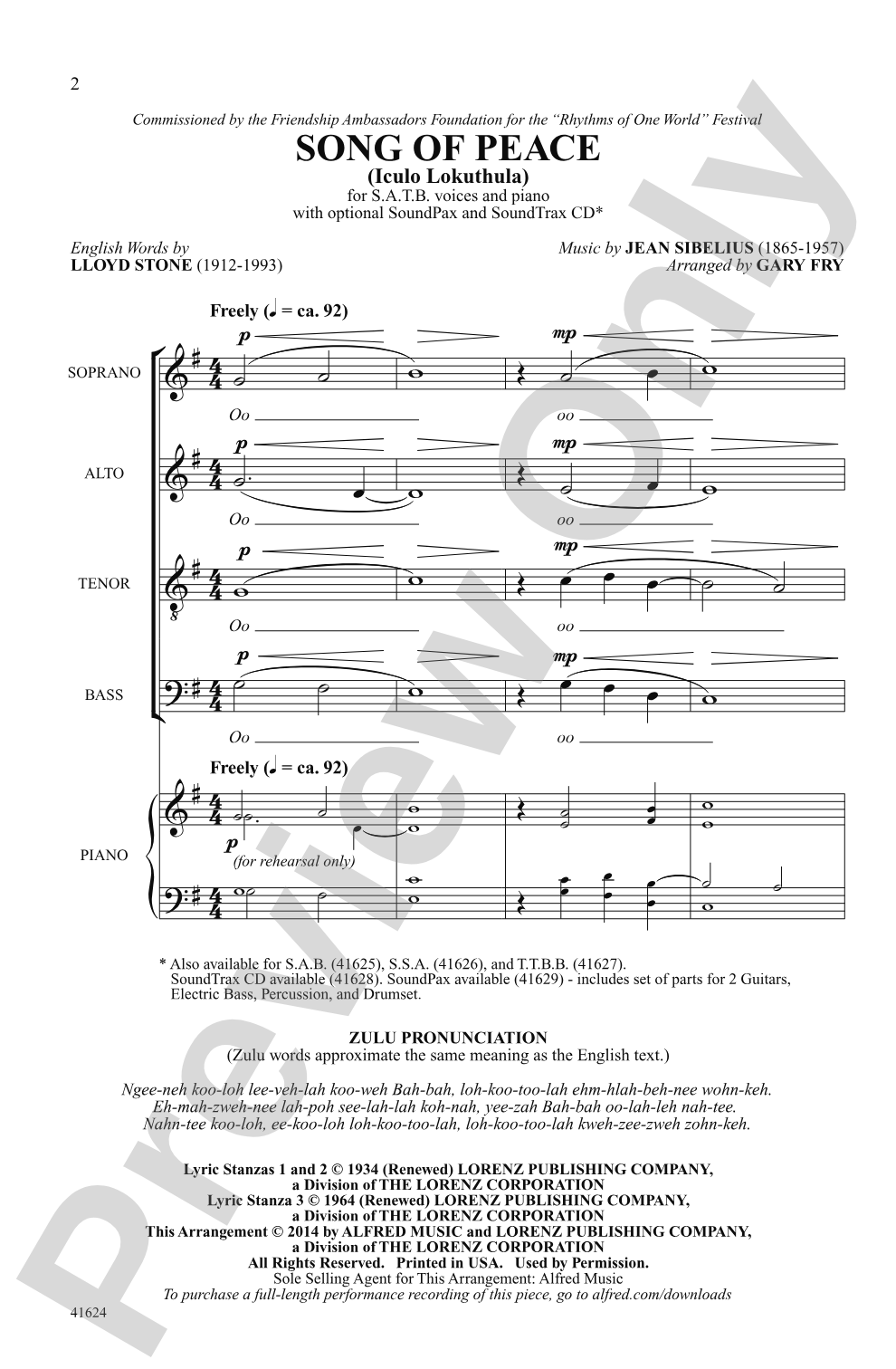

Song of Peace: SATB Choral Octavo
(Iculo Lokuthula)
English words by Lloyd Stone, music by Jean Sibelius / arr. Gary Fry
Item: 00-PO-0001835
$1.85
Minimum order quantity: 20 copies
Pickup currently not available
Related Items
Song of Peace: SoundTrax Digital Audio Download |
$27.99
|
View | |
Song of Peace: SAB Choral Octavo |
$1.85
|
View | |
Song of Peace: SSA Choral Octavo |
$1.85
|
View | |
Song of Peace: TTBB Choral Octavo |
$1.85
|
View | |
Song of Peace: SATB Choral Octavo |
$1.85
|
View | |
Song of Peace: SAB Choral Octavo |
$1.85
|
View | |
Song of Peace: SSA Choral Octavo |
$1.85
|
View | |
Song of Peace: TTBB Choral Octavo |
$1.85
|
View | |
Song of Peace: Choral Octavo SoundTrax CD |
$27.99
|
View |
Description
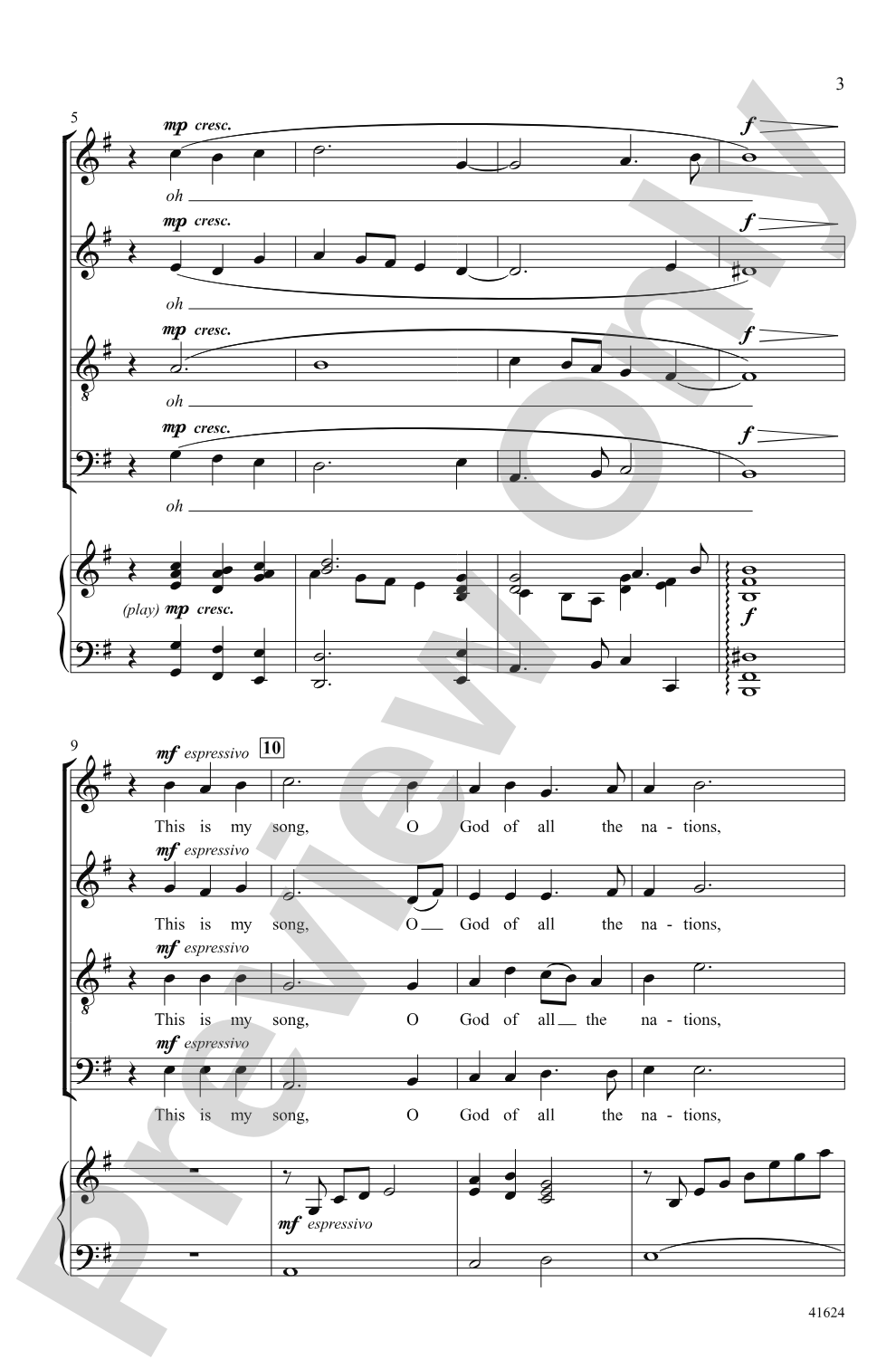
Based on Sibelius' Finlandia, this impressive selection is like two phenomenal arrangements in one: the first half, a stunning homophonic treatment of "This Is My Song;" the second half, a Zulu translation set to a world music groove. A powerful multicultural standout!


Song of Peace: SATB Choral Octavo isn't in MakeMusic Cloud just yet...but it could be. Let us know you'd like to see it, and you'll help shape what comes next. In the meantime, start a free trial and dive into thousands of interactive titles your students can play along with today.
Request This Title
Tell us you want it.
Start Your Free Trial
Explore everything that's ready to play right now.
Sample Audio
1
Audio File
--:--
0:00
0:00
Sample Video
No sample videos found.
Additional Details
Series:
Alfred Choral Designs
Publisher:
Alfred Music
Page Count:
12
SKU:
00-PO-0001835
More about this title
About the Composer: Jean Sibelius
Jean Sibelius (1865-1957) shaped the sound of Finnish nationalism through orchestral music that bridged Romanticism and modernism. His symphonies and tone poems established him as one of the most performed composers of the 20th century, yet his influence extends far beyond the concert hall into choral and educational settings.
Finlandia stands as Sibelius' most recognizable work outside the symphony, born from his commitment to Finnish cultural identity. For choral educators, his melodic gift and structural clarity make his music ideal for arrangement and adaptation across skill levels and ensemble sizes.
Why we love this
Gary Fry has engineered a genuinely inventive approach here by pairing two distinct arrangements of the same melodic foundation, creating a single piece that teaches harmonic sophistication in the first section while introducing world music context and cultural meaning in the second. The structural choice rewards singers who engage with the cultural shift rather than asking them to simply sing two unrelated pieces, and that intentionality is rare at this level.
What to expect
The opening section unfolds with hymn-like warmth and dignity, the kind of sustained harmonic writing that builds across phrases rather than moment to moment. The second half shifts ground entirely, introducing rhythmic energy and a melodic character shaped by African musical tradition, creating a sense of discovery and expansion within a single piece.
Who it's for
Advanced mixed choirs, particularly those with interest in cultural representation and programming depth. This works for groups that have command of four-part writing and are ready to explore how arrangement choices carry meaning beyond musical technique.
How to get the most out of it
- The homophonic first half demands blend and attention to vowel shape across all four parts; because the harmony is accessible, lapses in intonation become immediately audible. Sectional rehearsal by part first, then vertical listening, prevents the temptation to rush.
- Rhythmic specificity in the Zulu section determines whether the groove lands or feels stiff; mark the percussion parts and encourage singers to think of themselves as part of an ensemble that includes rhythm instruments, not just voices.
- Balance the two halves as distinct musical statements rather than variations on the same theme. The recorded accompaniment can clarify the stylistic pivot, but rehearse both sections without it to ensure singers own the transition.
How to use it
Place this in a concert that addresses peace, community, or cultural bridge-building, where its two distinct musical approaches become part of a larger conversation. The structural variety also makes it a strong closer or centerpiece for a program focused on arrangement and orchestration in choral music.
Skills your students will build
- Four-part harmonic balance and blend in homophonic texture
- Rhythmic independence and groove awareness across ensemble
- Cultural listening and contextual interpretation of arrangement choices
- Sustained legit singing across longer harmonic phrases