

Sonatemi un Balletto: TBB Choral Octavo
(Play a Dance for Me)
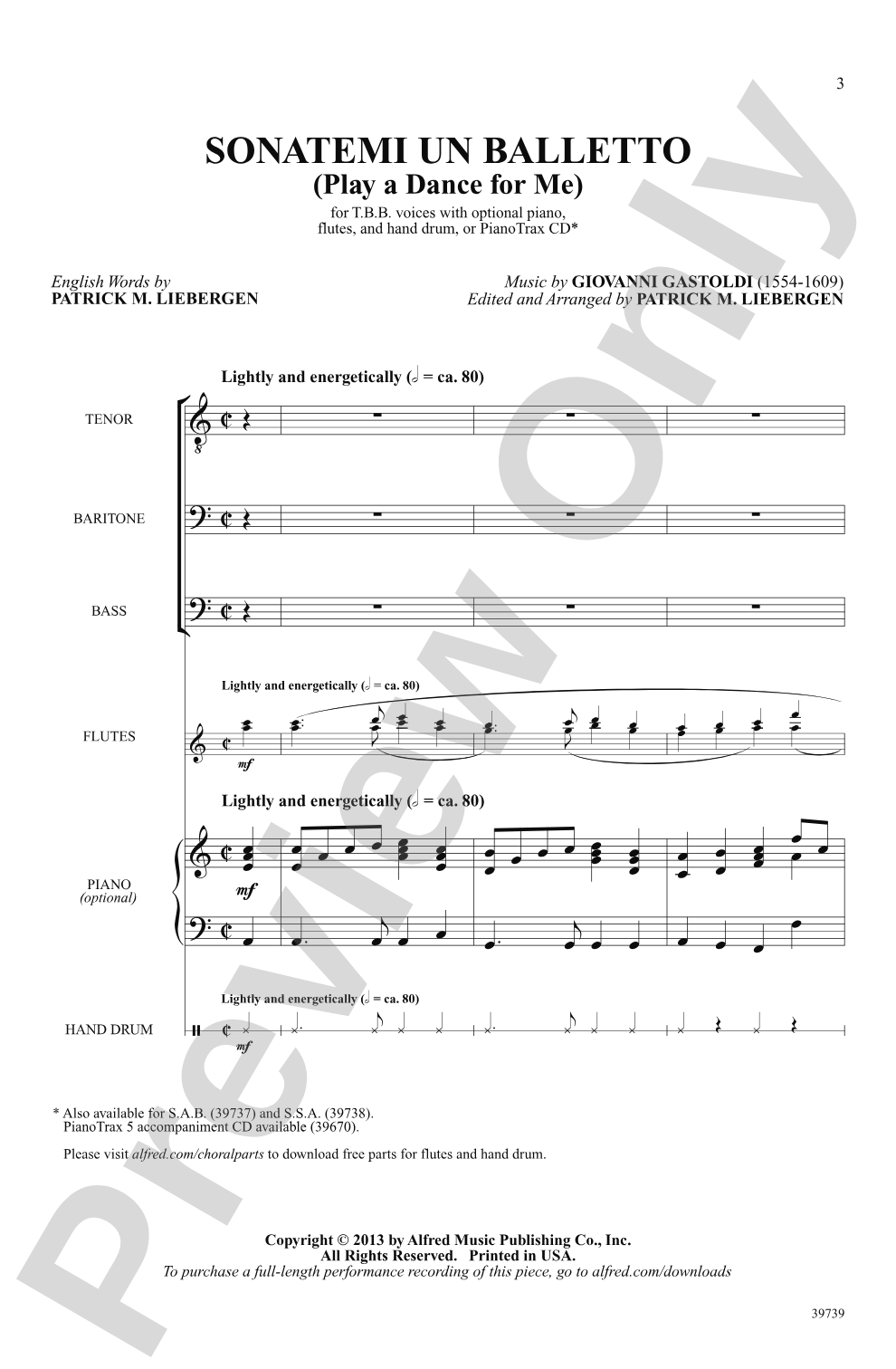
Music by Giovanni Gastoldi / ed. and arr., with English words, by Patrick M. Liebergen
Item: 00-PO-0001576
$1.85
Minimum order quantity: 20 copies
Pickup currently not available
Related Items
Sonatemi un Balletto: PianoTrax Digital Download |
$9.99
|
View | |
Sonatemi un Balletto: SAB Choral Octavo |
$1.85
|
View | |
Sonatemi un Balletto: SSA Choral Octavo |
$1.85
|
View | |
Sonatemi un Balletto: SAB Choral Octavo |
$1.85
|
View | |
Sonatemi un Balletto: SSA Choral Octavo |
$1.85
|
View | |
Sonatemi un Balletto: TBB Choral Octavo |
$1.85
|
View |
Description
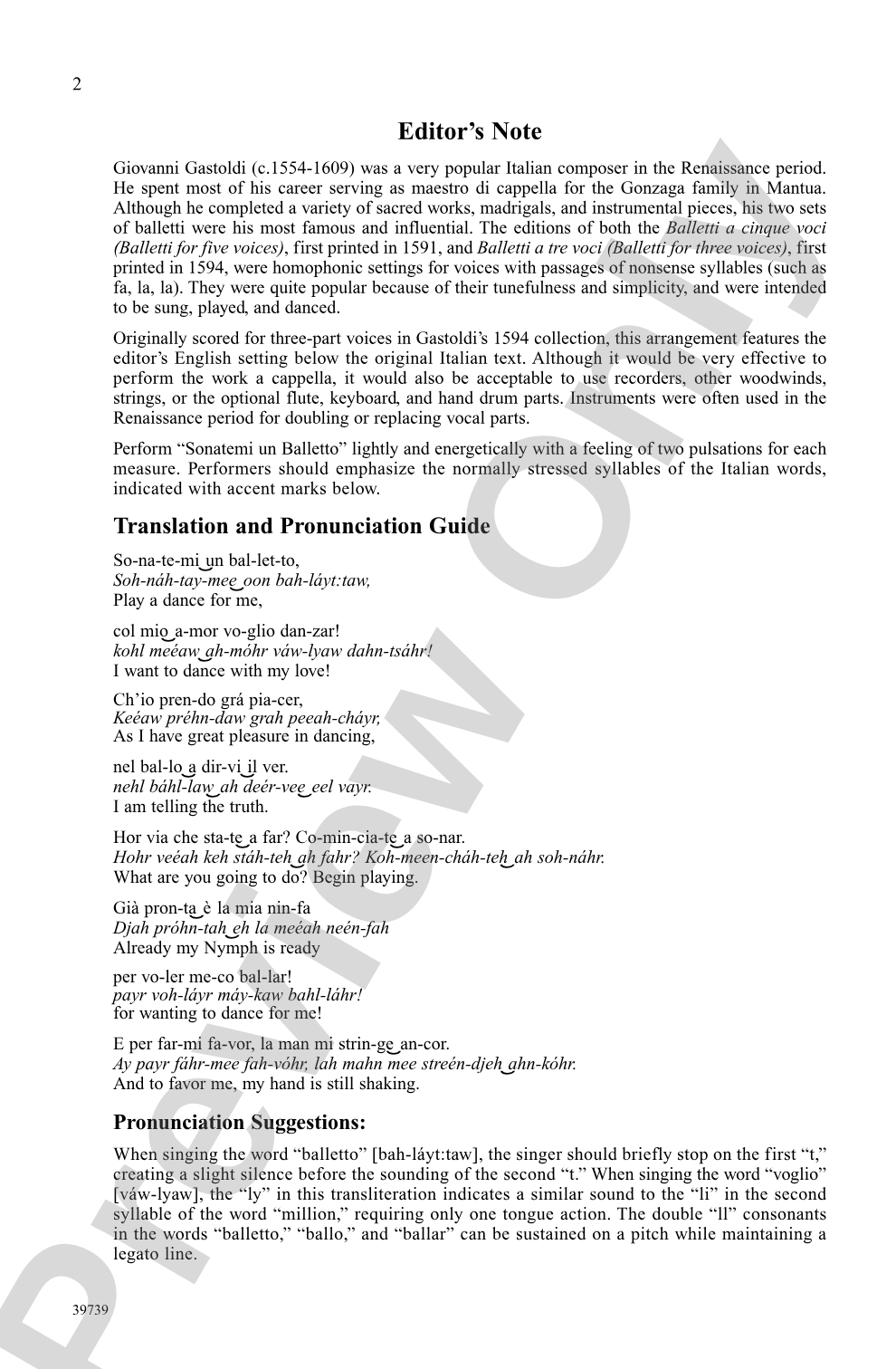
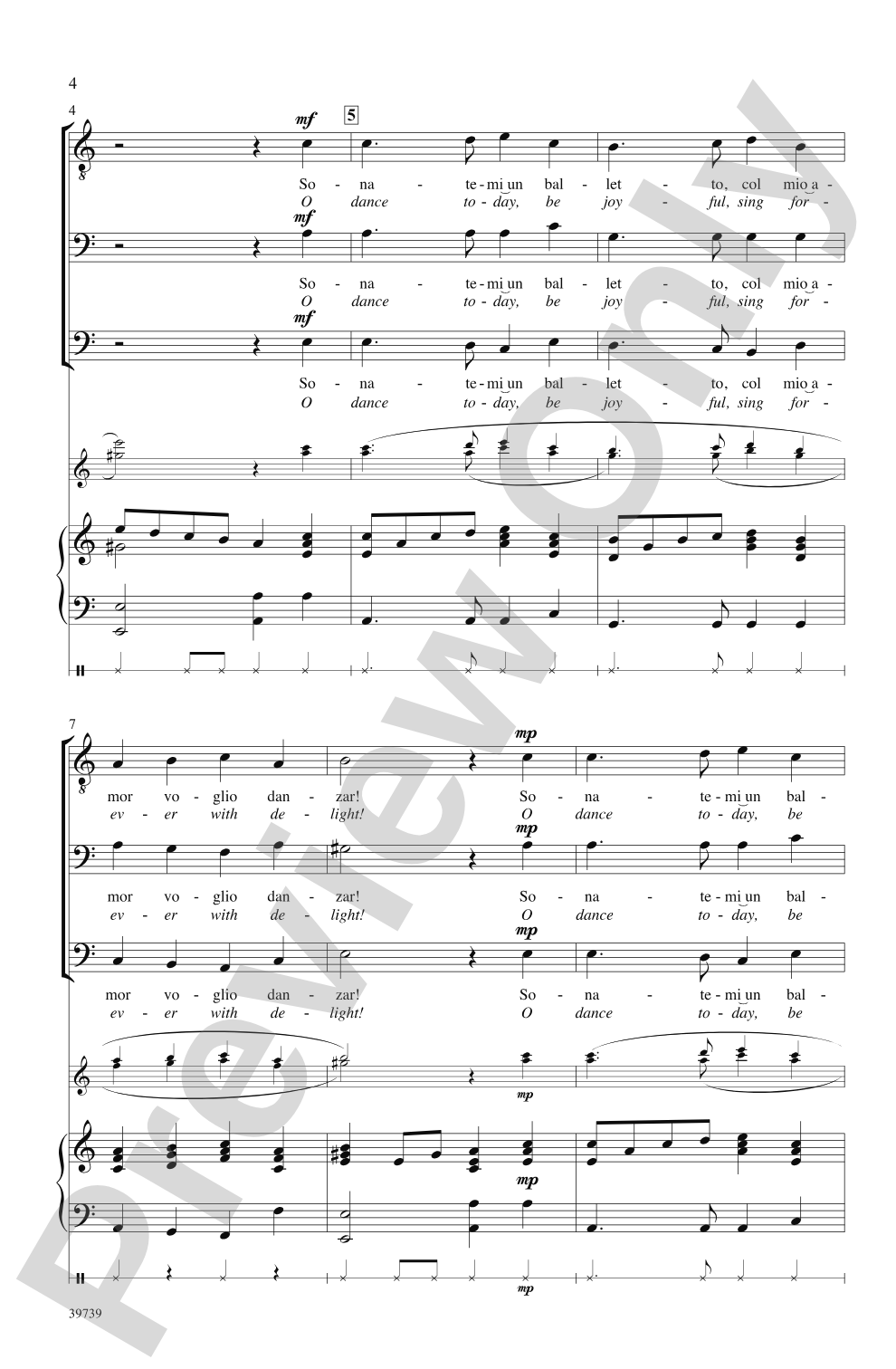
This balletti from the Renaissance period should be performed lightly and energetically. Three-part choirs of any gender may choose to sing in Italian or English, a cappella or accompanied. Optional flute and hand drum parts are available free at alfred.com/choralparts.


Sonatemi un Balletto: TBB Choral Octavo isn't in MakeMusic Cloud just yet...but it could be. Let us know you'd like to see it, and you'll help shape what comes next. In the meantime, start a free trial and dive into thousands of interactive titles your students can play along with today.
Request This Title
Tell us you want it.
Start Your Free Trial
Explore everything that's ready to play right now.
Sample Audio
1
Audio File
--:--
0:00
0:00
Sample Video
No sample videos found.
Additional Details
Series:
Alfred Choral Designs
Publisher:
Alfred Music
Page Count:
12
SKU:
00-PO-0001576
More about this title
About the Composer: Giovanni Gastoldi
Giovanni Gastoldi (c. 1554-1609) was a master of the Italian balletti, a secular vocal form that emerged in late Renaissance Italy. Working primarily in Mantua as a composer and maestro di cappella, Gastoldi created music that balanced sophisticated counterpoint with infectious rhythmic vitality, making his works favorites in courts and among amateur musicians alike.
His balletti are characterized by fa-la-la refrains, syllabic text setting, and clear harmonic progressions that made them accessible without sacrificing musical interest. These pieces remain teaching staples because they demonstrate Renaissance compositional principles while remaining genuinely enjoyable to perform and hear.
Why we love this
This arrangement captures the essential energy and transparency of a Renaissance balletto while offering real flexibility for mixed-voice choirs. The optional English text, straightforward voice leading, and available instrumentation parts make it work equally well as a concert opener, a rehearsal energizer, or a pedagogical model for understanding Renaissance secular music.
What to expect
Light, buoyant, and celebratory. The piece moves forward with natural momentum, driven by its rhythmic clarity and the sing-along appeal of the fa-la-la refrains. There is joy in the transparency of the writing and the clarity of purpose in every phrase.
Who it's for
TBB and flexible mixed-voice choirs looking for Renaissance repertoire that works without extensive rehearsal. Small to mid-sized ensembles, community choirs, and high school choirs will find this accessible enough to learn quickly while sophisticated enough to reward musical attention.
How to get the most out of it
- Maintain crisp articulation on the text to let the syllabic writing breathe. Gastoldi's fa-la-la sections demand clarity rather than legit singing.
- Shape the piece through light dynamic variation rather than tempo manipulation. A single, flowing tempo with subtle phrase swells will reveal the form without losing momentum.
- If using the optional flute and hand drum parts, keep them in rhythmic lock with the singers. These instruments should sit lightly in the texture, not dominate it.
- Choose between Italian and English text based on your choir's strengths and your concert context. Both are equally valid; commit fully to whichever you select.
How to use it
Open a concert or the second half of a program with this piece to shift energy and mood. It pairs beautifully with other Renaissance and early Baroque repertoire, or use it as a stylistic contrast when programming with modern works. The relatively short length and straightforward difficulty make it ideal filler for a mixed program.
Skills your students will build
- Reading Renaissance text underlay and balancing text clarity with musical line
- Singing syllabic, rhythmically driven writing with proper articulation
- Balancing three independent voices while maintaining harmonic integrity
- Understanding fa-la-la refrains and their structural function in balletti
- Ensemble cohesion and intonation in a cappella and accompanied settings