

Sonatemi un Balletto: SAB Choral Octavo
(Play a Dance for Me)
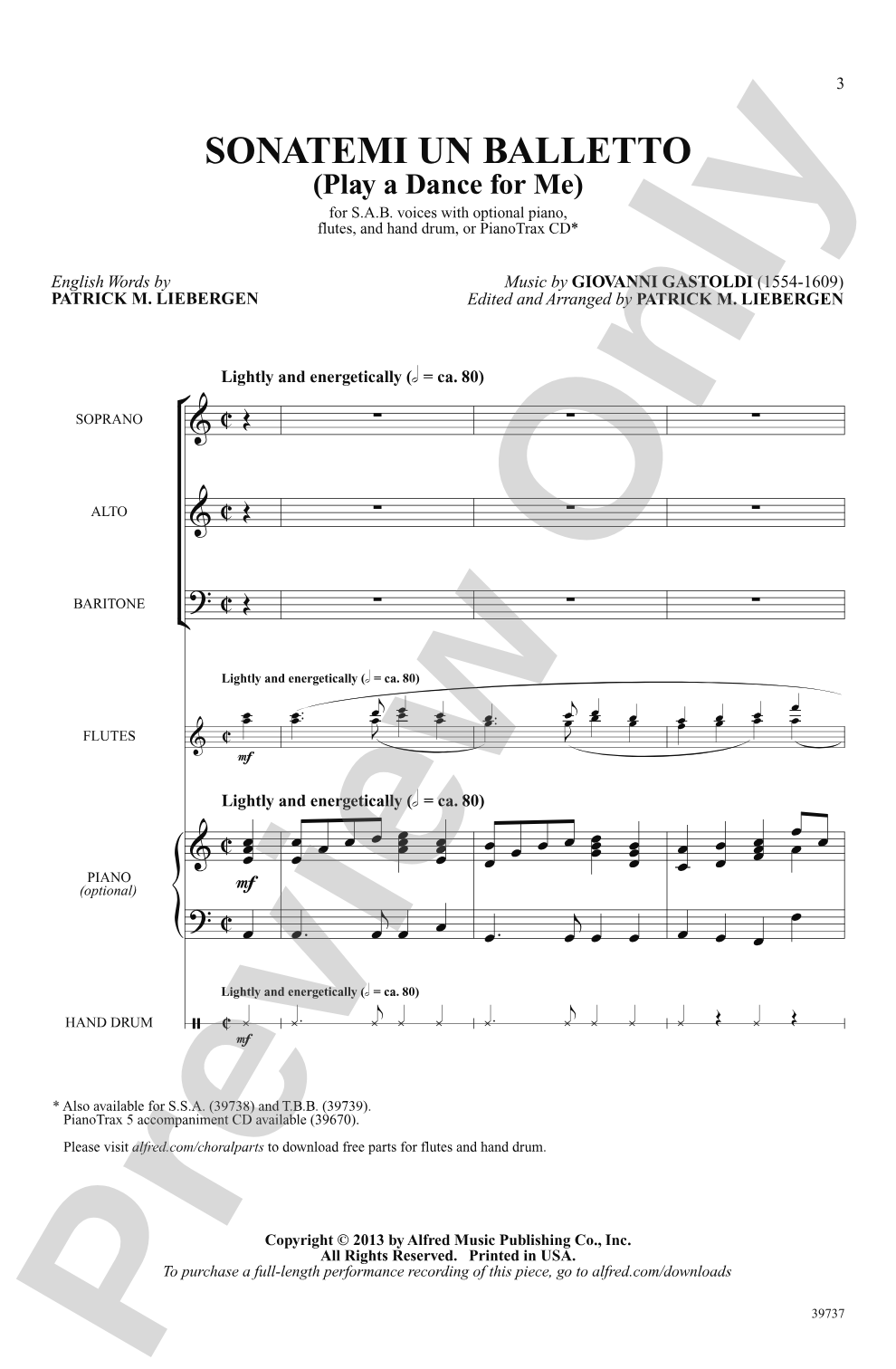
Music by Giovanni Gastoldi / ed. and arr., with English words, by Patrick M. Liebergen
Item: 00-PO-0001574
$1.85
Minimum order quantity: 20 copies
Pickup currently not available
Related Items
Sonatemi un Balletto: PianoTrax Digital Download |
$9.99
|
View | |
Sonatemi un Balletto: SSA Choral Octavo |
$1.85
|
View | |
Sonatemi un Balletto: TBB Choral Octavo |
$1.85
|
View | |
Sonatemi un Balletto: SAB Choral Octavo |
$1.85
|
View | |
Sonatemi un Balletto: SSA Choral Octavo |
$1.85
|
View | |
Sonatemi un Balletto: TBB Choral Octavo |
$1.85
|
View |
Description
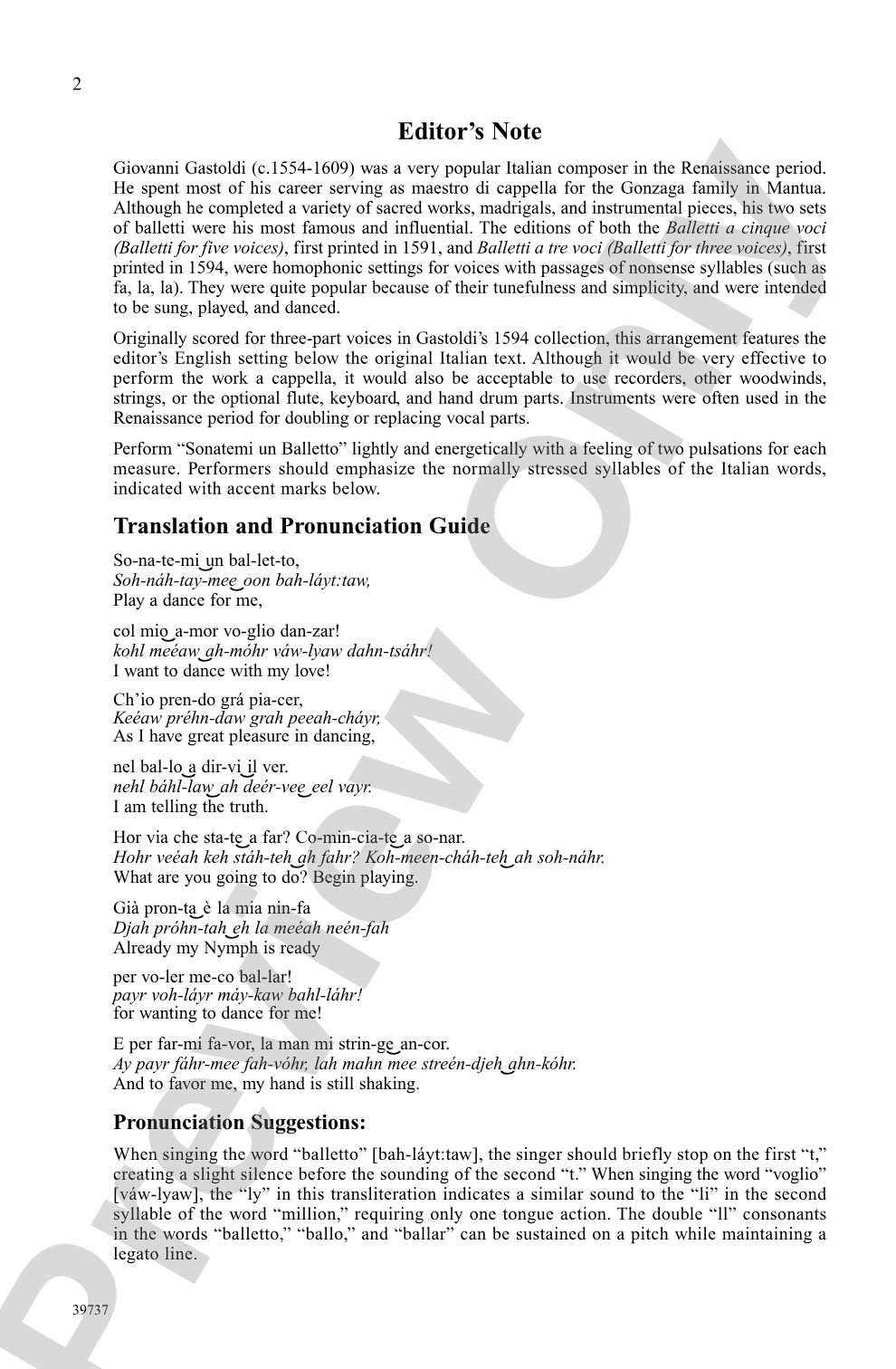
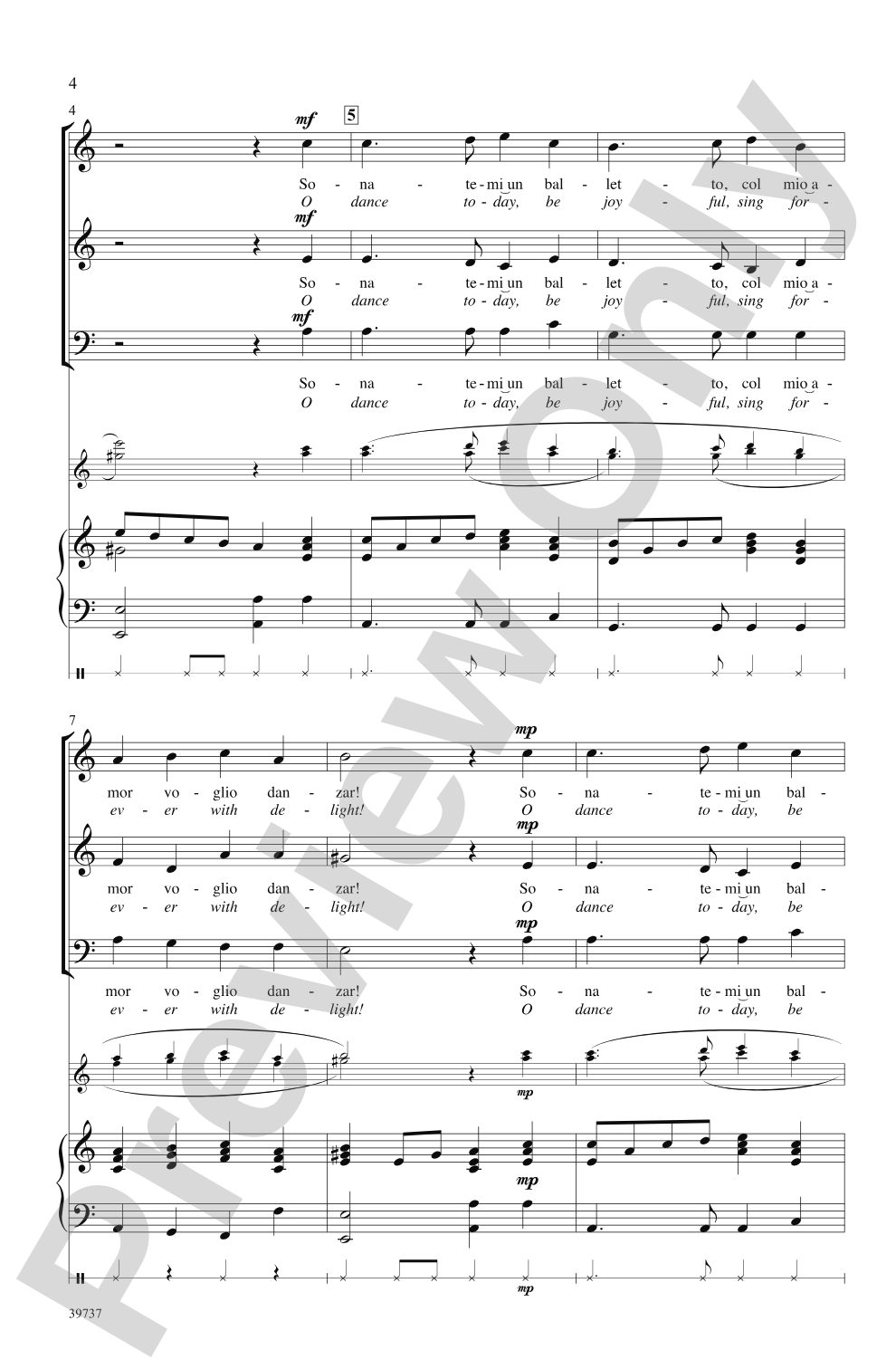
This balletti from the Renaissance period should be performed lightly and energetically. Three-part choirs of any gender may choose to sing in Italian or English, a cappella or accompanied. Optional flute and hand drum parts are available free at alfred.com/choralparts.


Sonatemi un Balletto: SAB Choral Octavo isn't in MakeMusic Cloud just yet...but it could be. Let us know you'd like to see it, and you'll help shape what comes next. In the meantime, start a free trial and dive into thousands of interactive titles your students can play along with today.
Request This Title
Tell us you want it.
Start Your Free Trial
Explore everything that's ready to play right now.
Sample Audio
1
Audio File
--:--
0:00
0:00
Sample Video
No sample videos found.
Additional Details
Series:
Alfred Choral Designs
Publisher:
Alfred Music
Page Count:
12
SKU:
00-PO-0001574
More about this title
About the Composer: Giovanni Gastoldi
Giovanni Gastoldi (c. 1554–1609) was an Italian composer and maestro di cappella who worked primarily in Mantua during the late Renaissance. He became famous throughout Europe for his balletti, a genre of secular vocal music designed for singing and dancing in the court. His works combine Italian text-setting with melodic immediacy and rhythmic vitality, making them as entertaining to perform as they are to hear.
Gastoldi's balletti influenced composers across Europe and remain central to Renaissance choral repertoire today. His ability to craft music that feels both sophisticated and singable has kept these pieces alive in choirs for over four centuries.
Why we love this
Gastoldi's balletti radiate joy without sacrificing musicality, and this arrangement captures that spirit perfectly. The optional flute and hand drum parts allow you to scale the performance context from intimate a cappella singing to a fuller, more theatrical presentation. Directors appreciate how readily SAB choirs connect with this music; its melodic clarity and energetic rhythms engage singers and audiences alike.
What to expect
Sonatemi un Balletto bounces with infectious energy and courtly grace. The melodies invite singers to phrase expressively while the rhythmic drive keeps the piece moving forward, creating an experience that feels both refined and joyful. It's the kind of music that makes audiences smile and singers feel the pleasure of singing together.
Who it's for
This arrangement suits any SAB choir seeking accessible yet substantive Renaissance material. It works well for singers new to early music as well as experienced ensembles looking for program diversity. Whether your choir sings a cappella or you layer in the optional flute and hand drum parts, the piece accommodates different performance capacities and rehearsal timelines.
How to get the most out of it
- Keep the tempo brisk and the articulation clean. Renaissance balletti thrive on forward motion and rhythmic precision; sluggish pacing drains the character.
- If using the optional flute and hand drum parts, let them establish the rhythmic foundation while the choir sings with natural phrasing rather than locking mechanically to the drums.
- Encourage flexibility with language choice. Singing in Italian amplifies the authentic character, while English allows broader accessibility; decide based on your choir's comfort and your performance context.
- Balance lightness with clarity. The piece should feel buoyant and spirited, but each voice part must remain audible, especially in the SAB texture where the alto line carries important harmonic material.
How to use it
Program this as a concert centerpiece that showcases your choir's versatility. It pairs beautifully alongside madrigals, motets, or folk arrangements, offering a lighter counterweight to more introspective repertoire. The piece also works well in thematic programs exploring Renaissance secular music or the history of dance in vocal performance.
Skills your students will build
- Performing Renaissance-era text and style conventions
- Singing in Italian with proper vowel production and diction
- Balancing three-part SAB texture with transparent voice leading
- Maintaining rhythmic vitality and forward motion in a cappella settings
- Interpreting optional instrumental accompaniments expressively