

Sonatemi un Balletto: SSA Choral Octavo
(Play a Dance for Me)
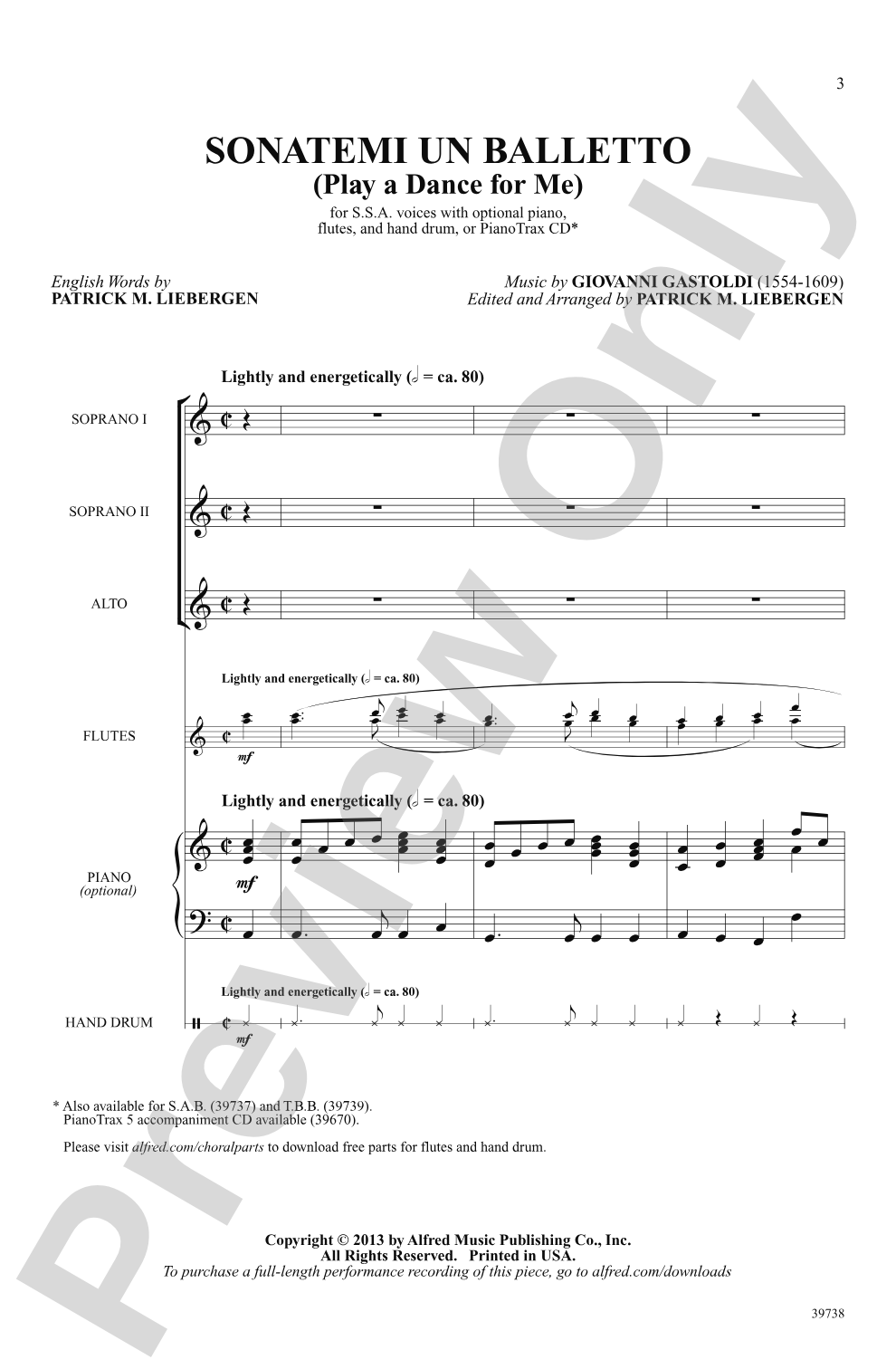
Music by Giovanni Gastoldi / ed. and arr., with English words, by Patrick M. Liebergen
Item: 00-PO-0001575
$1.85
Minimum order quantity: 20 copies
Pickup currently not available
Related Items
Sonatemi un Balletto: PianoTrax Digital Download |
$9.99
|
View | |
Sonatemi un Balletto: SAB Choral Octavo |
$1.85
|
View | |
Sonatemi un Balletto: TBB Choral Octavo |
$1.85
|
View | |
Sonatemi un Balletto: SAB Choral Octavo |
$1.85
|
View | |
Sonatemi un Balletto: SSA Choral Octavo |
$1.85
|
View | |
Sonatemi un Balletto: TBB Choral Octavo |
$1.85
|
View |
Description
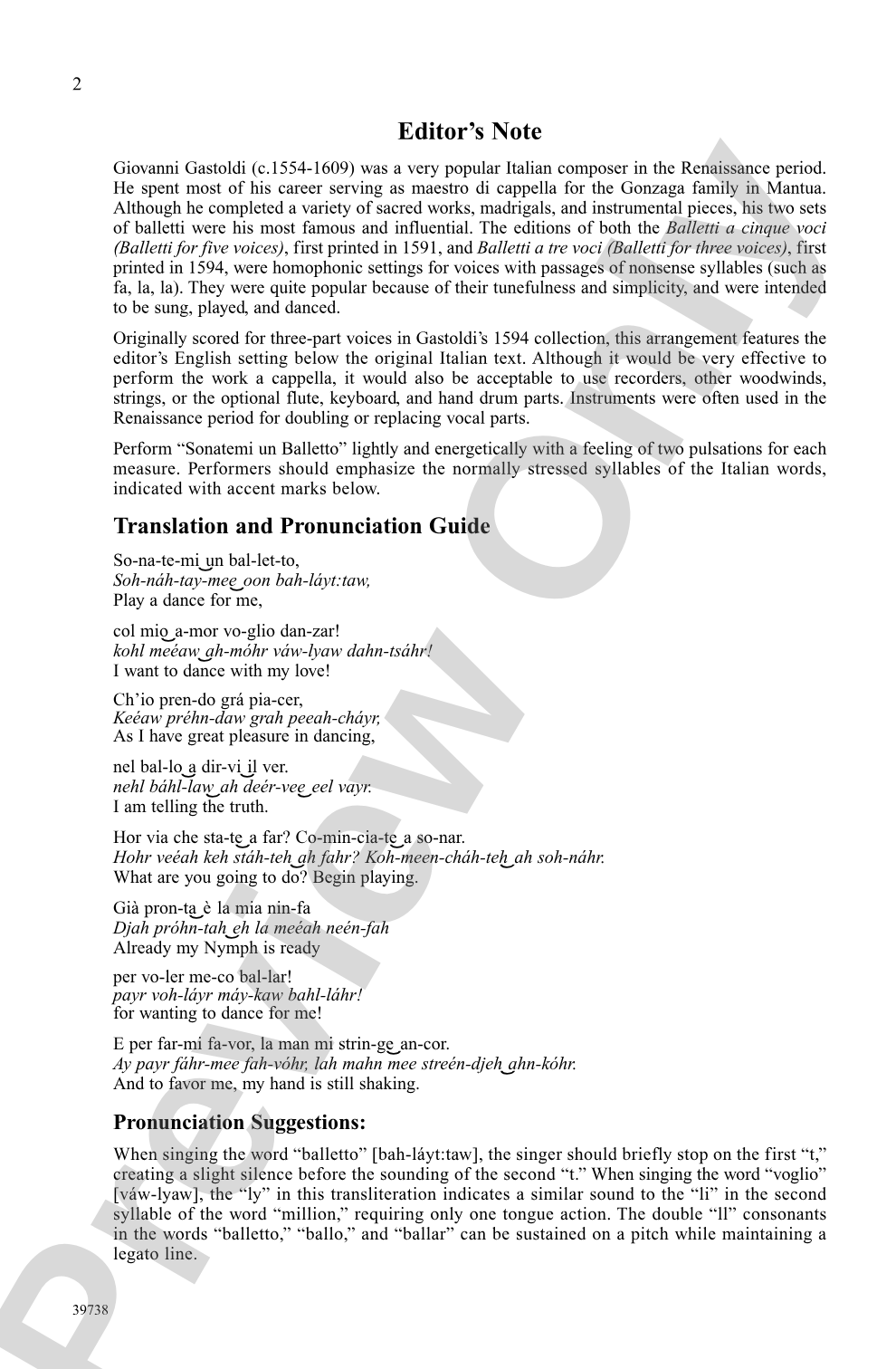
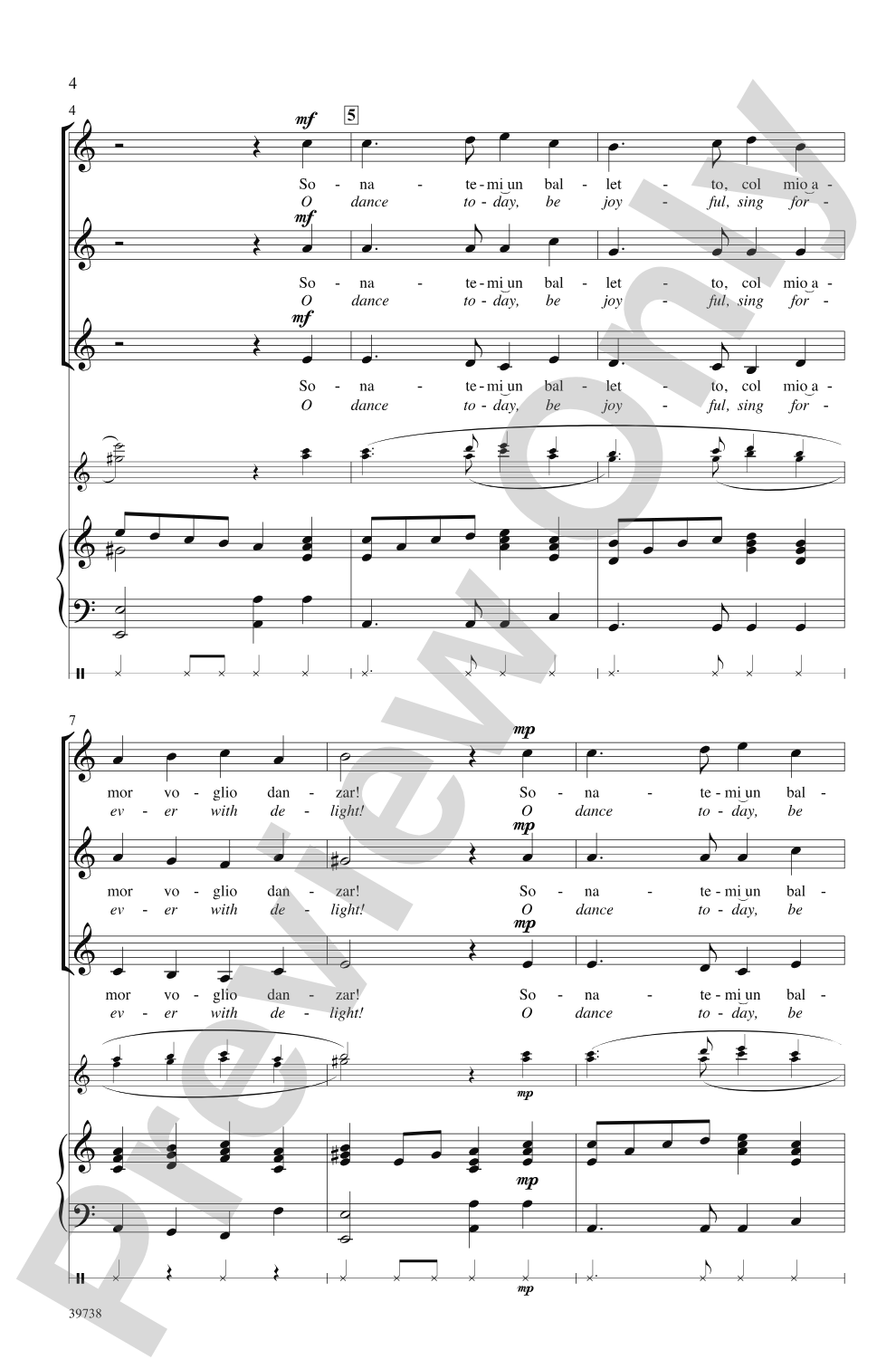
This balletti from the Renaissance period should be performed lightly and energetically. Three-part choirs of any gender may choose to sing in Italian or English, a cappella or accompanied. Optional flute and hand drum parts are available free at alfred.com/choralparts.


Sonatemi un Balletto: SSA Choral Octavo isn't in MakeMusic Cloud just yet...but it could be. Let us know you'd like to see it, and you'll help shape what comes next. In the meantime, start a free trial and dive into thousands of interactive titles your students can play along with today.
Request This Title
Tell us you want it.
Start Your Free Trial
Explore everything that's ready to play right now.
Sample Audio
1
Audio File
--:--
0:00
0:00
Sample Video
No sample videos found.
Additional Details
Series:
Alfred Choral Designs
Publisher:
Alfred Music
Page Count:
12
SKU:
00-PO-0001575
More about this title
About the Composer: Giovanni Gastoldi
Giovanni Gastoldi (c. 1554-1609) was an Italian composer and choirmaster whose lighter vocal works defined the sound of late Renaissance court music. Based primarily in Mantua, he composed sacred music alongside secular pieces that brought wit and rhythmic vitality to the Italian repertoire.
Gastoldi's balletti and madrigals were celebrated across Europe for their accessibility and infectious rhythmic drive. Unlike the complex counterpoint of his contemporaries, his secular works prioritized clarity and forward motion, making them ideal for both trained choirs and courtly amateurs. This combination of musicality and approachability secured his lasting presence in choral repertoire.
Why we love this
This arrangement brings one of the Renaissance's most exuberant secular works into a flexible, modern choral setting without sacrificing the piece's essential character. The optional English text, flexible accompaniment options, and available instrumental parts mean you can program it as written or reshape it to fit your rehearsal room and performance context. Gastoldi's balletti practically sing themselves once the rhythm locks in, rewarding your ensemble's work with genuine audience delight.
What to expect
Buoyant and direct. Gastoldi's writing sits comfortably in the treble range and moves with natural elasticity; there is no meandering here. Whether performed a cappella or with instruments, the piece has an almost dancelike quality that feels both intimate and celebratory at once.
Who it's for
This piece suits any treble-voiced choir with at least basic part-singing ability. The straightforward harmonic language and manageable tessitura make it accessible to high school, community, and collegiate choirs, while its stylistic demands reward more advanced groups seeking Renaissance repertoire that audiences genuinely enjoy.
How to get the most out of it
- Emphasize the forward harmonic rhythm and keep the tempo steady; this music thrives on momentum rather than expressive rubato.
- If adding the optional flute and hand drum parts, let the percussion establish a clear pulse from the downbeat to anchor the lighter upper voices.
- Shape phrases by moving toward strong syllables and stressing the text's natural word accents rather than relying on dynamic swells.
- Sing the Italian text with clean vowels and crisp consonants to match the piece's energetic character; if using English, maintain the same rhythmic clarity and forward motion.
How to use it
Place this as an opening number or in the second half of a program where its freshness offers relief and contrast. It pairs naturally with other Renaissance secular works or as a lighter companion to a block of madrigals. The optional instrumental parts also make it effective as a transitional piece between larger choral works.
Skills your students will build
- Renaissance performance practice and authentic text underlay in Italian
- Reading and singing three-part SSA harmony with clear voice independence
- Maintaining steady tempo and ensemble cohesion in rhythmically driven music
- Flexible text delivery in both Italian and English with appropriate stylistic clarity
- Ensemble balance in works without harmonic density to rely on