
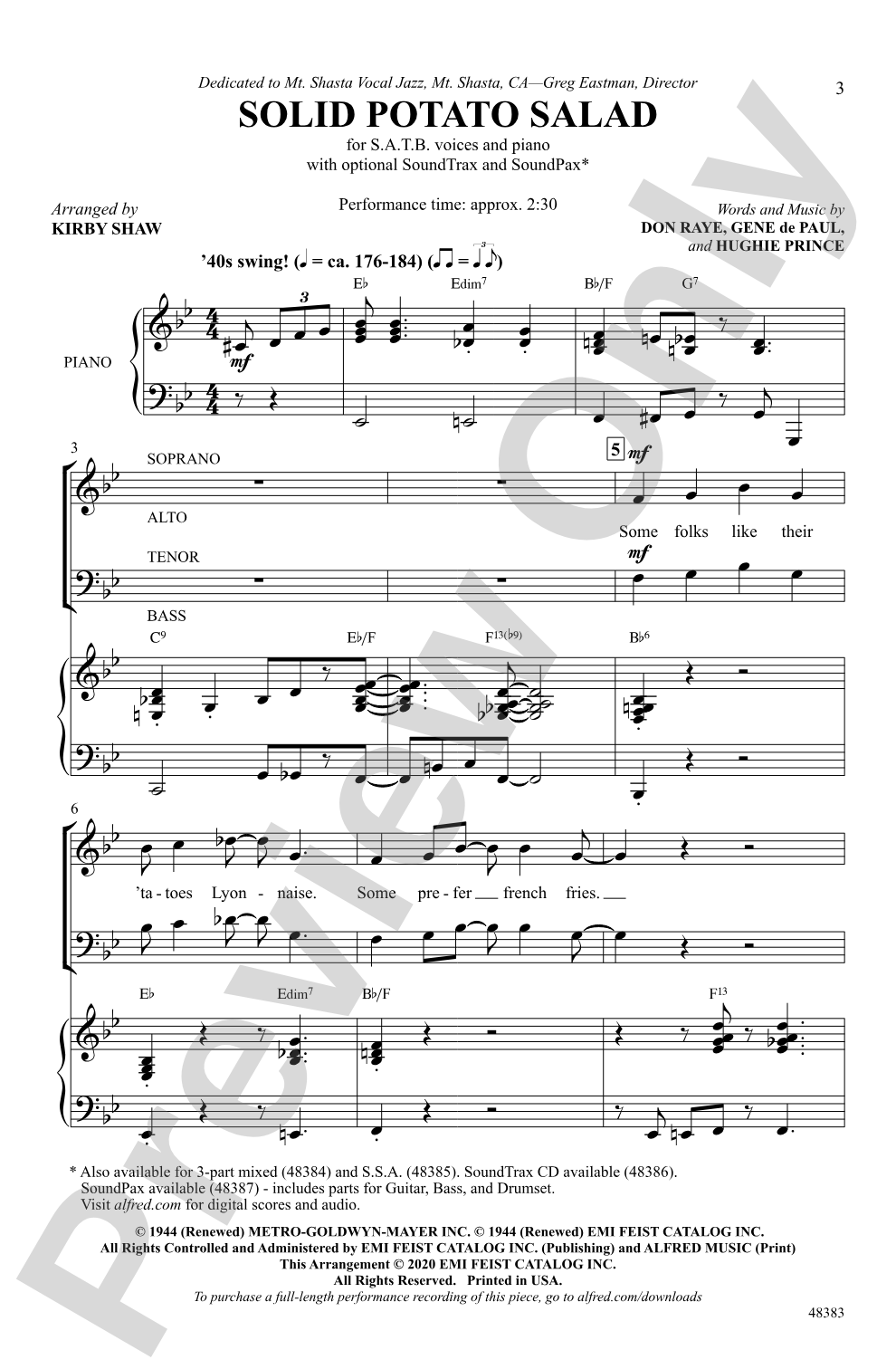
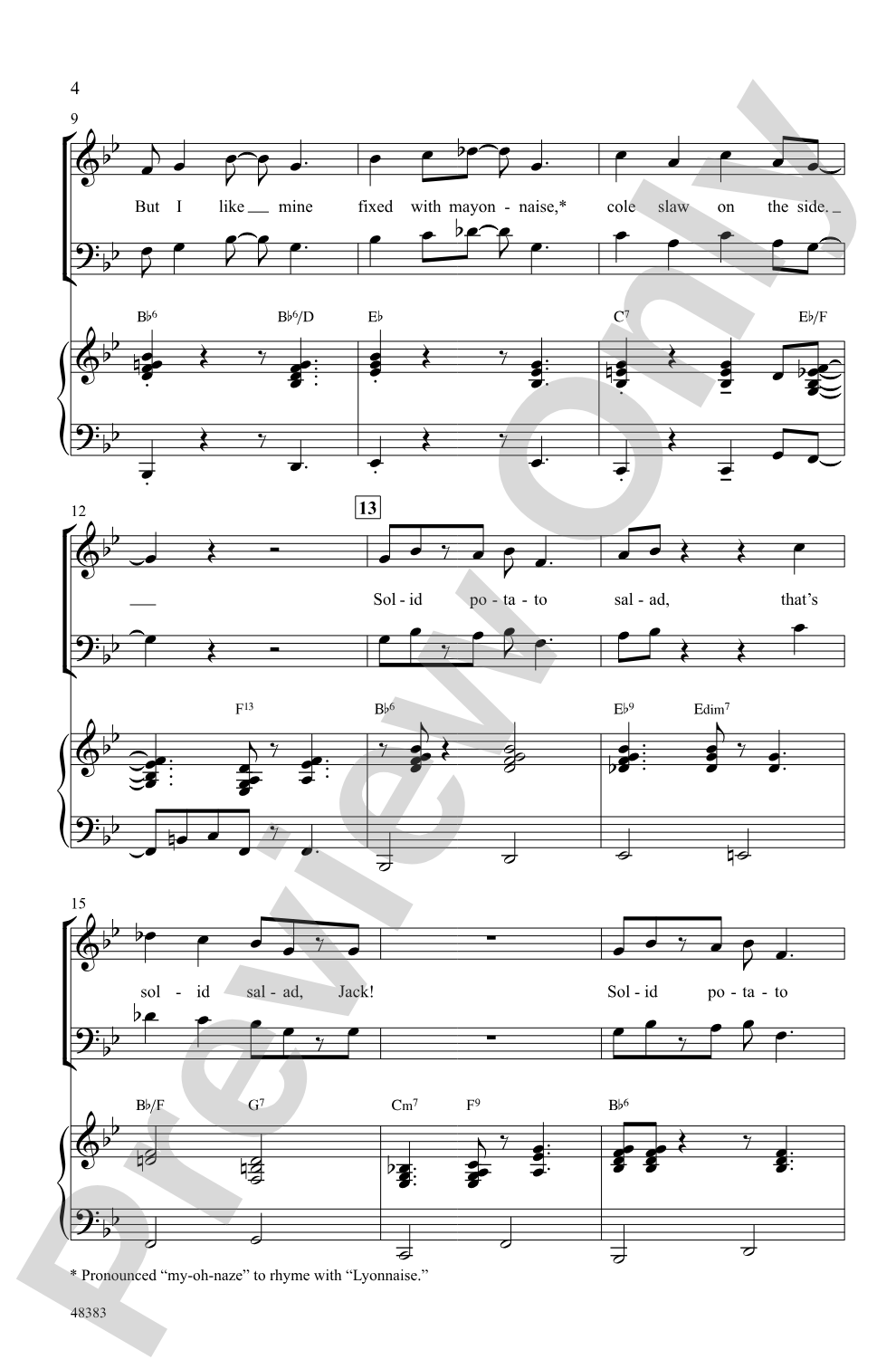

Solid Potato Salad: SATB Choral Octavo
Words and music by Don Raye, Gene De Paul, and Hughie Prince / arr. Kirby Shaw
Item: 00-PO-0006412
$2.10
Minimum order quantity: 20 copies
One moment…
Related Items
Solid Potato Salad: SoundTrax Digital Audio Download |
$29.99
|
View | |
Solid Potato Salad: 3-Part Mixed Choral Octavo |
$2.10
|
View | |
Solid Potato Salad: SSA Choral Octavo |
$2.10
|
View | |
Solid Potato Salad: Choral SoundPax |
$15.00
|
View | |
Solid Potato Salad: SATB Choral Octavo |
$2.10
|
View | |
Solid Potato Salad: 3-Part Mixed Choral Octavo |
$2.10
|
View | |
Solid Potato Salad: SSA Choral Octavo |
$2.10
|
View | |
Solid Potato Salad: Choral SoundTrax CD |
$29.99
|
View | |
Solid Potato Salad: Choral SoundPax |
$15.00
|
View |
Description
You'll never think of the popular potluck side dish the same way again! This quirky song originally appeared in the 1944 MGM musical Broadway Rhythm. Kirby's authentic arrangement retains the characteristic sound and style of the time period, including bright jazz harmonies and swing rhythms. An add-on section near the end introduces a whole picnic of musical goodies before packing it up for a big finish!


Solid Potato Salad: SATB Choral Octavo isn't in MakeMusic Cloud just yet...but it could be. Let us know you'd like to see it, and you'll help shape what comes next. In the meantime, start a free trial and dive into thousands of interactive titles your students can play along with today.
Request This Title
Tell us you want it.
Start Your Free Trial
Explore everything that's ready to play right now.
Sample Audio
1
Audio File
--:--
0:00
0:00
Sample Video
Additional Details
Series:
Alfred Pop Choral Series
Publisher:
Alfred Music
Page Count:
12
SKU:
00-PO-0006412
More about this title
About the Composer: Don Raye
Don Raye (1909-1985) was a prolific lyricist and songwriter who helped define the sound of 1940s Hollywood musicals. Working alongside composers like Gene De Paul and Hughie Prince, Raye crafted clever, often humorous lyrics that matched the infectious melodies of the era. His work appeared in numerous MGM productions, and his gift for combining wit with singable, memorable lines made him a favorite among entertainers and audiences alike.
Raye's songwriting style emphasized accessibility and fun, qualities that made his songs durable standards in the American songbook. For choral directors, his material offers a window into the theatrical sensibilities of the swing era, when novelty songs and clever wordplay were central to musical entertainment.
Why we love this
Kirby Shaw's arrangement captures all the color and energy of the original 1944 recording while keeping the voicing approachable for mixed choirs. The swing rhythms and bright jazz harmonies feel fresh and contemporary despite their vintage roots, and the witty subject matter guarantees an engaged audience from the first note. This is the kind of piece that reminds singers why they love performing.
What to expect
Imagine the energy of a 1940s Hollywood musical number, complete with tap shoes and sequins, distilled into pure vocal joy. The arrangement swings with a wink, the lyrics absurdly celebrate the humble potato salad, and the choral writing lets each section shine with clever counterpoint and snappy rhythmic figures. It's nostalgic yet playful, sophisticated enough to respect the original composition while remaining unapologetically fun.
Who it's for
Mixed choirs looking for novelty repertoire that doesn't sacrifice musicianship or style. This works equally well for concert choirs wanting a lighter program piece, show choirs seeking fun material with swing credentials, and community or church choirs ready to surprise their audience with something genuinely entertaining.
How to get the most out of it
- Keep the swing rhythm light and bouncy; resist the urge to drag. The feel should evoke 1940s big band energy, not a march.
- Balance the sass in the lyrics with genuine musical commitment. Camp works only when the singers believe in what they're singing.
- Use the recorded accompaniment to lock in the rhythmic pocket, especially during the add-on section where the groove shifts.
- Shape the dynamics to highlight the arrangement's humor. Those bright jazz harmonies land hardest when they're distinctly sung, not buried.
How to use it
Program this as a contrast piece in a concert built around classic American song, or use it to open a lighter half after heavier choral literature. It also works beautifully as a finale piece on a pops or seasonal show concert, where it can land as a memorable, crowd-pleasing closer. The novelty hook makes it especially effective when you want to showcase your choir's versatility and personality.
Skills your students will build
- Singing swing rhythms with precision and style
- Balancing humor and musicality in performance
- Reading and executing jazz harmonies and voice leading
- Rhythmic coordination across multiple vocal lines
- Phrasing and expression in a 1940s vocal style