

Solid Potato Salad: 3-Part Mixed Choral Octavo
Words and music by Don Raye, Gene De Paul, and Hughie Prince / arr. Kirby Shaw
Item: 00-PO-0006413
$2.10
Minimum order quantity: 20 copies
One moment…
Related Items
Solid Potato Salad: SoundTrax Digital Audio Download |
$29.99
|
View | |
Solid Potato Salad: SATB Choral Octavo |
$2.10
|
View | |
Solid Potato Salad: SSA Choral Octavo |
$2.10
|
View | |
Solid Potato Salad: Choral SoundPax |
$15.00
|
View | |
Solid Potato Salad: SATB Choral Octavo |
$2.10
|
View | |
Solid Potato Salad: 3-Part Mixed Choral Octavo |
$2.10
|
View | |
Solid Potato Salad: SSA Choral Octavo |
$2.10
|
View | |
Solid Potato Salad: Choral SoundTrax CD |
$29.99
|
View | |
Solid Potato Salad: Choral SoundPax |
$15.00
|
View |
Description
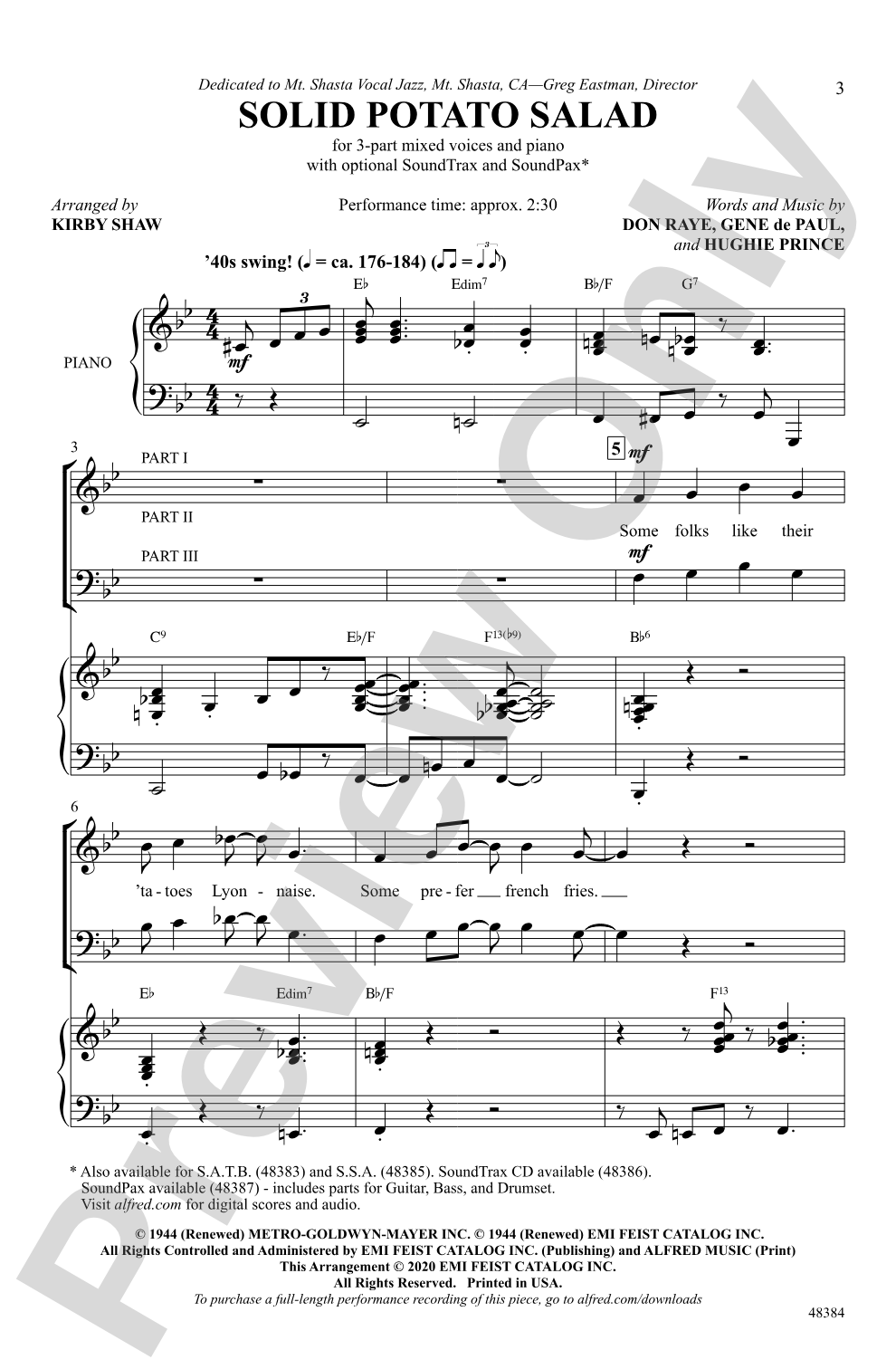
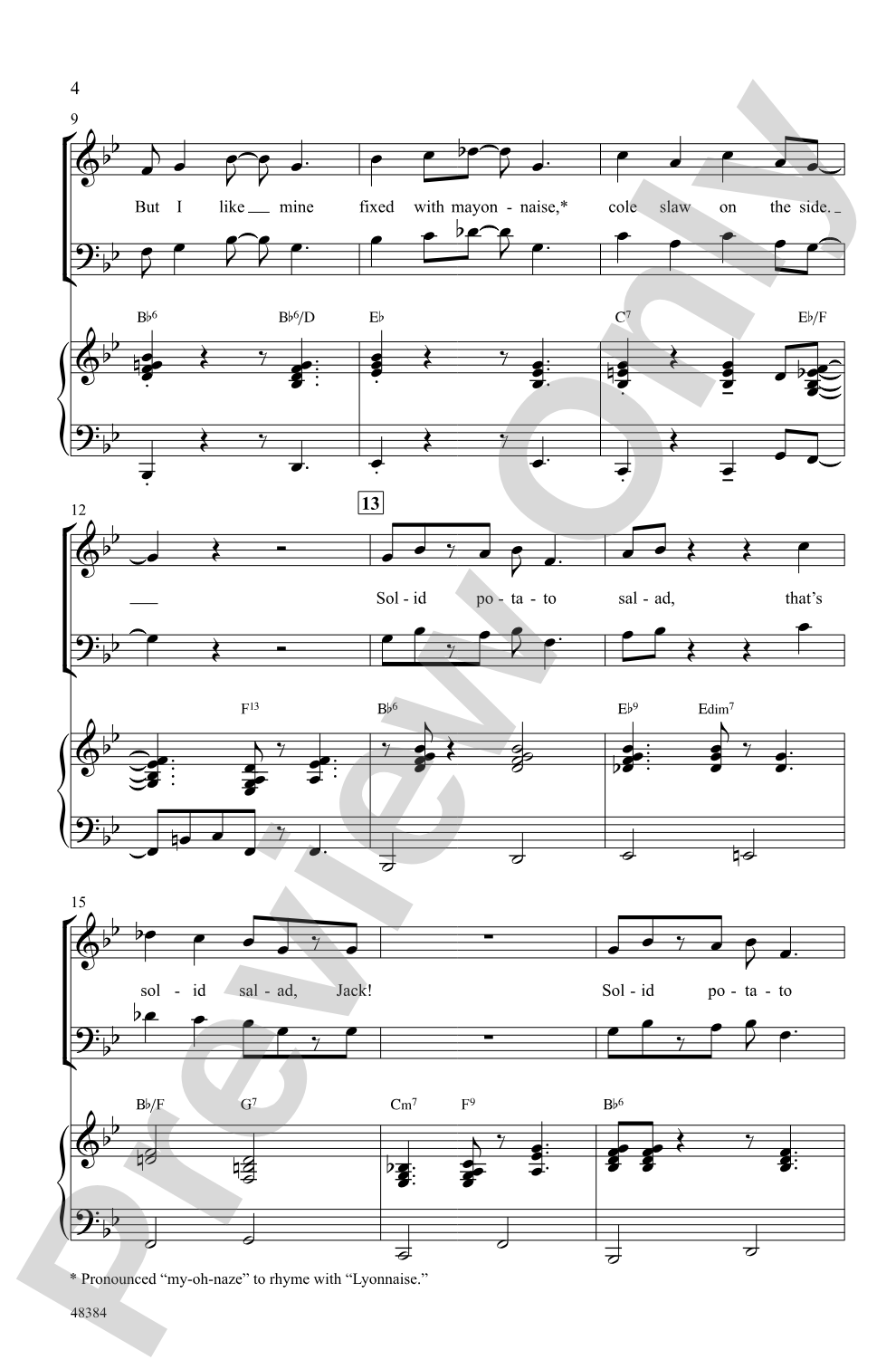
You'll never think of the popular potluck side dish the same way again! This quirky song originally appeared in the 1944 MGM musical Broadway Rhythm. Kirby's authentic arrangement retains the characteristic sound and style of the time period, including bright jazz harmonies and swing rhythms. An add-on section near the end introduces a whole picnic of musical goodies before packing it up for a big finish!


Solid Potato Salad: 3-Part Mixed Choral Octavo isn't in MakeMusic Cloud just yet...but it could be. Let us know you'd like to see it, and you'll help shape what comes next. In the meantime, start a free trial and dive into thousands of interactive titles your students can play along with today.
Request This Title
Tell us you want it.
Start Your Free Trial
Explore everything that's ready to play right now.
Sample Audio
1
Audio File
--:--
0:00
0:00
Sample Video
No sample videos found.
Additional Details
Series:
Alfred Pop Choral Series
Publisher:
Alfred Music
Page Count:
12
SKU:
00-PO-0006413
More about this title
About the Composer: Don Raye
Don Raye was a prolific songwriter and lyricist who wrote for major Hollywood studios during the 1940s and 1950s, penning songs for MGM and other producers during the golden age of film musicals. His ability to craft clever, singable melodies with witty lyrics made him a natural fit for novelty numbers and upbeat production songs that became standards in musical theater.
Raye's work appeared in numerous films and stage productions, and his songs often captured the playful spirit and bright orchestration of the swing era. His collaborations with composers like Gene De Paul resulted in memorable pieces that audiences still encounter today in both original and arranged contexts.
Why we love this
Kirby Shaw's arrangement captures all the infectious energy of a 1940s novelty number while keeping the parts accessible for a mixed voices ensemble. The bright jazz harmonies and swing rhythms stay true to the original's character without overwhelming singers who may be less experienced with jazz idioms, and the clever add-on section gives the piece memorable personality that audiences genuinely enjoy.
What to expect
A musical wink and a nudge, full of zippy rhythms and harmonies that shimmer with period charm. The arrangement has a polished, vintage sparkle that somehow makes a song about potato salad feel sophisticated and swinging, with just enough playfulness to keep things from taking themselves seriously.
Who it's for
Choirs comfortable with swing feel and willing to lean into a novelty number that rewards performers with genuine fun and audiences with entertainment value. Mixed voices ensembles at the middle school through community choir level will find the ranges comfortable and the parts manageable with basic rehearsal.
How to get the most out of it
- Nail the rhythmic precision in the swing sections by having the choir lock in on the offbeats; think of it as a rhythmic conversation rather than a steady march, and use the recorded accompaniment to internalize the groove.
- Bring out the bright, almost comedic quality of the melody line by keeping the tone forward and energized, especially in the outer voices where the main tune sits.
- Shape the add-on section with clear dynamic contrast so each new "musical goodie" lands with its own character and the accumulation builds momentum toward the final payoff.
- Balance the jazz harmonies so they sparkle without muddying; encourage singers to listen across the parts and think of themselves as a single instrument rather than three separate lines.
How to use it
Pair this with other novelty or pop selections to create a lighter programming block that gives your audience a breather and reminds them why singing together can be pure joy. It works especially well in spring or summer concerts, or in any program that benefits from a moment of comedic levity and tap-tap-tapping feet.
Skills your students will build
- Swing rhythm interpretation and syncopation
- Jazz harmonies and tertian extensions (7ths and 9ths)
- Blend and balance in 3-part textures
- Stylistic authenticity to 1940s popular song idiom
- Rhythmic independence while maintaining ensemble cohesion