
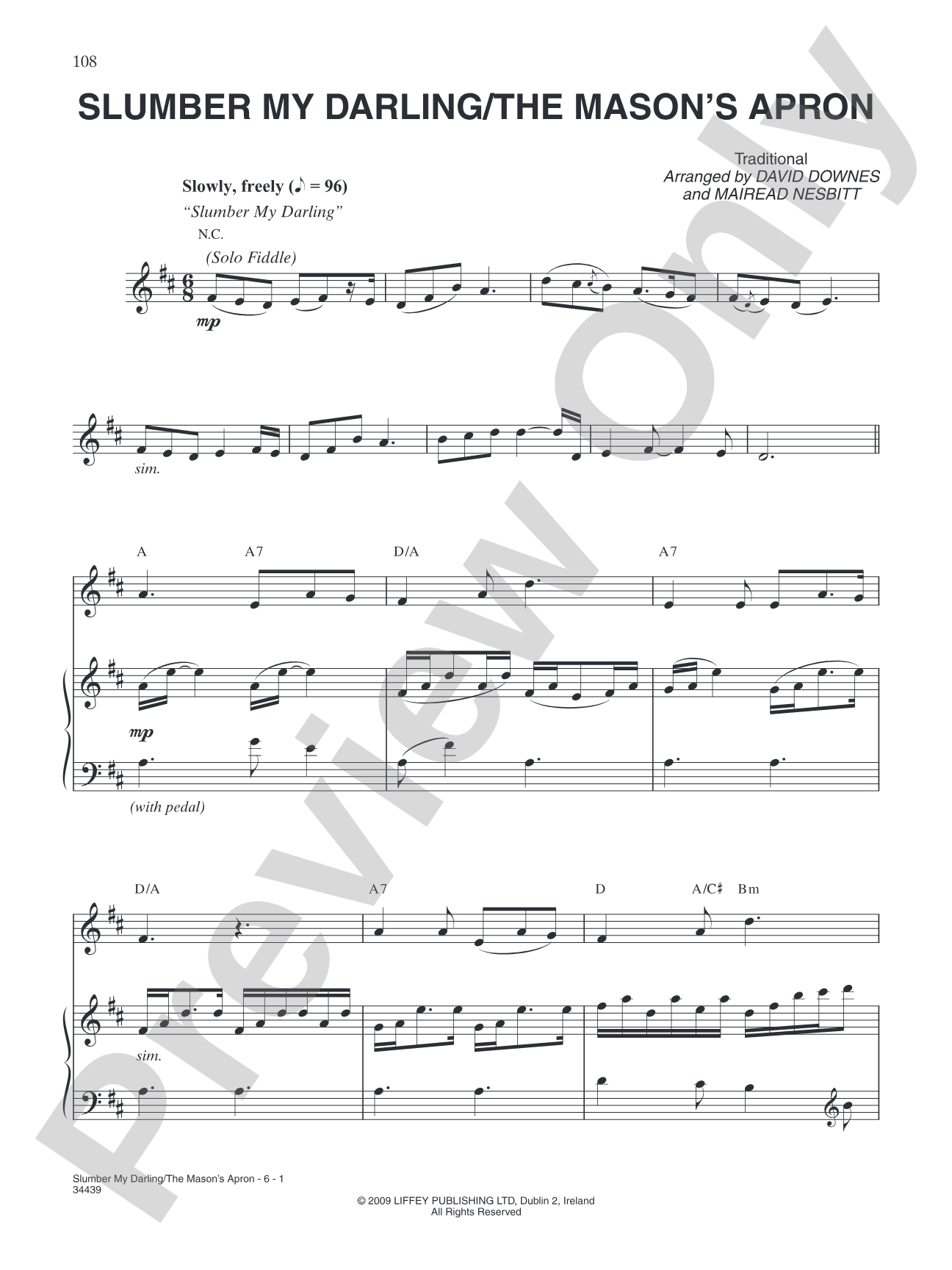
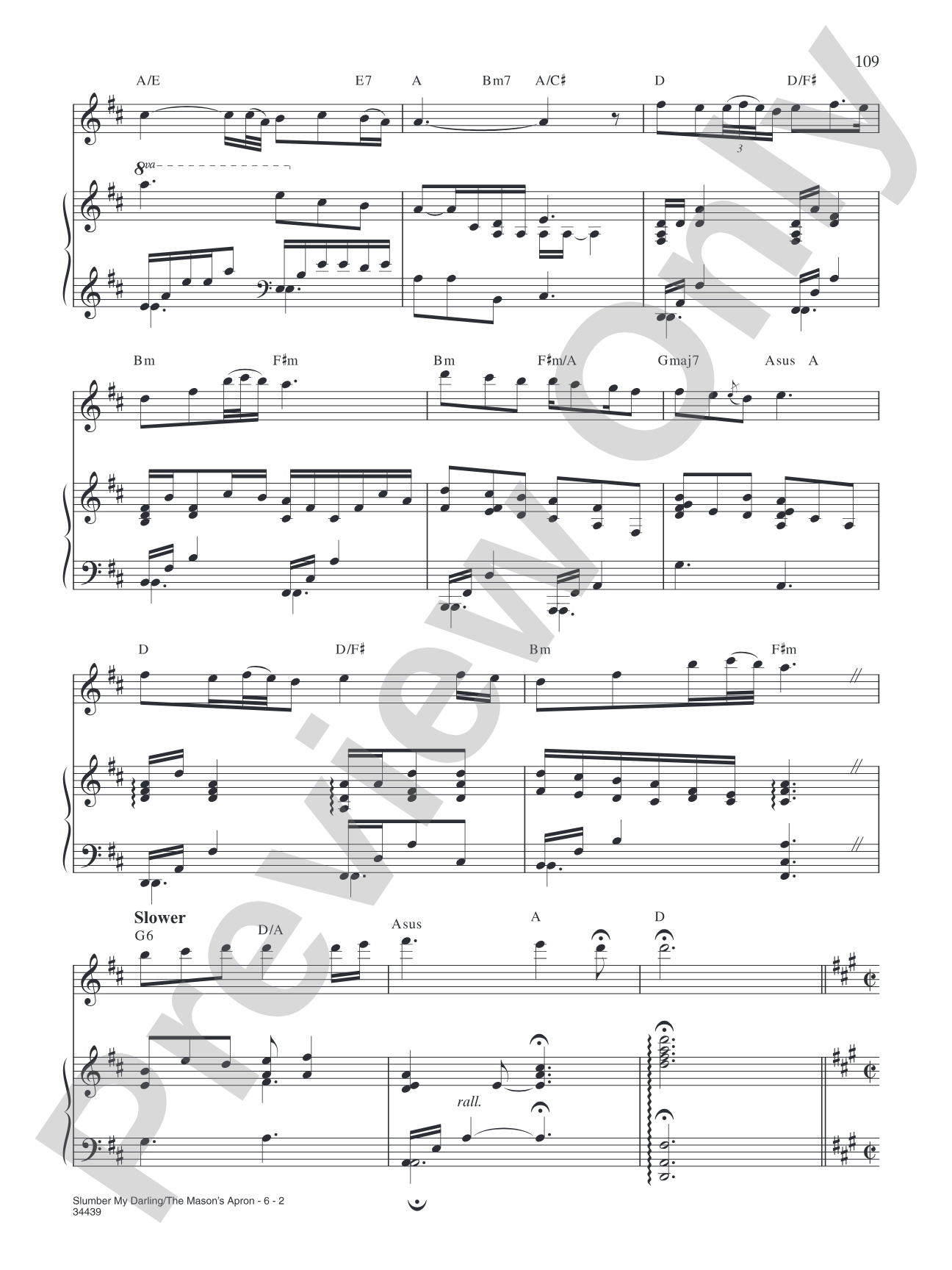

Slumber My Darling: Piano/Vocal/Chords
Celtic Woman
Item: 00-PS-0012080
$5.99
One moment…
Related Items
The Coast of Galicia: Piano/Vocal/Chords |
$5.99
|
View | |
The New Ground: Piano/Vocal/Chords |
$4.99
|
View | |
Non C'e Piu: Piano/Vocal/Chords |
$4.99
|
View | |
Nil Se'n La: Piano/Vocal/Chords |
$9.99
|
View | |
The Lost Rose Fantasia: Piano/Vocal/Chords |
$4.99
|
View | |
My Lagan Love: Piano/Vocal/Chords |
$4.99
|
View | |
Amazing Grace: Piano/Vocal/Chords |
$5.99
|
View | |
Danny Boy: Piano/Vocal/Chords |
$4.99
|
View | |
Finale/Mo Ghile Mear: Piano/Vocal/Chords |
$9.99
|
View | |
Celtic Woman: Songs from the Heart: Piano/Vocal/Chords Book |
$21.99
|
View |
Description
These piano/vocal/chord arrangements are based on Celtic Woman's PBS TV special and 2010 tour. This book showcases their unforgettable style and features four pages of color photos. Titles: Fields of Gold * Amazing Grace * Níl Sé'n Lá * My Lagan Love * When You Believe * The New Ground * Isle of Hope, Isle of Tears * The Coast of Galiçia * Non C'è Più * The Moon's a Harsh Mistress * You'll Be in My Heart * Goodnight My Angel * Galway Bay * The Lost Rose Fantasia * O, America! * The Call * Finale / Mo Ghile Mear * True Colors * Pie Jesu * Slumber My Darling / The Mason's Apron * Danny Boy * You Raise Me Up.


Discover MakeMusic Cloud: thousands of interactive titles your students can play along with today.
Sample Audio
No sample audio found.
Sample Video
No sample videos found.
Additional Details
Publisher:
Alfred Music
Page Count:
140
SKU:
00-PS-0012080
More about this title
About the Artist: Celtic Woman
Celtic Woman emerged in 2004 as a groundbreaking ensemble that brought Irish and world music to international audiences through their PBS television specials and touring performances. The group's carefully curated arrangements honor traditional Celtic material while creating accessible, emotionally direct interpretations that appeal to singers across ages and experience levels.
Why we love this
This collection captures the distinctive Celtic Woman sound in a singable, playable format for voice and piano. The mix of traditional Celtic songs, sacred music, and contemporary pieces gives you genuine programming flexibility, whether you're building a world music concert, creating a recital with thematic depth, or letting strong singers explore mature, emotionally intelligent arrangements.
What to expect
These arrangements evoke intimacy and reflection, blending the spare beauty of Celtic melody with lush harmonic underpinnings that feel both timeless and contemporary. Singing through this collection feels like a journey through landscapes both familiar and distant, moving from folk simplicity to orchestral grandeur without losing the core emotional honesty that defines the original Celtic Woman interpretations.
Who it's for
Singers preparing for recital, concert, or church performance who want emotionally mature material that bridges classical art song and contemporary world music. Pianists accompanying singers at intermediate to advanced levels will find these arrangements musically rewarding and technically manageable.
How to get the most out of it
- Pay attention to the lyrical phrasing over strict metronomic precision; these arrangements breathe and swell with the emotional arc of each song rather than driving mechanically forward.
- Use the chord symbols to experiment with the harmonic color available to you, especially on repeated passages where a pianist might subtly shift voicing or add textural warmth.
- Let the piano part support the vocal line rather than compete with it; many of these arrangements feature delicate, impressionistic accompaniment that becomes muddy if played too aggressively.
- Explore the arrangement's dynamic contrasts carefully; several pieces build from intimate, minimal textures to fuller orchestral-style writing, and clarity in these transitions will strengthen the overall effect.
How to use it
Build a thematic concert around world music traditions, pairing these arrangements with instrumental world music pieces or other cultural traditions. Several pieces work beautifully in sacred or spiritual concert contexts (Amazing Grace, Pie Jesu, The Call), while others create natural bridges for programming both classical and contemporary work on the same recital.
Skills your students will build
- Interpreting legit vocal phrasing with attention to lyrical shape rather than metronomic pulse
- Reading and performing with chord symbols and harmonic accompaniment
- Managing dynamic contrast and emotional arc across longer, through-composed forms
- Collaborating effectively between singer and pianist to balance lyrical expression with accompaniment support
- Exploring cultural context and stylistic authenticity in arranging and performance