
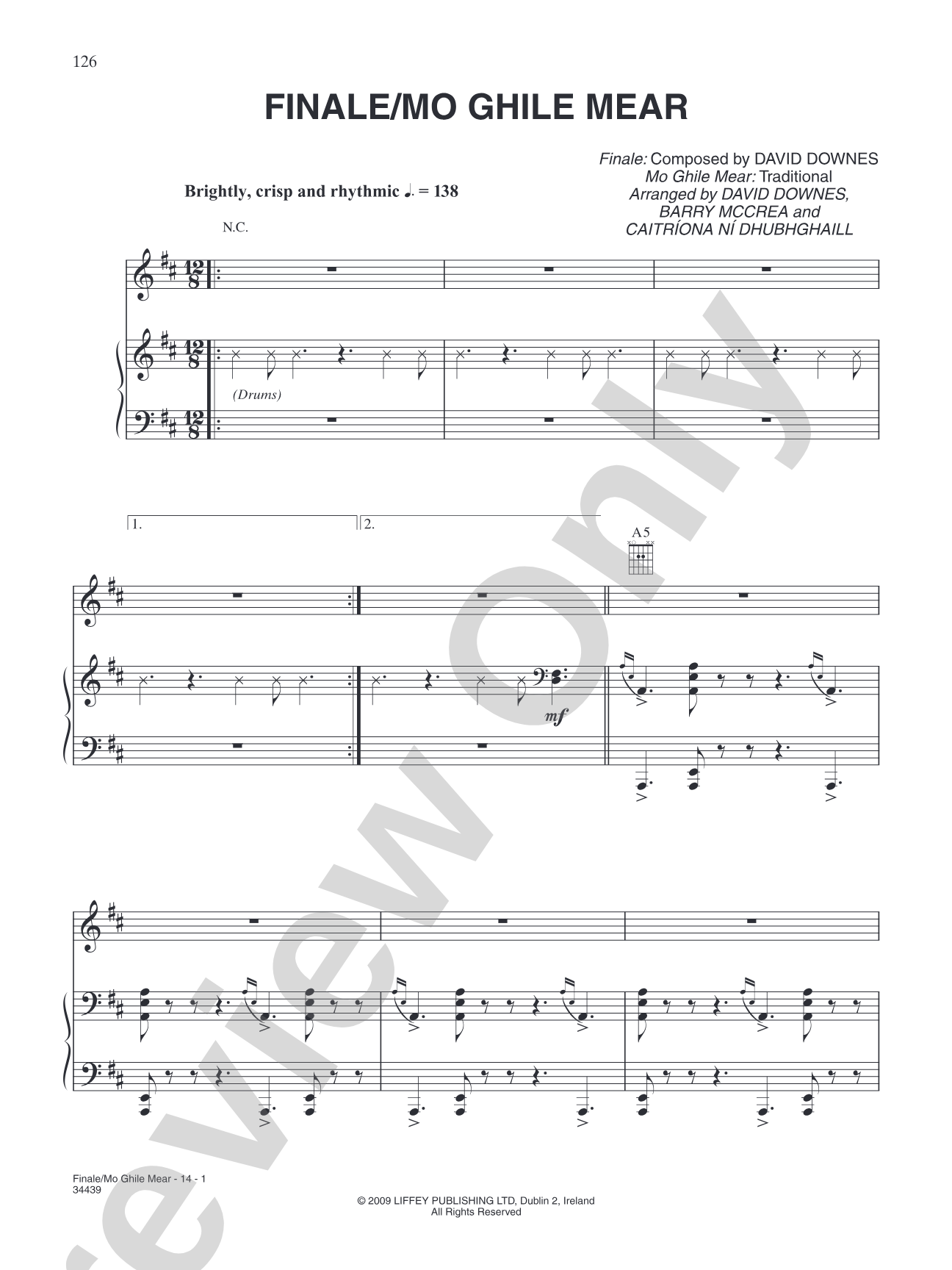
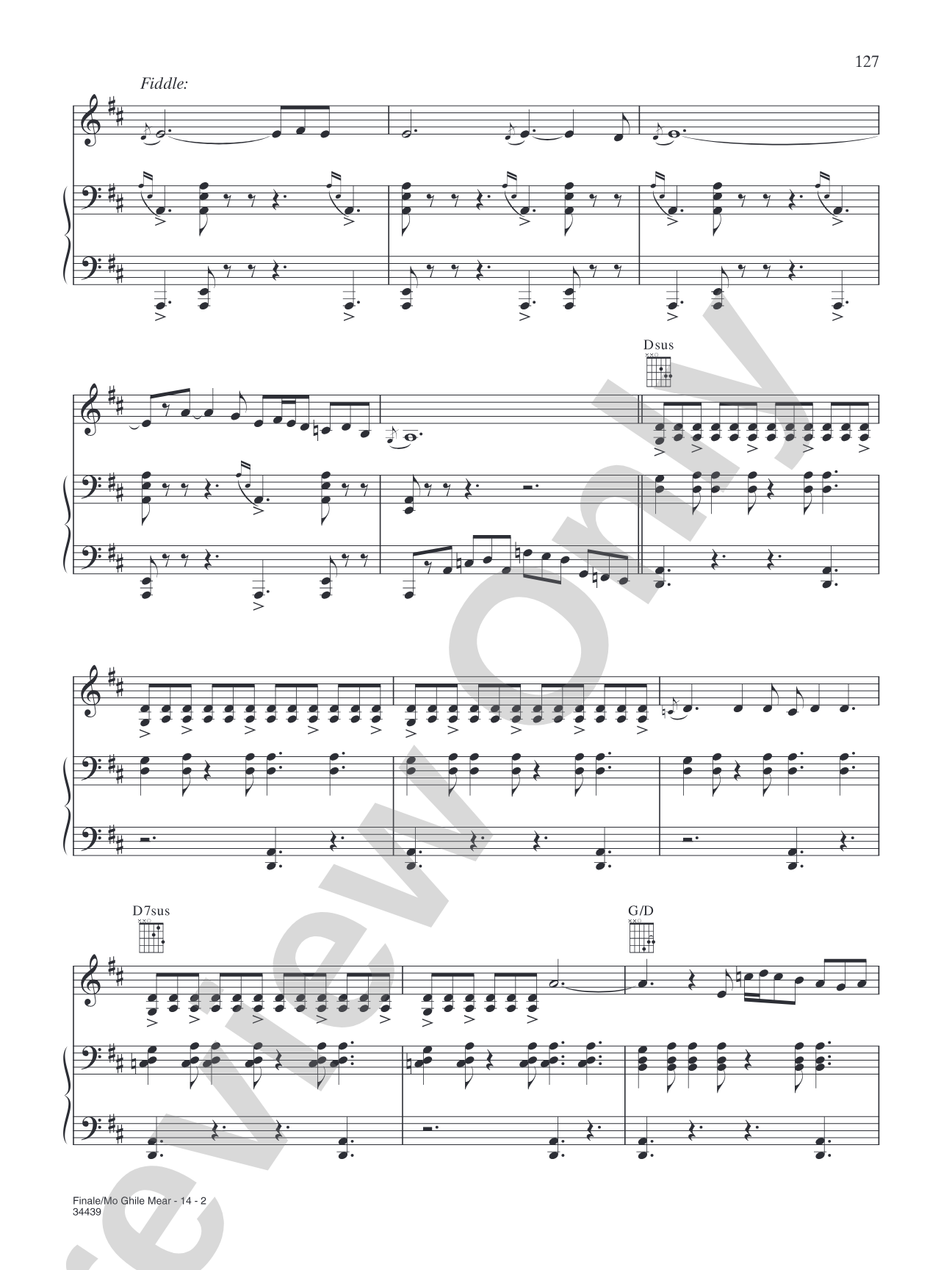
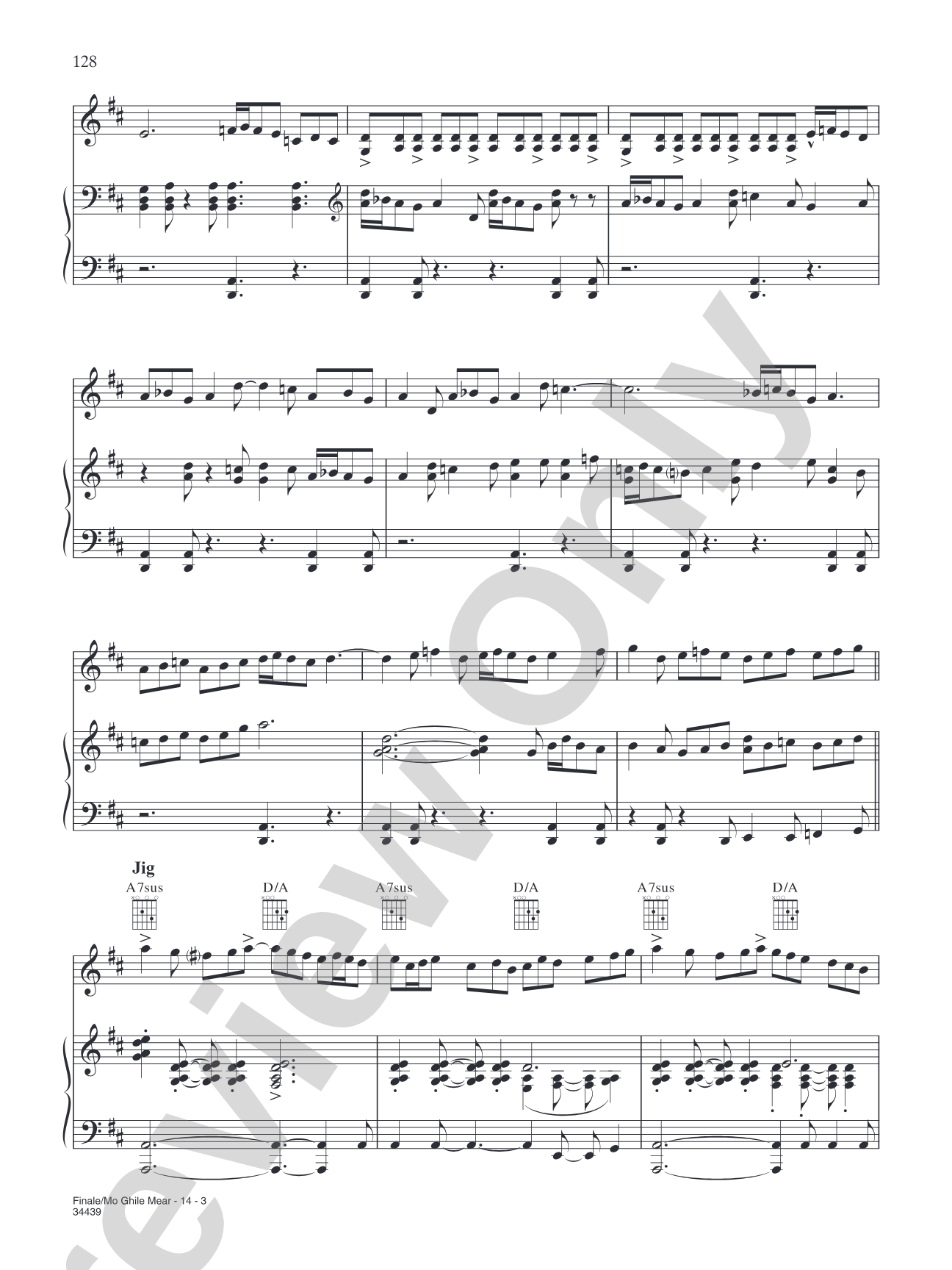

Finale/Mo Ghile Mear: Piano/Vocal/Chords
Celtic Woman
Item: 00-PS-0012082
$9.99
One moment…
Related Items
The Coast of Galicia: Piano/Vocal/Chords |
$5.99
|
View | |
The New Ground: Piano/Vocal/Chords |
$4.99
|
View | |
Non C'e Piu: Piano/Vocal/Chords |
$4.99
|
View | |
Nil Se'n La: Piano/Vocal/Chords |
$9.99
|
View | |
The Lost Rose Fantasia: Piano/Vocal/Chords |
$4.99
|
View | |
My Lagan Love: Piano/Vocal/Chords |
$4.99
|
View | |
Amazing Grace: Piano/Vocal/Chords |
$5.99
|
View | |
Slumber My Darling: Piano/Vocal/Chords |
$5.99
|
View | |
Danny Boy: Piano/Vocal/Chords |
$4.99
|
View | |
Celtic Woman: Songs from the Heart: Piano/Vocal/Chords Book |
$21.99
|
View |
Description
These piano/vocal/chord arrangements are based on Celtic Woman's PBS TV special and 2010 tour. This book showcases their unforgettable style and features four pages of color photos. Titles: Fields of Gold * Amazing Grace * Níl Sé'n Lá * My Lagan Love * When You Believe * The New Ground * Isle of Hope, Isle of Tears * The Coast of Galiçia * Non C'è Più * The Moon's a Harsh Mistress * You'll Be in My Heart * Goodnight My Angel * Galway Bay * The Lost Rose Fantasia * O, America! * The Call * Finale / Mo Ghile Mear * True Colors * Pie Jesu * Slumber My Darling / The Mason's Apron * Danny Boy * You Raise Me Up.


Discover MakeMusic Cloud: thousands of interactive titles your students can play along with today.
Sample Audio
No sample audio found.
Sample Video
No sample videos found.
Additional Details
Publisher:
Alfred Music
Page Count:
140
SKU:
00-PS-0012082
More about this title
About the Composer: David Downes
David Downes is a composer and arranger whose work centers on Celtic music and cross-cultural fusion. He has been instrumental in shaping Celtic Woman's sound through his arrangements and compositions, bringing traditional Irish melodies and contemporary songwriting into accessible formats for global audiences.
Why we love this
This collection captures the theatrical sweep and emotional depth that made Celtic Woman's PBS specials resonate with millions of viewers. The arrangements balance singability with the lush harmonic language of the performances, making these songs genuinely rewarding to perform without requiring extreme vocal range or technical complexity.
What to expect
Opening this book feels like stepping into the warmth and grandeur of a Celtic Woman concert. The music moves seamlessly from intimate, lyrical moments ("My Lagan Love," "Slumber My Darling") to soaring, anthemic passages ("You Raise Me Up," "Finale / Mo Ghile Mear"), with a sensibility that honors traditional Irish music while embracing contemporary production values.
Who it's for
Vocalists preparing for recitals, community theatre productions, or cabaret-style performances will find these accessible arrangements with full piano accompaniment and chord symbols for optional additional instrumentation. Piano accompanists seeking material that bridges classical training with world music repertoire will appreciate the stylistic range and singable melodies across the collection.
How to get the most out of it
- Pay attention to the suggested chord voicings, especially in passages that call for open, resonant sonorities typical of Celtic arrangements. These voicings often determine the color and warmth of the accompaniment.
- Let the lyrics breathe in ballads like 'Danny Boy' and 'The Moon's a Harsh Mistrist.' Resist the urge to fill every beat; silence and space are as much a part of Celtic style as the melody itself.
- In the more energetic pieces, lock the rhythmic pulse between voice and piano to capture the dancing quality that characterizes much of this material. The accompaniment patterns often carry as much character as the melody.
How to use it
These arrangements work beautifully as a complete evening's program or as a thematic set within a larger concert focused on world music or storytelling. Consider pairing selections from this collection with solo recital repertoire to create a program that explores emotional depth across musical traditions. The variety of tempos and moods makes it easy to program individual pieces as encores or to build themed concerts around specific moods (love songs, nationalist themes, spiritual pieces).
Skills your students will build
- Reading chord symbols and understanding their relationship to melody
- Interpreting piano accompaniment patterns that support vocal phrasing
- Balancing rhythmic precision with lyrical legato in world music styles
- Connecting emotional storytelling to melodic shape and harmonic language