
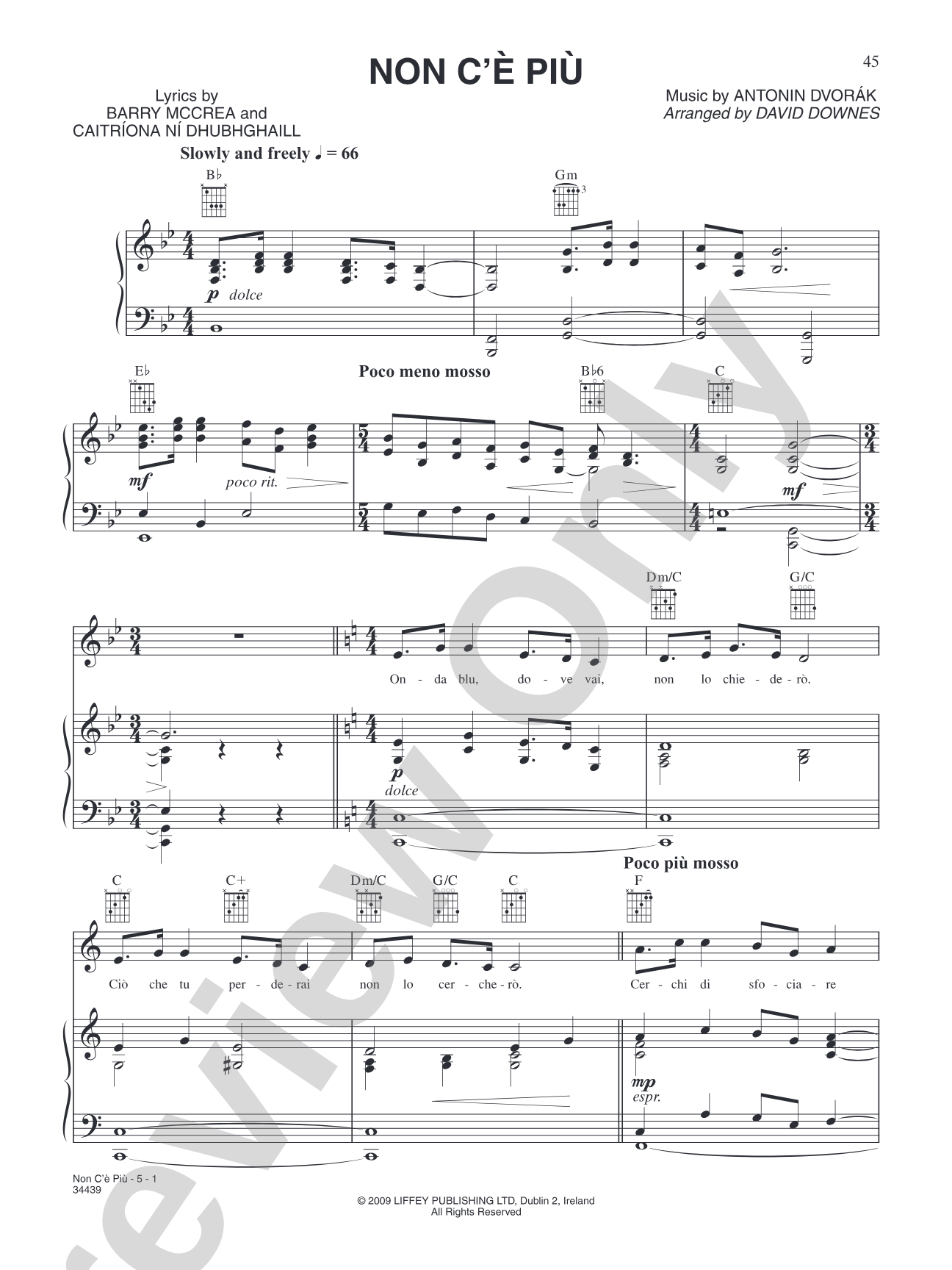

Non C'e Piu: Piano/Vocal/Chords
Celtic Woman
Item: 00-PS-0012075
$4.99
One moment…
Related Items
The Coast of Galicia: Piano/Vocal/Chords |
$5.99
|
View | |
The New Ground: Piano/Vocal/Chords |
$4.99
|
View | |
Nil Se'n La: Piano/Vocal/Chords |
$9.99
|
View | |
The Lost Rose Fantasia: Piano/Vocal/Chords |
$4.99
|
View | |
My Lagan Love: Piano/Vocal/Chords |
$4.99
|
View | |
Amazing Grace: Piano/Vocal/Chords |
$5.99
|
View | |
Slumber My Darling: Piano/Vocal/Chords |
$5.99
|
View | |
Danny Boy: Piano/Vocal/Chords |
$4.99
|
View | |
Finale/Mo Ghile Mear: Piano/Vocal/Chords |
$9.99
|
View | |
Celtic Woman: Songs from the Heart: Piano/Vocal/Chords Book |
$21.99
|
View |
Description
These piano/vocal/chord arrangements are based on Celtic Woman's PBS TV special and 2010 tour. This book showcases their unforgettable style and features four pages of color photos. Titles: Fields of Gold * Amazing Grace * Níl Sé'n Lá * My Lagan Love * When You Believe * The New Ground * Isle of Hope, Isle of Tears * The Coast of Galiçia * Non C'è Più * The Moon's a Harsh Mistress * You'll Be in My Heart * Goodnight My Angel * Galway Bay * The Lost Rose Fantasia * O, America! * The Call * Finale / Mo Ghile Mear * True Colors * Pie Jesu * Slumber My Darling / The Mason's Apron * Danny Boy * You Raise Me Up.


Discover MakeMusic Cloud: thousands of interactive titles your students can play along with today.
Sample Audio
No sample audio found.
Sample Video
No sample videos found.
Additional Details
Publisher:
Alfred Music
Page Count:
140
SKU:
00-PS-0012075
More about this title
About the Composer: Antonin Dvorak
Antonin Dvorak (1841-1904) was a Czech composer whose gift for melody and orchestration shaped the Romantic era. His works span symphonies, concertos, chamber music, and vocal pieces, many drawing on the folk traditions and natural landscape of his homeland. Dvorak's influence extends far beyond concert halls; his music has become a foundation of choral and vocal pedagogy, appearing in everything from elementary school arrangements to professional recital programs.
Why we love this
This collection captures a remarkable moment in contemporary Celtic music, bringing together traditional material, beloved standards, and original compositions in arrangements that respect both the source material and the distinctive artistry of Celtic Woman. The variety here is genuine: you move from "Fields of Gold" to "Pie Jesu" to "Danny Boy" without feeling jarring transitions, because each arrangement understands the vocal character and emotional weight it needs to carry. For singers and accompanists seeking repertoire that bridges classical training with accessible, theatrical presentation, this book delivers substance alongside style.
What to expect
These arrangements evoke candlelit venues and intimate concert halls. There's an emotional openness here, a blend of wistfulness and warmth that draws equally from Celtic folk sensibility and classical song tradition. The emotional palette ranges from introspective to joyful, with moments of genuine dramatic intensity.
Who it's for
This collection serves singers who love art song and musical theater equally, as well as pianists seeking accompaniment material that sits comfortably in an intermediate to advanced range. Directors programming recitals, concert events, or special performances will find a curated mix of recognizable titles and gems that appeal to diverse audiences.
How to get the most out of it
- Pay attention to the harmonic movement beneath the melody. Celtic Woman's arrangements often layer rich, unexpected chord changes that can support interpretation without overwhelming the vocal line. Let the piano part breathe as an equal partner rather than a pure accompaniment.
- Honor the ornamentation and phrasing marks provided in the vocal line. These pieces were written with specific interpretive choices in mind, and respecting those details brings authenticity to performance.
- Balance volume carefully in passages with thicker piano textures. The vocalist's tone should remain clear and centered even when the accompaniment becomes complex.
How to use it
This book works beautifully as a source for benefit concerts, special themed events, or recitals focused on world music and cross-cultural repertoire. You might also draw individual selections for lesson study with advanced vocal students, allowing them to explore how arrangers craft singable lines atop sophisticated harmonic writing. The inclusion of both well-known songs and less familiar material makes it flexible for either a full evening or a curated set within a larger program.
Skills your students will build
- Reading piano/vocal score notation with chord symbols
- Interpreting stylistically informed phrasing across multiple cultural traditions
- Managing vocal line independence while tracking harmonic movement in the accompaniment
- Building artistic interpretation through attention to dynamic and textural contrast