
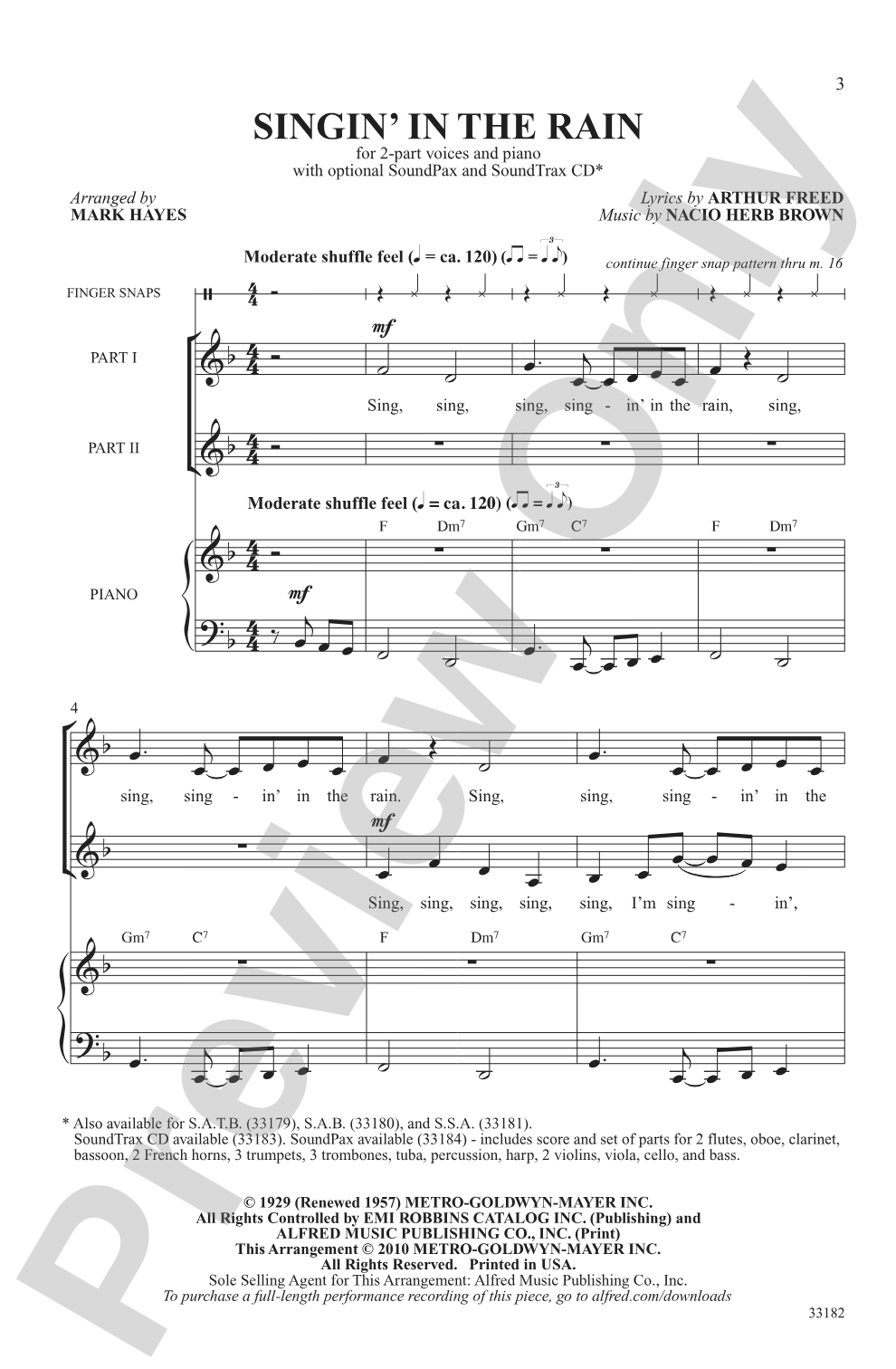

Singin' in the Rain: 2-Part Choral Octavo
Lyric by Arthur Freed, music by Nacio Herb Brown / arr. Mark Hayes
Item: 00-PO-0007720
$2.25
Minimum order quantity: 20 copies
Pickup currently not available
Related Items
Singin' in the Rain: SoundTrax Digital Audio Download |
$29.99
|
View | |
Singin' in the Rain: SATB Choral Octavo |
$2.75
|
View | |
Singin' in the Rain: SAB Choral Octavo |
$2.25
|
View | |
Singin' in the Rain: SSA Choral Octavo |
$2.25
|
View | |
Singin' in the Rain: Choral SoundPax |
$75.00
|
View | |
Singin' in the Rain: SATB Choral Octavo |
$2.75
|
View | |
Singin' in the Rain: SAB Choral Octavo |
$2.25
|
View | |
Singin' in the Rain: SSA Choral Octavo |
$2.25
|
View | |
Singin' in the Rain: 2-Part Choral Octavo |
$2.75
|
View | |
Singin' in the Rain: Choral Octavo SoundTrax CD |
$29.99
|
View | |
Singin' in the Rain: Choral SoundPax |
$75.00
|
View |
Description
Grab your umbrellas and your yellow slickers! Everyone will enjoy performing and hearing this novel Mark Hayes arrangement of the well-known song originally featured in the 1952 musical film of the same name.


Singin' in the Rain: 2-Part Choral Octavo isn't in MakeMusic Cloud just yet...but it could be. Let us know you'd like to see it, and you'll help shape what comes next. In the meantime, start a free trial and dive into thousands of interactive titles your students can play along with today.
Request This Title
Tell us you want it.
Start Your Free Trial
Explore everything that's ready to play right now.
Sample Audio
1
Audio File
--:--
0:00
0:00
Sample Video
No sample videos found.
Additional Details
Series:
Alfred Pop Choral Series
Publisher:
Alfred Music
Page Count:
16
SKU:
00-PO-0007720
More about this title
About the Composer: Nacio Herb Brown
Nacio Herb Brown composed the iconic standards that defined Hollywood's Golden Age. Born in 1896, he partnered with lyricist Arthur Freed to create some of cinema's most enduring melodies, including "Singin' in the Rain," "You Were Meant for Me," and "All I Do Is Dream of You." His gift for writing singable, memorable tunes made him a cornerstone of American musical theater and film.
Brown's work remains central to music education because his melodies are instantly recognizable, harmonically accessible, and genuinely fun to perform. Teachers and conductors return to his catalog again and again because students connect immediately with the material, and audiences respond with genuine joy.
Why we love this
Mark Hayes captures the infectious optimism of this standard while keeping the voicing singable for mixed-ability choirs. The arrangement balances familiarity with enough fresh musical interest to keep rehearsals engaging. Any group that performs this will deliver genuine smiles from an audience.
What to expect
Bright, optimistic, and unabashedly joyful. The arrangement captures the spirit of dancing through rain without a care, complete with the kind of straightforward happiness that reminds audiences why they love music. There's a lightness and playfulness here that lifts the room.
Who it's for
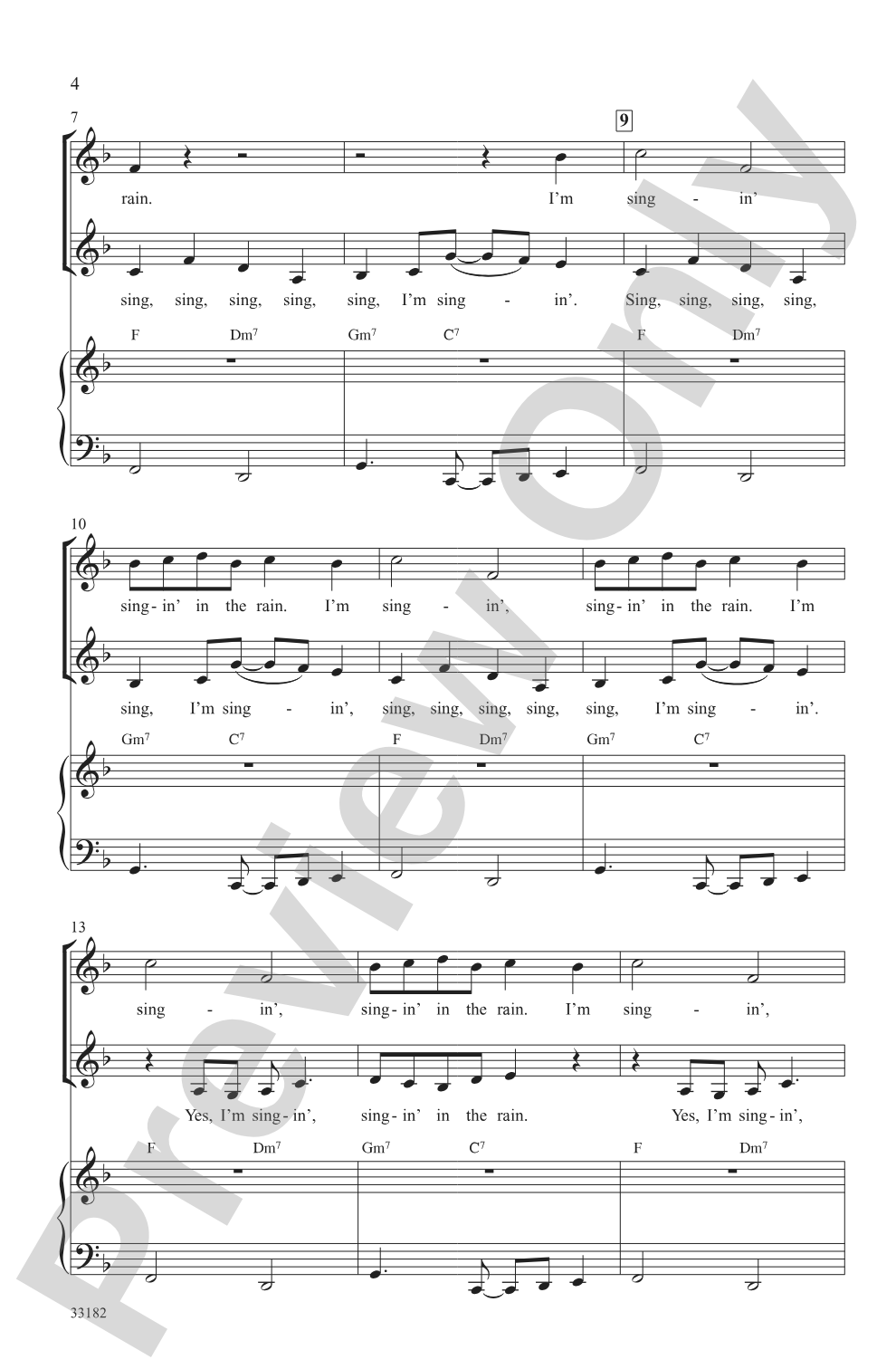
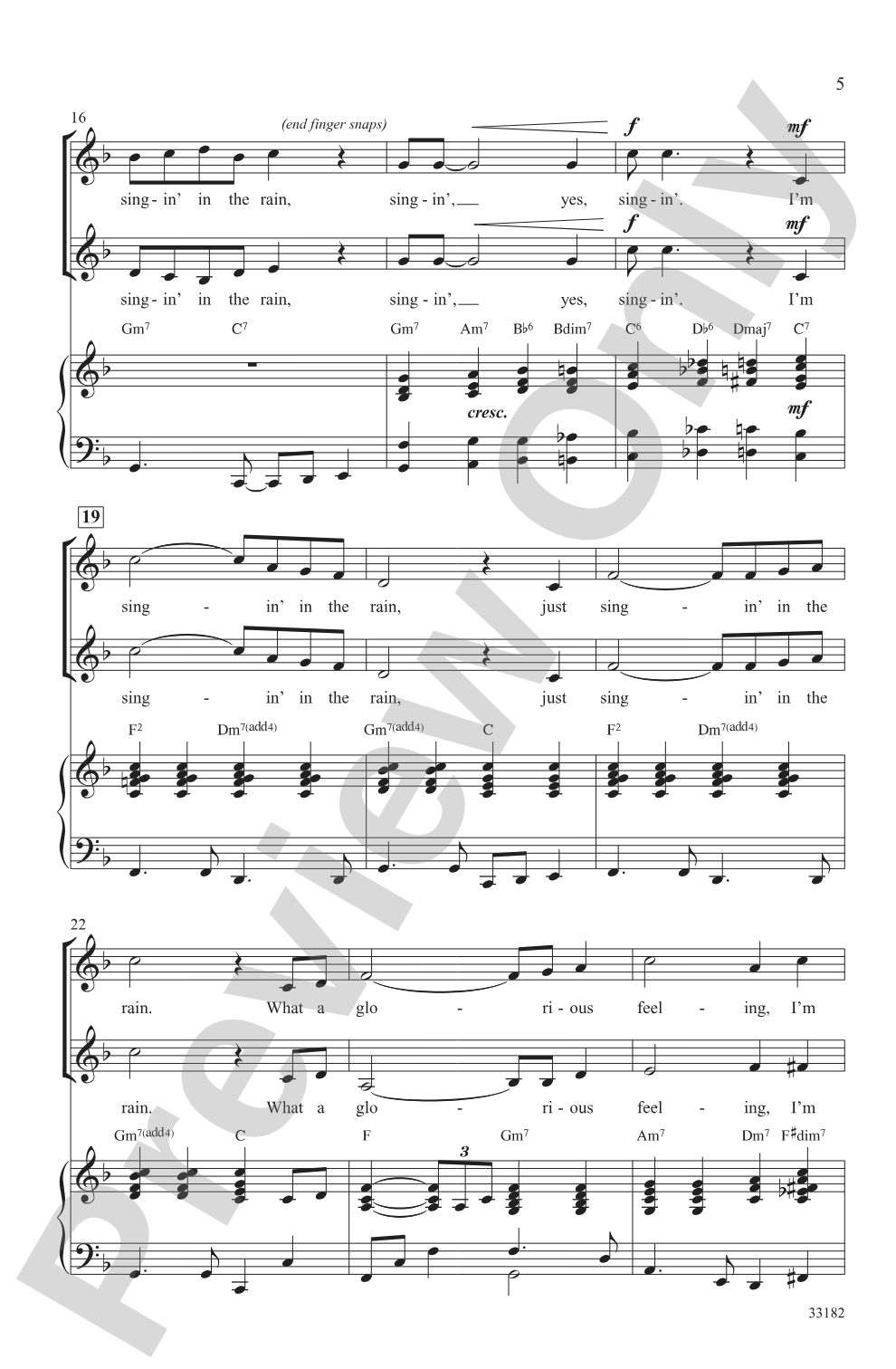
This arrangement works for developing choirs, community ensembles, and any group seeking an uplifting, accessible piece with genuine audience appeal. The 2-part voicing keeps vocal ranges comfortable while the familiar melody removes the barrier of unfamiliar material. It's equally at home in a concert with classical repertoire or in a cabaret-style program.
How to get the most out of it
- Maintain a steady, confident tempo throughout. This piece thrives on rhythmic precision and forward momentum, so anchor the rhythm section (or recorded accompaniment) from the very first run-through.
- Shape the melodic line with clear phrasing rather than pushing the volume. Let the tunefulness of the original melody shine without forcing the tone.
- Balance the two parts so neither voice overwhelms the other. The impact comes from the blend, not from one section carrying the full weight.
- Use the recorded accompaniment during early rehearsals to lock in the harmonic foundation, then gradually remove it so singers can develop independence.
How to use it
This is a natural choice for spring concerts, pops programs, or any show that needs a mood lift after heavier material. It also pairs beautifully with other classic standards or as a bridge into a cabaret-themed set. Consider it for community performances where accessibility and audience recognition matter as much as artistic growth.
Skills your students will build
- Blending two distinct vocal lines while maintaining melodic independence
- Singing syncopated rhythms with rhythmic confidence
- Phrasing lyrical material in period style
- Responding to a recorded accompaniment with ensemble precision