
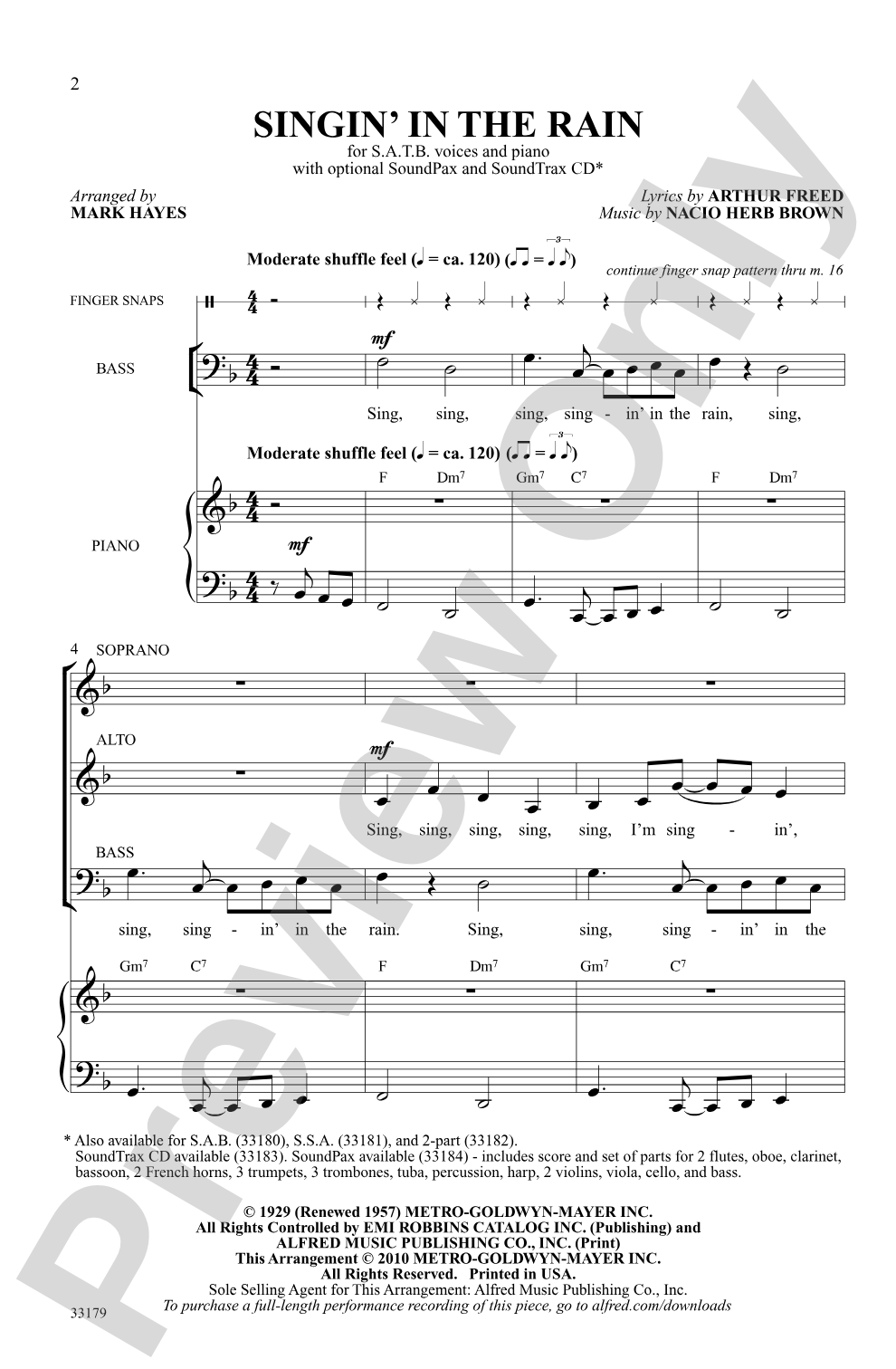
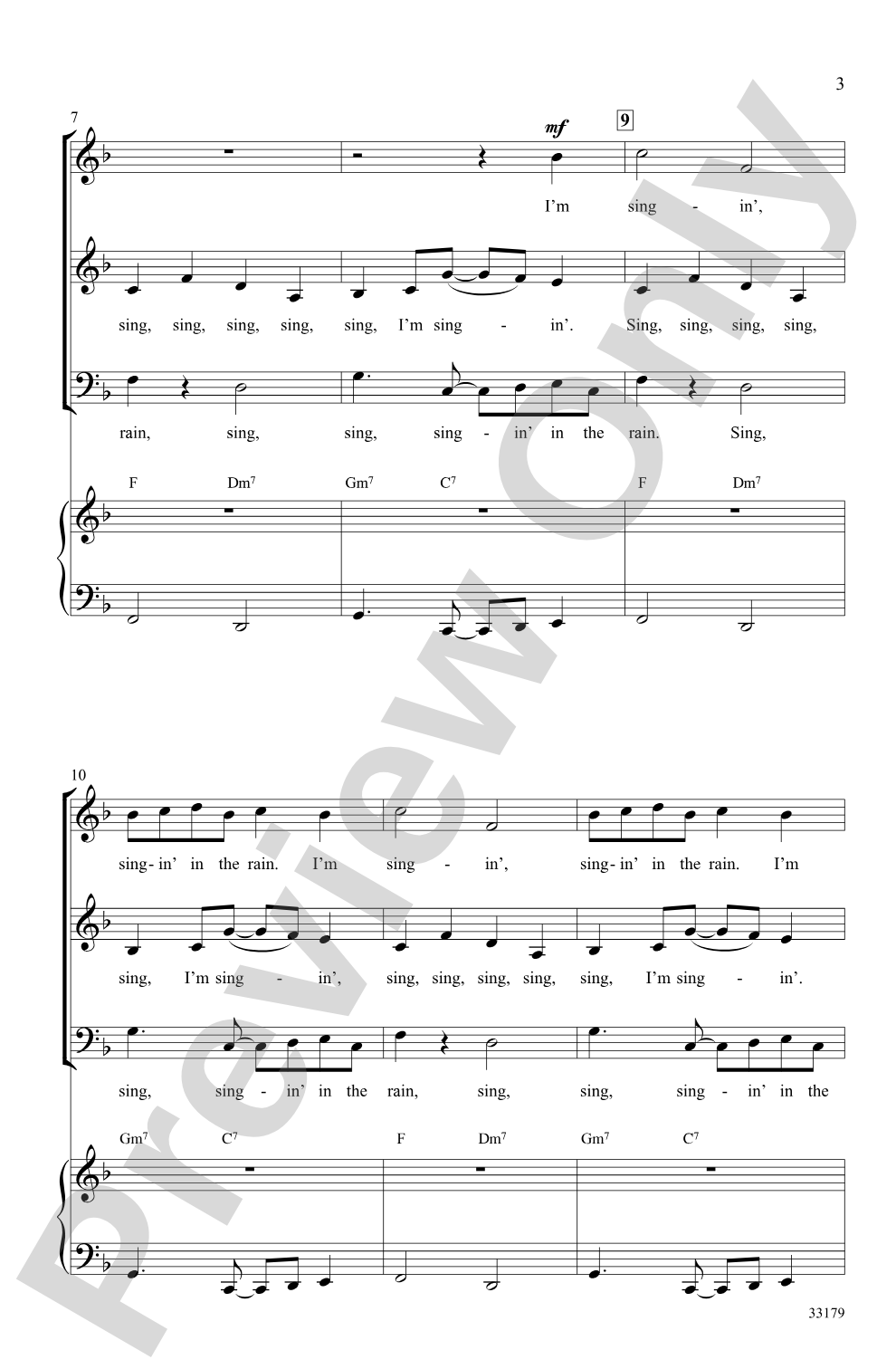
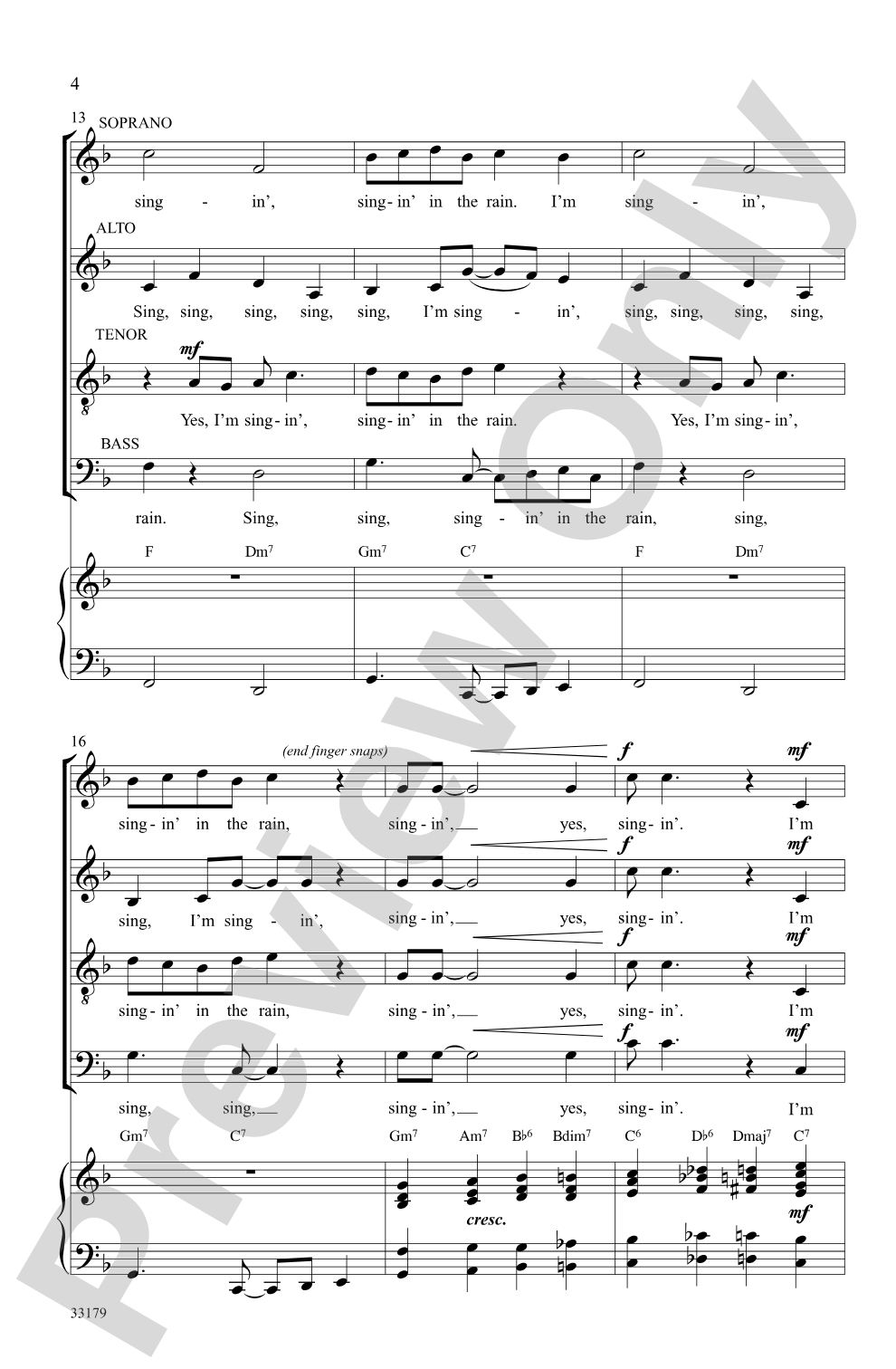

Singin' in the Rain: SATB Choral Octavo
Lyric by Arthur Freed, music by Nacio Herb Brown / arr. Mark Hayes
Item: 00-PO-0002354
$2.75
Minimum order quantity: 20 copies
One moment…
Related Items
Singin' in the Rain: SoundTrax Digital Audio Download |
$29.99
|
View | |
Singin' in the Rain: SAB Choral Octavo |
$2.25
|
View | |
Singin' in the Rain: SSA Choral Octavo |
$2.25
|
View | |
Singin' in the Rain: 2-Part Choral Octavo |
$2.25
|
View | |
Singin' in the Rain: Choral SoundPax |
$75.00
|
View | |
Singin' in the Rain: SATB Choral Octavo |
$2.75
|
View | |
Singin' in the Rain: SAB Choral Octavo |
$2.25
|
View | |
Singin' in the Rain: SSA Choral Octavo |
$2.25
|
View | |
Singin' in the Rain: 2-Part Choral Octavo |
$2.75
|
View | |
Singin' in the Rain: Choral Octavo SoundTrax CD |
$29.99
|
View | |
Singin' in the Rain: Choral SoundPax |
$75.00
|
View |
Description
Grab your umbrellas and your yellow slickers! Everyone will enjoy performing and hearing this novel Mark Hayes arrangement of the well-known song originally featured in the 1952 musical film of the same name.


Singin' in the Rain: SATB Choral Octavo isn't in MakeMusic Cloud just yet...but it could be. Let us know you'd like to see it, and you'll help shape what comes next. In the meantime, start a free trial and dive into thousands of interactive titles your students can play along with today.
Request This Title
Tell us you want it.
Start Your Free Trial
Explore everything that's ready to play right now.
Sample Audio
1
Audio File
--:--
0:00
0:00
Sample Video
No sample videos found.
Additional Details
Series:
Alfred Pop Choral Series
Publisher:
Alfred Music
Page Count:
16
SKU:
00-PO-0002354
More about this title
About the Composer: Nacio Herb Brown
Nacio Herb Brown composed some of the most enduring standards of Hollywood's Golden Age, collaborating with lyricist Arthur Freed to create songs that defined the musical film genre in the 1920s and 1930s. His melodic gift and understanding of what makes a song memorable shaped American popular music for generations, with "Singin' in the Rain" standing as one of his most iconic achievements.
Brown's compositions consistently demonstrate strong harmonic structure and singable lines, qualities that make his work as rewarding to teach as it is to perform. His legacy extends far beyond film; his songs have become essential repertoire for choral ensembles, allowing students to connect with music history while developing their vocal skills.
Why we love this
Mark Hayes brings genuine musicality to this beloved standard without overshadowing what makes the song work: a rock-solid melody and infectious optimism. The arrangement respects the original's character while giving each voice part room to sing, making it accessible for developing choirs yet satisfying enough to engage experienced singers.
What to expect
Optimism in four parts. There's genuine joy in this music, the kind that invites both singers and listeners to embrace the simple pleasure of a well-crafted melody and the infectious spirit of a rainy day transformed into celebration. The arrangement captures that cinematic warmth while maintaining enough substance to keep choristers engaged throughout the 16 pages.
Who it's for
This arrangement works for choirs at the intermediate level and above who want to program something with immediate audience appeal and strong melodic content. It's equally suited to high school treble choirs, community ensembles, and adult singers looking to add a feel-good standard to their repertoire.
How to get the most out of it
- Shape the phrases to mirror the lyrics' natural inflection; let the text guide your phrasing rather than boxing everything into strict 4-bar units.
- Keep the harmonic progression transparent, especially in the verse sections, so the audience hears the song's familiar structure underneath the arrangement.
- Use the recorded accompaniment to establish tempo and style during rehearsals, but pull away from it during performance to let your singers' energy drive the piece forward.
- Balance the solo moments carefully; if you choose to feature a soloist on certain sections, ensure ensemble tutti passages feel equally confident and grounded.
How to use it
This piece shines in spring pops concerts or programs celebrating classic American songwriting, where it can anchor a set of standards or serve as a lighter moment between more demanding choral literature. It also works beautifully as an opener or closer, setting an inviting tone that puts audiences at ease immediately.
Skills your students will build
- Singing with clear harmonic function across four parts
- Phrasing longer melodic lines with text-driven expression
- Balancing blend and balance in homophonic textures
- Interpreting a recognizable melody within an arranged context
- Sustaining ensemble focus and confidence in straightforward, singable music