

Sing for Joy, Alleluia!: SSAB, a cappella Choral Octavo
Music by Sally K. Albrecht
Item: 00-PO-0003858
$2.25
Minimum order quantity: 20 copies
Pickup currently not available
Description
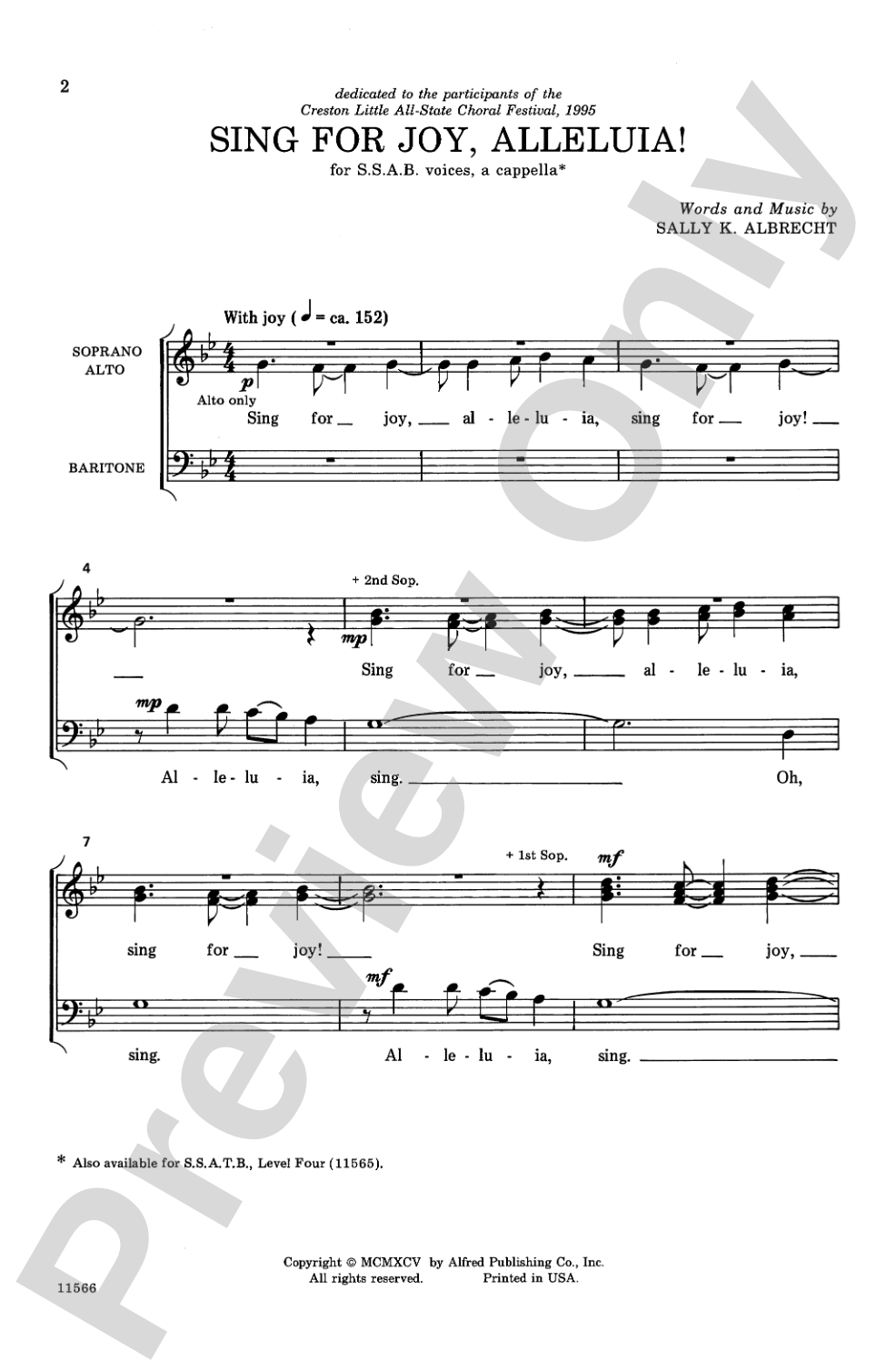
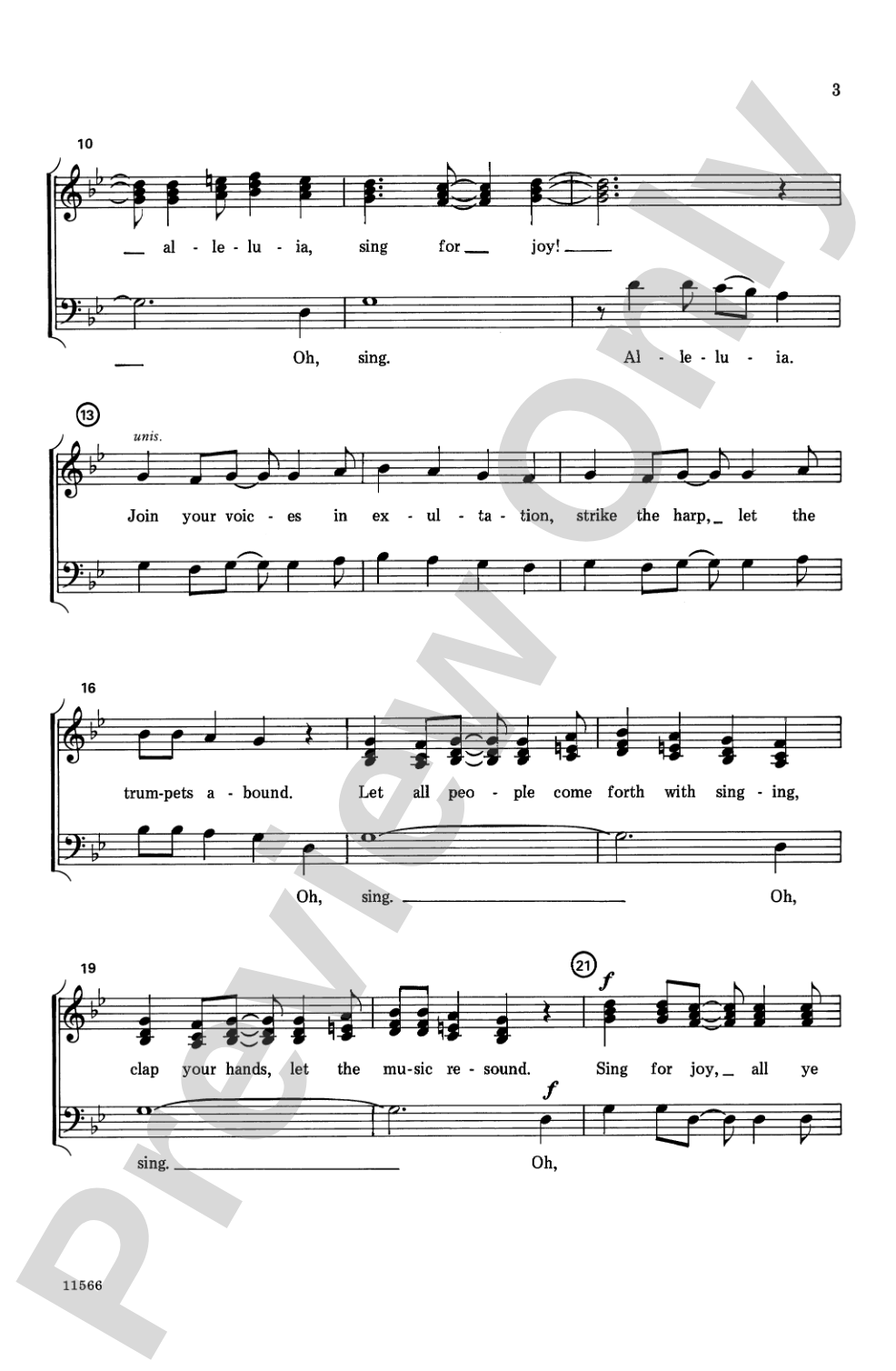
This full-sounding choral work with a driving, rhythmic intensity may be performed a cappella or with the piano doubling the voices. ABA form makes for quick learning. Secular text is perfect for school chorals . . . and a great festival work, too. Note: The SSAB edition is excellent for choirs with few men.


Sing for Joy, Alleluia!: SSAB, a cappella Choral Octavo isn't in MakeMusic Cloud just yet...but it could be. Let us know you'd like to see it, and you'll help shape what comes next. In the meantime, start a free trial and dive into thousands of interactive titles your students can play along with today.
Request This Title
Tell us you want it.
Start Your Free Trial
Explore everything that's ready to play right now.
Sample Audio
No sample audio found.
Sample Video
No sample videos found.
Additional Details
Series:
Alfred Archive Edition: Alfred Choral Designs
Publisher:
Alfred Music
Page Count:
8
SKU:
00-PO-0003858
More about this title
About the Composer: Sally K. Albrecht

Sally K. Albrecht has shaped American choral music through her prolific compositions and leadership in music education. Since 1987, she has received annual ASCAP Special Music Awards, with more than 600 choral publications and 75 larger works currently in print. She conducted honor choirs at prestigious venues including Lincoln Center, Carnegie Hall, and The Kennedy Center, and spent over thirty years directing school choral, vocal, and elementary publications for major educational publishers, including her tenure at Alfred Music.
Albrecht's career reflects a deep commitment to accessible, engaging choral writing for students. She holds degrees from Rollins College (B.A., 1976), the University of Miami (M.A. in Drama, 1979; M.M. in Accompanying, 1979), and has taught at Oakland University, Jersey City State College, and Meredith College. In recognition of her contributions to music education and leadership, she received the Distinguished Alumna Award from both the University of Miami Frost School of Music and Rollins College in 2021.
Why we love this
Albrecht writes with genuine understanding of what school choirs can accomplish. The ABA structure streamlines rehearsal time while the rhythmic energy keeps singers engaged, and the SSAB voicing solves a real scheduling problem for choirs with limited male participation without sacrificing the full, resonant sound directors expect.
What to expect
The rhythmic intensity propels the piece forward with celebratory warmth. Spirited and uplifting, it balances accessibility with the full harmonic texture that keeps singers satisfied and audiences moved.
Who it's for
This piece fits school choirs seeking substantial repertoire that performs well at festivals and concerts without requiring months of preparation. It works particularly well for programs with more treble and alto singers than lower voices, and reaches choirs that want joyful, accessible music with genuine musical substance.
How to get the most out of it
- Shape each section of the ABA form with distinct articulation and dynamic choices so the return of A feels genuinely new, not simply repetitive.
- Let the driving rhythm anchor the ensemble; have singers internalize the pulse before adding text to keep the piece tight and energized.
- If performing a cappella, mark breath points carefully and rehearse staggered breathing in sustained passages to maintain momentum without audible gaps.
How to use it
Position this as an energizing opener or closer on a concert program where you want immediate audience connection and vocal joy. Its festival credentials and quick learning curve make it ideal for spring concert planning or competition calendars without displacing weightier repertoire elsewhere on the program.
Skills your students will build
- Reading SSAB voicing and part independence in mixed choral texture
- Maintaining rhythmic precision in driving, syncopated accompaniment patterns
- Shaping phrase continuity across formal sections (ABA structure)
- Sustaining vocal blend and intonation without instrumental support (a cappella performance)