
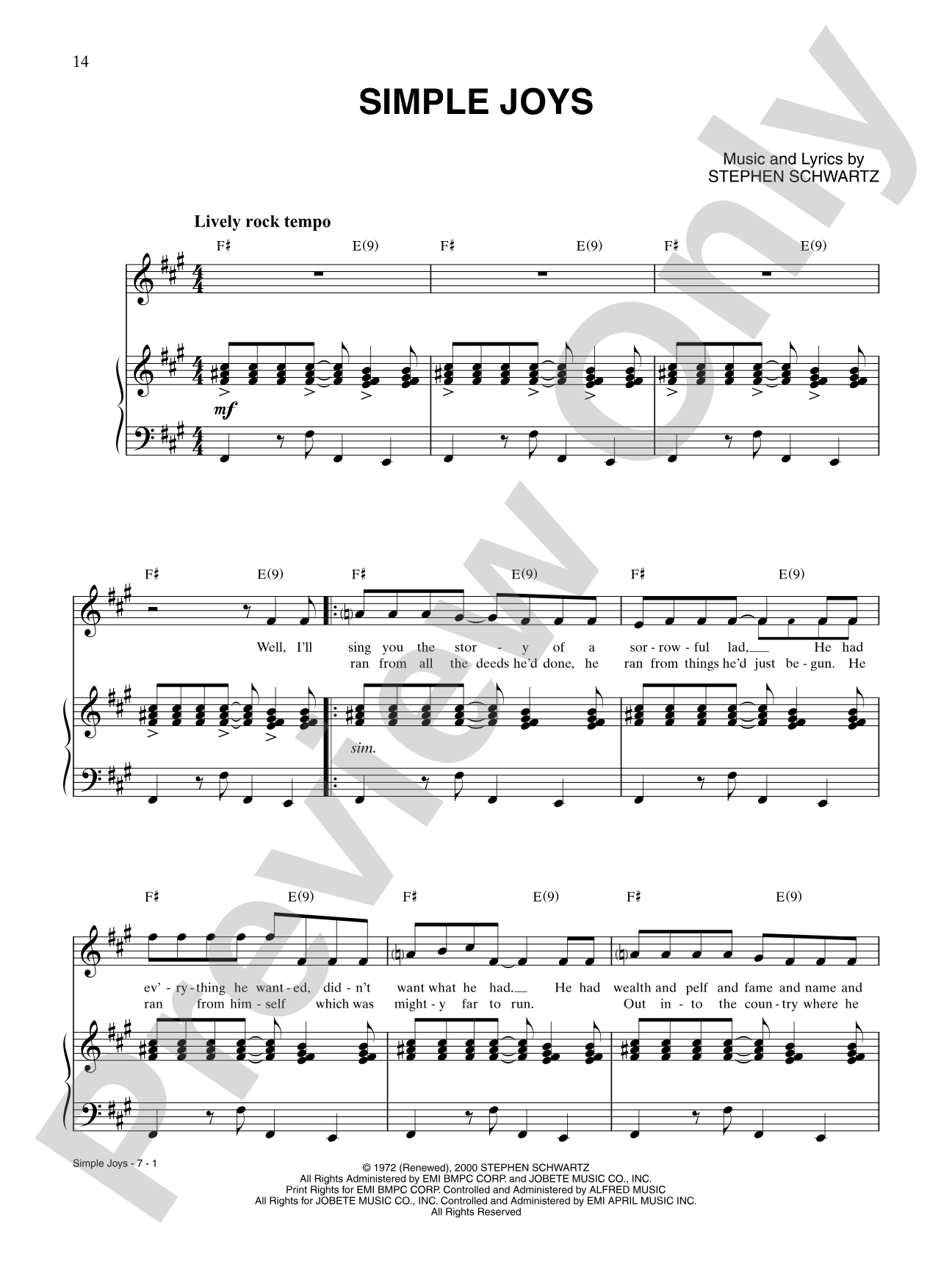
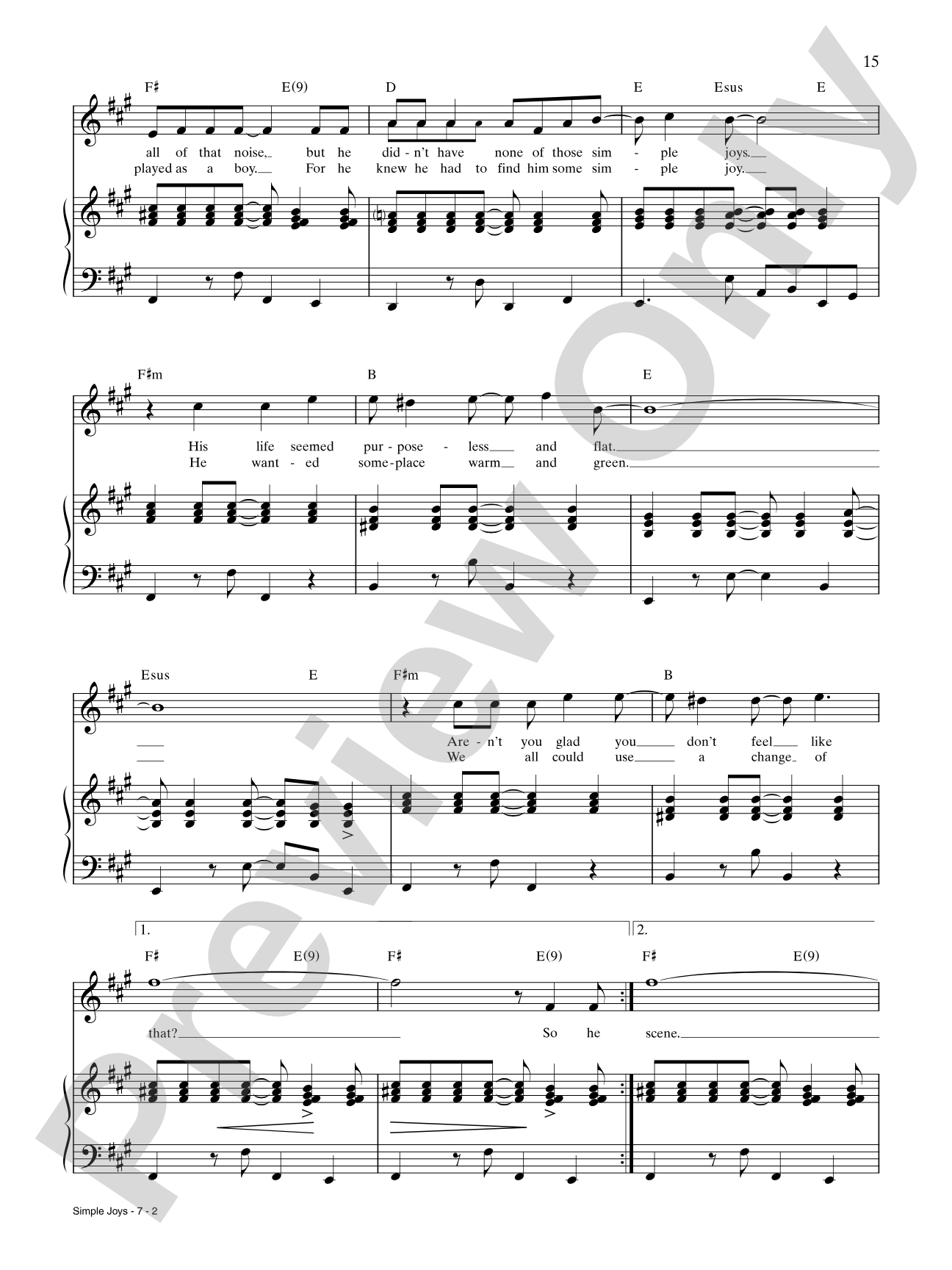

Simple Joys (from Pippin): Piano/Vocal/Chords
Music and lyrics by Stephen Schwartz
Item: 00-PS-0014393
$5.99
Pickup currently not available
Related Items
Magic to Do (from Pippin): Piano/Vocal/Chords |
$5.99
|
View | |
Corner of the Sky (from Pippin): Piano/Vocal/Chords |
$4.99
|
View | |
Morning Glow (from Pippin): Piano/Vocal/Chords |
$4.99
|
View | |
With You (from Pippin): Piano/Vocal/Chords |
$4.99
|
View | |
Extraordinary (from Pippin): Piano/Vocal/Chords |
$5.99
|
View | |
Love Song (from Pippin): Piano/Vocal/Chords |
$4.99
|
View | |
No Time at All (from Pippin): Piano/Vocal/Chords |
$5.99
|
View | |
Pippin (Finale) (from Pippin): Piano/Vocal/Chords |
$5.99
|
View | |
On the Right Track (from Pippin): Piano/Vocal/Chords |
$9.99
|
View | |
I Guess I'll Miss the Man (from Pippin): Piano/Vocal/Chords |
$4.99
|
View | |
Kind of Woman (from Pippin): Piano/Vocal/Chords |
$4.99
|
View | |
Spread a Little Sunshine (from Pippin): Piano/Vocal/Chords |
$4.99
|
View | |
Pippin: Sheet Music from the Broadway Musical: Piano/Vocal/Chords Book |
$21.99
|
View |
Description
This updated, newly-engraved songbook was produced in direct consultation with Stephen Schwartz to coincide with the smash 2013 Broadway revival of Pippin. The song "On the Right Track" is now included, and the composer provided a number of lyric and arrangement updates. Titles: Magic to Do * Corner of the Sky * Simple Joys * No Time at All * With You * Spread a Little Sunshine * Morning Glow * On the Right Track * Kind of Woman * Extraordinary * Love Song * I Guess I'll Miss the Man * Pippin (Finale).


Simple Joys (from Pippin): Piano/Vocal/Chords isn't in MakeMusic Cloud just yet...but it could be. Let us know you'd like to see it, and you'll help shape what comes next. In the meantime, start a free trial and dive into thousands of interactive titles your students can play along with today.
Request This Title
Tell us you want it.
Start Your Free Trial
Explore everything that's ready to play right now.
Sample Audio
No sample audio found.
Sample Video
No sample videos found.
Additional Details
Publisher:
Alfred Music
Page Count:
80
SKU:
00-PS-0014393
More about this title
About the Composer: Stephen Schwartz
Stephen Schwartz has composed and written lyrics for some of Broadway's most enduring musicals, including Godspell, Pippin, and Wicked. His gift for crafting songs that combine sophisticated harmonic language with singable, memorable melodies has made his work central to contemporary musical theater pedagogy and performance.
Schwartz's involvement in this 2013 edition of Pippin reflects his commitment to refining his own work across decades. His willingness to consult directly on new engravings and provide lyric and arrangement updates demonstrates his investment in how his music is learned and performed in educational and professional settings.
Why we love this
Schwartz's harmonic sophistication and lyrical clarity shine throughout this collection, offering singers and pianists material that rewards both interpretive nuance and accessibility. The 2013 revisions ensure that the vocal ranges, accompaniment textures, and harmonic voicings feel contemporary while preserving the songs' theatrical warmth. A songbook this well-crafted serves equally well in a voice studio, a high school musical rehearsal, or a college music theater program.
What to expect
These songs carry the theatrical intelligence and emotional directness that define Pippin: moments of genuine tenderness sit alongside exuberant celebration, and the harmonic language feels both accessible and subtly surprising. The piano writing invites both intimate accompaniment and fuller, orchestral textures, creating space for a singer to tell each story with authenticity.
Who it's for
Singers preparing audition material or recital repertoire from contemporary musical theater will find songs suited to a range of voice types and emotional colors. Piano teachers and vocal coaches working with intermediate-to-advanced students can draw from this collection to build sight-reading skills, harmonic fluency, and interpretive confidence. High school and college music theater programs will use this as a core rehearsal and performance resource.
How to get the most out of it
- Balance the vocal line against the piano accompaniment by thinking of the chords as harmonic cushion rather than as steady strumming; let the bass movement and voice-leading support the singer's phrasing.
- Pay attention to lyrical articulation, particularly in passages marked with syncopation or rhythmic displacement; Schwartz's rhythmic language is precise and integral to how the lyrics land.
- Transpose strategically to fit your singer's comfortable tessitura; these songs exist in published keys that serve a Broadway soprano, but a semitone or two adjustment can expand accessibility without compromising the music's character.
- Explore the harmonic substitutions and jazz-inflected chords in cuts like 'Simple Joys' and 'Love Song'; these are not errors but intentional color and require a pianist who listens to voice leading, not just chord symbols.
How to use it
Consider programming one or more of these songs in a musical theater concert or cabaret-style recital where Schwartz's lyrical specificity and melodic craft can anchor an evening. For ensemble study, selections like 'Magic to Do' and 'Spread a Little Sunshine' work as group pieces that teach ensemble blend and harmonic listening. Individual songs also fit naturally into voice studio curricula focused on contemporary musical theater song.
Skills your students will build
- Reading and interpreting chord symbols in contemporary musical theater contexts
- Balancing vocal line independence from harmonic accompaniment
- Understanding syncopation and rhythmic displacement in lyrical sung music
- Navigating jazzy harmonic substitutions and extended chords
- Interpreting stylistic elements specific to Stephen Schwartz's compositional voice (rhythmic precision, lyrical clarity, harmonic color)
- Transposing effectively to accommodate different voice types