
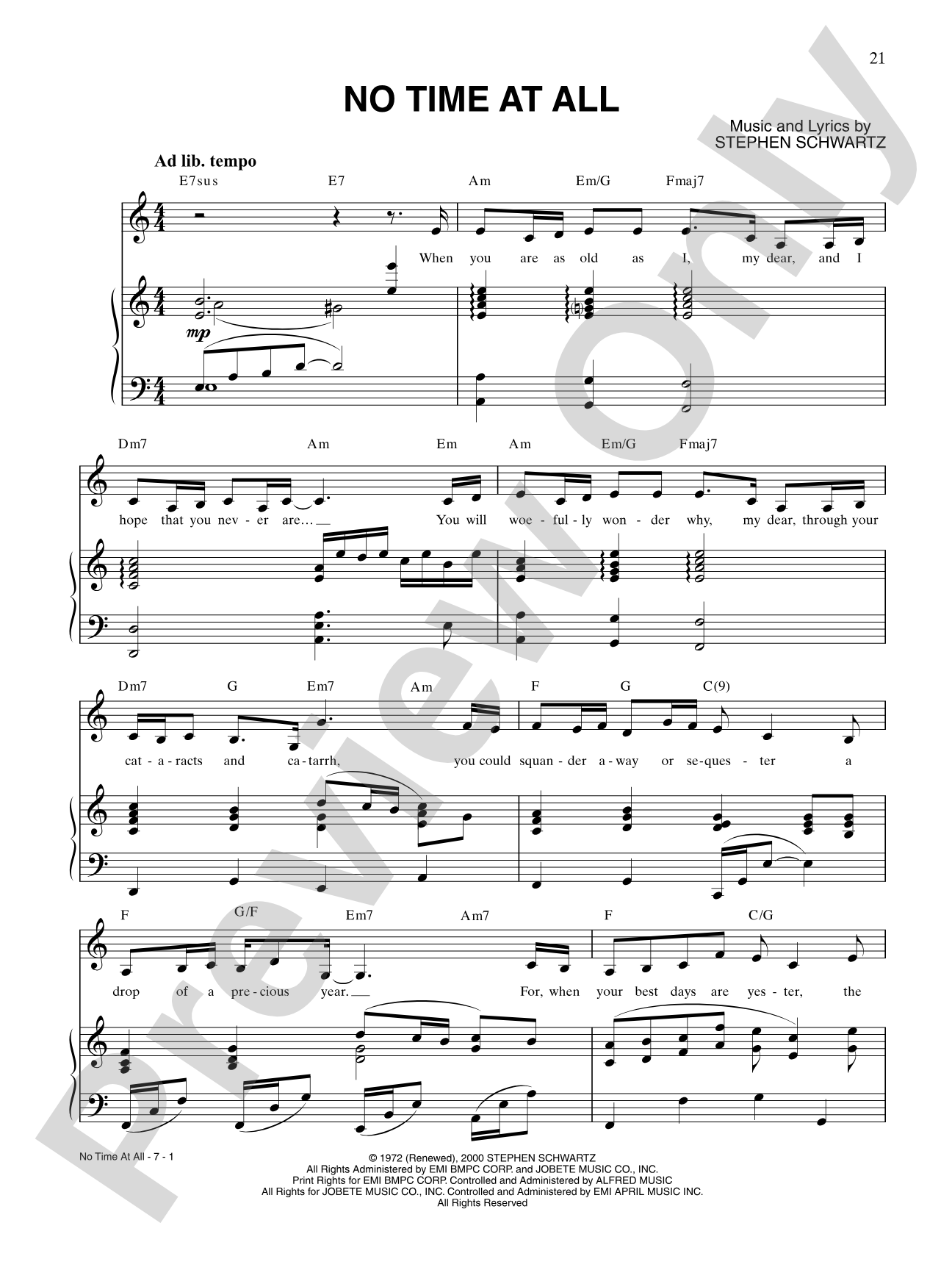
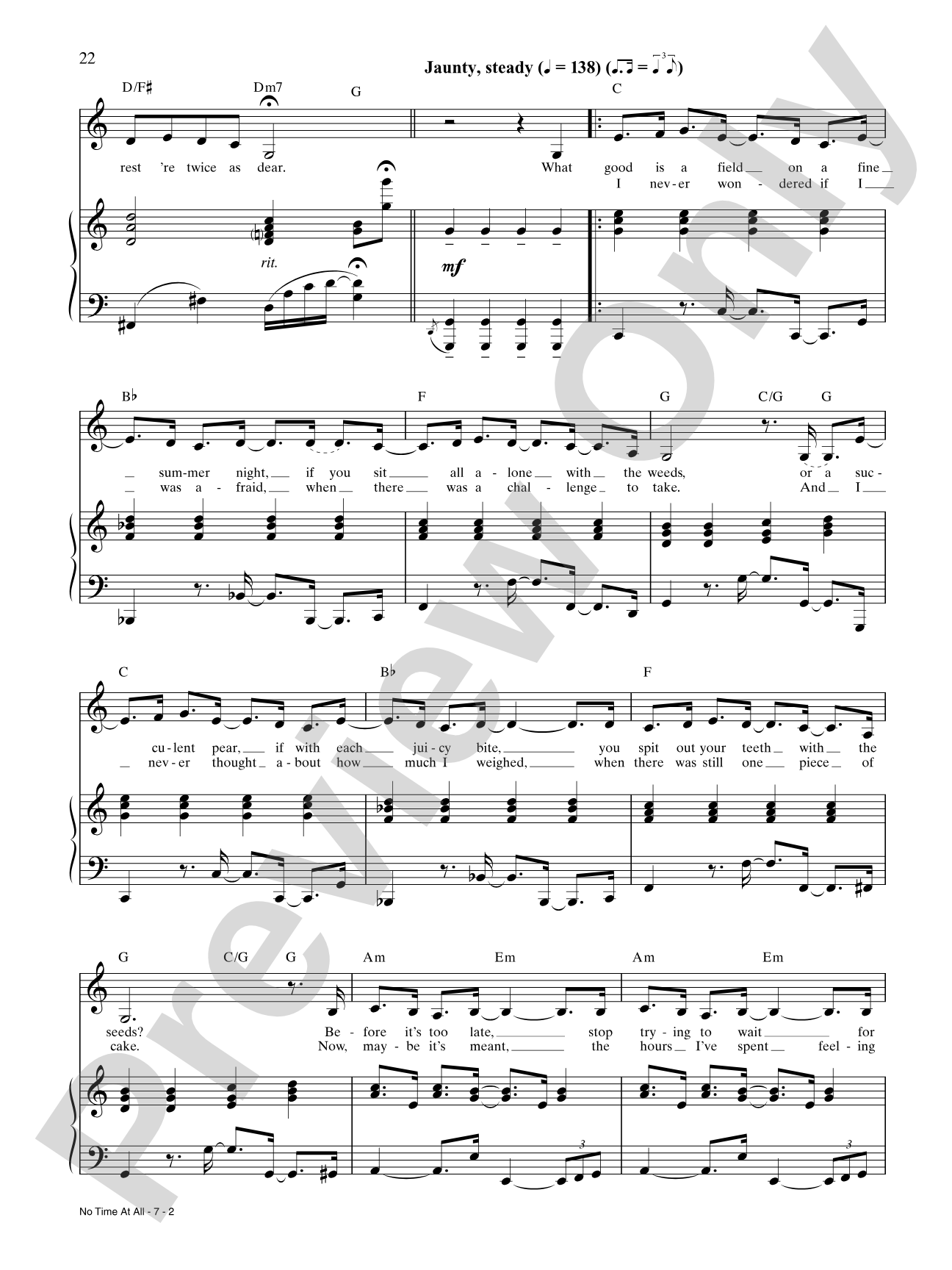

No Time at All (from Pippin): Piano/Vocal/Chords
Music and lyrics by Stephen Schwartz
Item: 00-PS-0014392
$5.99
Pickup currently not available
Related Items
Magic to Do (from Pippin): Piano/Vocal/Chords |
$5.99
|
View | |
Corner of the Sky (from Pippin): Piano/Vocal/Chords |
$4.99
|
View | |
Morning Glow (from Pippin): Piano/Vocal/Chords |
$4.99
|
View | |
With You (from Pippin): Piano/Vocal/Chords |
$4.99
|
View | |
Extraordinary (from Pippin): Piano/Vocal/Chords |
$5.99
|
View | |
Love Song (from Pippin): Piano/Vocal/Chords |
$4.99
|
View | |
Simple Joys (from Pippin): Piano/Vocal/Chords |
$5.99
|
View | |
Pippin (Finale) (from Pippin): Piano/Vocal/Chords |
$5.99
|
View | |
On the Right Track (from Pippin): Piano/Vocal/Chords |
$9.99
|
View | |
I Guess I'll Miss the Man (from Pippin): Piano/Vocal/Chords |
$4.99
|
View | |
Kind of Woman (from Pippin): Piano/Vocal/Chords |
$4.99
|
View | |
Spread a Little Sunshine (from Pippin): Piano/Vocal/Chords |
$4.99
|
View | |
Pippin: Sheet Music from the Broadway Musical: Piano/Vocal/Chords Book |
$21.99
|
View |
Description
This updated, newly-engraved songbook was produced in direct consultation with Stephen Schwartz to coincide with the smash 2013 Broadway revival of Pippin. The song "On the Right Track" is now included, and the composer provided a number of lyric and arrangement updates. Titles: Magic to Do * Corner of the Sky * Simple Joys * No Time at All * With You * Spread a Little Sunshine * Morning Glow * On the Right Track * Kind of Woman * Extraordinary * Love Song * I Guess I'll Miss the Man * Pippin (Finale).


Discover MakeMusic Cloud: thousands of interactive titles your students can play along with today.
Sample Audio
No sample audio found.
Sample Video
No sample videos found.
Additional Details
Publisher:
Alfred Music
Page Count:
80
SKU:
00-PS-0014392
More about this title
About the Composer: Stephen Schwartz
Stephen Schwartz is a composer and lyricist whose work spans theater, film, and concert music. He won the Academy Award for Best Original Song for "Defying Gravity" from Wicked and has created scores for Pippin, Godspell, and Children of Eden, among others. His gift for crafting memorable melodies and emotionally direct lyrics has made his work a cornerstone of contemporary musical theater repertoire.
Why we love this
This digital songbook captures the essence of Schwartz's accessible, character-driven writing across an entire Broadway score. The newly-engraved edition reflects the composer's direct input on the 2013 revival, offering performers the most authoritative text available for piano/vocal study and performance. From intimate ballads to ensemble showstoppers, the collection showcases why Pippin remains a staple of musical theater programs.
What to expect
Schwartz's Pippin score balances theatrical vitality with genuine emotional warmth. These songs move between whimsical charm and moments of real vulnerability, creating a score that feels both immediately singable and surprisingly rich upon deeper exploration. The music has a conversational quality that draws listeners in rather than overwhelming them.
Who it's for
This songbook serves pianists and singers preparing solo repertoire for recitals, auditions, or informal performance. Music teachers will find these pieces valuable for students exploring contemporary musical theater literature, and directors can use individual selections for concert programming or classroom study.
How to get the most out of it
- Balance the vocal line clearly over the piano accompaniment; Schwartz's melodies thrive when they sit naturally in the singer's range without forcing projection
- Study the harmonic vocabulary throughout these songs; Schwartz's chords often move by whole step and use unexpected progressions that reward a player's attention to voice leading
- Honor the lyrical intent of each number by shaping phrases musically rather than mechanically; these songs reward storytelling that matches the text
- Pay attention to the relationship between tempo and character; pieces like "Magic to Do" and "No Time at All" have distinct rhythmic personalities that define their moods
How to use it
Program individual songs as contrasting selections in a musical theater showcase, or use the collection to teach the architecture of a complete Broadway score. The ballads work well in recital contexts, while the ensemble pieces suit concert or classroom performance.
Skills your students will build
- Reading and performing contemporary musical theater notation and phrasing conventions
- Playing flowing accompaniment patterns that support rather than compete with the vocal line
- Interpreting chromatic and unexpected harmonic movement in a theatrical context
- Coordinating pianist and vocalist to achieve lyrical, conversational performance
- Sustaining musical interest across contrasting song styles within a single score