
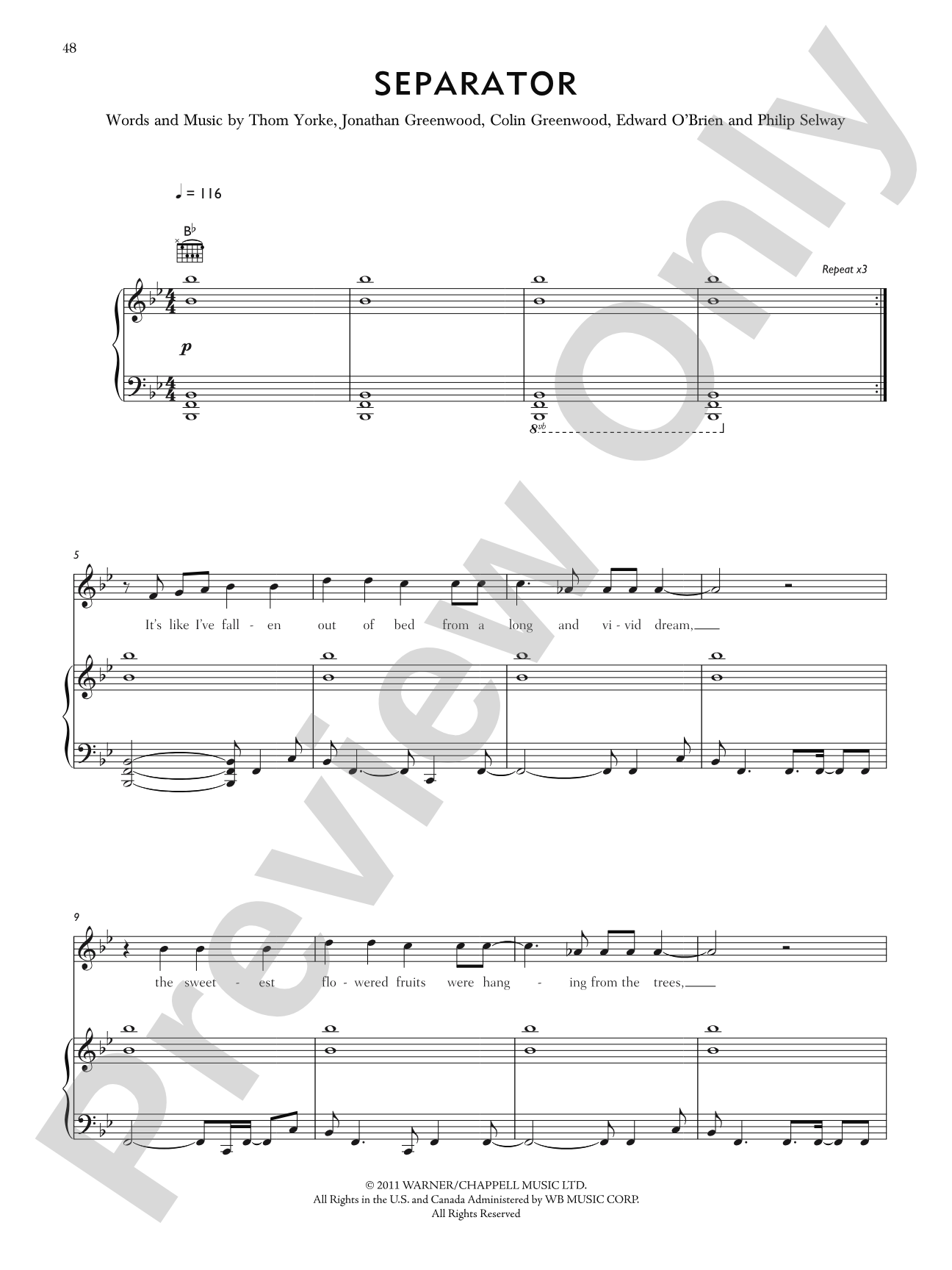
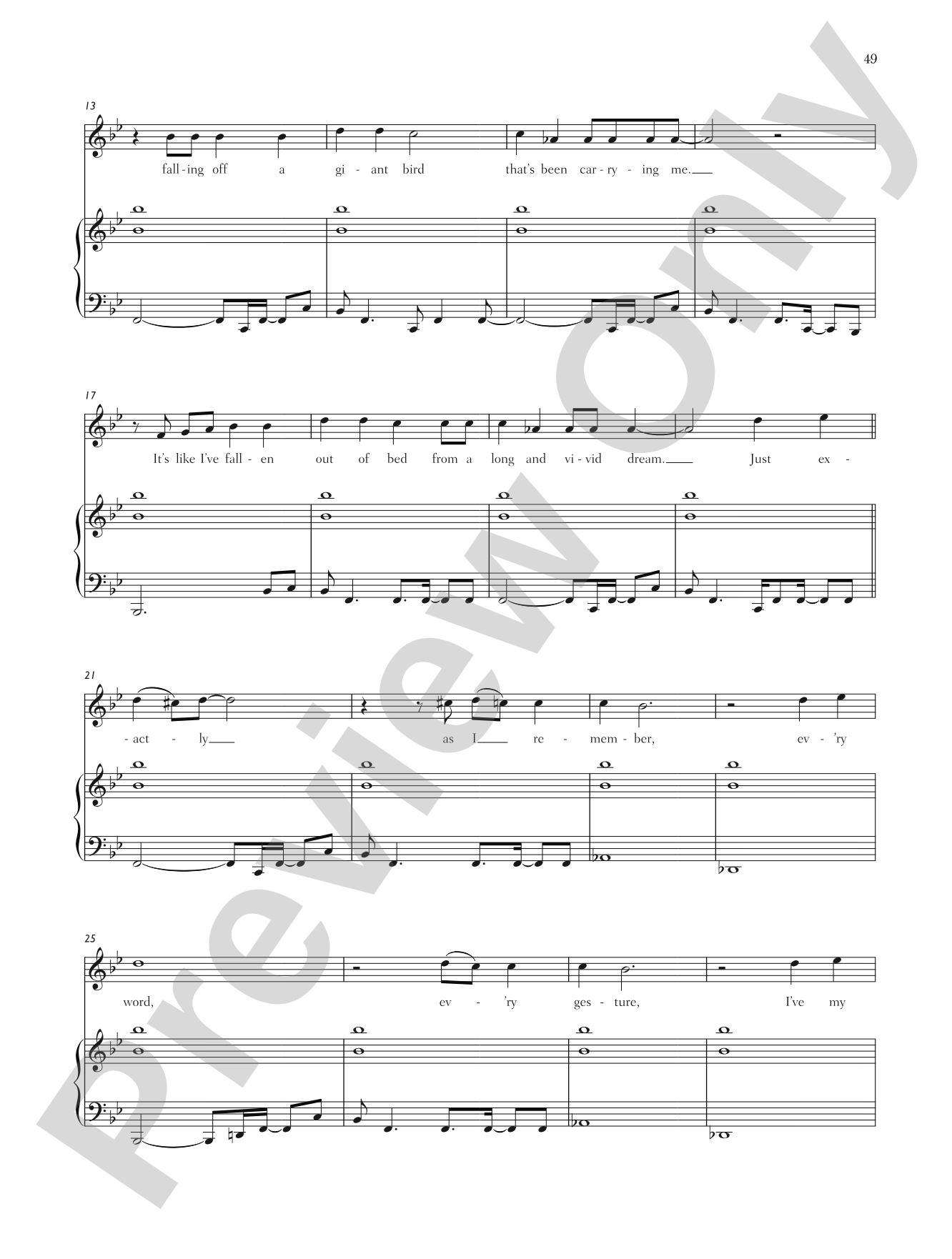

Separator: Piano/Vocal/Chords
Radiohead
Item: 00-PS-0013276
$5.99
One moment…
Related Items
Bloom: Piano/Vocal/Chords |
$5.99
|
View | |
Morning Mr. Magpie: Piano/Vocal/Chords |
$5.99
|
View | |
Little By Little: Piano/Vocal/Chords |
$5.99
|
View | |
Feral: Piano/Vocal/Chords |
$4.99
|
View | |
Lotus Flower: Piano/Vocal/Chords |
$5.99
|
View | |
Codex: Piano/Vocal/Chords |
$4.99
|
View | |
Give Up the Ghost: Piano/Vocal/Chords |
$5.99
|
View |
Description
This is the officially licensed matching songbook to Radiohead's February 2011 album, which met with widespread critical acclaim and a No. 3 peak on the Billboard 200. In this folio, each song from the album is arranged for piano and voice, with guitar chord grids also included. Titles: Bloom * Morning Mr. Magpie * Little by Little * Feral * Lotus Flower * Codex * Give Up the Ghost * Separator.


Separator: Piano/Vocal/Chords isn't in MakeMusic Cloud just yet...but it could be. Let us know you'd like to see it, and you'll help shape what comes next. In the meantime, start a free trial and dive into thousands of interactive titles your students can play along with today.
Request This Title
Tell us you want it.
Start Your Free Trial
Explore everything that's ready to play right now.
Sample Audio
No sample audio found.
Sample Video
No sample videos found.
Additional Details
Publisher:
Alfred Music
Page Count:
56
SKU:
00-PS-0013276
More about this title
About the Composer: Thom Yorke
Thom Yorke is the lead vocalist and principal songwriter of Radiohead, the British rock band that fundamentally reshaped alternative and experimental music from the 1990s onward. His work as a composer spans from accessible pop-rock melodies to intricate electronic production and avant-garde soundscapes, making him one of the most influential songwriters in contemporary music. Yorke's approach to composition emphasizes harmonic sophistication, unconventional song structures, and integration of electronic and acoustic elements, all of which have shaped how modern musicians think about arranging rock music.
Why we love this
This folio captures one of Radiohead's most cohesive and experimental albums in an arrangement that respects the original compositions while making them accessible to pianists and vocalists. The inclusion of guitar chord grids alongside piano voicings means singers and pianists can work together easily, and the arrangements reveal the harmonic architecture underneath some genuinely unconventional song structures. Programming contemporary art rock at an intermediate-advanced level opens doors for serious students who might otherwise dismiss classical repertoire as their primary learning path.
What to expect
These songs inhabit a space between melancholy introspection and electronic unease. Textures tend toward the sparse and atmospheric, with vocals sitting atop deliberate piano figures that often suggest rather than state the harmonic landscape. The overall effect is contemplative and sometimes unsettling, rewarding singers who can sustain long phrases with emotional restraint.
Who it's for
This book is ideal for advanced high school vocalists and college-level pianists who want to explore contemporary art rock alongside or instead of traditional classical repertoire. It also works well for private studio teachers serving students interested in modern composition, unconventional harmonic language, and the intersection of rock and experimental music.
How to get the most out of it
- Balance the vocal line with the piano texture; many of these songs build atmosphere through spare, deliberate accompaniment rather than thick chords, so resist the urge to play full voicings under every phrase.
- Pay attention to the rhythmic displacement and syncopation in songs like Lotus Flower and Codex. These pieces reward precision in rhythm section coordination between voice and piano.
- Use dynamics to create the emotional arc within individual songs. The album's production style relies on subtle volume shifts and textural changes rather than dramatic tempo or key changes.
- Reference the original recordings to understand how electronic layers and effects inform the song's emotional weight. Your arrangement choices should acknowledge what the strings, synths, or effects contribute to the original.
How to use it
Consider featuring one or two songs from this folio in a concert that explores contemporary art rock, or as part of a recital program that intentionally juxtaposes classical standards with modern composition. These pieces also work as a bridge for intermediate students who are beginning to study more challenging harmonic and structural concepts but want material that speaks to their own musical interests.
Skills your students will build
- Reading and performing unconventional song structures and harmonic progressions
- Coordinating voice and piano ensemble playing with independent rhythmic figures
- Interpreting guitar chord grids in the context of piano voicing
- Sustaining vocal lines over sparse, minimalist accompaniment
- Understanding contemporary arrangement choices in art rock and experimental music