
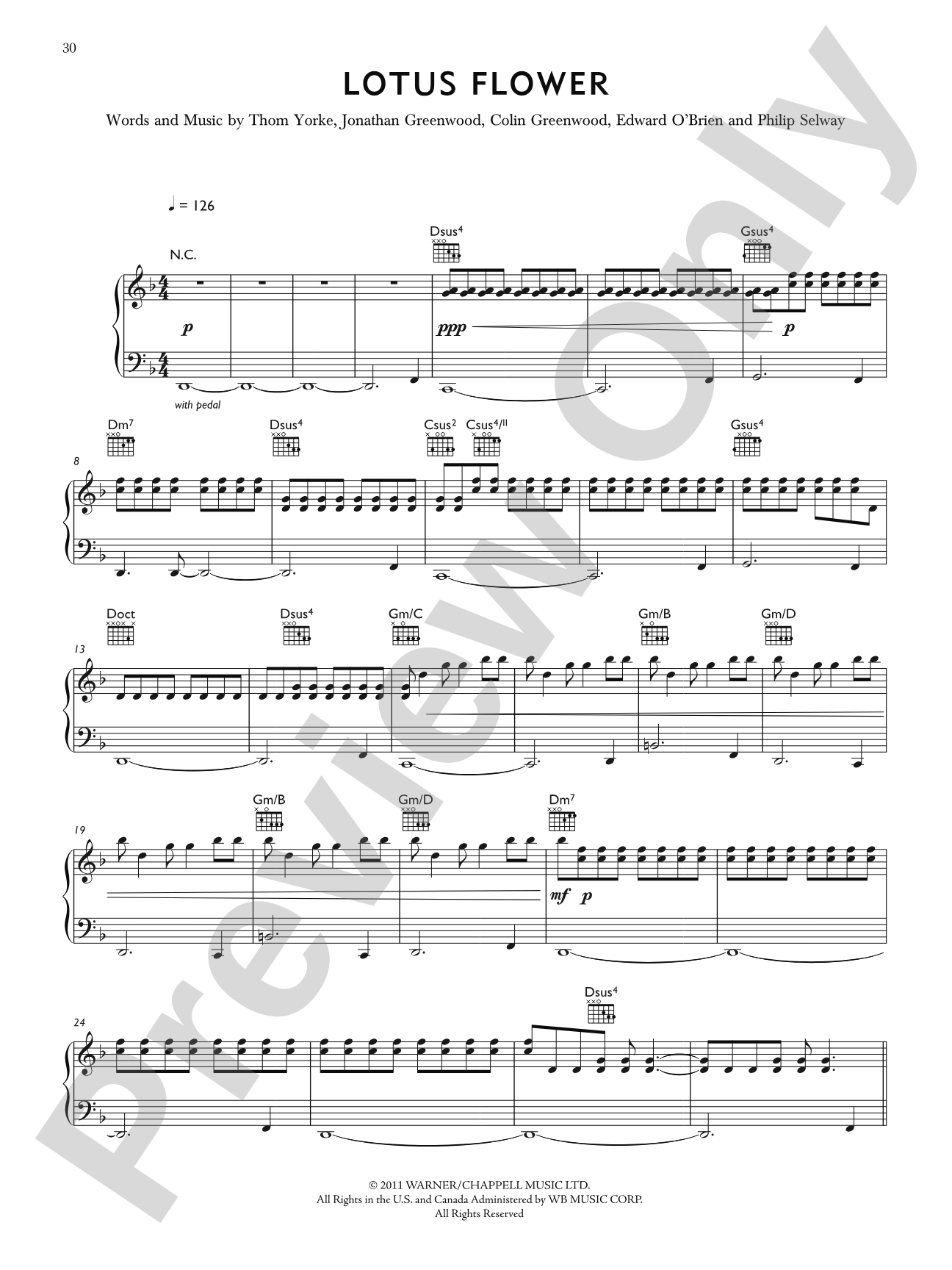
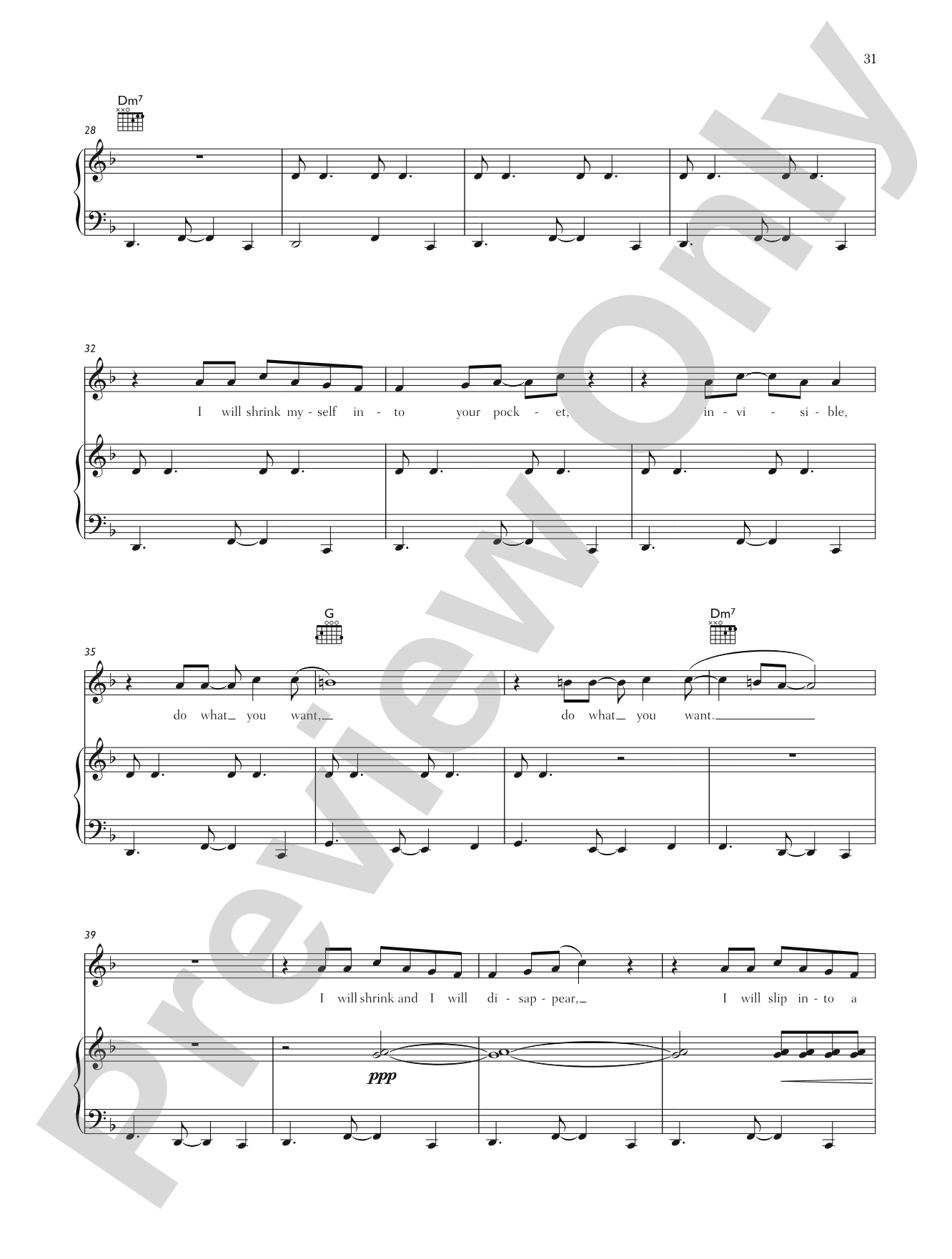

Lotus Flower: Piano/Vocal/Chords
Radiohead
Item: 00-PS-0013273
$5.99
One moment…
Related Items
Bloom: Piano/Vocal/Chords |
$5.99
|
View | |
Morning Mr. Magpie: Piano/Vocal/Chords |
$5.99
|
View | |
Little By Little: Piano/Vocal/Chords |
$5.99
|
View | |
Feral: Piano/Vocal/Chords |
$4.99
|
View | |
Codex: Piano/Vocal/Chords |
$4.99
|
View | |
Give Up the Ghost: Piano/Vocal/Chords |
$5.99
|
View | |
Separator: Piano/Vocal/Chords |
$5.99
|
View |
Description
This is the officially licensed matching songbook to Radiohead's February 2011 album, which met with widespread critical acclaim and a No. 3 peak on the Billboard 200. In this folio, each song from the album is arranged for piano and voice, with guitar chord grids also included. Titles: Bloom * Morning Mr. Magpie * Little by Little * Feral * Lotus Flower * Codex * Give Up the Ghost * Separator.


Lotus Flower: Piano/Vocal/Chords isn't in MakeMusic Cloud just yet...but it could be. Let us know you'd like to see it, and you'll help shape what comes next. In the meantime, start a free trial and dive into thousands of interactive titles your students can play along with today.
Request This Title
Tell us you want it.
Start Your Free Trial
Explore everything that's ready to play right now.
Sample Audio
No sample audio found.
Sample Video
No sample videos found.
Additional Details
Publisher:
Alfred Music
Page Count:
56
SKU:
00-PS-0013273
More about this title
About the Composer: Thom Yorke
Thom Yorke is the lead vocalist and primary songwriter of Radiohead, a band that has consistently pushed the boundaries of rock music since the 1990s. His compositional work spans experimental electronic music, art rock, and introspective singer-songwriter material, and his approach to melody, harmony, and production has influenced a generation of musicians working across genres.
Why we love this
This folio captures a landmark album in Radiohead's catalog with arrangements that honor both the piano-driven compositions and the layered production of the original recordings. Singers and pianists working through these songs will encounter sophisticated harmonic language, unconventional song structures, and lyrics that reward close listening; this is material that teaches expressive phrasing and emotional restraint alongside technical skill.
What to expect
These songs move between moments of crystalline clarity and deliberate ambiguity, with instrumentation that feels both intimate and expansive. The vocal writing demands vulnerability and control in equal measure, while the piano arrangements range from sparse and meditative to densely textured, creating a listening experience that rewards both introspection and careful attention to detail.
Who it's for
This folio is ideal for advanced pianists and singers who want to explore contemporary rock songwriting with genuine harmonic depth and lyrical sophistication. It works equally well for musicians preparing for recitals, student ensembles pairing voices and piano, or anyone seeking substantial material that bridges classical technique with modern songcraft.
How to get the most out of it
- Study the guitar chord grids alongside the piano voicings to understand how the harmonic foundation shifts between instruments; this will inform your voice leading and help you recognize where to lean into dissonance or resolution.
- Pay attention to the rhythmic freedom in pieces like 'Lotus Flower' and 'Bloom'; these songs often sit slightly ahead of or behind the beat rather than locking rigidly to the pulse, so let the emotional arc of the lyric guide your phrasing.
- Use the vocal line as your starting point and build the piano accompaniment around it, rather than treating the voice as a melody sitting on top of predetermined chords; this approach mirrors how these songs were conceived.
How to use it
Feature one or two songs from this album as part of a contemporary music recital, pairing them with art songs or other singer-songwriter material to show the range of vocal writing available to modern composers. Alternatively, use individual pieces in student recitals to challenge advanced singers and pianists; the album's cohesive artistic vision means even standalone songs carry substantial emotional weight.
Skills your students will build
- Reading contemporary vocal writing and extended harmonic language
- Interpreting rhythmic flexibility and rubato in a pop/rock context
- Coordinating voice and piano with independent harmonic structures
- Understanding guitar chord voicings and translating them to piano
- Developing expressive restraint and lyrical interpretation in non-classical contexts