
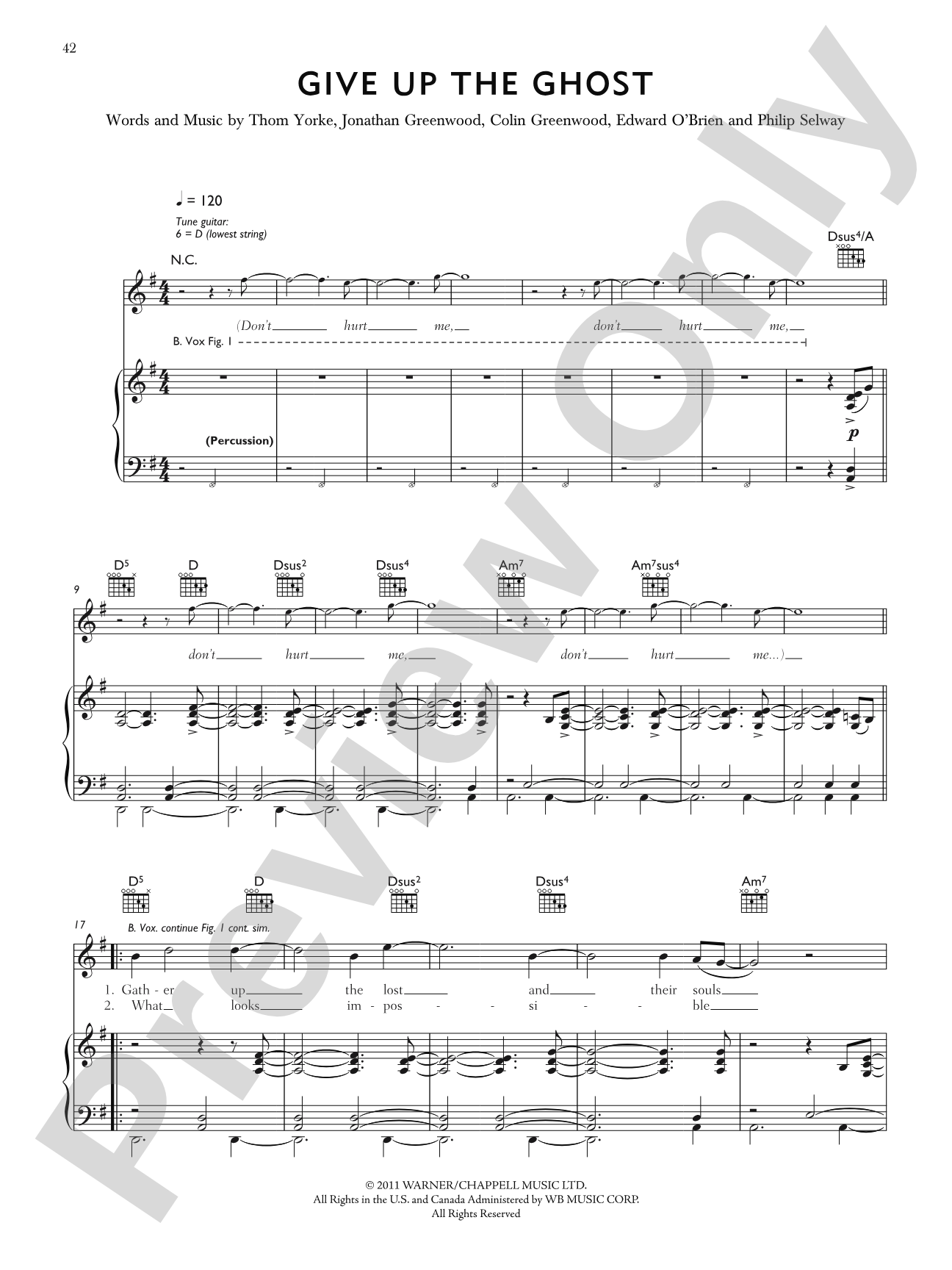
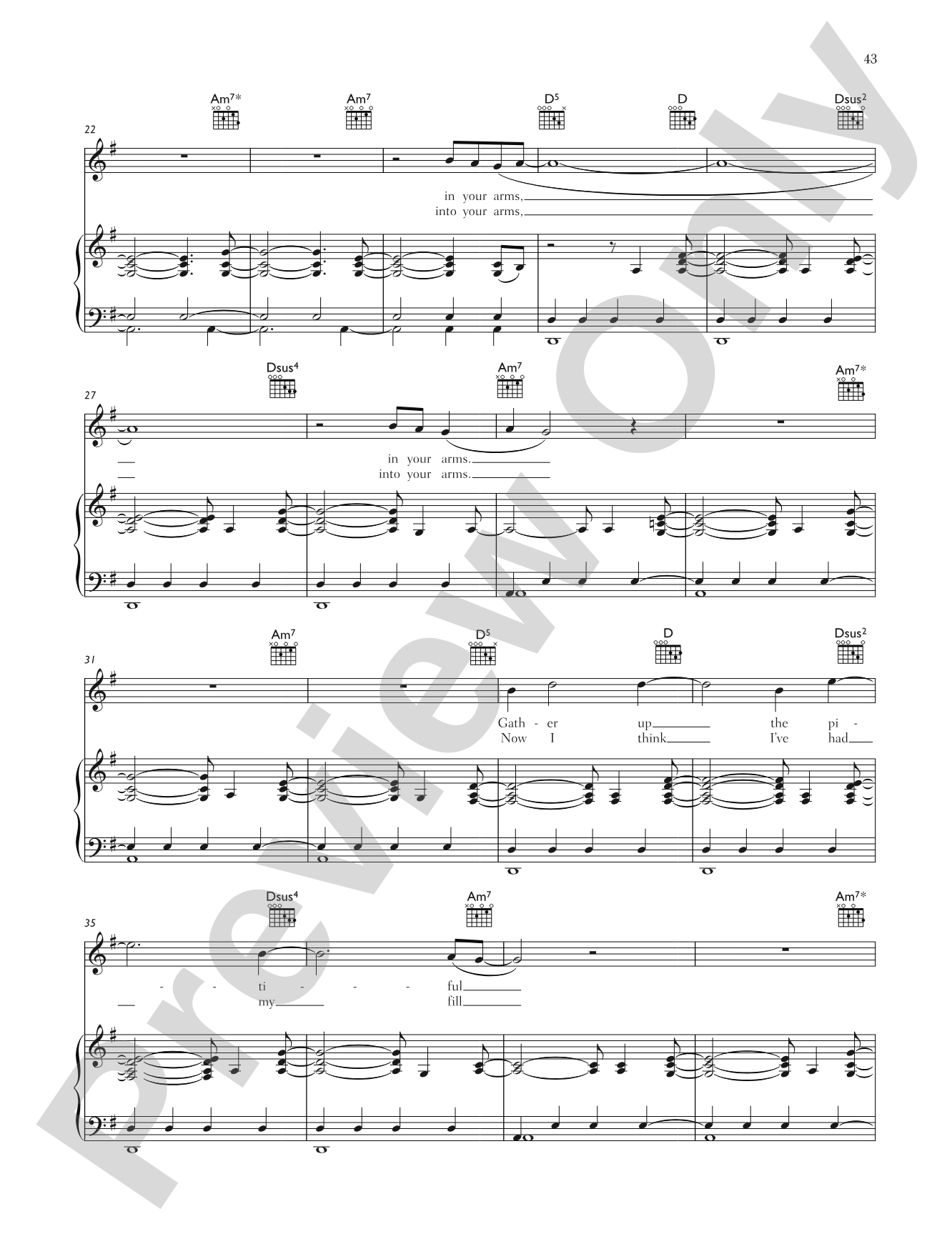

Give Up the Ghost: Piano/Vocal/Chords
Radiohead
Item: 00-PS-0013275
$5.99
One moment…
Related Items
Bloom: Piano/Vocal/Chords |
$5.99
|
View | |
Morning Mr. Magpie: Piano/Vocal/Chords |
$5.99
|
View | |
Little By Little: Piano/Vocal/Chords |
$5.99
|
View | |
Feral: Piano/Vocal/Chords |
$4.99
|
View | |
Lotus Flower: Piano/Vocal/Chords |
$5.99
|
View | |
Codex: Piano/Vocal/Chords |
$4.99
|
View | |
Separator: Piano/Vocal/Chords |
$5.99
|
View |
Description
This is the officially licensed matching songbook to Radiohead's February 2011 album, which met with widespread critical acclaim and a No. 3 peak on the Billboard 200. In this folio, each song from the album is arranged for piano and voice, with guitar chord grids also included. Titles: Bloom * Morning Mr. Magpie * Little by Little * Feral * Lotus Flower * Codex * Give Up the Ghost * Separator.


Give Up the Ghost: Piano/Vocal/Chords isn't in MakeMusic Cloud just yet...but it could be. Let us know you'd like to see it, and you'll help shape what comes next. In the meantime, start a free trial and dive into thousands of interactive titles your students can play along with today.
Request This Title
Tell us you want it.
Start Your Free Trial
Explore everything that's ready to play right now.
Sample Audio
No sample audio found.
Sample Video
No sample videos found.
Additional Details
Publisher:
Alfred Music
Page Count:
56
SKU:
00-PS-0013275
More about this title
About the Composer: Thom Yorke
Thom Yorke is the lead vocalist and principal songwriter of Radiohead, the Oxford-based band that redefined alternative rock across three decades. His compositional voice spans intricate melodies, experimental production techniques, and lyrics that explore anxiety, technology, and human connection. Yorke's work across Radiohead albums and solo projects has established him as one of contemporary music's most influential and intellectually restless composers.
Why we love this
This folio captures the full sonic and lyrical ambition of The King of Limbs without requiring a band arrangement. The piano voicings reveal the compositional architecture beneath Radiohead's electronic production, making these songs accessible for solo performers and duets while maintaining their emotional intensity. Singers and pianists alike will discover how carefully Yorke constructs melody, harmony, and rhythm across eight distinct sonic landscapes.
What to expect
These eight songs inhabit a space between organic and electronic, intimate and expansive. The King of Limbs unfolds in moments of quiet vulnerability alongside passages of hypnotic repetition and textural surprise. Performing from this arrangement, you'll find yourself navigating subtle dynamic shifts, syncopated rhythmic figures, and melodic lines that reward both precision and interpretive freedom.
Who it's for
Singer-songwriters and pianists who want to perform Radiohead with authenticity and clarity, high school and college vocalists working on contemporary repertoire, and guitarists looking to deepen their understanding of these compositions through harmonic study. This folio also serves musicians preparing audition material or recital programs that demand intellectual sophistication and emotional range.
How to get the most out of it
- Study the original recordings alongside the sheet music to understand the production textures and rhythmic layers the piano part references; this context will inform phrasing and dynamic shaping.
- Treat the guitar chord grids as harmonic guidance rather than strict voicing requirements; experiment with inversions and extensions to find what works naturally under your voice or in your left hand.
- Pay attention to song-specific rhythmic feels: some pieces move with pulse-driven precision while others float more freely. Let the melody guide your approach to time rather than forcing uniformity across the album.
- Use the vocal line as your structural anchor, especially in songs with intricate piano accompaniment; the melody will help you navigate passages where harmonic density increases.
How to use it
Program individual selections as standalone contemporary art songs in recital settings, or use the folio to build a thematic set exploring modern songwriting craft. The album's progression also works well as a complete song cycle for advanced vocalists exploring narrative and sonic unity across multiple pieces.
Skills your students will build
- Reading and performing syncopated rhythmic patterns in contemporary pop/rock contexts
- Interpreting guitar chord grids and translating them into pianistic voicings
- Balancing lyrical phrasing with intricate rhythmic accompaniment
- Understanding production arrangement and translating electronic textures to acoustic instruments
- Sustaining vocal control across extended melodic lines with minimal harmonic resolution