Poems for Two Cover Image

Poems for Two: Digital Audio Download

$16.99 USD
Sale price  $16.99 USD Regular price 
Skip to product information
Poems for Two Cover Image

Poems for Two: Digital Audio Download

10 Vocal Duets for Recitals, Concerts, and Contests

By Mary Donnelly & George L. O. Strid, Greg Gilpin, Ruth Morris Gray, Victor C. Johnson, Penny Rodriguez, Michael John Trotta, and Douglas E. Wagner

Item: 00-AA-0000315

$16.99
Digital Download
Description

Poems for Two: Digital Audio Download isn't in MakeMusic Cloud just yet...but it could be. Let us know you'd like to see it, and you'll help shape what comes next. In the meantime, start a free trial and dive into thousands of interactive titles your students can play along with today.

Sample Pages

No sample pages found.

Sample Audio
1 01 A Dream Within a Dream --:--
2 02 For the Beauty of the Earth --:--
3 03 Hope Is the Thing with Feathers --:--

01 A Dream Within a Dream

0:00
0:00
Sample Video
Additional Details
Series: For Two Series
Publisher: Alfred Music
SKU: 00-AA-0000315

More about this title

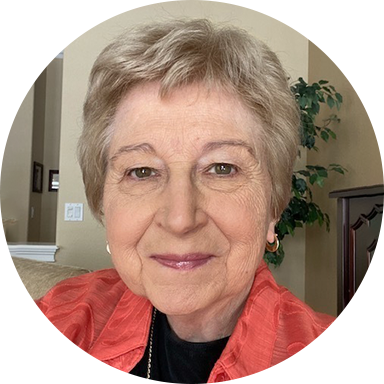
About the Composer: Mary Donnelly
Mary Donnelly

Mary Donnelly grew up in Reno, Nevada, and studied English and French at the University of Nevada before redirecting her career toward music education. After earning a Master's Degree in Education from Lesley College, she spent three decades teaching general music and choir in the Washoe County schools, bringing an arts-integrated approach to her classrooms.

In 1985, Donnelly began collaborating with George Strid when their principal asked them to write a musical for a school reading week. That partnership sparked decades of prolific output: over two hundred songs and twenty-five musicals written together. She remains active in ACDA, NEA, and ASCAP. The collection Poems for Two reflects her deep understanding of what young singers need: engaging literature, singable melodies, and the social joy of duet singing.

Why we love this

This collection brings together eight skilled composers whose work consistently connects with young singers. The pairing of literary texts with accessible melodies creates natural duet moments that feel conversational rather than showy, making them ideal for building ensemble confidence without demanding technical fireworks. You'll find genuine variety in voice type combinations and musical character across the collection.

What to expect

The collection reads as conversational and lyrical, drawing strength from the interaction between two voices rather than requiring virtuosity. These are pieces that let singers explore emotional nuance, narrative tension, and harmonic color without overwhelming them technically.

Who it's for

Young singers in middle school through high school who are developing duet skills and seeking repertoire that honors both musical and poetic merit. These pieces work equally well for school concerts, competitions, recital programs, or community performances where singers want material that engages listeners beyond technical display.

How to get the most out of it

  • Balance the two voices as partners rather than soloist and accompanist; both singers should feel equally important to the overall effect.
  • Use the recorded accompaniment to establish tempo and harmonic context during rehearsals, then gradually reduce accompaniment volume as singers internalize the parts.
  • Pay attention to the literary content first; understanding the poem's meaning will shape how singers phrase and inflect their lines naturally.
  • Experiment with microphone placement if performing amplified, ensuring both voices sit equally in the mix without one dominating.

How to use it

Duets from this collection serve well as variety spots in larger concert programs, particularly in youth music festivals where different voice types need repertoire. They work as standalone recital pieces or grouped as a themed set within a longer concert; the literary foundation makes them especially compelling in programs that celebrate word and music together.

Skills your students will build

  • Active listening and balance within a two-voice texture
  • Phrasing based on poetic content and natural speech rhythm
  • Ensemble awareness and cuing without a conductor
  • Interpretation of meaningful texts set to music

You May Also Like