
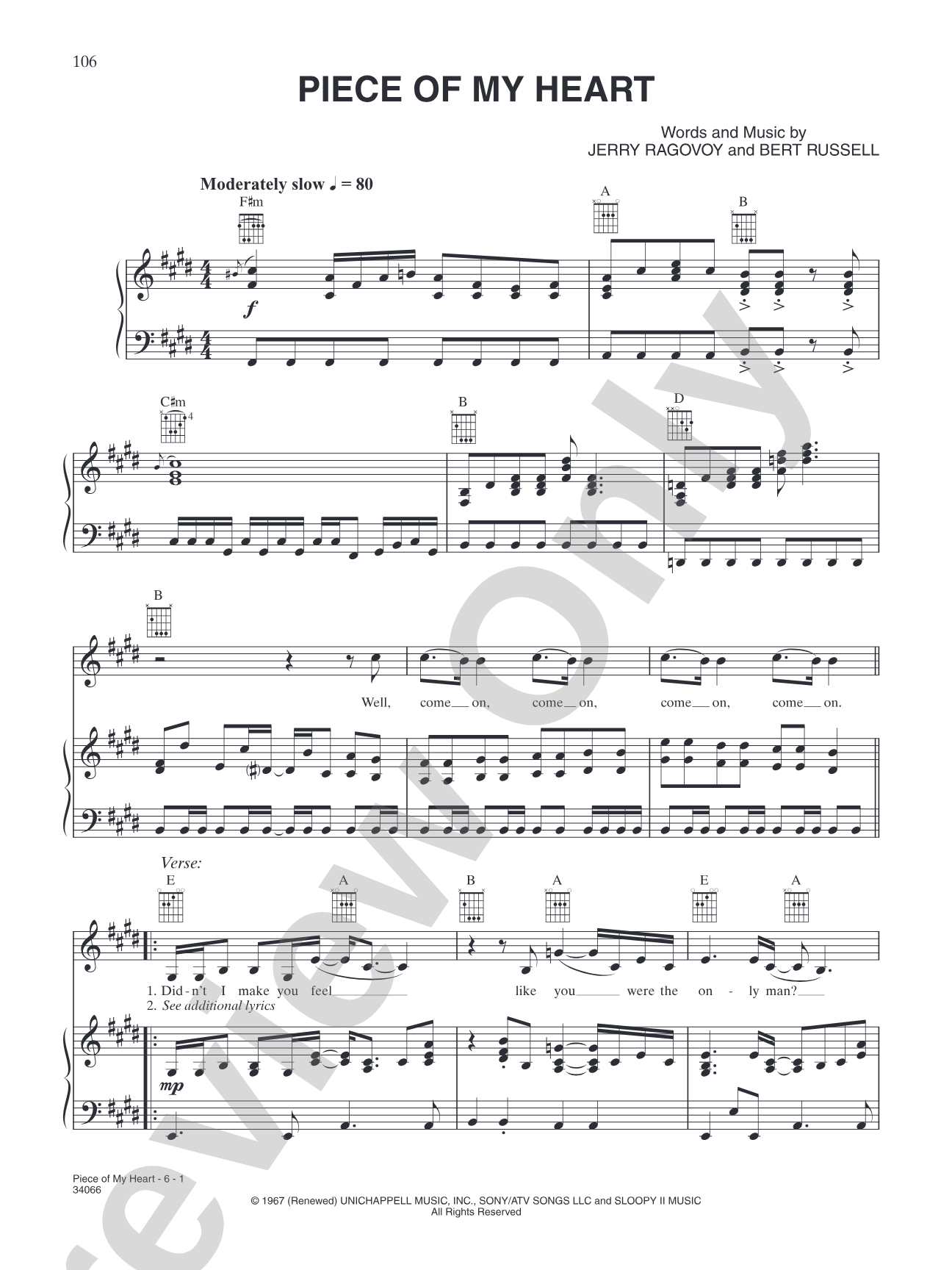
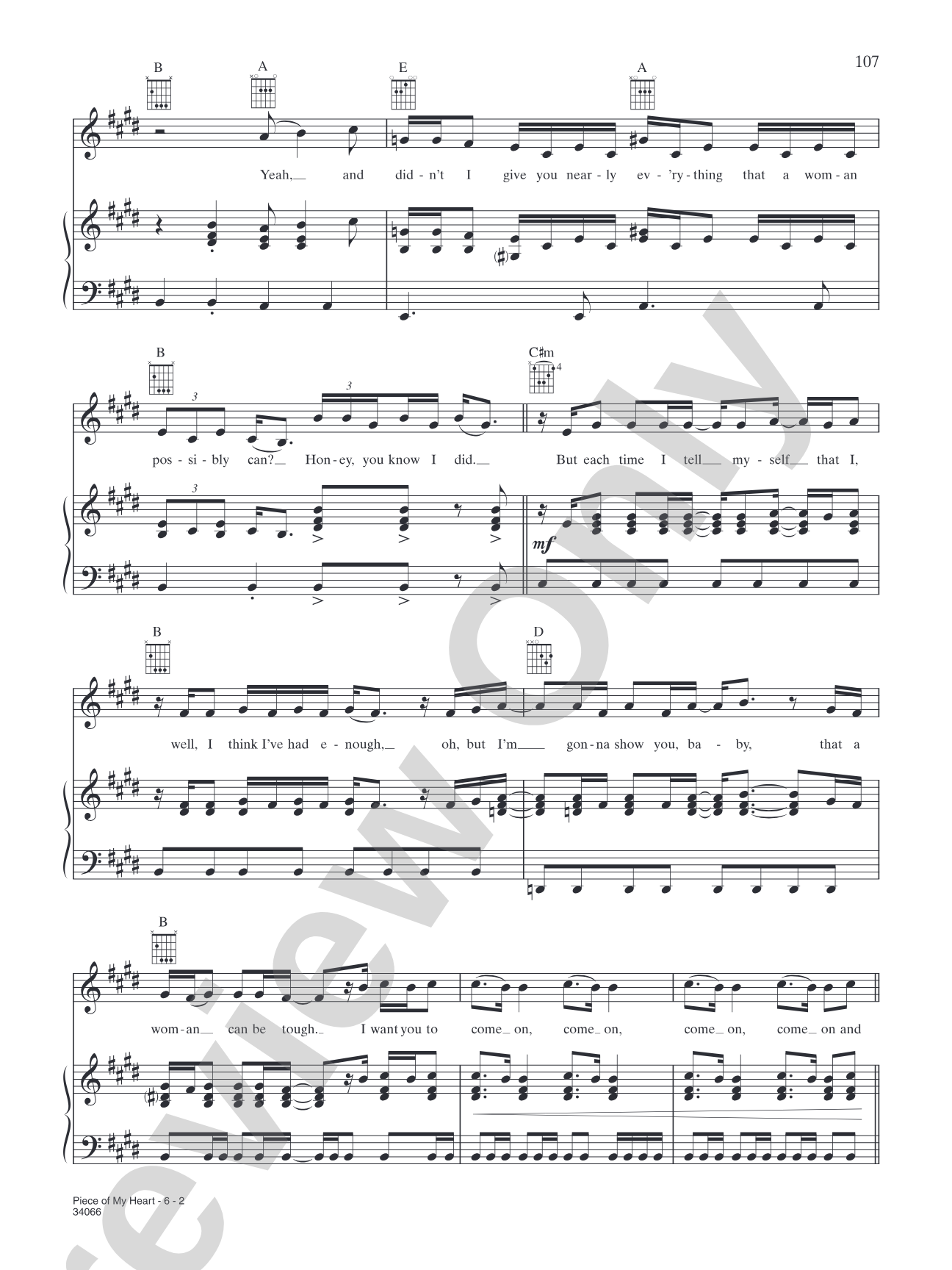

Piece of My Heart: Piano/Vocal/Chords
Item: 00-PS-0003105
$5.99
One moment…
Description
Woodstock Sheet Music Anthology contains 24 songs performed at the original 1969 Woodstock festival, plus four bonus songs that helped define the peace and love generation. Woodstock proved to be a touchstone for baby boomers. Whether you were there or not, you can now relive the festival through the music of Canned Heat; Country Joe McDonald; The Who; Janis Joplin; Jimi Hendrix; Crosby, Stills, Nash, and Young; and many others with this piano/vocal songbook. Also included is an historical essay putting each song in perspective of the three-day event. Titles: Bad Moon Rising * Everyday People * Feelin' Alright * Going Up the Country * Hey Joe * My Generation * Piece of My Heart * St. Stephen * The Weight * White Rabbit * and more.


Piece of My Heart: Piano/Vocal/Chords isn't in MakeMusic Cloud just yet...but it could be. Let us know you'd like to see it, and you'll help shape what comes next. In the meantime, start a free trial and dive into thousands of interactive titles your students can play along with today.
Request This Title
Tell us you want it.
Start Your Free Trial
Explore everything that's ready to play right now.
Sample Audio
No sample audio found.
Sample Video
No sample videos found.
Additional Details
Publisher:
Alfred Music
Page Count:
172
SKU:
00-PS-0003105
More about this title
About the Artist: Janis Joplin
Janis Joplin (1943-1970) emerged as one of rock music's most powerful and uninhibited vocalists, bringing raw emotional intensity to every performance. Her distinctive contralto voice and fearless stage presence made her a defining figure of the late 1960s counterculture, and her rendition of "Piece of My Heart" became a defining moment at the 1969 Woodstock festival.
Joplin's vocal approach combined blues phrasing with rock urgency, influencing generations of singers across multiple genres. Her willingness to take risks both musically and personally made her a symbol of artistic authenticity during an era of massive social change.
Why we love this
This anthology captures a pivotal moment in American music history through the lens of the performers who shaped it, making it invaluable for singers and pianists exploring rock vocal repertoire from a foundational era. The piano/vocal/chords format allows students to engage with these songs in multiple ways: singers can interpret these iconic melodies, pianists can develop accompanying skills, and both can work through the harmonic language that defined late-1960s rock.
What to expect
This collection vibrates with the urgency, hope, and defiance of a generation discovering its voice. Each song carries the weight of cultural moment, whether through Joplin's raw vulnerability, the anthemic swagger of "My Generation," or the psychedelic drift of "White Rabbit." Performing from these pages connects you directly to music that mattered deeply and still resonates.
Who it's for
Singers and pianists who want to understand the music that defined the Woodstock generation from the inside out, and teachers seeking repertoire that connects music history, iconic vocal performance, and accessible rock standards. High school and college students can use these songs to explore vocal interpretation, chord accompaniment, and the social and musical context of the late 1960s.
How to get the most out of it
- Approach the vocal phrasing with the freedom and emotional commitment these songs demand; don't be constrained by strict time if the arrangement allows for expressive rubato.
- Listen closely to the original recordings to capture the character and intent behind each song, then make intentional choices about what you'll keep or reimagine in your interpretation.
- Use the chord symbols to explore reharmonization possibilities on piano, especially in quieter sections where subtle harmonic shifts can deepen emotional impact.
- Balance the vocal line's prominence with the piano accompaniment; these songs often benefit from a conversational dynamic rather than strict hierarchy between voice and instrument.
How to use it
Program individual songs from this anthology in jazz ensemble, contemporary choir, or recital contexts to give audiences historically grounded rock standards performed at a serious musical level. Use the historical essay included in the book as a foundation for a thematic concert or educational presentation pairing Woodstock music with discussion of its cultural significance.
Skills your students will build
- Singing with emotional authenticity and vocal freedom in a rock idiom
- Reading and interpreting chord symbols for improvisation and accompaniment
- Understanding harmonic language in blues-influenced rock (dominant seventh chords, modal interchange)
- Balancing vocal phrasing against steady accompaniment without losing groove
- Connecting musical interpretation to historical and cultural context