
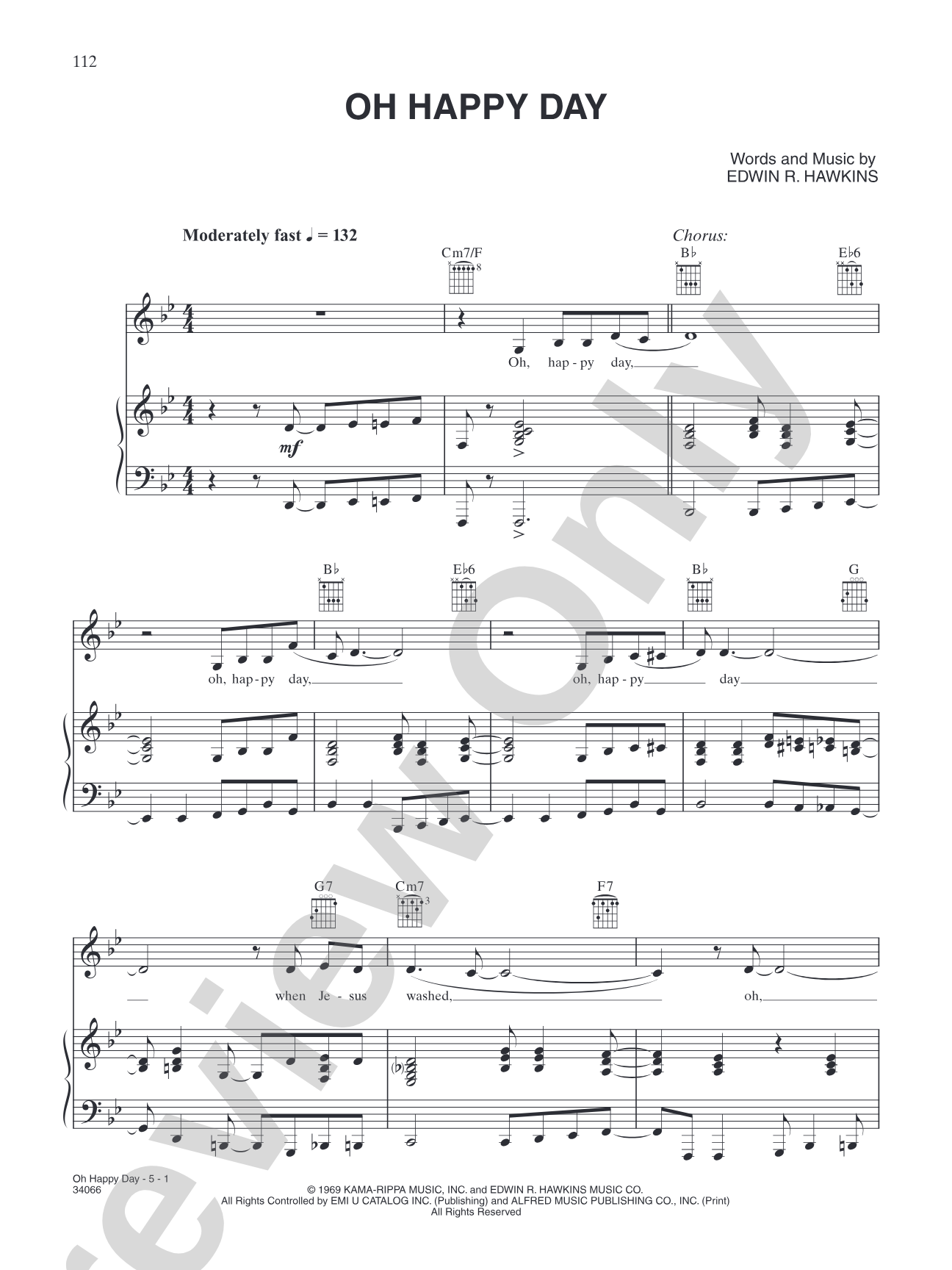

Oh Happy Day: Piano/Vocal/Chords
Item: 00-PS-0011778
$4.99
Pickup currently not available
Description
Woodstock Sheet Music Anthology contains 24 songs performed at the original 1969 Woodstock festival, plus four bonus songs that helped define the peace and love generation. Woodstock proved to be a touchstone for baby boomers. Whether you were there or not, you can now relive the festival through the music of Canned Heat; Country Joe McDonald; The Who; Janis Joplin; Jimi Hendrix; Crosby, Stills, Nash, and Young; and many others with this piano/vocal songbook. Also included is an historical essay putting each song in perspective of the three-day event. Titles: Bad Moon Rising * Everyday People * Feelin' Alright * Going Up the Country * Hey Joe * My Generation * Piece of My Heart * St. Stephen * The Weight * White Rabbit * and more.


Oh Happy Day: Piano/Vocal/Chords isn't in MakeMusic Cloud just yet...but it could be. Let us know you'd like to see it, and you'll help shape what comes next. In the meantime, start a free trial and dive into thousands of interactive titles your students can play along with today.
Request This Title
Tell us you want it.
Start Your Free Trial
Explore everything that's ready to play right now.
Sample Audio
No sample audio found.
Sample Video
No sample videos found.
Additional Details
Publisher:
Alfred Music
Page Count:
172
SKU:
00-PS-0011778
More about this title
About the Composer: Edwin R. Hawkins
Edwin R. Hawkins composed "Oh Happy Day" in 1968, a gospel song that crossed over to mainstream audiences and became one of the most recognizable spiritual arrangements of its era. The piece exemplifies how sacred music can reach beyond its original context, offering accessibility and emotional directness that resonates across denominations and belief systems.
Why we love this
This is one of those songs that bridges the gap between serious musicianship and genuine joy. The arrangement works beautifully for mixed ensembles at intermediate levels, and the piano part provides enough harmonic substance to keep accompanists engaged without becoming technically prohibitive. Its spiritual authenticity combined with infectious energy makes it a natural choice for concerts celebrating American roots music and social movements.
What to expect
There's an unforced joy in this music, a sense of communal celebration grounded in spiritual conviction. The melody sits warmly in the voice, and the harmonic movement underneath creates a gentle but purposeful forward motion that feels both intimate and inclusive.
Who it's for
Solo singers, small vocal ensembles, and pianists looking for accessible repertoire with real substance will find this a reliable choice for recitals and community performances. It works equally well for classroom singers studying American spiritual traditions and popular music of the 1960s.
How to get the most out of it
- Let the vocal line breathe naturally rather than rushing the phrases; the text deserves space and clarity.
- Balance the piano accompaniment so it supports but never drowns out the vocal melody, especially in the chorus where voices carry the primary interest.
- Pay attention to the chord symbols for voicing options; they offer flexibility for different ensemble sizes and acoustic settings.
- Shape dynamic contours phrase by phrase to build momentum through the piece without losing the contemplative quality of the opening.
How to use it
Program this alongside other songs from the civil rights and peace movements era to create a concert segment exploring music as social commentary. It pairs naturally with folk and soul repertoire, or use it as a powerful closer that leaves audiences with both emotional resonance and a message of hope.
Skills your students will build
- Reading chord symbols and understanding basic voice-leading options
- Phrasing spiritual and gospel-influenced melody with appropriate rubato
- Balancing vocal and instrumental lines in a mixed ensemble setting
- Interpreting historical context and cultural significance in performance choices