
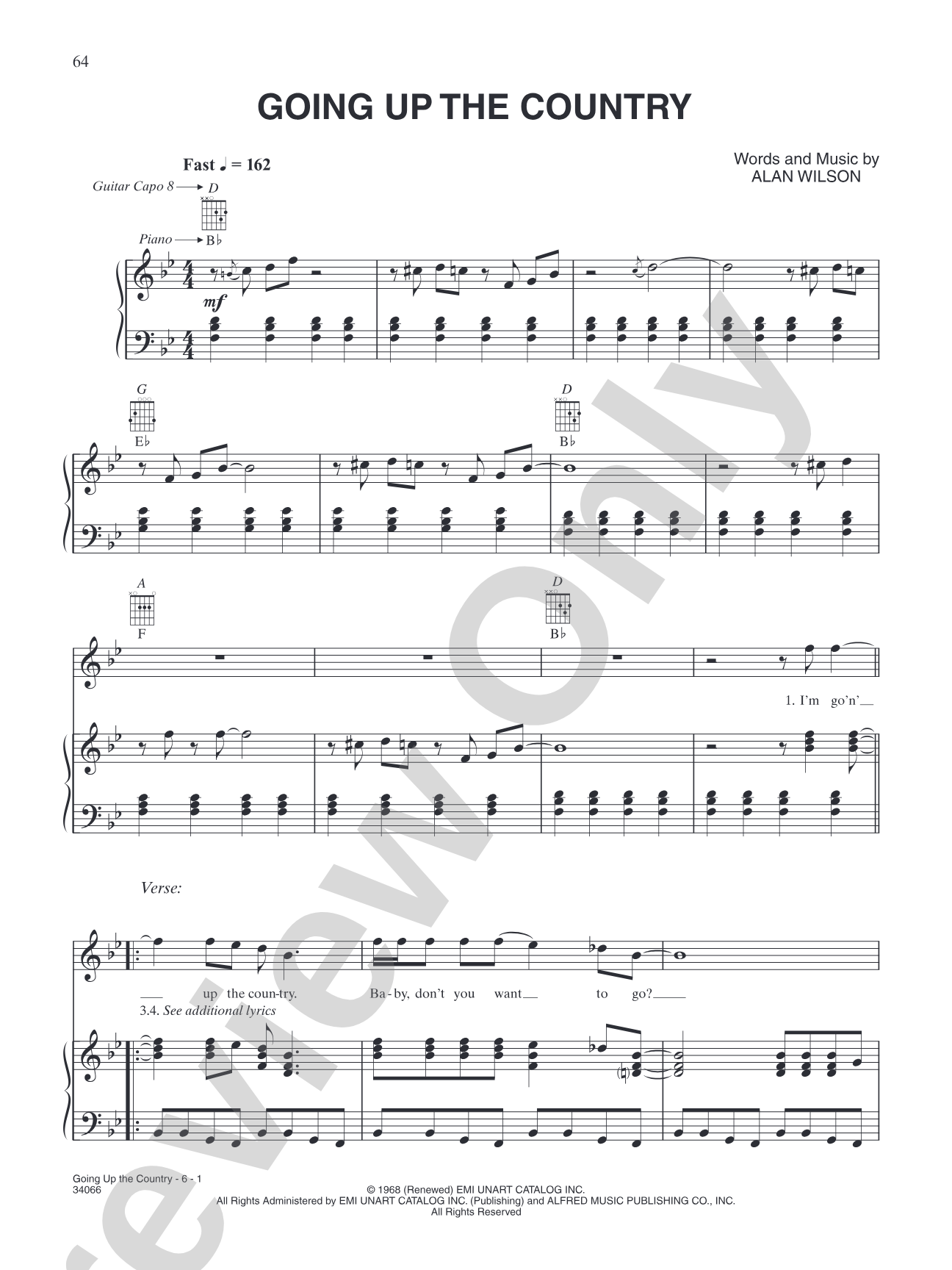
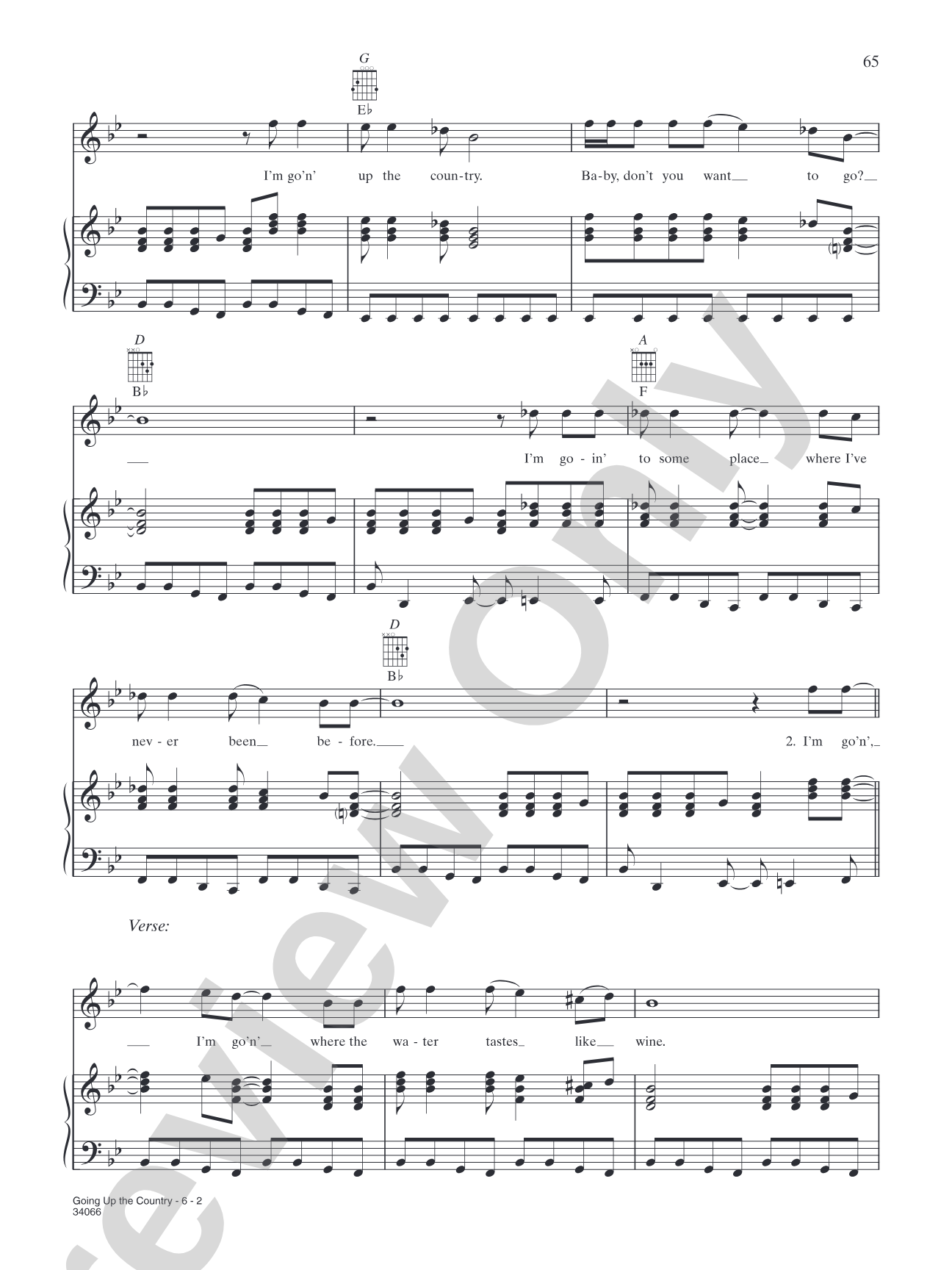

Going Up the Country: Piano/Vocal/Chords
Item: 00-PS-0011761
$5.99
One moment…
Description
Woodstock Sheet Music Anthology contains 24 songs performed at the original 1969 Woodstock festival, plus four bonus songs that helped define the peace and love generation. Woodstock proved to be a touchstone for baby boomers. Whether you were there or not, you can now relive the festival through the music of Canned Heat; Country Joe McDonald; The Who; Janis Joplin; Jimi Hendrix; Crosby, Stills, Nash, and Young; and many others with this piano/vocal songbook. Also included is an historical essay putting each song in perspective of the three-day event. Titles: Bad Moon Rising * Everyday People * Feelin' Alright * Going Up the Country * Hey Joe * My Generation * Piece of My Heart * St. Stephen * The Weight * White Rabbit * and more.


Going Up the Country: Piano/Vocal/Chords isn't in MakeMusic Cloud just yet...but it could be. Let us know you'd like to see it, and you'll help shape what comes next. In the meantime, start a free trial and dive into thousands of interactive titles your students can play along with today.
Request This Title
Tell us you want it.
Start Your Free Trial
Explore everything that's ready to play right now.
Sample Audio
No sample audio found.
Sample Video
No sample videos found.
Additional Details
Publisher:
Alfred Music
Page Count:
172
SKU:
00-PS-0011761
More about this title
About the Composer: Alan Wilson
Alan Wilson (1943-1970) was the primary songwriter and harmonica player for Canned Heat, the blues-rock band that became one of the defining acts of the late 1960s. His composition "Going Up the Country" became the band's signature hit and a generational anthem, showcasing his gift for crafting accessible, earthy blues-rock that connected with audiences far beyond traditional blues circles. Wilson's early death cut short a career that had already left an indelible mark on rock music and the counterculture movement.
Wilson's songwriting centered on blues traditions filtered through a contemporary rock lens. His work demonstrated how traditional American musical forms could speak directly to the concerns and aspirations of a new generation, making him a crucial bridge between blues heritage and the emerging rock idiom of the late 1960s.
Why we love this
This anthology gives singers and pianists direct access to the actual songs that defined a cultural moment, complete with historically grounded context. The 172-page collection balances iconic tracks you'll recognize immediately with deeper cuts that reveal how diverse the festival's musical landscape truly was. For singers especially, this means learning repertoire that sits naturally in the voice and teaches authentic rock-era phrasing without requiring arrangements that soften the originals' character.
What to expect
These songs carry the spirit of their moment: idealistic, energetic, sometimes raw, and unafraid to blend folk sincerity with rock electricity. Whether you're tackling the grit of "Piece of My Heart" or the rolling blues swagger of "Going Up the Country," the music refuses to be polished into irrelevance. There's a directness here that rewards honest playing and singing.
Who it's for
Singers and pianists drawn to rock and pop repertoire from the late 1960s will find authentic, playable arrangements of songs that shaped popular music history. This collection serves accompanists preparing for recitals, and vocalists building a bridge repertoire that honors both technical growth and cultural relevance.
How to get the most out of it
- Lean into the blues inflections, particularly in melodies that bend or slide between pitches. These details distinguish the era's rock from pop, and they matter in every octave you sing.
- Let the piano part breathe where the original recordings have space. Silence and restraint can be as powerful as a busy left hand.
- Study the original recordings alongside these charts. The vocal delivery and rhythmic feel in songs like "Going Up the Country" and "My Generation" shaped how a generation heard rock music, and those details live in your interpretation.
How to use it
Build a recital or concert around a themed evening of late-1960s rock and pop, using this collection as your primary source. The historical essay provided can frame the concert experience for audiences, transforming a song set into a cultural exploration. Alternatively, cherry-pick songs that fit your ensemble's strengths and interests, knowing you're working from historically accurate sources.
Skills your students will build
- Blues-inflected melody singing and phrasing typical of 1960s rock
- Reading and executing slash chord notation common in songbooks
- Balancing vocal line independence with harmonic accompaniment in rock contexts
- Interpreting performance directions and dynamics in arrangements drawn from live recordings