Peaceful Things Cover Image

Peaceful Things: Choral Octavo SoundTrax CD

$27.99 USD
Sale price  $27.99 USD Regular price 
Skip to product information
Peaceful Things Cover Image

Peaceful Things: Choral Octavo SoundTrax CD

Words and music by Mary Donnelly and George L. O. Strid

Item: 00-45427

$27.99
Shipped

One moment…

Description
An easily-sung pentatonic melody, a text rich in imagery, and a supportive piano part make this soothing song an ideal selection for beginning choirs. The patterning of the optional bell, triangle, and hand drum parts make them easy to learn for young players: a great way to incorporate classroom and Orff instruments!

Peaceful Things: Choral Octavo SoundTrax CD isn't in MakeMusic Cloud just yet...but it could be. Let us know you'd like to see it, and you'll help shape what comes next. In the meantime, start a free trial and dive into thousands of interactive titles your students can play along with today.

Sample Pages

Sample Audio
0:00
0:00
Sample Video
Additional Details
Series: Alfred Choral Designs
Publisher: Alfred Music
UPC: 038081511672
SKU: 00-45427

More about this title

About the Composer: Mary Donnelly
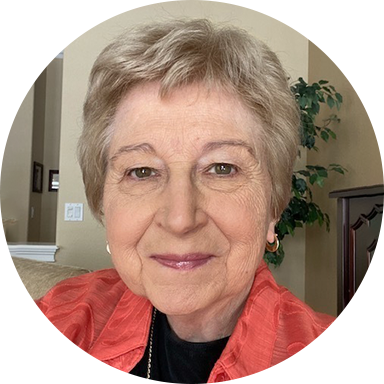
Mary Donnelly

Mary Donnelly grew up in Reno, Nevada, and studied English and French at the University of Nevada, Reno. While still an undergraduate, she founded two children's choruses, a experience that redirected her toward music education. She earned a Master's Degree in Education from Lesley College in Cambridge, Massachusetts, where she focused on integrating the arts across subjects.

Donnelly taught general music and choir in elementary and middle schools throughout the Washoe County School District for three decades. In 1985, while team-teaching with George Strid, their principal challenged them to create a musical for Reading Week. That collaboration led to The Million Dollar Mystery and launched a prolific songwriting partnership that has produced over two hundred songs and twenty-five musicals. She is active in ACDA, NEA, and ASCAP.

Why we love this

Donnelly and Strid have built this piece on the strengths of young singers: a pentatonic melody that sits naturally in the voice, text layered with concrete imagery that helps singers connect emotionally, and a piano accompaniment that supports without overwhelming. The optional percussion parts (bells, triangle, hand drum) use repeating patterns that young Orff players can master quickly, making this one of those rare pieces where adding instruments enhances rather than complicates the rehearsal process.

What to expect

Serene and grounded, with the quality of a gentle meditation. The pentatonic framework creates an almost floating sensation, while concrete, natural imagery in the text anchors the piece in something tangible and restful.

Who it's for

Beginning and developing choirs of all ages will find success here. The pentatonic melody removes harmonic barriers that often frustrate young singers, and the supportive piano part ensures singers stay grounded even as they learn to blend.

How to get the most out of it

  • Let the pentatonic melody breathe naturally; young voices often rush through unfamiliar tonality, so establish a comfortable tempo in early rehearsals and anchor the singers' sense of space with steady piano support.
  • Introduce the percussion parts only after the choir knows the melody securely; simple patterns that repeat allow non-music-readers to participate immediately without written notation.
  • Balance the imagery in the text by having singers silently visualize the peaceful scenes described; this internal focus naturally reduces tension and brightens tone.

How to use it

This is a natural choice for a concert program that needs a moment of stillness, particularly in spring or end-of-year celebrations where contrast with livelier selections matters. It also serves well in community outreach settings where young singers perform for families unfamiliar with choral singing, as the accessible melody and peaceful character invite engagement from any listener.

Skills your students will build

  • Singing in pentatonic tonality
  • Blending treble voices in unison or simple two-part texture
  • Connecting text imagery to vocal expression
  • Basic Orff instrument patterns (if using optional percussion parts)
  • Sustained, resonant tone in a slower tempo

You May Also Like