Peaceful Things Cover Image

Peaceful Things: 2-Part Choral Octavo

$1.90 USD
Sale price  $1.90 USD Regular price 
Skip to product information
Peaceful Things Cover Image

Peaceful Things: 2-Part Choral Octavo

Words and music by Mary Donnelly and George L. O. Strid

Item: 00-45426

makemusic Cloud badge

Need it now?

Buy Digital Version
$1.90
Shipped

One moment…

Description
An easily-sung pentatonic melody, a text rich in imagery, and a supportive piano part make this soothing song an ideal selection for beginning choirs. The patterning of the optional bell, triangle, and hand drum parts make them easy to learn for young players: a great way to incorporate classroom and Orff instruments!

Don't just read it, hear it, play along with it, and watch your students grow with it. In MakeMusic Cloud, Peaceful Things: 2-Part Choral Octavo comes alive with professional accompaniment, adjustable tempo, and built-in practice tools that turn solo practice into real progress.

Sample Pages

Sample Audio
0:00
0:00
Sample Video
Additional Details
Series: Alfred Choral Designs
Publisher: Alfred Music
Page Count: 12
UPC: 038081511665
SKU: 00-45426
Instrumentation: with Opt. Bell, Triangle & Hand Drum

More about this title

About the Composer: Mary Donnelly
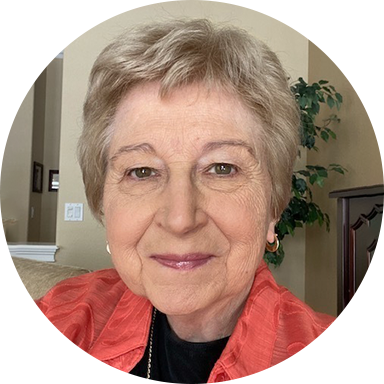
Mary Donnelly

Mary Donnelly grew up in Reno, Nevada, and studied English and French at the University of Nevada before discovering her passion for music education. While still an undergraduate, she co-founded two children's choruses, an experience that inspired her to pursue formal music training. She earned a Master's Degree in Education from Lesley College in Cambridge, Massachusetts, where she focused on integrating the arts across the curriculum. She spent thirty years teaching general music and choir in the Washoe County School District, retiring as an active classroom educator while remaining deeply involved in the choral community.

In 1985, Donnelly began collaborating with George Strid during a sixth-grade general music class they were team-teaching. Their principal asked them to create a musical for Reading Week, and that first project, The Million Dollar Mystery, launched a prolific partnership. Together they have composed over two hundred songs and twenty-five musicals. Donnelly is an active member of ACDA, NEA, and ASCAP, and continues to live in Reno with her husband Rich.

Why we love this

Donnelly and Strid have crafted a piece that respects young singers by using a pentatonic framework that feels natural and singable, while the rich imagery in the text gives students something meaningful to interpret. The optional Orff instruments are not afterthoughts but integral to the texture, making it simple for non-musicians to participate fully in the performance without requiring advance training.

What to expect

Calm and grounded, with the pentatonic melody evoking a sense of comfort and safety. The imagery in the text creates space for singers to connect emotionally to the music, and the gentle piano accompaniment wraps around the voices like a warm embrace.

Who it's for

Beginning choirs and young singers who are building confidence in blended tone and ensemble singing. This piece works equally well in classroom general music settings and in extracurricular choir programs, making it accessible across diverse music learning environments.

How to get the most out of it

  • Let the pentatonic melody breathe naturally; avoid pushing the tempo, as this piece lives in stillness and contemplation.
  • Assign the optional percussion parts to students who may not yet be confident singers. The simple patterning builds musical confidence and transforms classroom instruments into concert-quality contributors.
  • Work the text imagery into rehearsals before focusing heavily on notes. When singers understand what 'peaceful things' they're describing, the phrasing and breath control follow organically.
  • Use the recorded accompaniment sparingly in performance preparation; singers should lock in to each other's voices first, then add the piano as support, not crutch.

How to use it

Program this as an opening or closing piece for a concert focused on introspection or gratitude. Its brevity and straightforward musical content make it an excellent choice for a festival or competition where you want to showcase your younger singers' musicality without overwhelming them technically.

Skills your students will build

  • Reading and performing pentatonic melodies
  • Blending voices within a 2-part texture
  • Interpreting textual imagery through phrasing and dynamics
  • Collaborating with non-singers adding optional instrumental parts
  • Sustaining tone without vibrato in a contemplative setting

You May Also Like
