
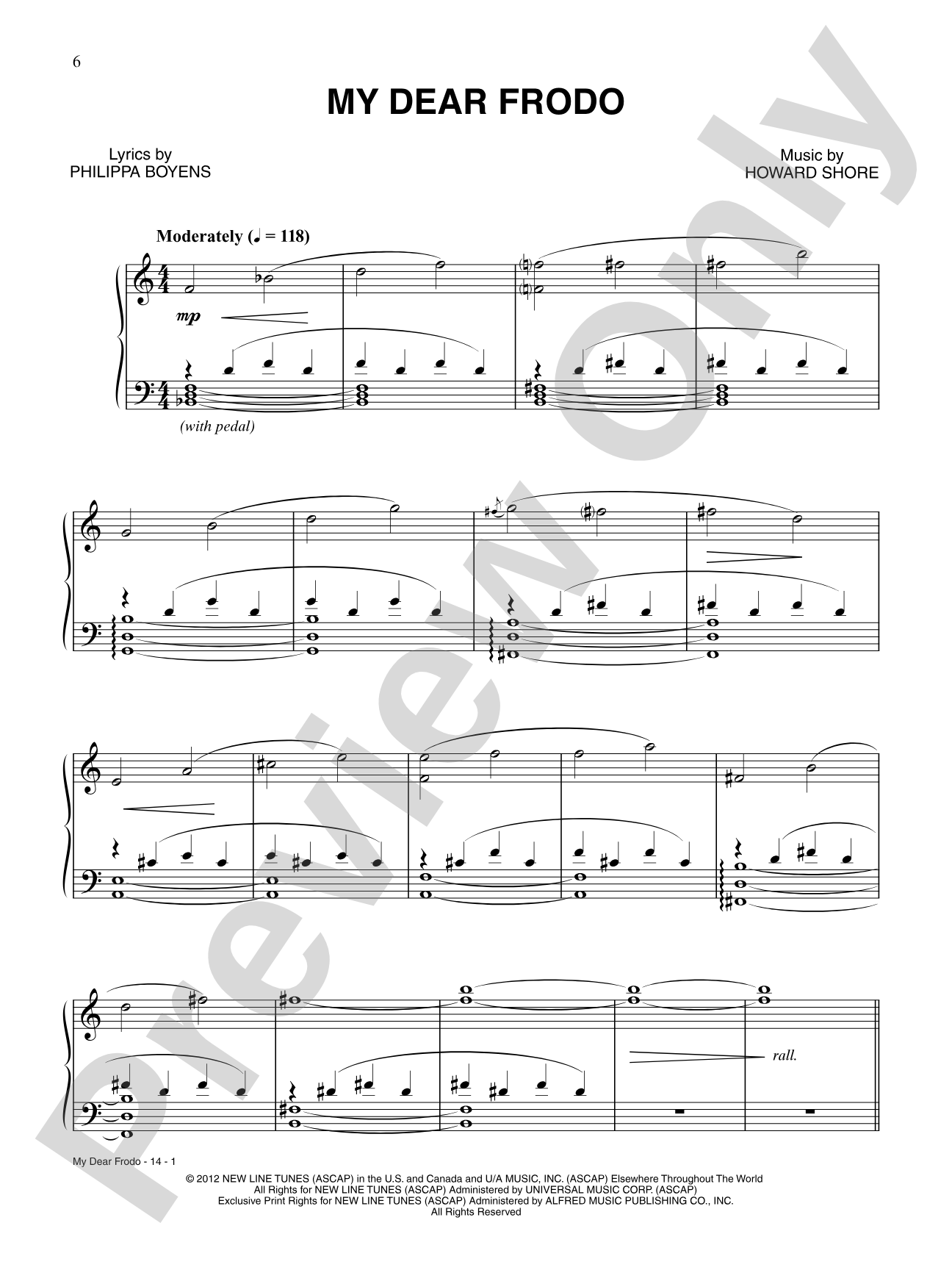
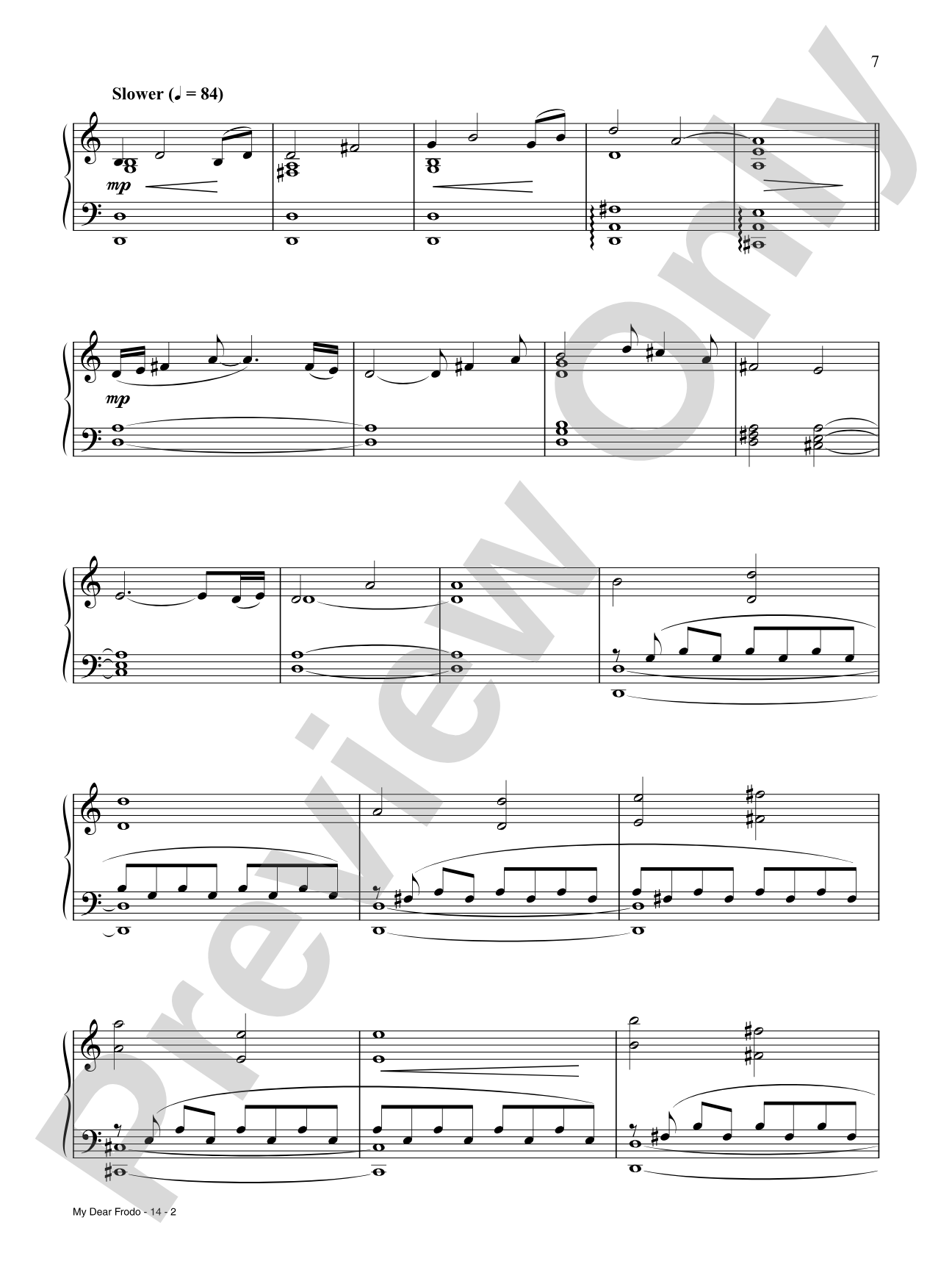
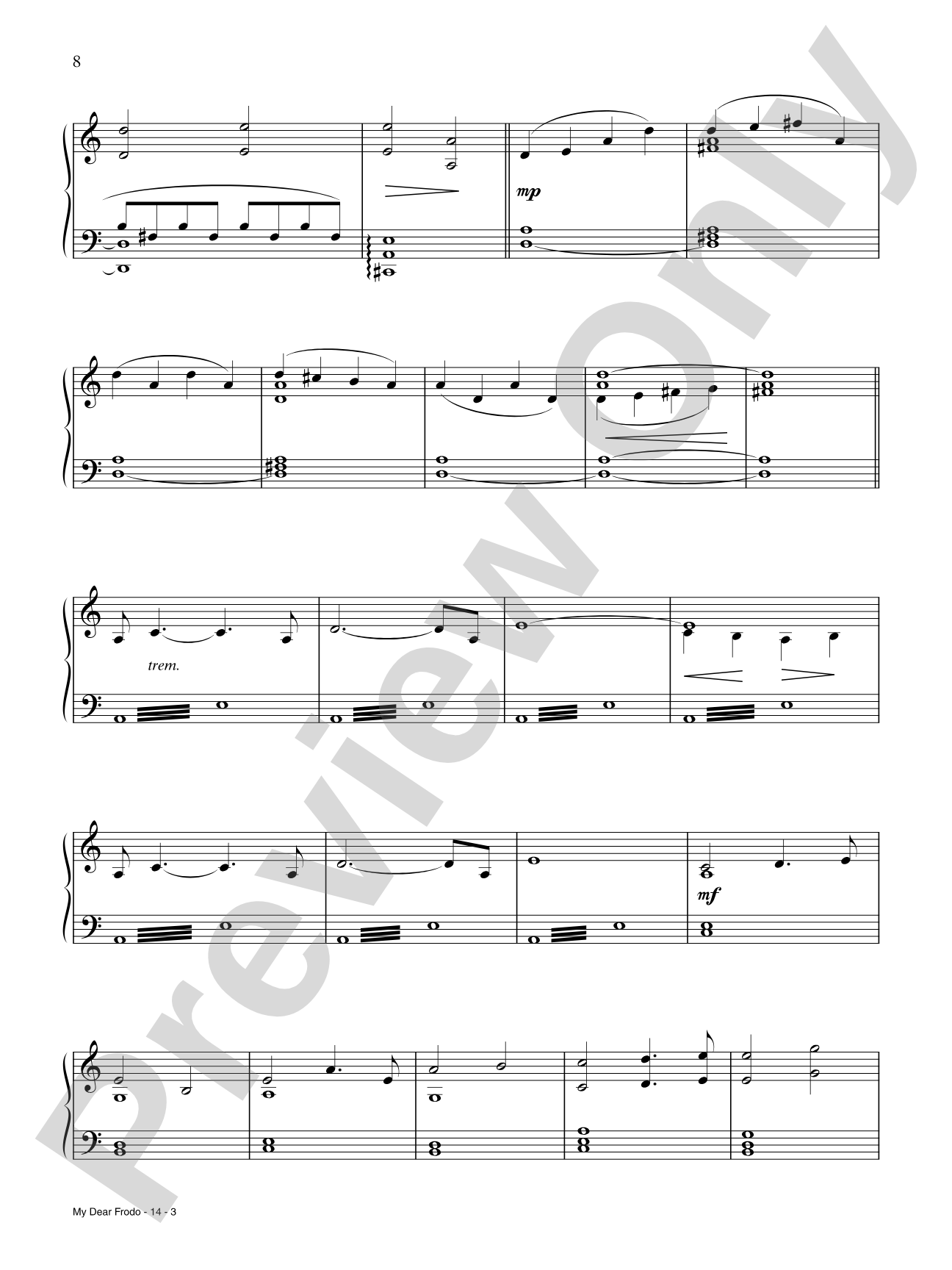

My Dear Frodo: Piano/Vocal
Sheet Music Selections from the Original Motion Picture Soundtrack
Music composed by Howard Shore
Item: 00-PS-0013929
$9.99
Pickup currently not available
Related Items
Old Friends: Piano/Vocal |
$5.99
|
View | |
An Unexpected Party: Piano/Vocal |
$5.99
|
View | |
Axe or Sword?: Piano/Vocal |
$5.99
|
View | |
Misty Mountains: Piano/Vocal |
$4.99
|
View | |
The Adventure Begins: Piano/Vocal |
$4.99
|
View | |
Radagast the Brown: Piano/Vocal |
$5.99
|
View | |
Warg-scouts: Piano/Vocal |
$5.99
|
View | |
A Good Omen: Piano/Vocal |
$5.99
|
View | |
A Very Respectable Hobbit: Piano/Vocal |
$4.99
|
View | |
Erebor: Piano/Vocal |
$4.99
|
View | |
The Dwarf Lords: Piano/Vocal |
$4.99
|
View | |
The Hobbit: An Unexpected Journey: Piano/Vocal Book |
$21.99
|
View |
Description
Pianists and aspiring media composers will delight in this officially licensed sheet music collection, which features piano renditions of 14 selections from Howard Shore's brilliant score to The Hobbit: An Unexpected Journey. Shore masterfully expands upon the musical palette of Middle-earth, blending familiar motifs from the The Lord of the Rings trilogy with an exciting array of memorable new themes. In addition to the piano arrangements, this beautifully produced souvenir folio features an array of colorful photos from the film. Titles: My Dear Frodo * Old Friends * An Unexpected Party * Axe or Sword? * Misty Mountains * The Adventure Begins * Radagast the Brown * Warg-scouts * A Good Omen * Song of the Lonely Mountain * Dreaming of Bag End * A Very Respectable Hobbit * Erebor * The Dwarf Lords.


Discover MakeMusic Cloud: thousands of interactive titles your students can play along with today.
Sample Audio
No sample audio found.
Sample Video
No sample videos found.
Additional Details
Publisher:
Alfred Music
Page Count:
88
SKU:
00-PS-0013929
More about this title
About the Composer: Howard Shore
Howard Shore has composed and orchestrated music for some of cinema's most ambitious and beloved franchises, including The Lord of the Rings trilogy, The Hobbit trilogy, and The Fly. His work across these projects demonstrates a mastery of thematic development, leitmotif construction, and large-scale orchestration that has earned him three Academy Awards and numerous Grammy nominations.
Shore's approach to film scoring emphasizes melody and emotional clarity alongside technical sophistication. His ability to weave new material with existing themes, as he does throughout The Hobbit score, makes his work particularly valuable for music students exploring how composers build continuity and narrative coherence across extended musical works.
Why we love this
Shore's thematic architecture across The Hobbit gives pianists a rare opportunity to study how a major film composer develops character and place through music. Each of these 14 selections stands alone as engaging keyboard writing, yet collectively they reveal the compositional strategies behind one of contemporary film music's most ambitious scores. Piano students and aspiring media composers gain direct insight into professional scoring craft without needing to hire an orchestra.
What to expect
These pieces capture the sweep and wonder of Middle-earth through Shore's gift for melody and orchestral color translated to the keyboard. You'll encounter moments of intimacy and whimsy (Bag End, An Unexpected Party), grand adventure and danger (Erebor, Warg-scouts), and the deep, resonant emotion of fellowship and homecoming. The writing feels both cinematic in scope and pianistically natural.
Who it's for
Pianists with intermediate to advanced technical skills who want to explore film scoring through accessible yet substantial repertoire. This collection also serves music students and composers studying how thematic material functions across a large-scale narrative, and performers looking to expand their recital programs with music from beloved films.
How to get the most out of it
- Balance melody and accompaniment carefully. Shore's orchestral voicing often features prominent inner voices that carry secondary themes; resist the urge to bury them beneath left-hand textures.
- Study the film scenes these pieces underscore. Knowing the dramatic context sharpens your sense of pacing, dynamic shape, and the emotional arc each piece must sustain.
- Pay close attention to Shore's use of modal and folk-influenced harmonic language, particularly in pieces like 'Misty Mountains' and 'Song of the Lonely Mountain.' This coloring is essential to the Middle-earth sound.
- Honor the rubato implied by Shore's orchestration. Piano reductions of film scores often benefit from slight flexibility in tempo to match the breathing and emotional weight of the original underscore.
How to use it
Consider programming individual selections from this collection alongside classical piano repertoire to showcase how contemporary film music engages with orchestral tradition and emotional narrative. Advanced students preparing for college auditions or recitals will find these pieces demonstrate technical skill and musical storytelling in a contemporary context. This folio also works well for student composers studying Shore's orchestration by reducing his orchestral textures to piano voicing.
Skills your students will build
- Reading orchestral reduction and translating thick textures into effective keyboard voicing
- Understanding leitmotif development and thematic transformation across a large work
- Sustaining long musical lines and managing rubato in film music contexts
- Analyzing modal and folk-influenced harmonic language
- Building dynamic and textural contrast with limited resources (two hands, sustain pedal)