
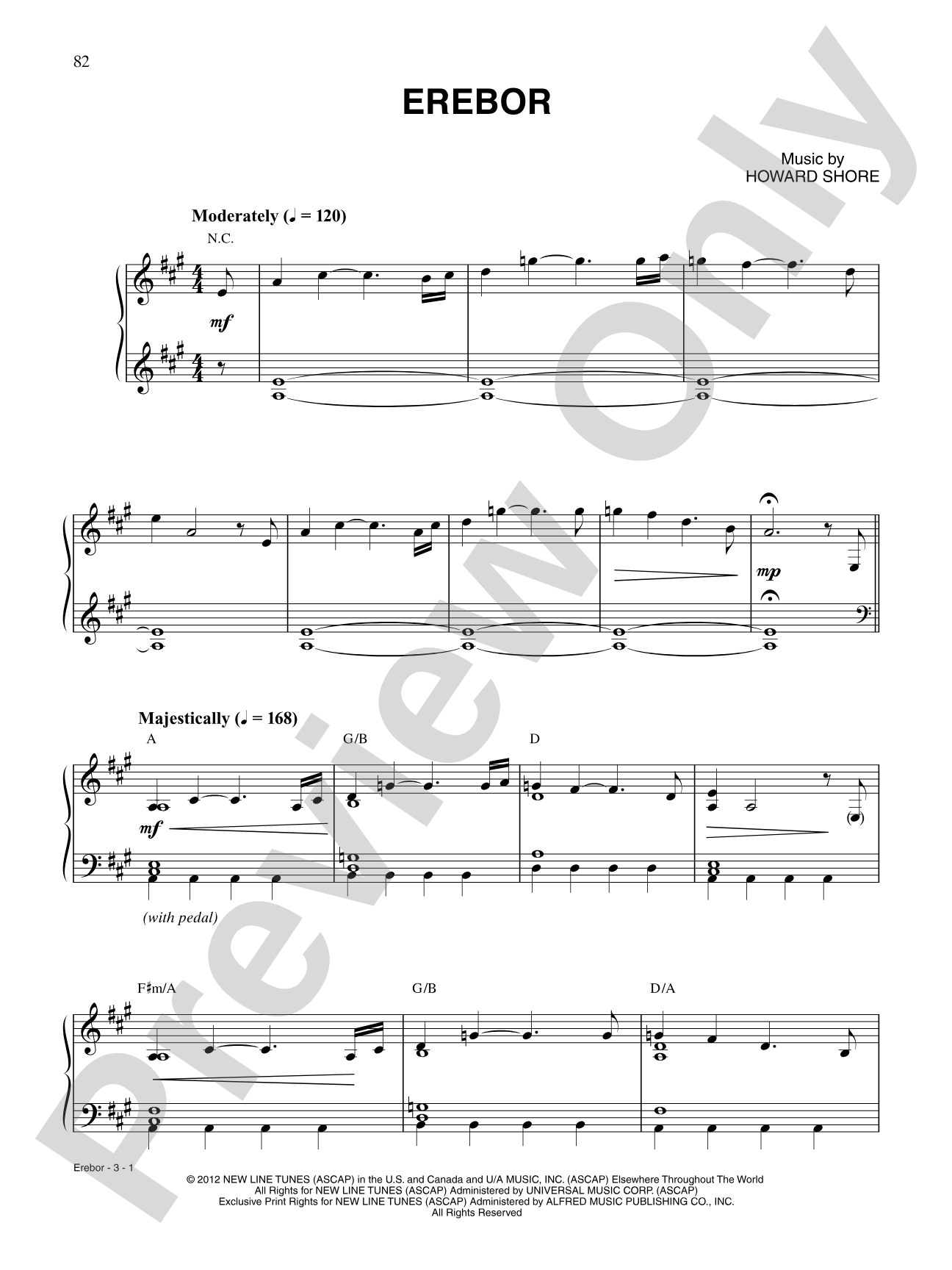

Erebor: Piano/Vocal
Sheet Music Selections from the Original Motion Picture Soundtrack
Music composed by Howard Shore
Item: 00-PS-0013939
$4.99
One moment…
Related Items
My Dear Frodo: Piano/Vocal |
$9.99
|
View | |
Old Friends: Piano/Vocal |
$5.99
|
View | |
An Unexpected Party: Piano/Vocal |
$5.99
|
View | |
Axe or Sword?: Piano/Vocal |
$5.99
|
View | |
Misty Mountains: Piano/Vocal |
$4.99
|
View | |
The Adventure Begins: Piano/Vocal |
$4.99
|
View | |
Radagast the Brown: Piano/Vocal |
$5.99
|
View | |
Warg-scouts: Piano/Vocal |
$5.99
|
View | |
A Good Omen: Piano/Vocal |
$5.99
|
View | |
A Very Respectable Hobbit: Piano/Vocal |
$4.99
|
View | |
The Dwarf Lords: Piano/Vocal |
$4.99
|
View | |
The Hobbit: An Unexpected Journey: Piano/Vocal Book |
$21.99
|
View |
Description
Pianists and aspiring media composers will delight in this officially licensed sheet music collection, which features piano renditions of 14 selections from Howard Shore's brilliant score to The Hobbit: An Unexpected Journey. Shore masterfully expands upon the musical palette of Middle-earth, blending familiar motifs from the The Lord of the Rings trilogy with an exciting array of memorable new themes. In addition to the piano arrangements, this beautifully produced souvenir folio features an array of colorful photos from the film. Titles: My Dear Frodo * Old Friends * An Unexpected Party * Axe or Sword? * Misty Mountains * The Adventure Begins * Radagast the Brown * Warg-scouts * A Good Omen * Song of the Lonely Mountain * Dreaming of Bag End * A Very Respectable Hobbit * Erebor * The Dwarf Lords.


Erebor: Piano/Vocal isn't in MakeMusic Cloud just yet...but it could be. Let us know you'd like to see it, and you'll help shape what comes next. In the meantime, start a free trial and dive into thousands of interactive titles your students can play along with today.
Request This Title
Tell us you want it.
Start Your Free Trial
Explore everything that's ready to play right now.
Sample Audio
No sample audio found.
Sample Video
No sample videos found.
Additional Details
Publisher:
Alfred Music
Page Count:
88
SKU:
00-PS-0013939
More about this title
About the Composer: Howard Shore
Howard Shore is a three-time Academy Award-winning composer whose work has defined the sound of epic fantasy cinema. His scores for The Lord of the Rings trilogy and The Hobbit films represent some of the most ambitious orchestral writing in film history, combining leitmotif technique with rich harmonic language to create worlds that feel both ancient and immediate.
Shore's ability to weave musical themes across multiple films while introducing fresh material for each installment demonstrates mastery of long-form storytelling through music. His work has become a touchstone for composers studying how to balance thematic coherence with dramatic variety, making his scores invaluable resources for students exploring media composition and orchestration.
Why we love this
These arrangements capture Shore's signature harmonic language and thematic writing in forms that pianists can actually perform and learn from. The collection spans the emotional arc of the film while remaining idiomatically written for the keyboard, making it compelling both as a recital work and as a study in how film themes translate to concert settings.
What to expect
These pieces evoke the grandeur and intimacy of Middle-earth, from the cozy warmth of the Shire to the vast, ancient presence of Erebor itself. The music carries both the wonder of adventure and the weight of history, with melodies that linger long after the final notes fade.
Who it's for
Pianists seeking substantial yet accessible film music will find plenty here to explore and perform. This collection also serves aspiring media composers and students studying orchestral writing in translation, offering clear examples of how Shore handles thematic material across different instrumental and textural settings.
How to get the most out of it
- Attend closely to Shore's harmonic progressions, which often move by color rather than traditional function. Let chord changes breathe rather than rushing through them, and use pedal deliberately to blend the orchestral colors he originally conceived.
- Balance the melodic lines with sensitivity to their orchestral origins. What might have been a horn line or string section in the film needs careful voicing on the piano to remain audible and lyrical.
- When text is present, treat the vocal line with the same weight as you would in art song literature. The melodies from Middle-earth deserve the same care and phrasing you'd give to a classical art song.
- Use dynamic range expansively. Film scores often rely on subtle shifts in orchestration rather than bold dynamic contrasts, so the quietest passages need clarity and presence equal to the fortissimo moments.
How to use it
Program selections from this collection in recitals focused on film and popular music, or use them as a bridge between classical and contemporary repertoire in mixed programs. Individual movements work beautifully as standalone pieces, allowing you to build a varied program around thematic connections or emotional arcs rather than historical period.
Skills your students will build
- Performing leitmotif-driven compositions with harmonic sophistication
- Translating orchestral textures and colors to the keyboard
- Navigating chromatic harmony and non-traditional chord progressions
- Coordinating piano accompaniment with vocal melody in film-inspired text settings
- Understanding thematic development across an extended suite of related pieces