
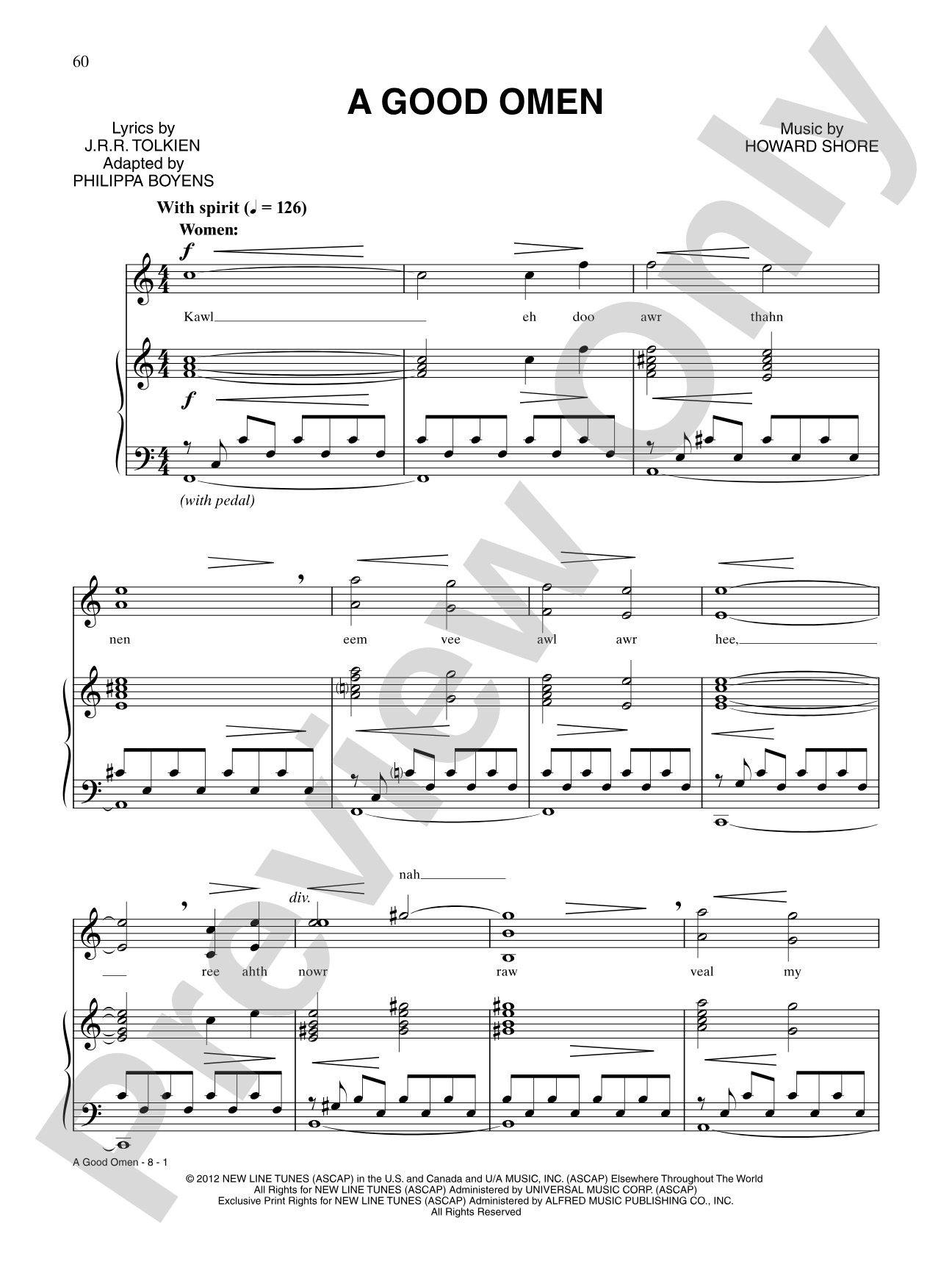
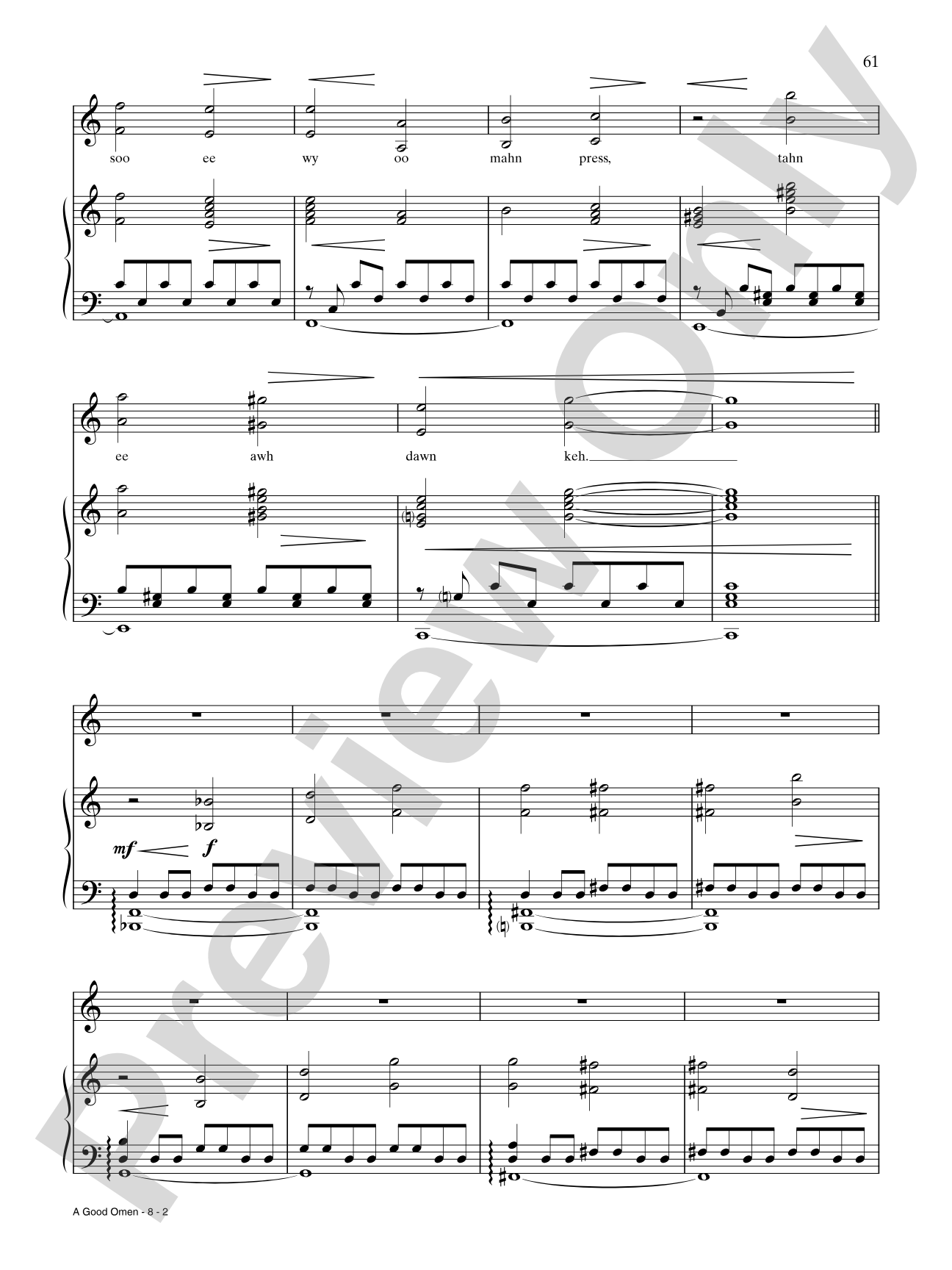

A Good Omen: Piano/Vocal
Sheet Music Selections from the Original Motion Picture Soundtrack
Music composed by Howard Shore
Item: 00-PS-0013937
$5.99
Pickup currently not available
Related Items
My Dear Frodo: Piano/Vocal |
$9.99
|
View | |
Old Friends: Piano/Vocal |
$5.99
|
View | |
An Unexpected Party: Piano/Vocal |
$5.99
|
View | |
Axe or Sword?: Piano/Vocal |
$5.99
|
View | |
Misty Mountains: Piano/Vocal |
$4.99
|
View | |
The Adventure Begins: Piano/Vocal |
$4.99
|
View | |
Radagast the Brown: Piano/Vocal |
$5.99
|
View | |
Warg-scouts: Piano/Vocal |
$5.99
|
View | |
A Very Respectable Hobbit: Piano/Vocal |
$4.99
|
View | |
Erebor: Piano/Vocal |
$4.99
|
View | |
The Dwarf Lords: Piano/Vocal |
$4.99
|
View | |
The Hobbit: An Unexpected Journey: Piano/Vocal Book |
$21.99
|
View |
Description
Pianists and aspiring media composers will delight in this officially licensed sheet music collection, which features piano renditions of 14 selections from Howard Shore's brilliant score to The Hobbit: An Unexpected Journey. Shore masterfully expands upon the musical palette of Middle-earth, blending familiar motifs from the The Lord of the Rings trilogy with an exciting array of memorable new themes. In addition to the piano arrangements, this beautifully produced souvenir folio features an array of colorful photos from the film. Titles: My Dear Frodo * Old Friends * An Unexpected Party * Axe or Sword? * Misty Mountains * The Adventure Begins * Radagast the Brown * Warg-scouts * A Good Omen * Song of the Lonely Mountain * Dreaming of Bag End * A Very Respectable Hobbit * Erebor * The Dwarf Lords.


A Good Omen: Piano/Vocal isn't in MakeMusic Cloud just yet...but it could be. Let us know you'd like to see it, and you'll help shape what comes next. In the meantime, start a free trial and dive into thousands of interactive titles your students can play along with today.
Request This Title
Tell us you want it.
Start Your Free Trial
Explore everything that's ready to play right now.
Sample Audio
No sample audio found.
Sample Video
No sample videos found.
Additional Details
Publisher:
Alfred Music
Page Count:
88
SKU:
00-PS-0013937
More about this title
About the Composer: Howard Shore
Howard Shore is a three-time Academy Award winner whose film scores have defined the sound of epic cinema for nearly four decades. His work on The Lord of the Rings trilogy established him as a master of thematic composition, and he brought that same sophisticated orchestral thinking to The Hobbit films, creating a score that honors Tolkien's world while establishing its own distinctive voice.
Shore's approach to film scoring emphasizes memorable melody and emotional clarity alongside harmonic richness. For pianists and composers studying how to adapt orchestral writing for solo keyboard, his work offers a masterclass in maintaining narrative coherence and character identity through purely instrumental means.
Why we love this
This collection captures Shore's gift for writing themes that function independently of the screen while remaining cinematically vivid. Pianists encounter orchestral thinking translated directly to the keyboard, making it valuable for anyone serious about understanding how film composers develop and recombine motifs across a narrative arc.
What to expect
These arrangements transport you through Middle-earth with music that feels simultaneously intimate at the keyboard and epic in scope. The emotional palette shifts from the comfort of the Shire to the danger of the wilderness and the grandeur of dwarven legend, creating a musical journey that rewards both performer and listener.
Who it's for
Pianists drawn to film music and aspiring media composers will find this collection both rewarding to perform and instructive to study. Upper-intermediate to advanced players can develop facility with Shore's harmonic language and thematic development while exploring how orchestral music functions across a narrative.
How to get the most out of it
- Study the recurring themes across multiple pieces to understand how Shore develops musical identity. Playing these selections in sequence reveals compositional strategy that deepens interpretation of individual pieces.
- Balance lyrical passages with rhythmic precision in the ensemble numbers (like An Unexpected Party). The piano writing often simplifies what orchestral voices carry, so clarity of articulation becomes essential.
- Anchor slower pieces in unhurried tempo choices. The contemplative nature of selections like Dreaming of Bag End requires genuine space rather than simply playing softer notes at a faster speed.
- Use dynamic range expressively throughout the collection. Shore's orchestrations translate into varied dynamic layers on piano; resist treating softer sections as merely quieter versions of the same material.
How to use it
Program selections from this collection as standalone recital pieces or curate a thematic set that showcases Shore's range within a single concert. These pieces also work powerfully in educational settings where you're demonstrating film composition techniques or exploring how leitmotif systems function in extended narratives.
Skills your students will build
- Reading and interpreting thematic material across harmonic variation
- Executing multilayered ensemble writing arranged for solo keyboard
- Balancing orchestral textures within piano's dynamic and timbral limits
- Understanding leitmotif development and recombination in extended works
- Sustaining narrative coherence through purely instrumental means