
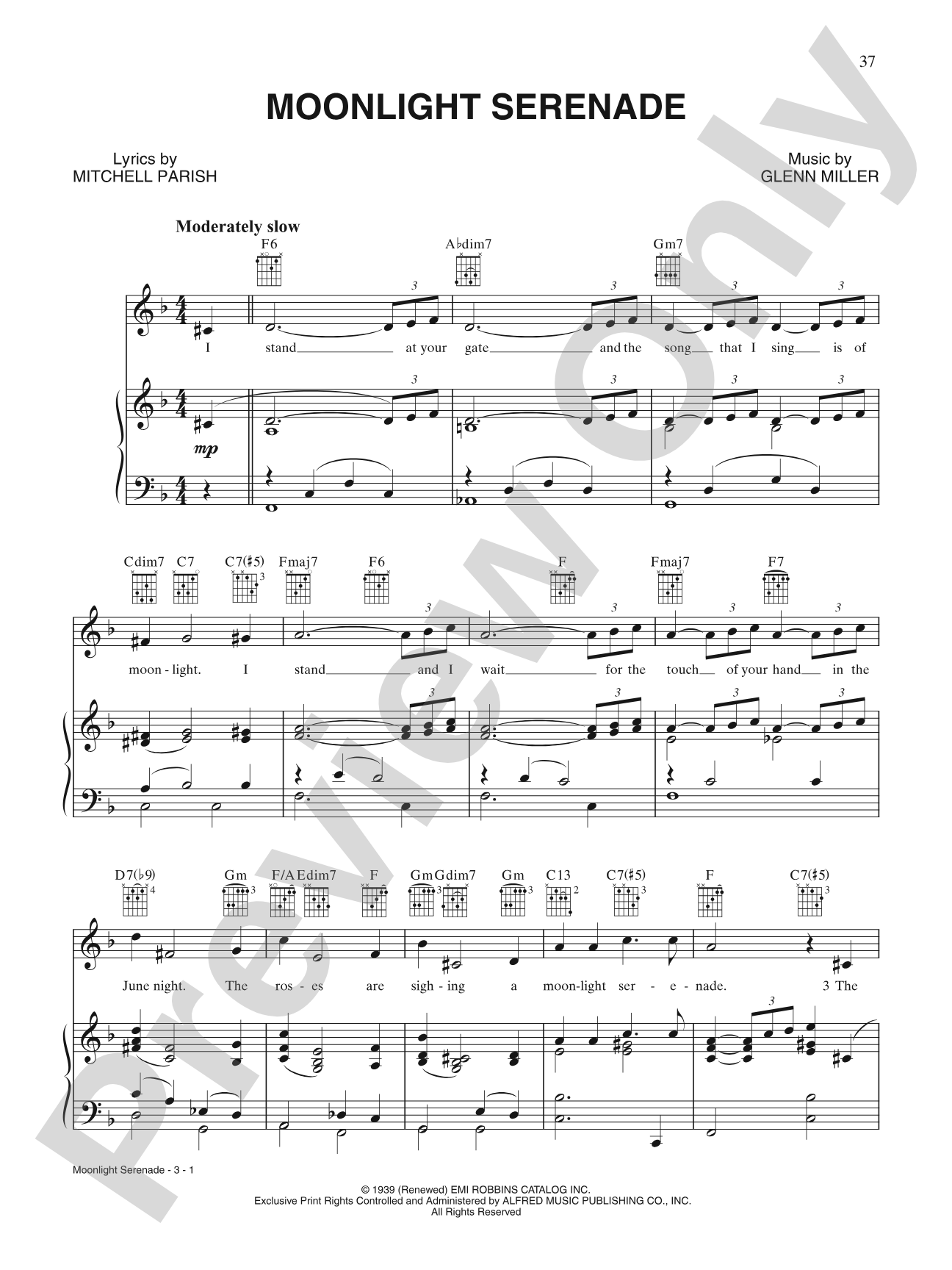

Moonlight Serenade: Piano/Vocal/Chords
20 Great American Songbook and Jazz Favorites
Item: 00-PS-0015563
$4.99
One moment…
Related Items
Laura: Piano/Vocal/Chords |
$4.99
|
View | |
The Shadow of Your Smile: Piano/Vocal/Chords |
$4.99
|
View | |
I'm in the Mood for Love: Piano/Vocal/Chords |
$4.99
|
View | |
Blue Moon: Piano/Vocal/Chords |
$4.99
|
View | |
I Put a Spell on You: Piano/Vocal/Chords |
$4.99
|
View | |
My Man: Piano/Vocal/Chords |
$4.99
|
View | |
Over the Rainbow: Piano/Vocal/Chords |
$4.99
|
View | |
Ain't Misbehavin': Piano/Vocal/Chords |
$4.99
|
View | |
Straighten Up and Fly Right: Piano/Vocal/Chords |
$4.99
|
View | |
Don't Sit Under the Apple Tree (With Anyone Else But Me): Piano/Vocal/Chords |
$4.99
|
View | |
Top-Requested Standards Sheet Music: Piano/Vocal/Guitar Book |
$14.99
|
View |
Description
The crowd-pleasing standards in this sheet music collection belong in every musician's repertoire. This songbook contains 20 piano/vocal arrangements of classic songs that are guaranteed to delight audiences of all ages. Complete lyrics and chord symbols are included. Titles: Ain't Misbehavin' * At Last * Blue Moon * Don't Get Around Much Anymore * Don't Sit Under the Apple Tree * I Put a Spell on You * I'm in the Mood for Love * Laura * Misty * Moonlight Serenade * My Man * Theme from New York, New York * Orange Colored Sky * Over the Rainbow * The Pink Panther * The Shadow of Your Smile * Straighten Up and Fly Right * Take Five * What a Wonderful World * Whatever Lola Wants.


Moonlight Serenade: Piano/Vocal/Chords isn't in MakeMusic Cloud just yet...but it could be. Let us know you'd like to see it, and you'll help shape what comes next. In the meantime, start a free trial and dive into thousands of interactive titles your students can play along with today.
Request This Title
Tell us you want it.
Start Your Free Trial
Explore everything that's ready to play right now.
Sample Audio
No sample audio found.
Sample Video
No sample videos found.
Additional Details
Series:
Top-Requested Sheet Music
Publisher:
Alfred Music
Page Count:
80
SKU:
00-PS-0015563
More about this title
About the Composer: Glenn Miller
Glenn Miller (1904-1944) led one of the most commercially successful big bands of the swing era, defining the sound of American popular music in the early 1940s. His orchestra's signature blend of clarinet, saxophone, and brass created instantly recognizable arrangements that made the Great American Songbook accessible to mainstream audiences. Miller's gift for orchestration and his ear for what would captivate dancers and listeners alike established standards that remain central to jazz and popular music education today.
Why we love this
This collection captures the essence of why the Great American Songbook endures in music education and performance. Each arrangement balances accessibility with sophistication, giving singers and pianists immediate opportunities to inhabit classic material without unnecessary technical barriers. The inclusion of chord symbols makes these pieces equally welcoming to guitarists and pianists working together, expanding how and where this repertoire can be performed.
What to expect
These arrangements evoke the warmth and sophistication of mid-century American popular music, with melodies that sit naturally in the voice and harmonies that feel both familiar and elegant. The writing captures that distinctive swing-era sensibility: rhythmically relaxed yet propulsive, sentimental without being saccharine, and designed for genuine connection with listeners.
Who it's for
Vocalists and accompanists preparing recitals, auditions, or casual performances will find reliable, singable arrangements that audiences recognize immediately. This collection also serves pianists and guitarists building solo repertoire or developing skills in accompanying different voice types and ranges.
How to get the most out of it
- Anchor the rhythm with clear chord articulation on the piano or guitar, particularly on upbeats; this grounding allows the vocalist to shape the melody with confidence and nuance.
- Study the lyrical phrasing carefully before mapping it to the notated rhythm; these standards were written for natural speech patterns, and slight rubato often serves the text better than strict time.
- Use the chord symbols to experiment with jazz voicings and reharmonization once the basic melody and changes are secure, especially in repeat sections where variation keeps the arrangement fresh.
How to use it
Program individual selections alongside contemporary art song or musical theater repertoire to demonstrate the historical depth of the American vocal tradition. These pieces work particularly well in casual settings, student recitals, or community performances where audience engagement and recognition matter as much as technical display.
Skills your students will build
- Reading and interpreting chord symbols while accompanying a vocalist
- Balancing harmonic support with independent rhythmic playing
- Shaping jazz-inflected phrasing with attention to lyrical content
- Adapting arrangements to different vocal ranges and timbres
- Understanding the relationship between notated melody and natural speech rhythm in American standards