
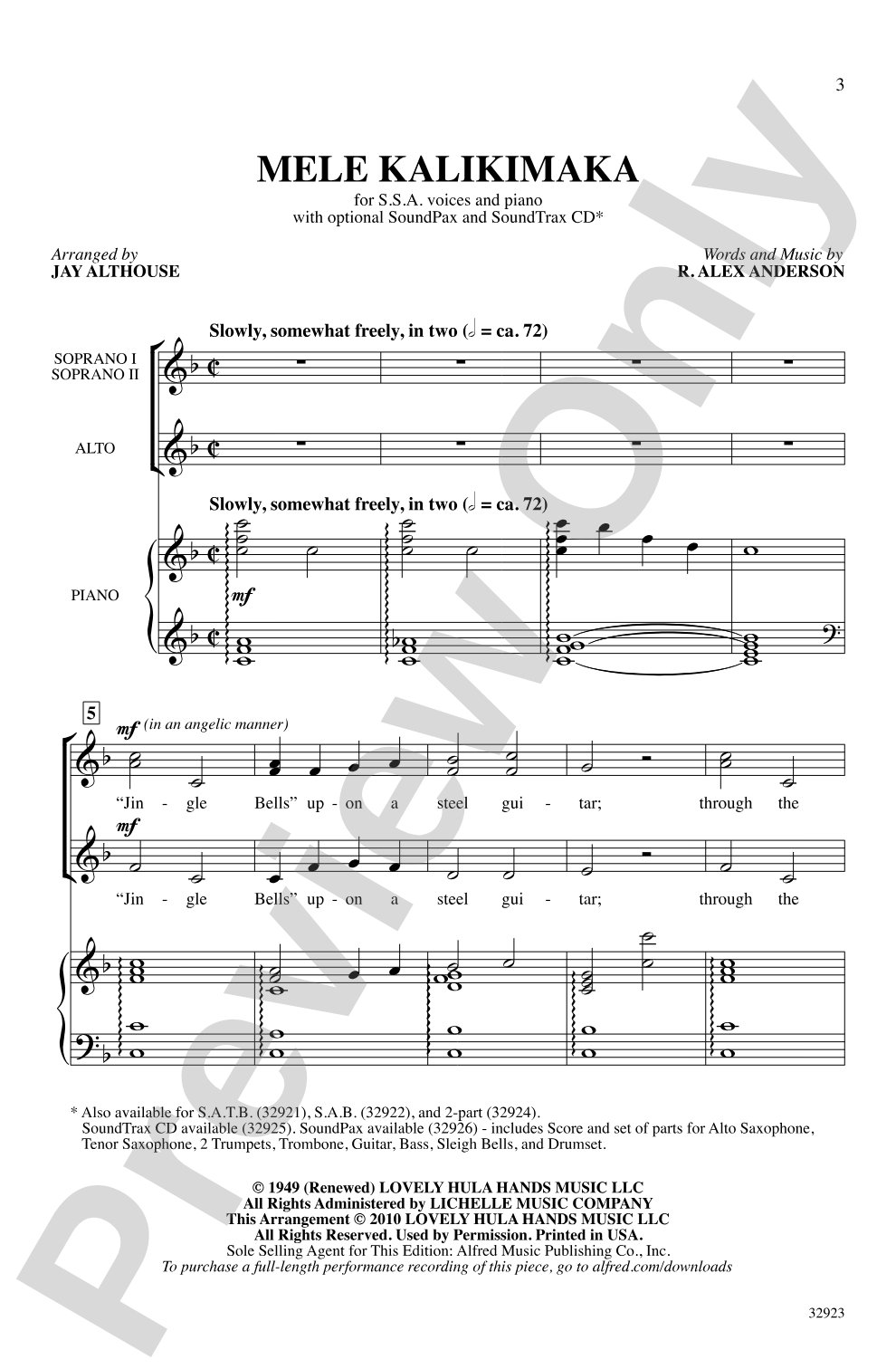
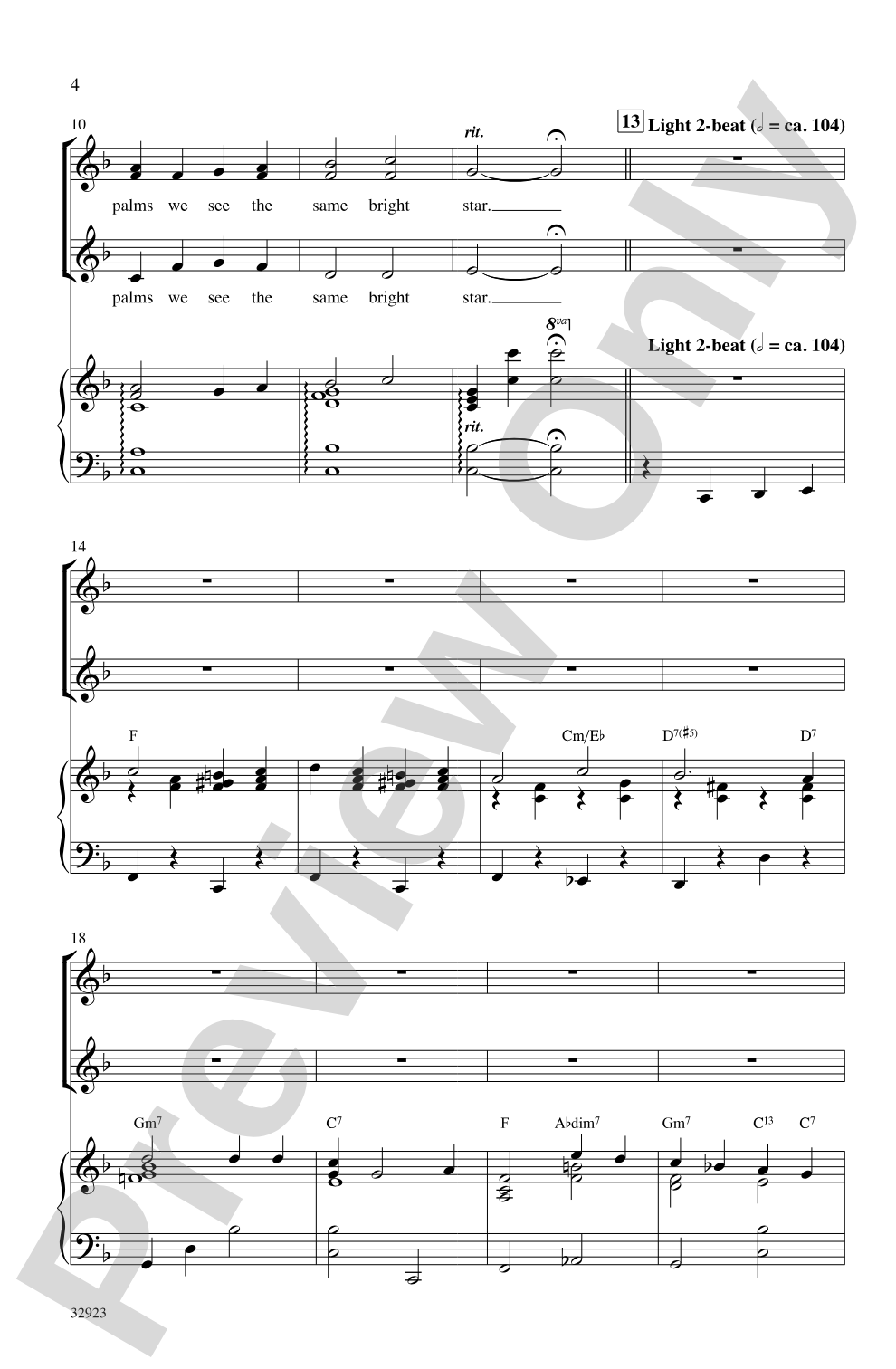

Mele Kalikimaka: SSA Choral Octavo
Words and music by R. Alex Anderson / arr. Jay Althouse
Item: 00-PO-0007687
$2.10
Minimum order quantity: 20 copies
Pickup currently not available
Related Items
Mele Kalikimaka: SoundTrax Digital Audio Download |
$27.99
|
View | |
Mele Kalikimaka: SATB Choral Octavo |
$2.10
|
View | |
Mele Kalikimaka: SAB Choral Octavo |
$2.10
|
View | |
Mele Kalikimaka: 2-Part Choral Octavo |
$2.10
|
View | |
Mele Kalikimaka: Choral SoundPax |
$35.00
|
View | |
Mele Kalikimaka: SATB Choral Octavo |
$2.65
|
View | |
Mele Kalikimaka: SAB Choral Octavo |
$2.10
|
View | |
Mele Kalikimaka: SSA Choral Octavo |
$2.10
|
View | |
Mele Kalikimaka: TTBB Choral Octavo |
$2.10
|
View | |
Mele Kalikimaka: 2-Part Choral Octavo |
$2.10
|
View | |
Mele Kalikimaka: Choral Octavo SoundTrax CD |
$27.99
|
View | |
Mele Kalikimaka: Choral SoundPax |
$35.00
|
View |
Description
Grass skirts and coconuts, anyone? Now your men can get in on the act with this popular Hawaiian Christmas greeting, featured on Bette Midler's album Cool Yule.


Mele Kalikimaka: SSA Choral Octavo isn't in MakeMusic Cloud just yet...but it could be. Let us know you'd like to see it, and you'll help shape what comes next. In the meantime, start a free trial and dive into thousands of interactive titles your students can play along with today.
Request This Title
Tell us you want it.
Start Your Free Trial
Explore everything that's ready to play right now.
Sample Audio
1
Audio File
--:--
0:00
0:00
Sample Video
No sample videos found.
Additional Details
Series:
Alfred Pop Choral Series
Publisher:
Alfred Music
Page Count:
12
SKU:
00-PO-0007687
More about this title
About the Composer: R. Alex Anderson
R. Alex Anderson composed "Mele Kalikimaka" in 1950, creating what would become one of the most recognizable Hawaiian Christmas songs in popular culture. His gift for melody and understanding of Hawaiian musical idiom gave the piece an authentic warmth that has endured across generations and genres, from traditional recordings to Bette Midler's modern interpretations.
Anderson's work bridged Hawaiian music traditions with accessible popular songwriting, making him a significant figure in bringing Hawaiian repertoire to mainland audiences during the mid-twentieth century. His compositions remain staples in holiday programming and Hawaiian cultural celebrations.
Why we love this
Jay Althouse's arrangement captures the easy charm of this perennial favorite while keeping the vocal writing uncluttered and singable across a range of choir levels. The arrangement respects the song's inherent warmth without overselling it, letting the melody and harmonic simplicity do the work. You get instant recognition and genuine audience joy without wrestling with complex part writing.
What to expect
Warm, celebratory, and transportive. The melody sits naturally in SSA voices, and the harmonic movement feels buoyant without demanding technical virtuosity. There's genuine aloha in this arrangement, a sense of generosity and joy that comes through in both the writing and the subject matter.
Who it's for
Choirs seeking accessible seasonal material that works for concerts, assemblies, or community performances. The SSA voicing makes it practical for treble-heavy ensembles or mixed choirs looking to feature upper voices during the holiday season.
How to get the most out of it
- Shape the melody with natural phrasing rather than mechanical diction; these lyrics invite a conversational, warm delivery that feels like an invitation rather than a performance.
- Balance the parts so the melody remains clear in the soprano line while the supporting voices add texture without overwhelming; recorded accompaniment can help establish this blend during rehearsal.
- Approach the harmonies with attention to blend in the SSA voicing; the thirds and sixths need cohesion to create the gentle, tropical feeling the arrangement aims for.
- Let the accompaniment set the rhythmic pocket; these grooves work best when the choir relaxes into them rather than pushing ahead or dragging behind.
How to use it
Pair this with other seasonal selections to create a multicultural holiday concert that moves beyond traditional winter material. The recorded accompaniment makes it practical for shorter rehearsal periods, allowing you to invest rehearsal time in building interpretation rather than part security. Consider programming it mid-set as a palette cleanser between heavier or more formal pieces.
Skills your students will build
- Singing with warmth and natural phrasing in a non-classical context
- Balancing melody and harmony in three-part voicing
- Listening to and locking with recorded accompaniment
- Understanding Hawaiian musical idiom and cultural context
- Maintaining blend while singing in a lighter, more contemporary vocal style