
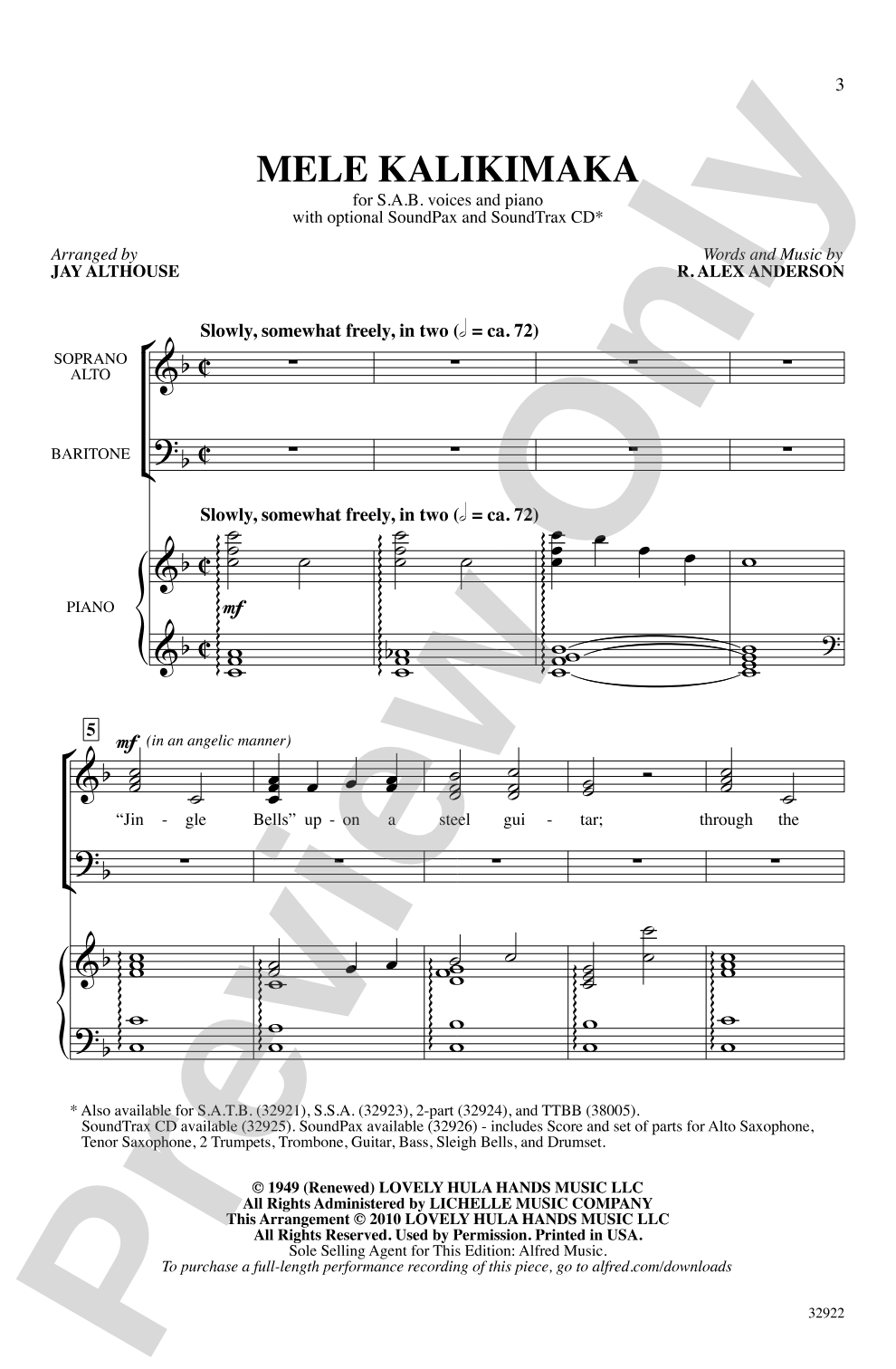
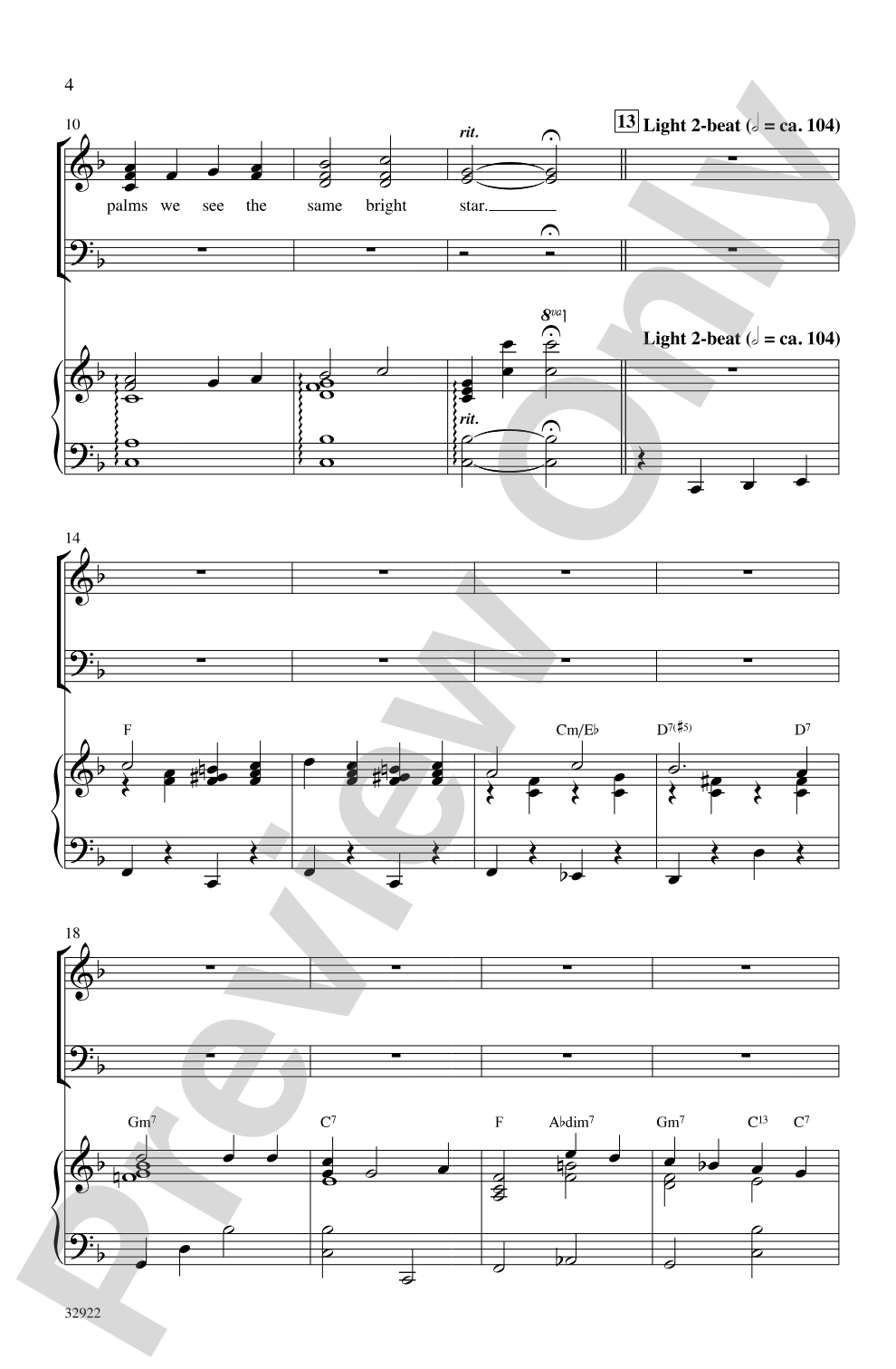

Mele Kalikimaka: SAB Choral Octavo
Words and music by R. Alex Anderson / arr. Jay Althouse
Item: 00-PO-0007679
$2.10
Minimum order quantity: 20 copies
Pickup currently not available
Related Items
Mele Kalikimaka: SoundTrax Digital Audio Download |
$27.99
|
View | |
Mele Kalikimaka: SATB Choral Octavo |
$2.10
|
View | |
Mele Kalikimaka: SSA Choral Octavo |
$2.10
|
View | |
Mele Kalikimaka: 2-Part Choral Octavo |
$2.10
|
View | |
Mele Kalikimaka: Choral SoundPax |
$35.00
|
View | |
Mele Kalikimaka: SATB Choral Octavo |
$2.65
|
View | |
Mele Kalikimaka: SAB Choral Octavo |
$2.10
|
View | |
Mele Kalikimaka: SSA Choral Octavo |
$2.10
|
View | |
Mele Kalikimaka: TTBB Choral Octavo |
$2.10
|
View | |
Mele Kalikimaka: 2-Part Choral Octavo |
$2.10
|
View | |
Mele Kalikimaka: Choral Octavo SoundTrax CD |
$27.99
|
View | |
Mele Kalikimaka: Choral SoundPax |
$35.00
|
View |
Description
Grass skirts and coconuts, anyone? Now your men can get in on the act with this popular Hawaiian Christmas greeting, featured on Bette Midler's album Cool Yule.


Mele Kalikimaka: SAB Choral Octavo isn't in MakeMusic Cloud just yet...but it could be. Let us know you'd like to see it, and you'll help shape what comes next. In the meantime, start a free trial and dive into thousands of interactive titles your students can play along with today.
Request This Title
Tell us you want it.
Start Your Free Trial
Explore everything that's ready to play right now.
Sample Audio
1
Audio File
--:--
0:00
0:00
Sample Video
No sample videos found.
Additional Details
Series:
Alfred Pop Choral Series
Publisher:
Alfred Music
Page Count:
12
SKU:
00-PO-0007679
More about this title
About the Composer: R. Alex Anderson
R. Alex Anderson composed "Mele Kalikimaka" in 1950, creating what would become one of Hawaii's most recognizable musical exports. His work bridged the gap between traditional Hawaiian music and popular song, earning the piece enduring appeal across generations and genres. Anderson's compositions captured the spirit of island culture at a moment when Hawaiian music was gaining international prominence, and his melodies remain central to how many people experience Hawaiian musical traditions today.
Why we love this
Jay Althouse's SAB arrangement opens this classic Hawaiian greeting to mixed choirs that might otherwise struggle to program it. The three-part voicing sits comfortably across soprano, alto, and baritone ranges without sacrificing the song's distinctive character, and the relatively modest page count makes it achievable for groups with limited rehearsal time. Programming a holiday concert that reaches beyond traditional carols creates memorable variety, and this piece does exactly that while remaining genuinely fun to sing.
What to expect
Bright, warm, and playful, with the easy friendliness of a greeting shared among people who know each other well. The melody floats buoyantly over a gentle rhythmic foundation, evoking both the leisure of island life and the genuine joy of extending seasonal wishes to others. There's humor in the imagery without condescension, and earnestness in the musical phrase.
Who it's for
Choirs with SAB voicing, particularly those looking to diversify their holiday programming beyond traditional Western carols. Groups preparing winter concerts that want to include multicultural repertoire will find this immediately singable and audience-friendly, regardless of ensemble size or experience level.
How to get the most out of it
- Treat the rhythm section as a steadying force; lock in with the recorded accompaniment early in rehearsals so singers can focus on matching the lilting, relaxed quality of the melody.
- Shape the melody with gentle dynamics rather than dramatic contrast; Hawaiian music thrives on smoothness, and restrained interpretation suits the greeting-style text far better than theatrical delivery.
- Balance the three parts so neither the altos nor baritones recede into the texture. This arrangement depends on all three lines contributing equally to the warmth of the sound.
- Approach the syllables with a light, almost conversational tone. The word painting ("grass skirts," "coconuts") calls for character and specificity, not operatic weight.
How to use it
Place this strategically in a holiday concert to shift the mood and geography; it works beautifully after a set of traditional carols or as a bridge between sacred and secular material. Pairing it with other world music selections creates coherent programming, or use it as a standalone encore that leaves audiences smiling and humming as they leave.
Skills your students will build
- Singing in three-part SAB voicing with independent melodic lines
- Maintaining rhythmic accuracy against a recorded accompaniment
- Performing with stylistic awareness of non-Western musical traditions
- Balancing harmonic blend across soprano, alto, and baritone parts
- Shaping lyrics and text painting in a pop-choral idiom