
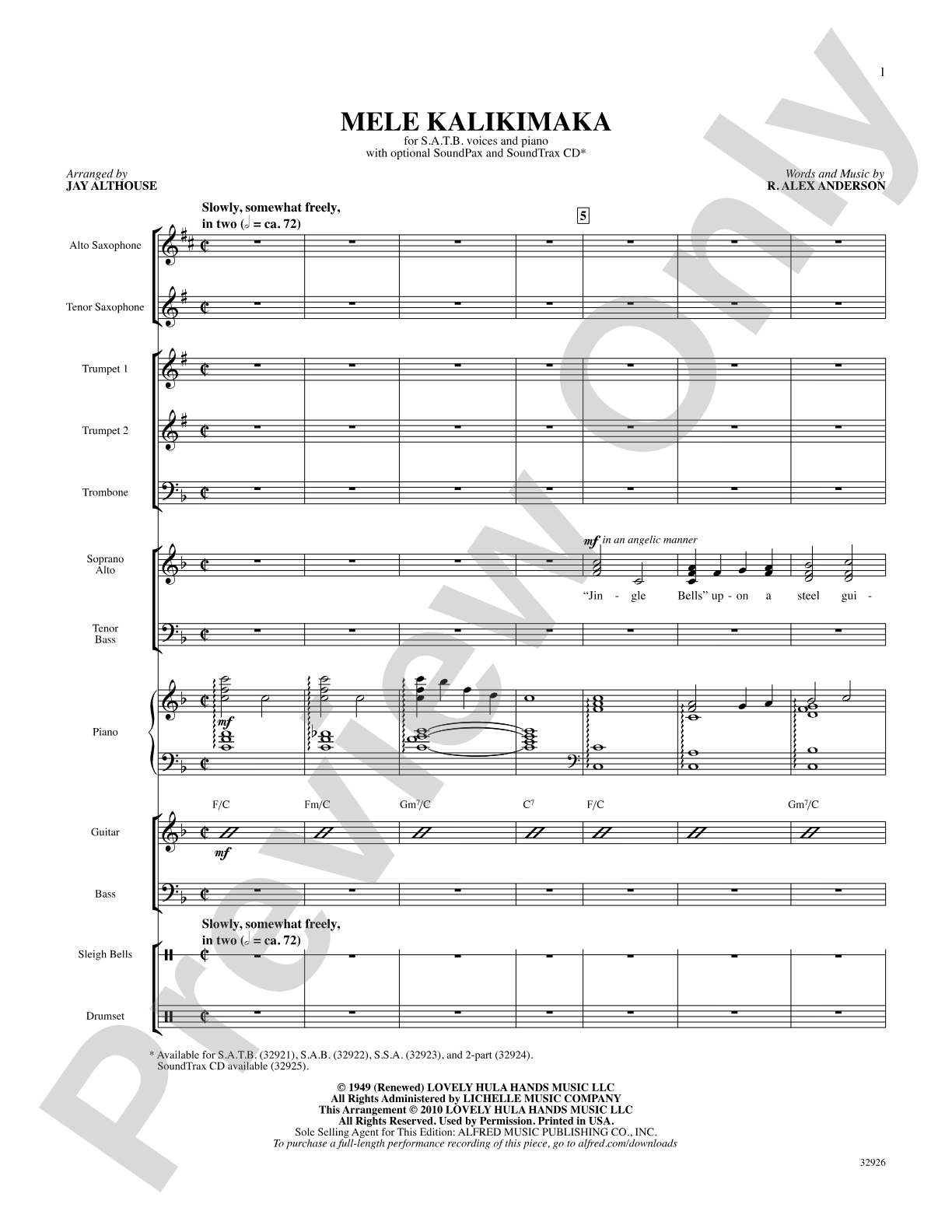
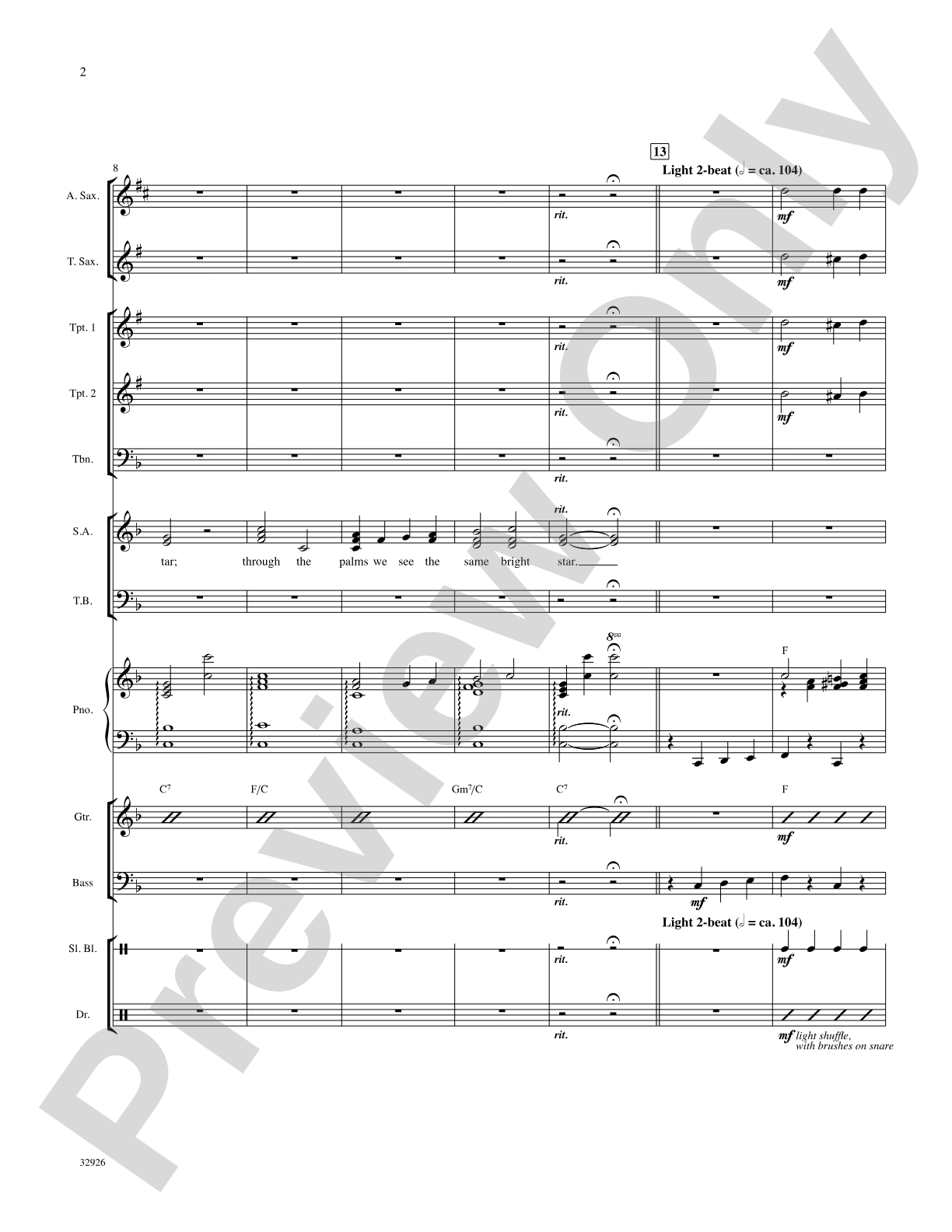
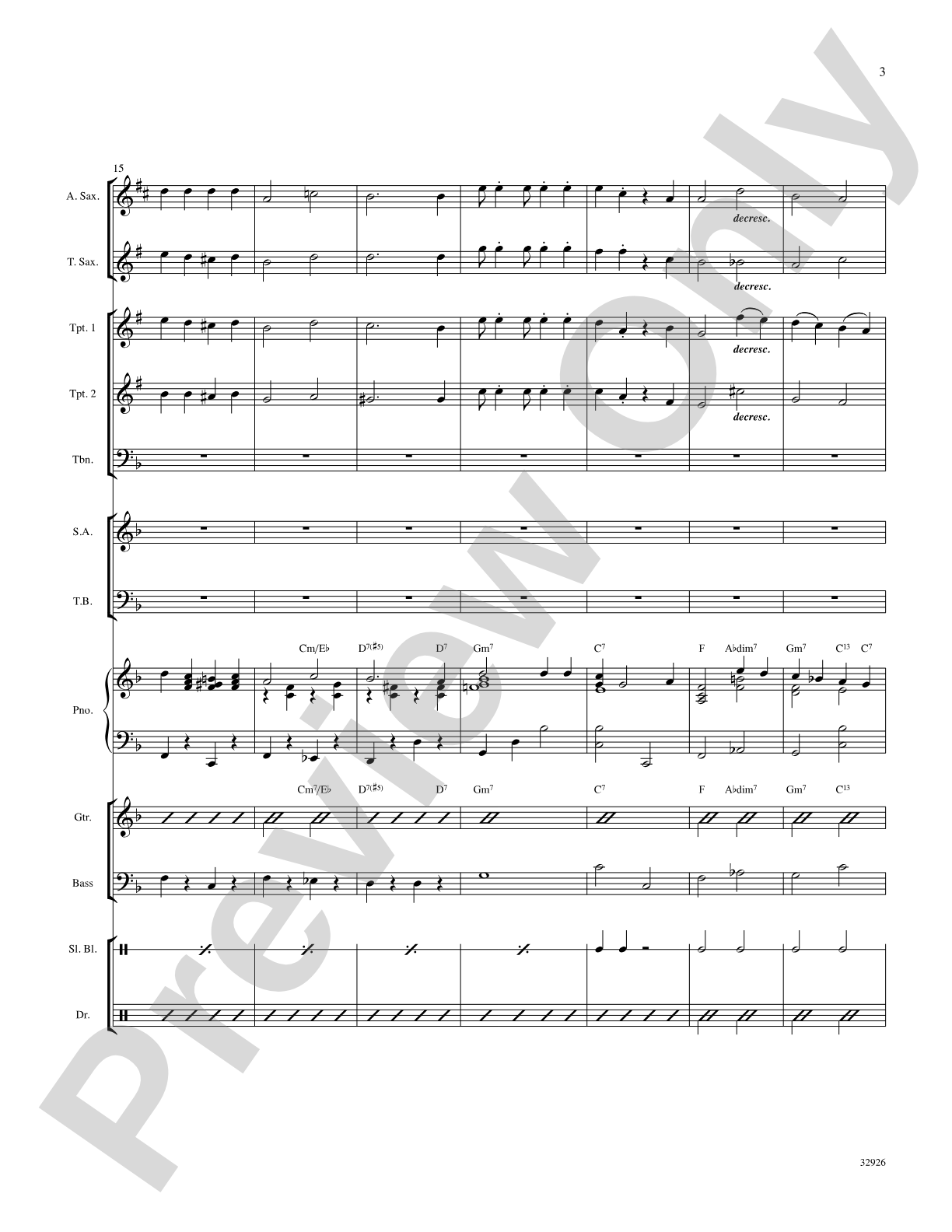
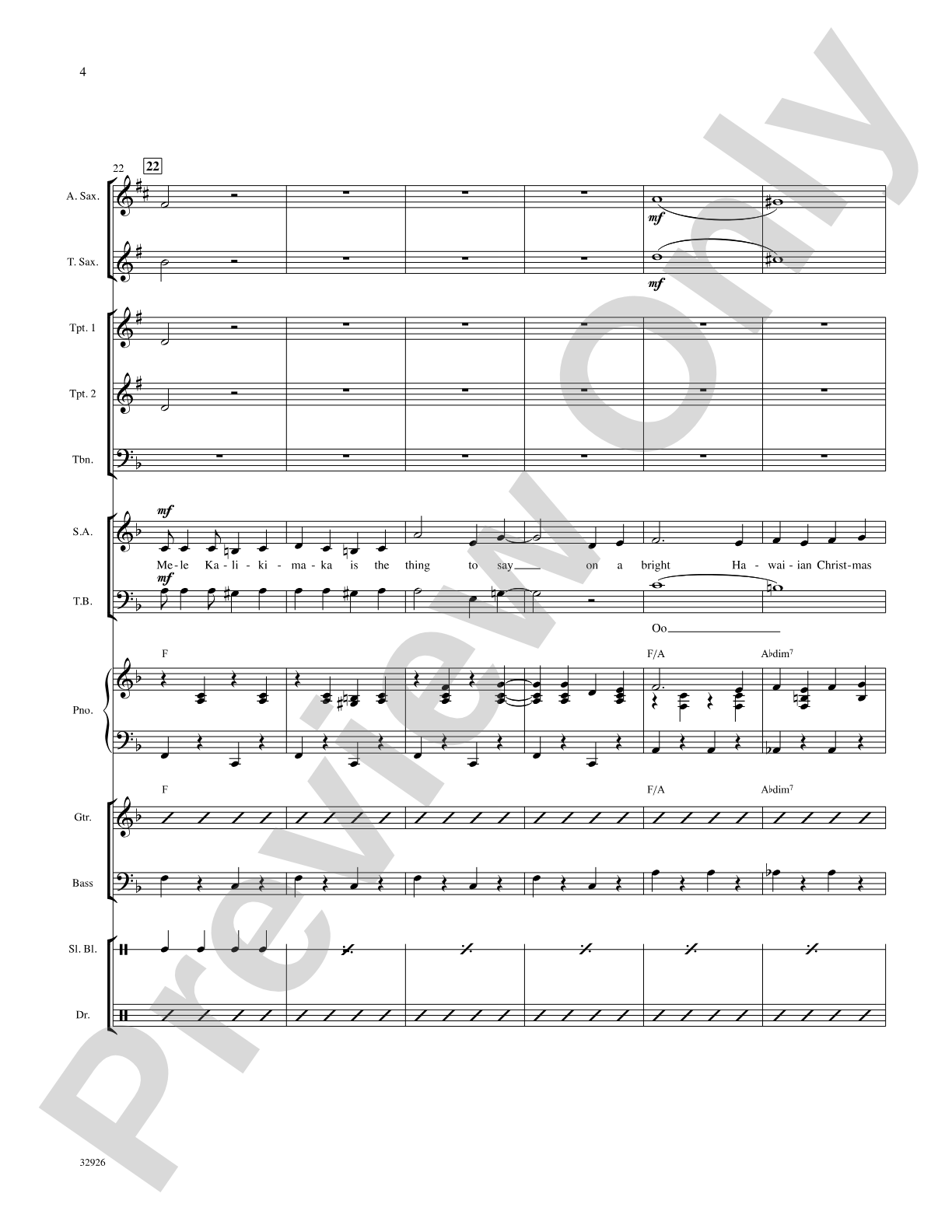
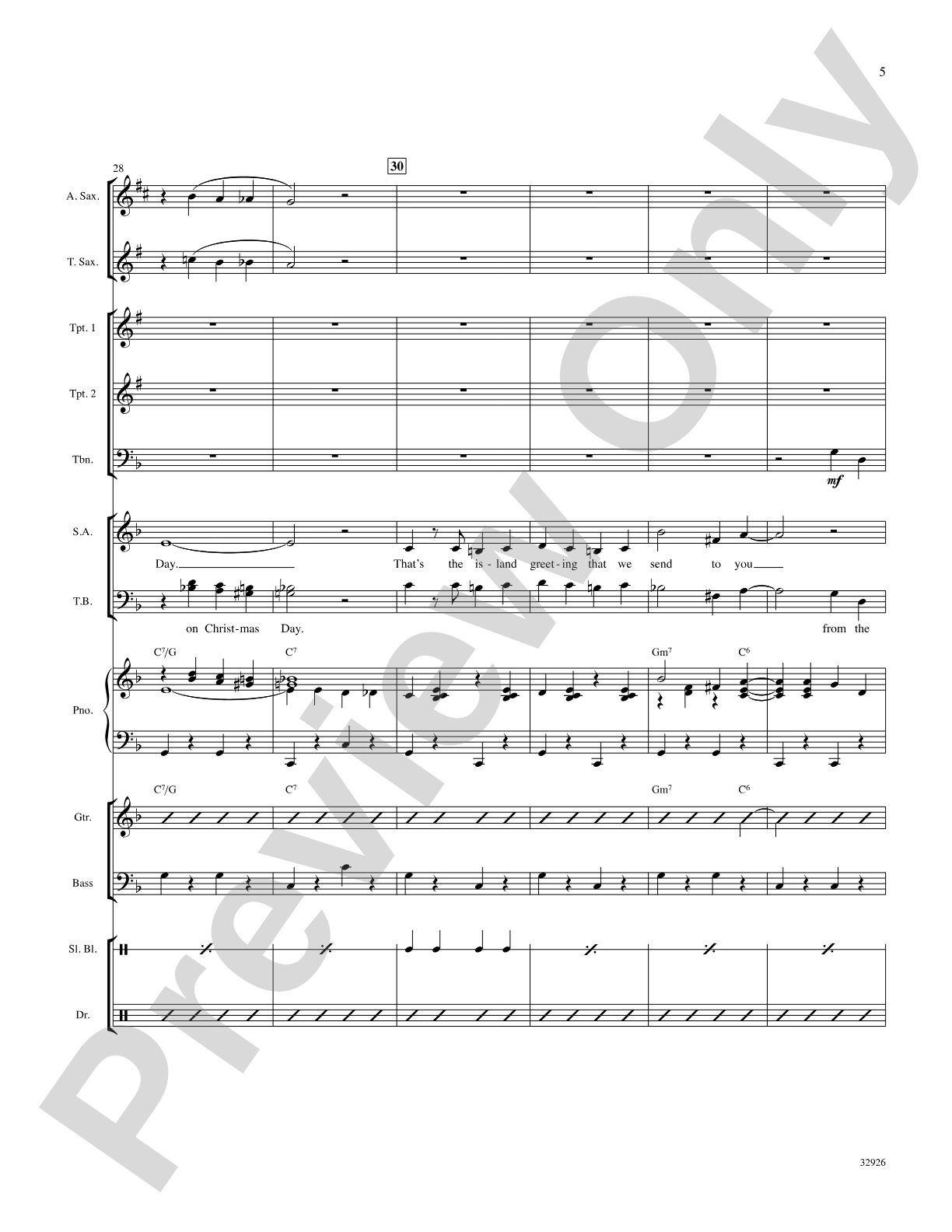
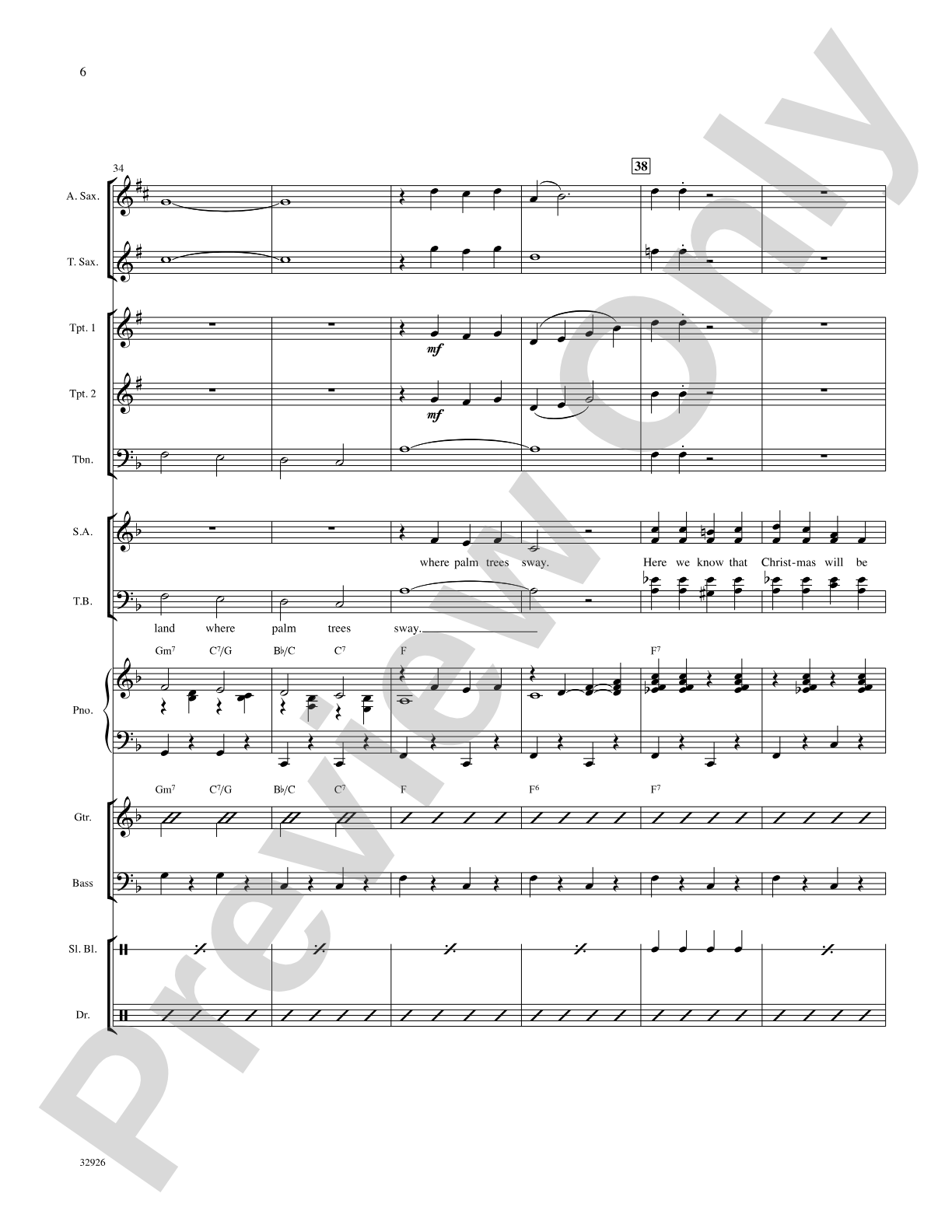
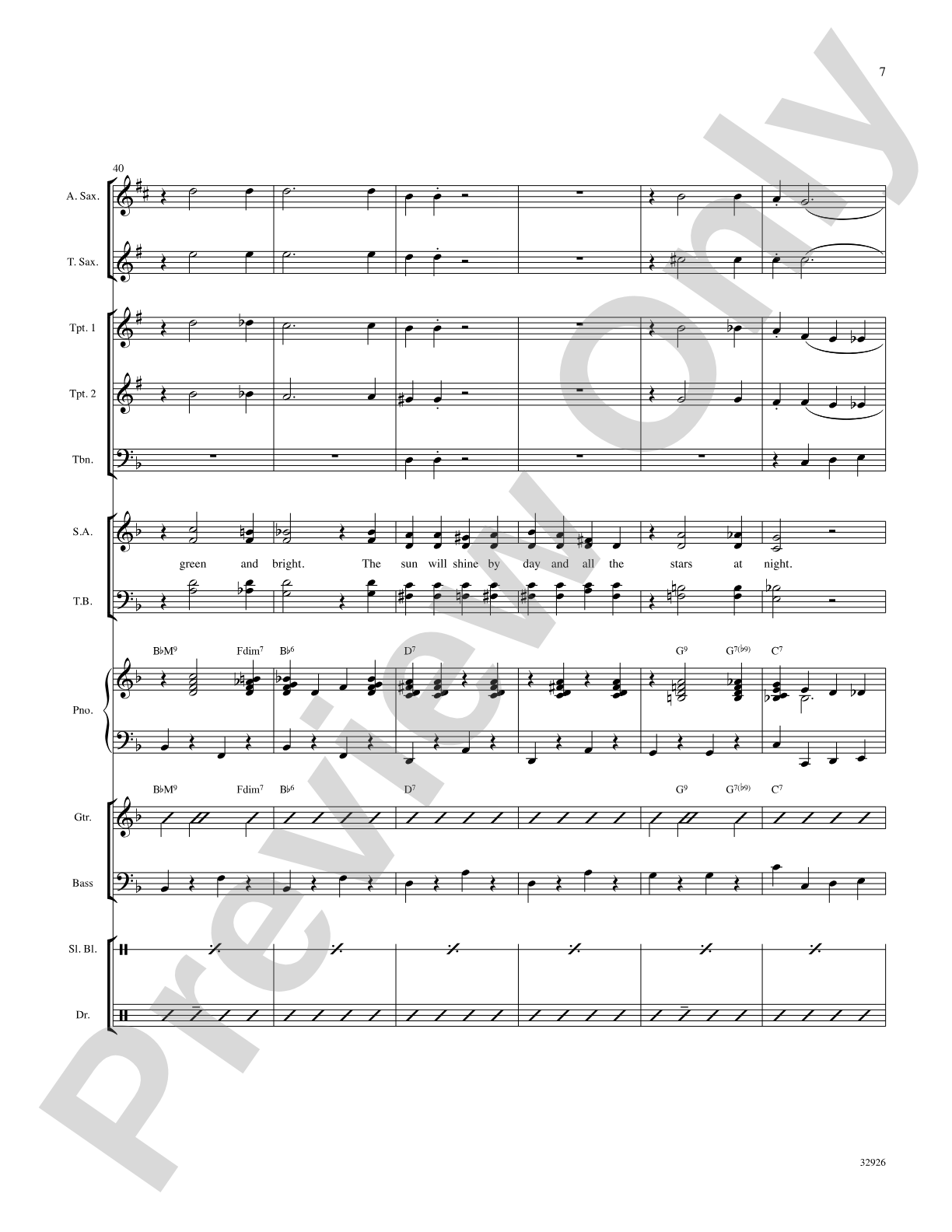
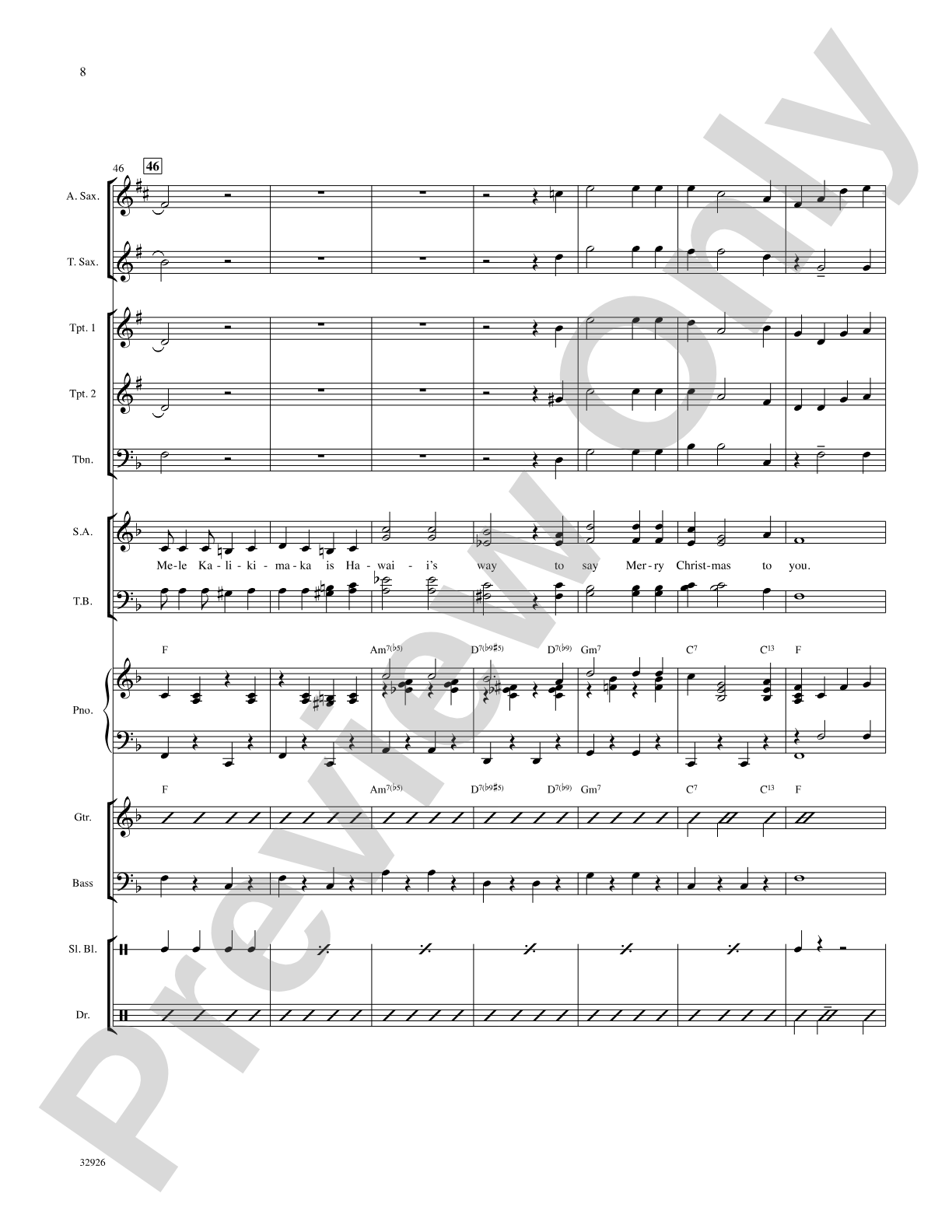
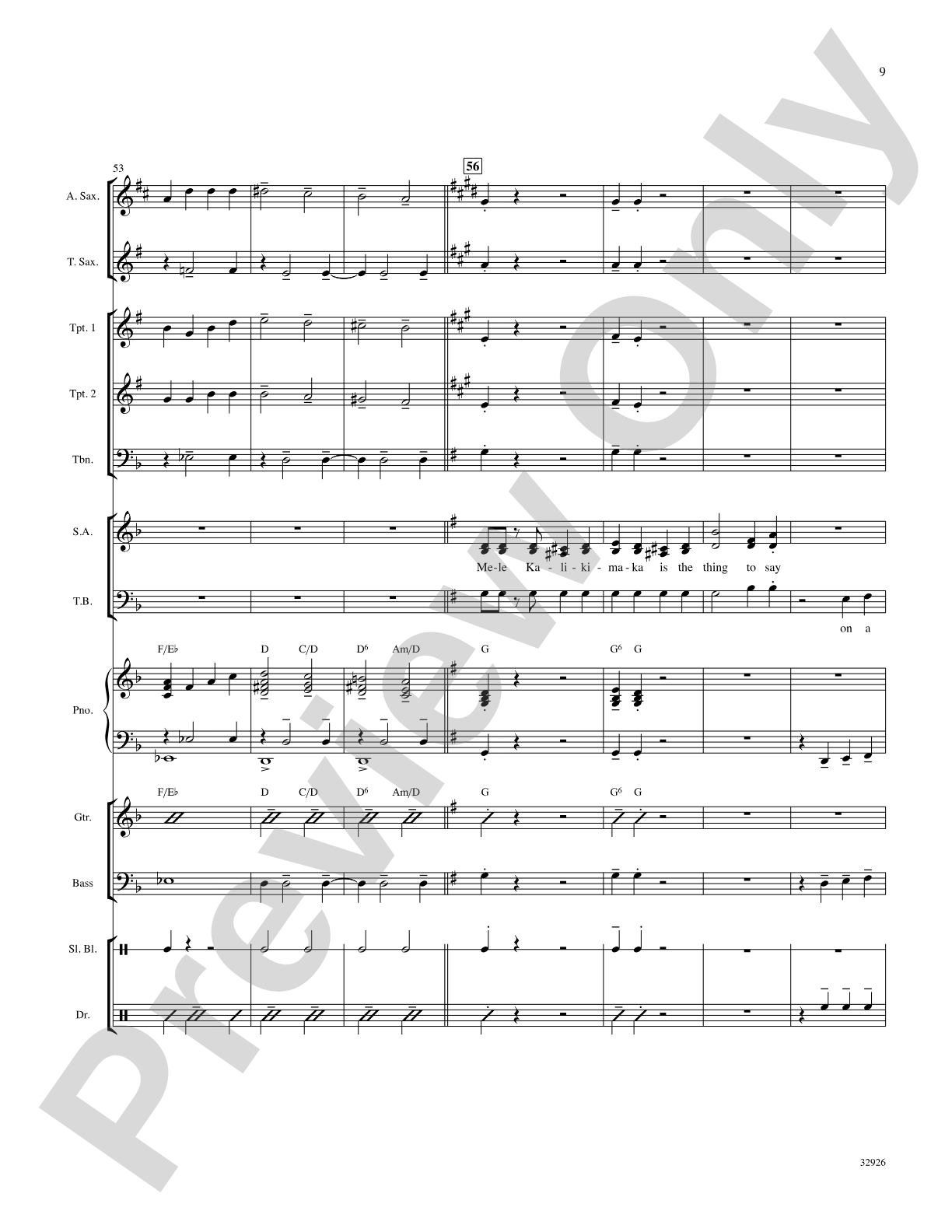
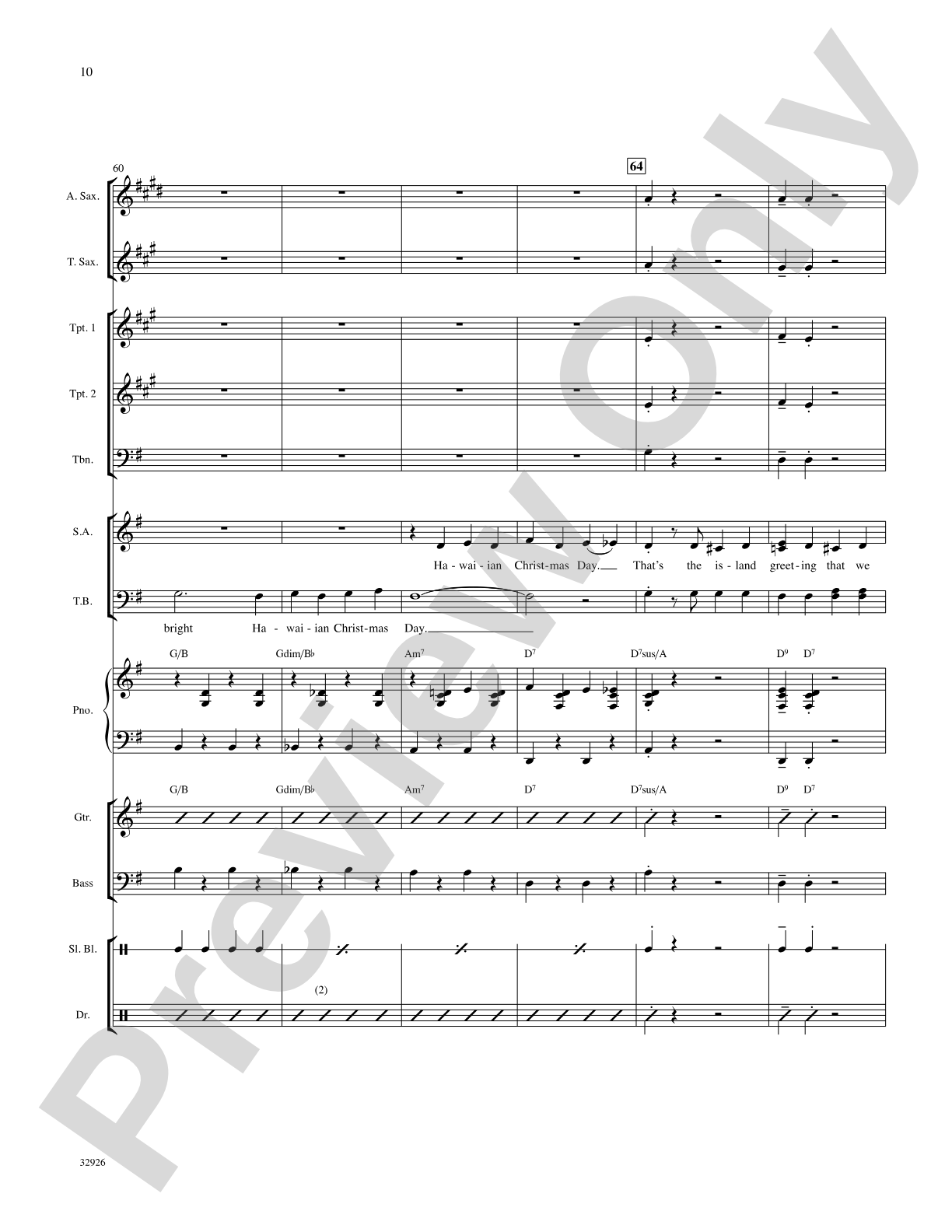
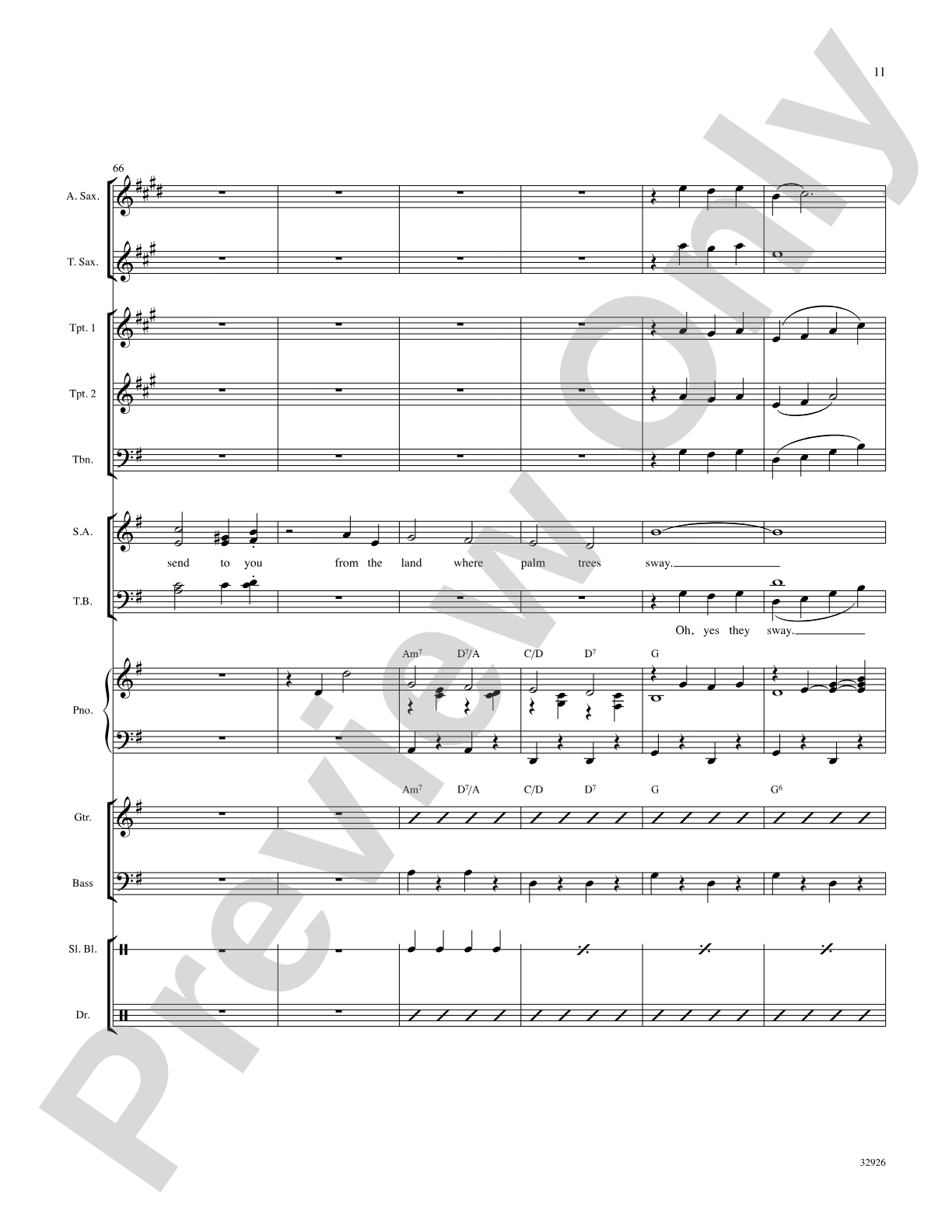
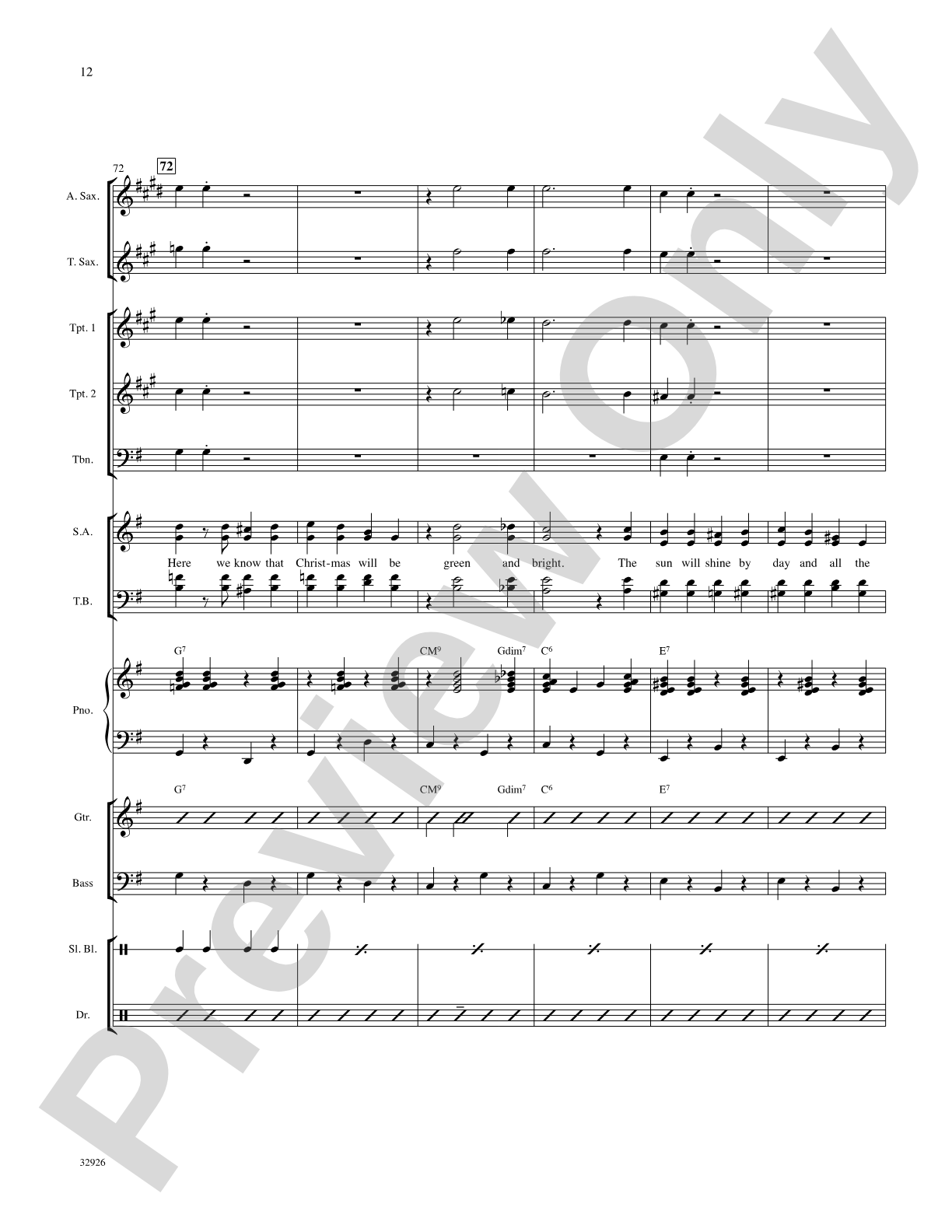
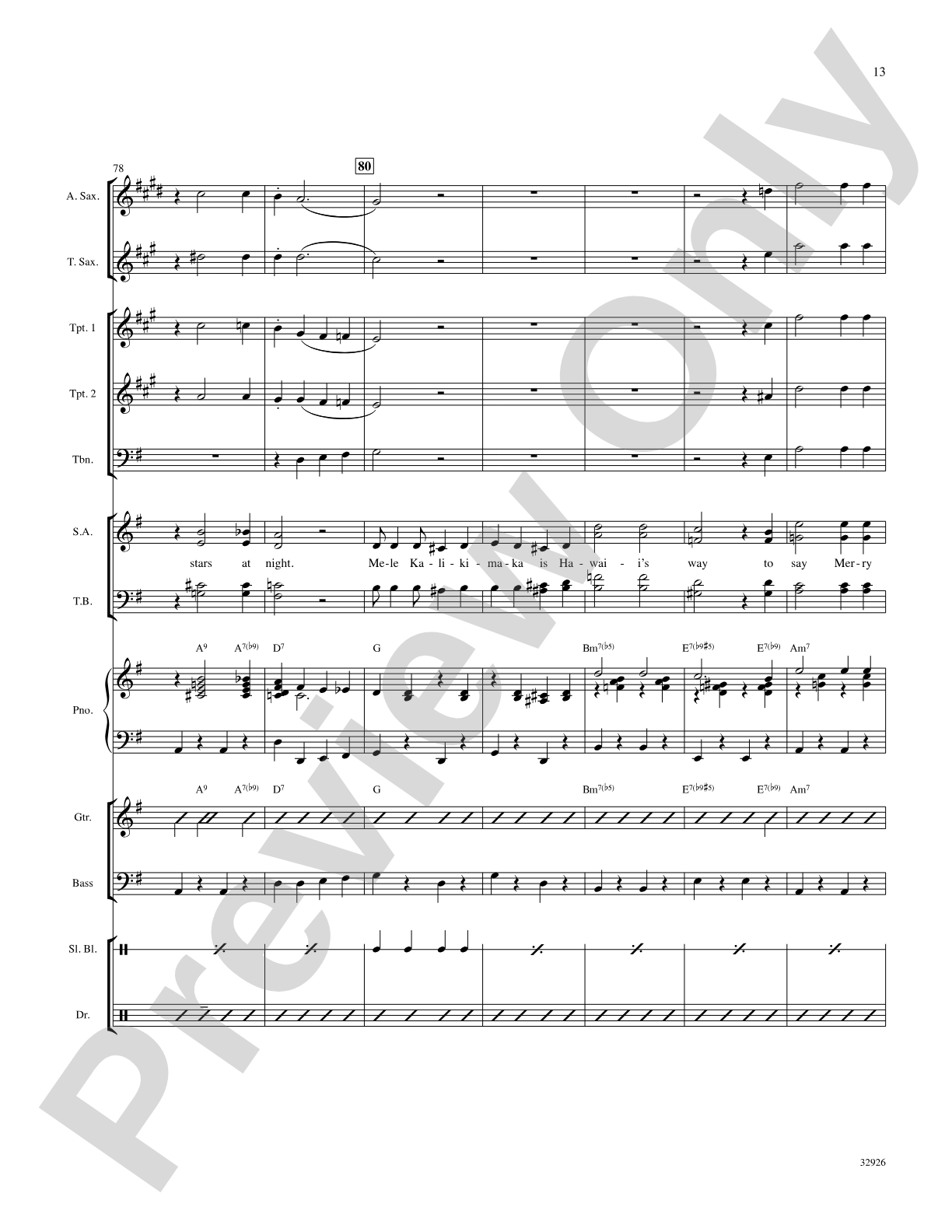
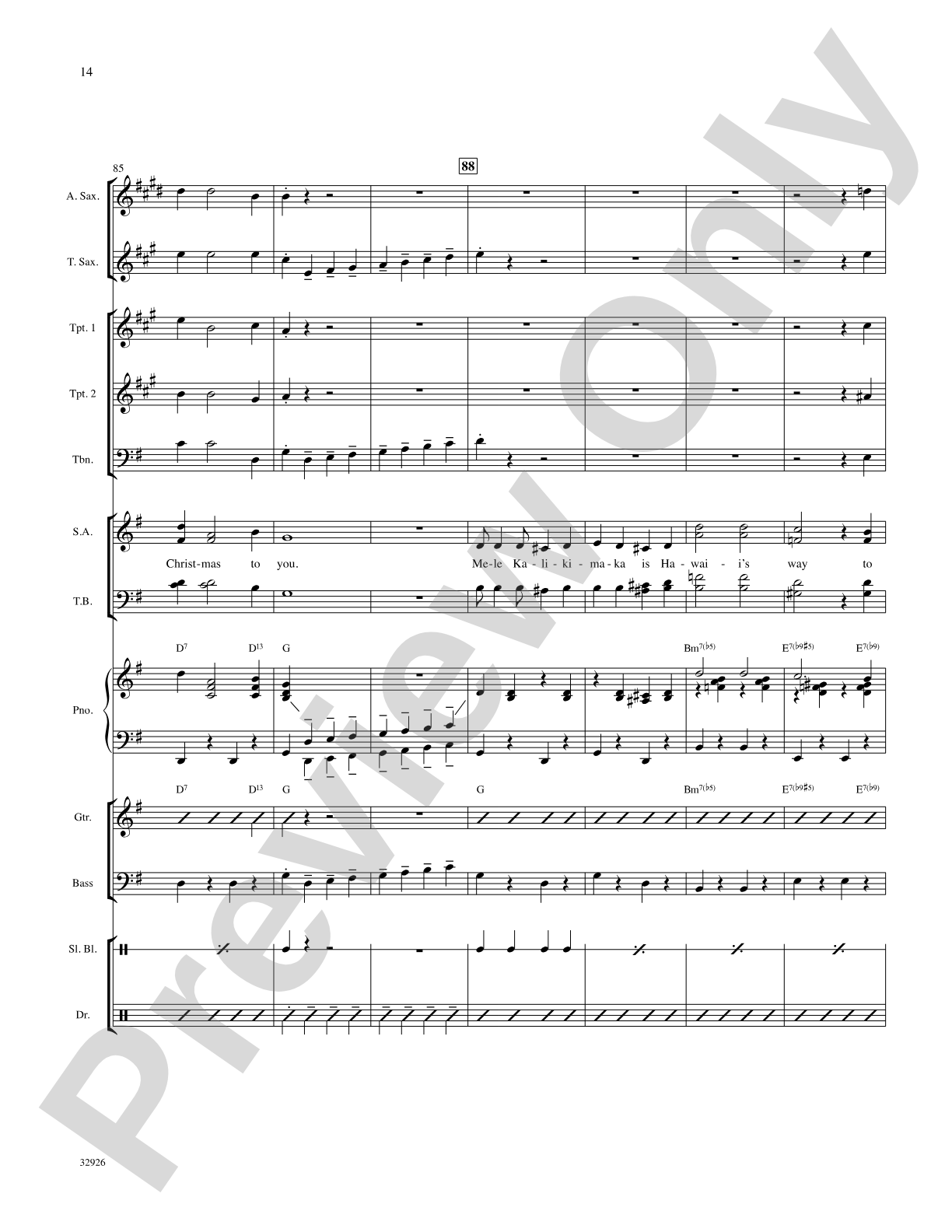
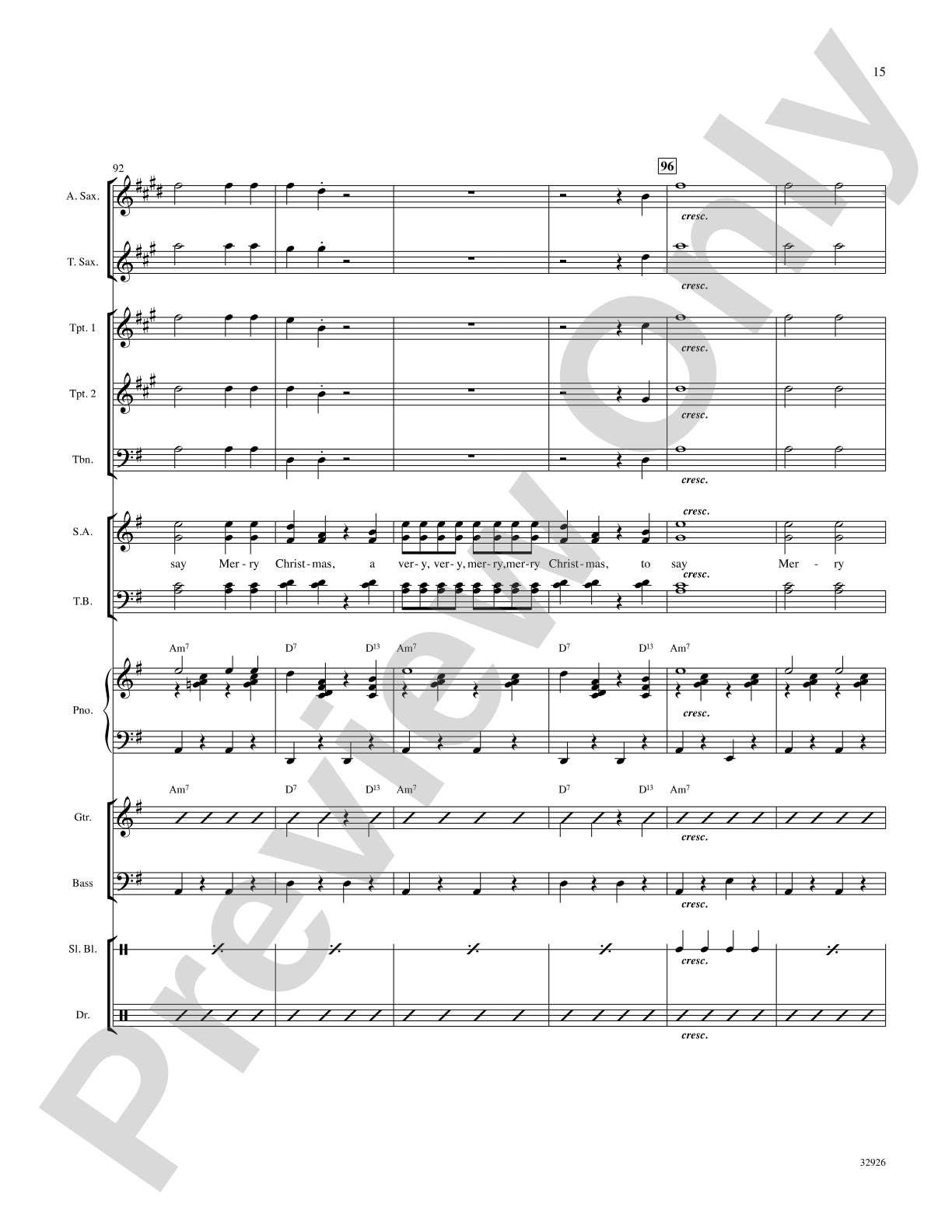
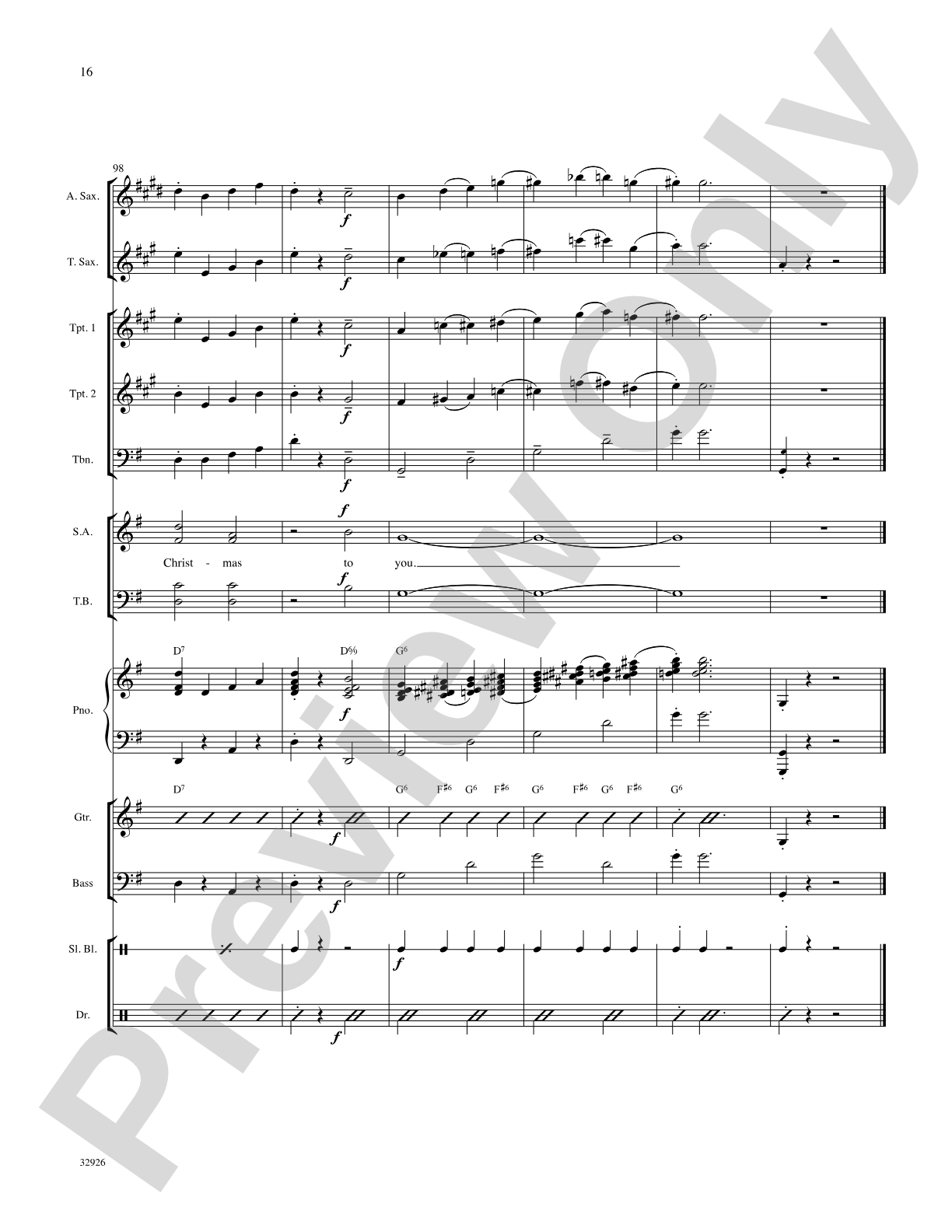

Mele Kalikimaka: Choral SoundPax
Words and music by R. Alex Anderson / arr. Jay Althouse
Item: 00-PK-0005940

$35.00
One moment…
Related Items
Mele Kalikimaka: SoundTrax Digital Audio Download |
$27.99
|
View | |
Mele Kalikimaka: SATB Choral Octavo |
$2.10
|
View | |
Mele Kalikimaka: SAB Choral Octavo |
$2.10
|
View | |
Mele Kalikimaka: SSA Choral Octavo |
$2.10
|
View | |
Mele Kalikimaka: 2-Part Choral Octavo |
$2.10
|
View | |
Mele Kalikimaka: SATB Choral Octavo |
$2.65
|
View | |
Mele Kalikimaka: SAB Choral Octavo |
$2.10
|
View | |
Mele Kalikimaka: SSA Choral Octavo |
$2.10
|
View | |
Mele Kalikimaka: TTBB Choral Octavo |
$2.10
|
View | |
Mele Kalikimaka: 2-Part Choral Octavo |
$2.10
|
View | |
Mele Kalikimaka: Choral Octavo SoundTrax CD |
$27.99
|
View | |
Mele Kalikimaka: Choral SoundPax |
$35.00
|
View |
Description
Grass skirts and coconuts, anyone? Now your men can get in on the act with this popular Hawaiian Christmas greeting, featured on Bette Midler's album Cool Yule.


Don't just read it, hear it, play along with it, and watch your students grow with it. In MakeMusic Cloud, Mele Kalikimaka: Choral SoundPax comes alive with professional accompaniment, adjustable tempo, and built-in practice tools that turn solo practice into real progress.
Open in the Player
Jump straight in and assign it today.
Start Your Free Trial
Open this title and explore the full library in minutes.
Sample Audio
1
Audio File
--:--
0:00
0:00
Sample Video
No sample videos found.
Additional Details
Series:
Alfred Pop Choral Series
Publisher:
Alfred Music
Page Count:
36
SKU:
00-PK-0005940
Instrumentation:
SoundPax
More about this title
About the Composer: R. Alex Anderson
R. Alex Anderson composed "Mele Kalikimaka" in 1950, creating what would become one of the most recognizable Hawaiian Christmas songs in American popular music. His work bridged traditional Hawaiian musical sensibilities with the commercial songwriting of mid-century Tin Pan Alley, giving the islands a distinctive voice in holiday repertoire that persists today.
Anderson's compositions capture the warmth and cultural character of Hawaii in ways that resonate far beyond the islands themselves. His ability to craft singable, memorable melodies has made his work a staple in choral and popular music education, particularly when educators seek to introduce students to multicultural holiday traditions.
Why we love this
Jay Althouse's arrangement opens the door for lower voices to claim this holiday standard, which too often gets relegated to treble-dominant programming. The SoundPax format gives singers the recorded accompaniment they need to rehearse independently, making this a practical choice for groups managing tight schedules around the holidays. It's genuinely fun to sing and genuinely Hawaiian in spirit without requiring exotic instrumentation or specialized knowledge.
What to expect
Warm, unhurried, and inviting. The harmonic movement suggests island breezes and gentle rhythmic sway, while the straightforward melody keeps everything grounded and singable. There's joy here without sentimentality, and authenticity without pretension.
Who it's for
Male singers and lower voice ensembles looking for holiday repertoire that feels fresh and genuinely multicultural. Choirs wanting to program beyond the traditional European Christmas canon without sacrificing accessibility or audience appeal.
How to get the most out of it
- Keep the rhythmic groove relaxed and swaying rather than metrically rigid; the accompaniment will anchor the pulse while your voices create a conversational, island-breeze quality.
- Balance the harmonic blend carefully in the lower parts, as open voicings can blur if singers don't listen across their section lines.
- Treat the text with genuine warmth rather than novelty energy; these singers have earned the right to deliver this greeting with dignity and joy.
- Use the recorded accompaniment in sectional rehearsals to let each part group build confidence with the harmonic movement before full ensemble.
How to use it
Pair this with other secular holiday pieces to build a multicultural December concert that reflects your community's diversity. It works beautifully as a program opener or closer, setting a relaxed, celebratory tone that audiences recognize and embrace immediately. Consider pairing it with traditional carols to create a meaningful contrast in programming.
Skills your students will build
- Singing with rhythmic independence from the accompaniment track
- Balancing open harmonic voicings for lower voices
- Phrasing and breath management across longer melodic lines
- Interpreting cultural musical inflections and stylistic nuance