
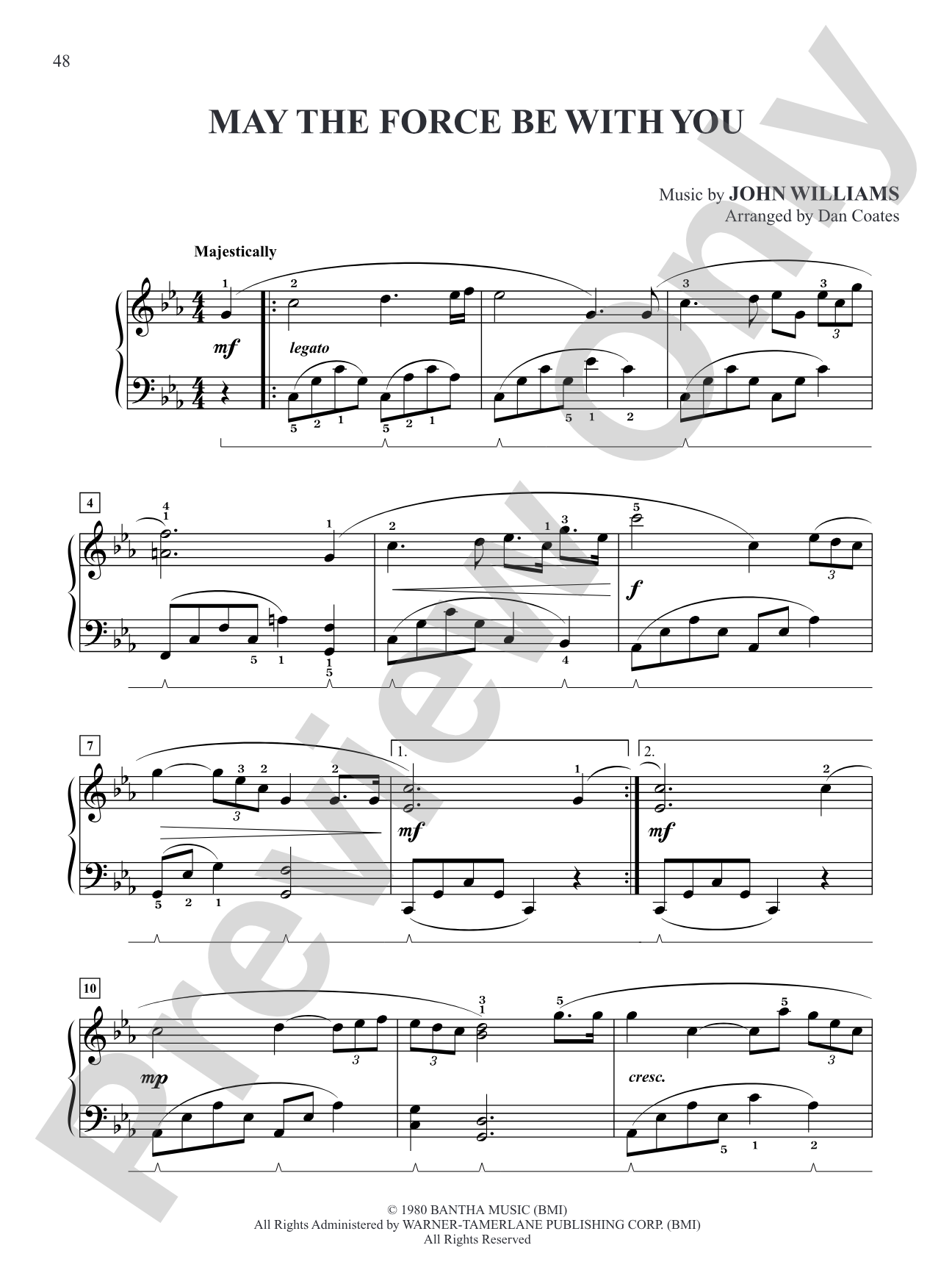

May the Force Be With You (from "Star Wars Episode V: The Empire Strikes Back"): Easy Piano
By John Williams / arr. Dan Coates
Level: Easy Piano
Item: 00-PS-0012761
$4.99
One moment…
Related Items
Cantina Band (from "Star Wars Episode IV: A New Hope"): Easy Piano |
$4.99
|
View | |
Princess Leia's Theme (from "Star Wars"): Easy Piano |
$4.99
|
View | |
The Throne Room (from "Star Wars"): Easy Piano |
$4.99
|
View | |
Yoda's Theme (from "Star Wars Episode V: The Empire Strikes Back"): Easy Piano |
$4.99
|
View | |
Imperial March ("Darth Vader's Theme") (from "Star Wars Episode V: The Empire Strikes Back"): Easy Piano |
$4.99
|
View | |
Jawa Sandcrawler (from "Star Wars Episode IV: A New Hope"): Easy Piano |
$4.99
|
View | |
Binary Sunset (from "Star Wars Episode IV: A New Hope"): Easy Piano |
$4.99
|
View | |
Star Wars Main Theme (from "Star Wars"): Easy Piano |
$4.99
|
View |
Description
For the first time, this piano sheet music collection encompasses the entire Star Wars saga! Set amid stunning imagery from the films, these easy piano arrangements bring the magic of Star Wars to life as they masterfully invoke the grand romanticism of John Williams's epic, award-winning scores. This collection includes several all-new arrangements by Dan Coates. The most definitive and memorable pieces from each of the six Star Wars episodes are included.
Titles: Twentieth Century Fox Trademark * Anakin's Theme * Across the Stars * Battle of the Heroes * Binary Sunset * Cantina Band * Duel of the Fates * The Force Theme * The Imperial March * Jawa Sandcrawler * Luke and Leia * May the Force Be with You * Princess Leia's Theme * Star Wars (Main Title) * The Throne Room * Yoda's Theme.


Titles: Twentieth Century Fox Trademark * Anakin's Theme * Across the Stars * Battle of the Heroes * Binary Sunset * Cantina Band * Duel of the Fates * The Force Theme * The Imperial March * Jawa Sandcrawler * Luke and Leia * May the Force Be with You * Princess Leia's Theme * Star Wars (Main Title) * The Throne Room * Yoda's Theme.
May the Force Be With You (from "Star Wars Episode V: The Empire Strikes Back"): Easy Piano isn't in MakeMusic Cloud just yet...but it could be. Let us know you'd like to see it, and you'll help shape what comes next. In the meantime, start a free trial and dive into thousands of interactive titles your students can play along with today.
Request This Title
Tell us you want it.
Start Your Free Trial
Explore everything that's ready to play right now.
Sample Audio
No sample audio found.
Sample Video
No sample videos found.
Additional Details
Publisher:
Alfred Music
Page Count:
56
SKU:
00-PS-0012761
More about this title
About the Composer: John Williams
John Williams has shaped the sound of cinema for over five decades, composing scores that define entire genres and generations of filmgoers. His work on the Star Wars saga stands among his most iconic achievements, creating themes so memorable and structurally brilliant that they have become part of the cultural lexicon and serve as masterclasses in orchestral storytelling.
Why we love this
Dan Coates's easy arrangements preserve the emotional core and melodic strength of Williams's original themes without sacrificing musical integrity. Students encounter some of the most recognizable film music ever written, which builds both motivation and musical literacy. Programming these pieces transforms a recital into a cinematic experience that resonates with audiences of all ages.
What to expect
Sweeping, cinematic, and emotionally direct. These melodies capture the grandeur of space opera and the intimate drama of character moments, all at a level where pianists can actually feel the heroism and romance in the music they're making.
Who it's for
Beginning and early intermediate pianists eager to play music they know and love. Students preparing recitals, school performances, or casual play sessions benefit from arrangements that challenge their musicianship without overwhelming their technical abilities.
How to get the most out of it
- Shape each phrase with the same care a conductor brings to an orchestra; these melodies sing, so listen for the natural breathing points and resist rushing the tempo.
- Lean into the orchestral color suggested by the original scores. Though you're playing piano, imagine the brass swells and string doublings that support the melody.
- Balance accompaniment and melody clearly so the iconic themes emerge without effort. Younger pianists often play both hands at equal volume; the right hand should breathe.
- Use the stylistic diversity across the collection as a teaching opportunity. "The Imperial March" demands rhythmic precision and darker tone, while "Across the Stars" requires singing legato and rubato.
How to use it
Build a "film score" concert or theme recital around these pieces, pairing them with other movie music or creating a narrative arc across the set. They also work beautifully as interludes between classical selections or as the centerpiece of a family-friendly performance.
Skills your students will build
- Sustaining longer melodic phrases with consistent tone and phrasing
- Balancing melody and accompaniment textures
- Reading and interpreting romantic, expressive musical language
- Connecting musical themes to emotional storytelling
- Managing harmonic accompaniment patterns across a full collection