
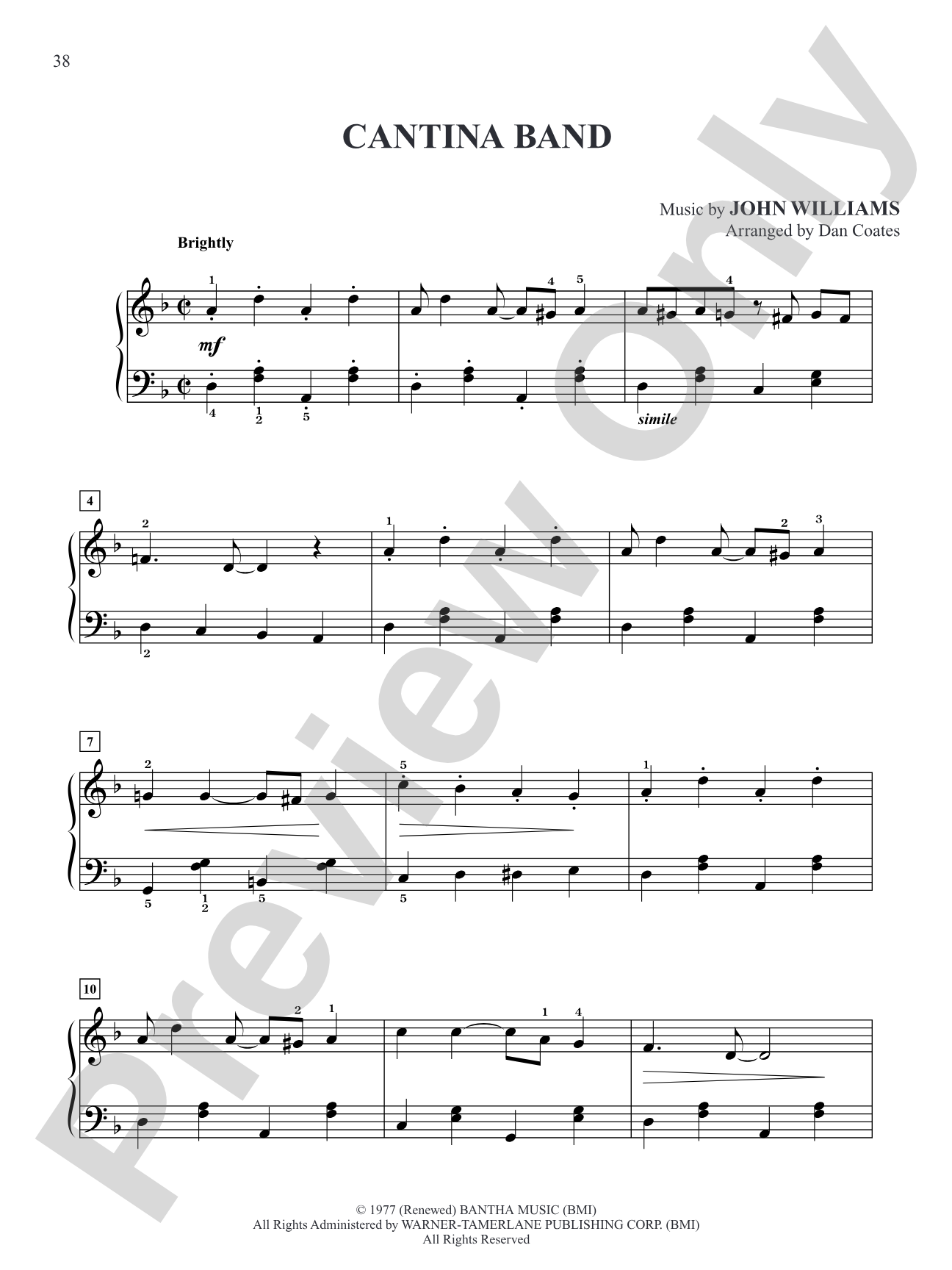

Cantina Band (from "Star Wars Episode IV: A New Hope"): Easy Piano
By John Williams / arr. Dan Coates
Level: Easy Piano
Item: 00-PS-0012748
$4.99
One moment…
Related Items
Princess Leia's Theme (from "Star Wars"): Easy Piano |
$4.99
|
View | |
The Throne Room (from "Star Wars"): Easy Piano |
$4.99
|
View | |
Yoda's Theme (from "Star Wars Episode V: The Empire Strikes Back"): Easy Piano |
$4.99
|
View | |
May the Force Be With You (from "Star Wars Episode V: The Empire Strikes Back"): Easy Piano |
$4.99
|
View | |
Imperial March ("Darth Vader's Theme") (from "Star Wars Episode V: The Empire Strikes Back"): Easy Piano |
$4.99
|
View | |
Jawa Sandcrawler (from "Star Wars Episode IV: A New Hope"): Easy Piano |
$4.99
|
View | |
Binary Sunset (from "Star Wars Episode IV: A New Hope"): Easy Piano |
$4.99
|
View | |
Star Wars Main Theme (from "Star Wars"): Easy Piano |
$4.99
|
View |
Description
For the first time, this piano sheet music collection encompasses the entire Star Wars saga! Set amid stunning imagery from the films, these easy piano arrangements bring the magic of Star Wars to life as they masterfully invoke the grand romanticism of John Williams's epic, award-winning scores. This collection includes several all-new arrangements by Dan Coates. The most definitive and memorable pieces from each of the six Star Wars episodes are included.
Titles: Twentieth Century Fox Trademark * Anakin's Theme * Across the Stars * Battle of the Heroes * Binary Sunset * Cantina Band * Duel of the Fates * The Force Theme * The Imperial March * Jawa Sandcrawler * Luke and Leia * May the Force Be with You * Princess Leia's Theme * Star Wars (Main Title) * The Throne Room * Yoda's Theme.


Titles: Twentieth Century Fox Trademark * Anakin's Theme * Across the Stars * Battle of the Heroes * Binary Sunset * Cantina Band * Duel of the Fates * The Force Theme * The Imperial March * Jawa Sandcrawler * Luke and Leia * May the Force Be with You * Princess Leia's Theme * Star Wars (Main Title) * The Throne Room * Yoda's Theme.
Cantina Band (from "Star Wars Episode IV: A New Hope"): Easy Piano isn't in MakeMusic Cloud just yet...but it could be. Let us know you'd like to see it, and you'll help shape what comes next. In the meantime, start a free trial and dive into thousands of interactive titles your students can play along with today.
Request This Title
Tell us you want it.
Start Your Free Trial
Explore everything that's ready to play right now.
Sample Audio
No sample audio found.
Sample Video
No sample videos found.
Additional Details
Publisher:
Alfred Music
Page Count:
56
SKU:
00-PS-0012748
More about this title
About the Composer: John Williams
John Williams stands as one of the most influential film composers of our time, with a catalog that has shaped how multiple generations experience cinema. His work across the Star Wars saga, Indiana Jones, Jaws, E.T., Harry Potter, and countless others demonstrates a mastery of orchestral writing and thematic development that elevates every moment it accompanies.
For music educators, Williams's scores offer unparalleled teaching material. His melodies are memorable and singable, his harmonic language is sophisticated yet accessible, and his understanding of how music builds emotional narrative makes his work ideal for students learning to think about music's dramatic function. His arrangements for young pianists preserve the character and sweep of his original compositions while remaining playable at early intermediate levels.
Why we love this
These arrangements capture the unmistakable grandeur of Williams's orchestral writing in a form your students can actually play. Dan Coates has preserved the essential harmonic movement and thematic integrity of each piece, which means students engage with real compositional thinking, not simplified substitutes. This single collection gives you instant access to 16 of the most iconic film themes ever written, each one a conversation starter about how music tells stories.
What to expect
Each arrangement carries the cinematic sweep of its original orchestral setting. The Cantina Band bounces with roguish charm; the Imperial March stalks with menace; the Force Theme soars with heroic wonder. Playing these pieces, students experience how melody, harmony, and rhythm combine to create distinct emotional worlds.
Who it's for
Early intermediate pianists (roughly Grades 2-3) who want to tackle music with real emotional weight and narrative purpose. Students who love film, students motivated by recognizable music, and pianists ready to move beyond exercise-style pieces will find these arrangements deeply engaging.
How to get the most out of it
- Shape each phrase with the composer's orchestral intent in mind. Williams writes in long, singing lines; resist the urge to chop them into small units. Let the melody breathe across measures.
- Pay attention to dynamics marked in the score. These pieces rely on crescendos and diminuendos to build drama and release tension. Small dynamic changes make the difference between a flat performance and a vivid one.
- Manage the tempo with care. Tempos that drift upward under nervousness will rob these themes of their grandeur. A metronome during practice helps anchor the pulse.
- When both hands have independent material, clarify the texture by adjusting hand balance. The melody usually needs to be heard, but supporting accompaniment should provide harmonic context, not compete.
How to use it
These work beautifully as program bookends or as a thematic block in a recital. You can build a "Film Music Favorites" recital by selecting three or four pieces across different moods. They're also excellent motivation tools when assigned as supplemental repertoire to students who need encouragement to keep practicing.
Skills your students will build
- Reading and maintaining consistent phrasing across longer melodic lines
- Dynamic control and shaping for expressive effect
- Managing tempo stability, particularly in lyrical passages
- Balance between melody and accompaniment in two-handed textures
- Recognizing and playing themes with thematic integrity rather than mechanical note reading