
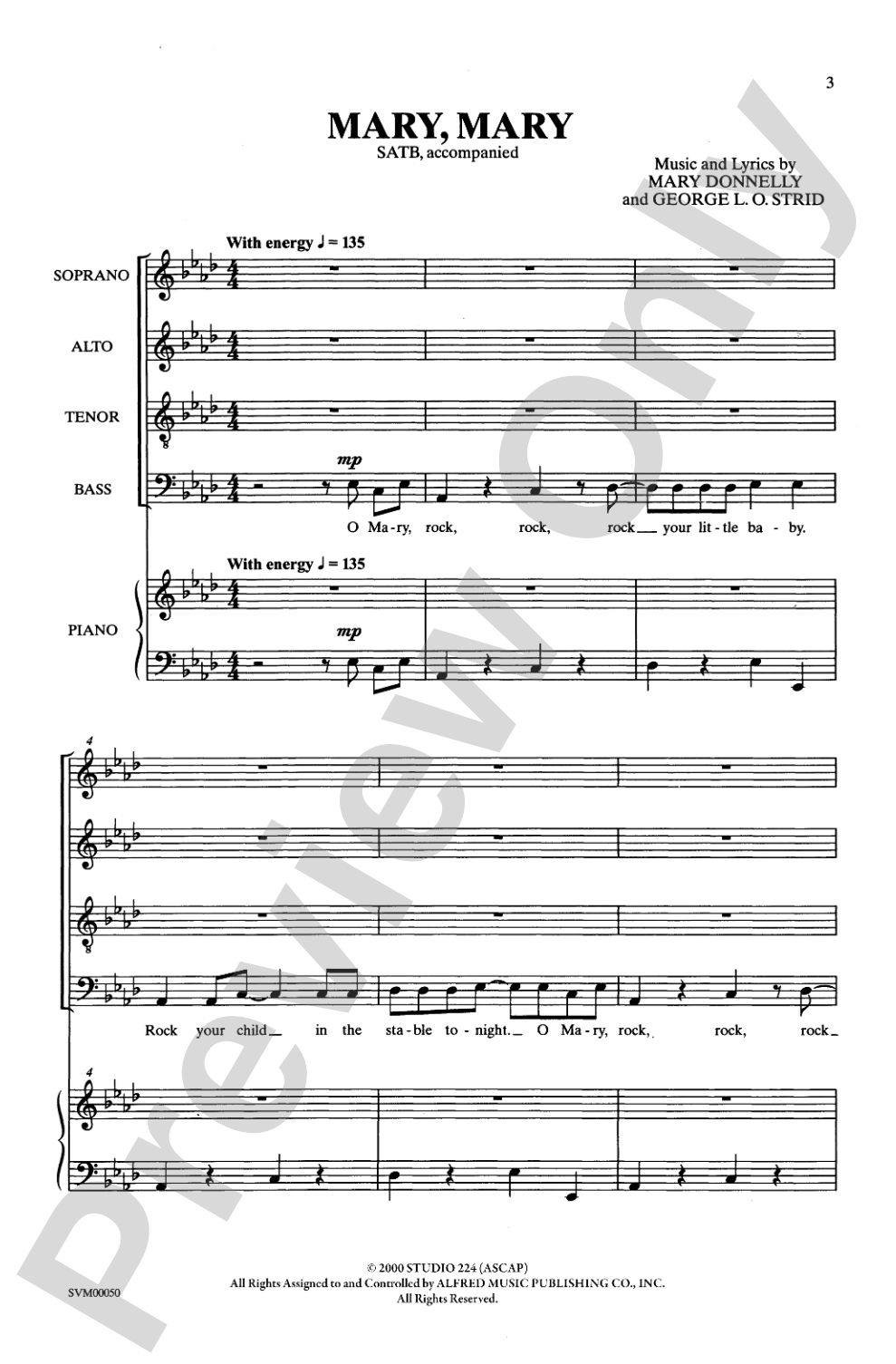
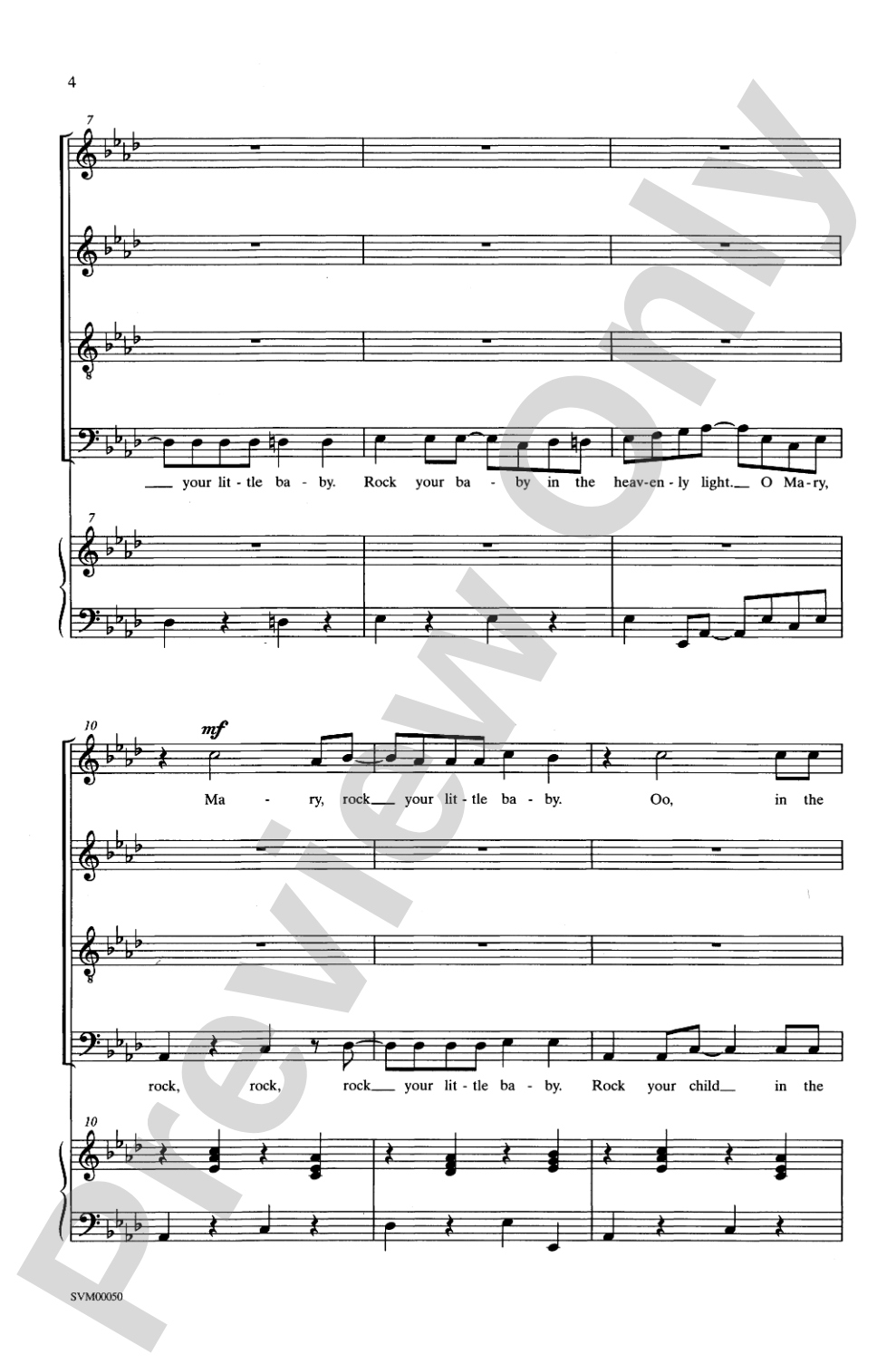
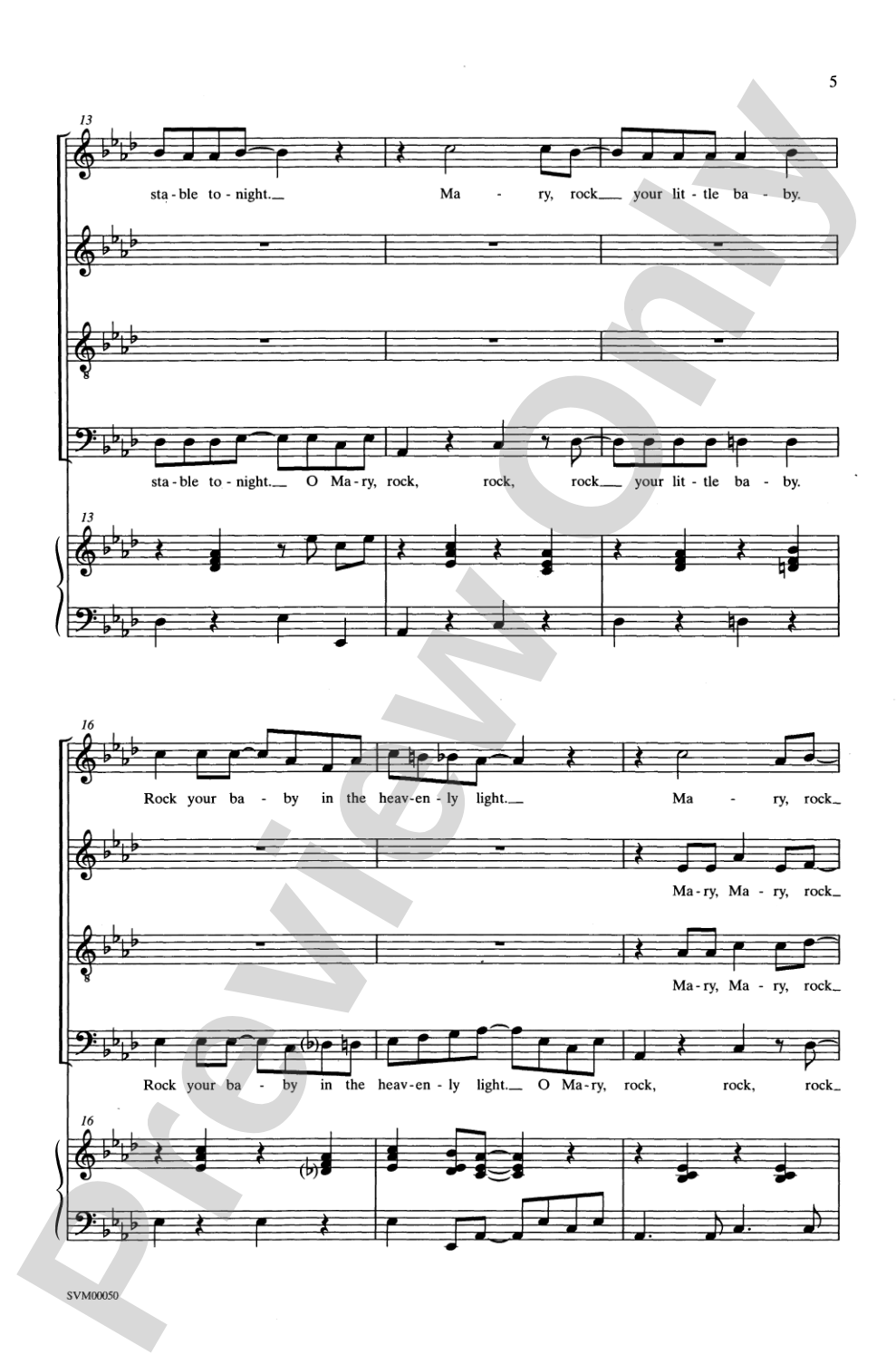

Mary, Mary: SATB Choral Octavo
Music and lyrics by Mary Donnelly and George L. O. Strid
Item: 00-PO-0002778
$2.95
Minimum order quantity: 20 copies
Pickup currently not available
Related Items
Mary, Mary: SAB Choral Octavo |
$2.95
|
View | |
Mary, Mary: SSA Choral Octavo |
$2.95
|
View | |
Mary, Mary: 2-Part Choral Octavo |
$2.25
|
View | |
Mary, Mary: SATB Choral Octavo |
$2.95
|
View | |
Mary, Mary: SAB Choral Octavo |
$2.95
|
View | |
Mary, Mary: SSA Choral Octavo |
$2.95
|
View | |
Mary, Mary: 2-Part Choral Octavo |
$2.25
|
View | |
Mary, Mary: Choral Octavo SoundTrax CD |
$27.99
|
View |
Description
Your choir will love to sing this gospel-rock winner! The multiple voicings of this upbeat original make this fantastic title available to all choirs. This is another great piece from Mary Donnelly and George Strid!


Mary, Mary: SATB Choral Octavo isn't in MakeMusic Cloud just yet...but it could be. Let us know you'd like to see it, and you'll help shape what comes next. In the meantime, start a free trial and dive into thousands of interactive titles your students can play along with today.
Request This Title
Tell us you want it.
Start Your Free Trial
Explore everything that's ready to play right now.
Sample Audio
No sample audio found.
Sample Video
No sample videos found.
Additional Details
Series:
Alfred Archive Edition: Studio PR Catalog
Publisher:
Alfred Music
Page Count:
16
SKU:
00-PO-0002778
More about this title
About the Composer: Mary Donnelly
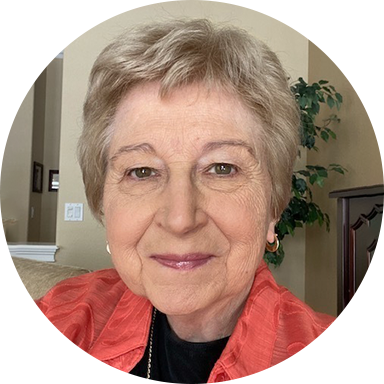
Mary Donnelly grew up in Reno, Nevada, and studied English and French at the University of Nevada before discovering her passion for music education. While still an undergraduate, she founded two children's choruses, an experience that inspired her to return to school for music certification. She earned a Master's Degree in Education from Lesley College in Cambridge, Massachusetts, where she focused on integrating arts across the curriculum. She spent thirty years teaching general music and choir in the Washoe County School District, retiring as an active member of ACDA, NEA, and ASCAP.
In 1985, Donnelly began a creative partnership with George Strid when their principal asked them to compose a musical for a sixth-grade Reading Week celebration. That first collaboration, The Million Dollar Mystery, launched a prolific writing team. Together they have created over two hundred songs and twenty-five musicals, establishing themselves as trusted voices in choral and musical theater repertoire for young singers.
Why we love this
The gospel-rock energy in this piece gives choirs permission to move, commit fully to the rhythm, and feel the fun in singing together. Donnelly and Strid's multiple voicings mean you can actually program this with mixed-ability ensembles without reducing anyone's part to unison or asking some singers to sit out. The recorded accompaniment keeps everyone locked in while your singers focus on the contemporary groove that makes gospel-rock so engaging to perform.
What to expect
This piece radiates joy and momentum. Gospel-rock harmonies warm the sound while driving rhythms keep the energy infectious, creating a performance that feels spontaneous and alive even after dozens of rehearsals. The multiple voicings create layered texture that rewards careful listening, inviting the audience into the singers' genuine enthusiasm.
Who it's for
This octavo suits choirs of varying experience levels because the voicings work for singers at different stages of development. Strong ensembles will relish the rhythmic complexity and part independence, while developing choirs can use the flexibility to adjust voicings while maintaining the piece's integrity. The gospel-rock idiom appeals to singers who connect with contemporary, energetic repertoire.
How to get the most out of it
- Lock the rhythm section (piano and bass parts) into the swing feel before rehearsing melody lines; the groove is the foundation that everything else rides on.
- Keep the alto and tenor lines moving with clear articulation; these parts carry harmonic interest that gets lost if they blur together.
- Encourage singers to listen across parts rather than purely within their own line; the interplay between voices creates the sparkle in this arrangement.
- Layer dynamics gradually across the piece rather than staying at one level; gospel-rock gains momentum through small pushes, not sudden jumps.
How to use it
Program this as a contrast piece in a concert heavy with ballads or classical sacred music; the contemporary groove gives audiences a chance to hear your choir's rhythmic sophistication and stylistic range. It works equally well as a standalone offering or paired with other gospel or spiritual arrangements to create a thematic set. Consider it for holiday concerts, spring pops programs, or community engagement events where accessibility and joy matter as much as musical polish.
Skills your students will build
- Singing in a swing rhythm and maintaining consistent groove
- Balancing independent melodic lines while listening to surrounding parts
- Articulation and rhythmic precision in syncopated passages
- Gospel-rock phrasing and interpretive choices in contemporary sacred music
- Confidence in performing energetic, text-driven arrangements